IPhO 2016 · Theory problem 3
Large Hadron Collider
Please read the general instructions in the separate envelope before you start this problem.
In this task, the physics of the particle accelerator LHC (Large Hadron Collider) at CERN is discussed. CERN is the world's largest particle physics laboratory. Its main goal is to get insight into the fundamental laws of nature. Two beams of particles are accelerated to high energies, guided around the accelerator ring by a strong magnetic field and then made to collide with each other. The protons are not spread uniformly around the circumference of the accelerator, but they are clustered in so-called bunches. The resulting particles generated by collisions are observed with large detectors. Some parameters of the LHC can be found in table 1.
| LHC ring | |
|---|---|
| Circumference of ring | \(26659\,\mathrm{m}\) |
| Number of bunches per proton beam | \(2808\) |
| Number of protons per bunch | \(1.15\times10^{11}\) |
| Proton beams | |
| Energy of protons | \(7.00\,\mathrm{TeV}\) |
| Centre of mass energy | \(14.0\,\mathrm{TeV}\) |
Table 1: Typical numerical values of relevant LHC parameters.
Particle physicists use convenient units for the energy, momentum and mass: The energy is measured in electron volts [eV]. By definition, \(1\,\mathrm{eV}\) is the amount of energy gained by a particle with elementary charge, \(e\), moved through a potential difference of one volt (\(1\,\mathrm{eV}=1.602\cdot10^{-19}\,\mathrm{kg\,m^2s^{-2}}\)).
The momentum is measured in units of \(\mathrm{eV}/c\) and the mass in units of \(\mathrm{eV}/c^2\), where \(c\) is the speed of light in vacuum. Since \(1\,\mathrm{eV}\) is a very small quantity of energy, particle physicists often use MeV (\(1\,\mathrm{MeV}=10^6\,\mathrm{eV}\)), GeV (\(1\,\mathrm{GeV}=10^9\,\mathrm{eV}\)) or TeV (\(1\,\mathrm{TeV}=10^{12}\,\mathrm{eV}\)).
Part A deals with the acceleration of protons or electrons. Part B is concerned with the identification of particles produced in the collisions at CERN.
Part A. LHC accelerator (6 points)
Acceleration:
Assume that the protons have been accelerated by a voltage \(V\) such that their velocity is very close to the speed of light and neglect any energy loss due to radiation or collisions with other particles.
A.1 — 0.7pt
Find the exact expression for the final velocity \(v\) of the protons as a function of the accelerating voltage \(V\), and physical constants.
A design for a future experiment at CERN plans to use the protons from the LHC and to collide them with electrons which have an energy of \(60.0\,\mathrm{GeV}\).
A.2 — 0.8pt
For particles with high energy and low mass the relative deviation \(\Delta=(c-v)/c\) of the final velocity \(v\) from the speed of light is very small. Find a first order approximation for \(\Delta\) and calculate \(\Delta\) for electrons with an energy of \(60.0\,\mathrm{GeV}\)using the accelerating voltage \(V\) and physical constants.
We now return to the protons in the LHC. Assume that the beam pipe has a circular shape.
A.3 — 1.0pt
Derive an expression for the uniform magnetic flux density \(B\) necessary to keep the proton beam on a circular track. The expression should only contain the energy of the protons \(E\), the circumference \(L\), fundamental constants and numbers. You may use suitable approximations if their effect is smaller than precision given by the least number of significant digits.
Calculate the magnetic flux density \(B\) for a proton energy of \(E=7.00\,\mathrm{TeV}\), neglecting interactions between the protons.
Radiated Power:
An accelerated charged particle radiates energy in the form of electromagnetic waves. The radiated power \(P_{\mathrm{rad}}\) of a charged particle that circulates with a constant angular velocity depends only on its acceleration \(a\), its charge \(q\), the speed of light \(c\) and the permittivity of free space \(\varepsilon_0\).
A.4 — 1.0pt
Use dimensional analysis to find an expression for the radiated power \(P_{\mathrm{rad}}\).
The real formula for the radiated power contains a factor \(1/(6\pi)\); moreover, a full relativistic derivation gives an additional multiplicative factor \(\gamma^4\), with \(\gamma=(1-v^2/c^2)^{-1/2}\).
A.5 — 1.0pt
Calculate \(P_{\mathrm{tot}}\), the total radiated power of the LHC, for a proton energy of \(E=7.00\,\mathrm{TeV}\) (Note table 1). You may use suitable approximations.
Linear Acceleration:
At CERN, protons at rest are accelerated by a linear accelerator of length \(d=30.0\,\mathrm{m}\) through a potential difference of \(V=500\,\mathrm{MV}\). Assume that the electrical field is homogeneous. A linear accelerator consists of two plates as sketched in Figure 1.
A.6 — 1.5pt
Determine the time \(T\) that the protons take to pass through this field.
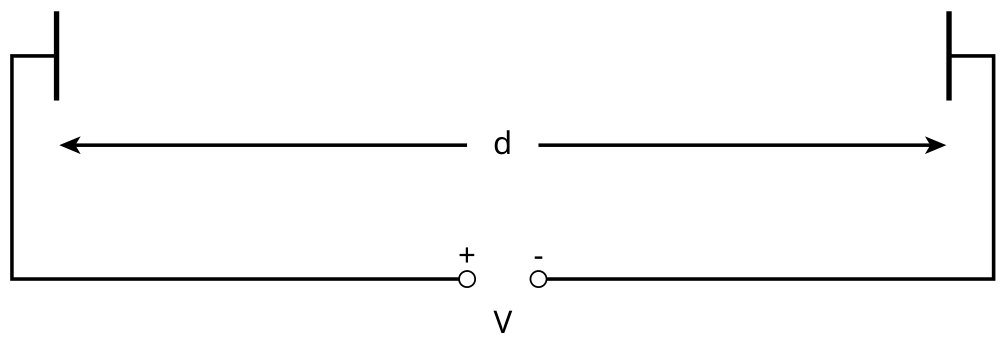
Figure 1: Sketch of an accelerator module.
Part B. Particle Identification (4 points)
Time of flight:
It is important to identify the high energy particles that are generated in the collision in order to interpret the interaction process. A simple method is to measure the time \((t)\) that a particle with known momentum needs to pass a length \(l\) in a so-called Time-of-Flight (ToF) detector. Typical particles which are identified in the detector, together with their masses, are listed in table 2.
| Particle | Mass \([\mathrm{MeV}/c^2]\) |
|---|---|
| Deuteron | \(1876\) |
| Proton | \(938\) |
| charged Kaon | \(494\) |
| charged Pion | \(140\) |
| Electron | \(0.511\) |
Table 2: Particles and their masses.
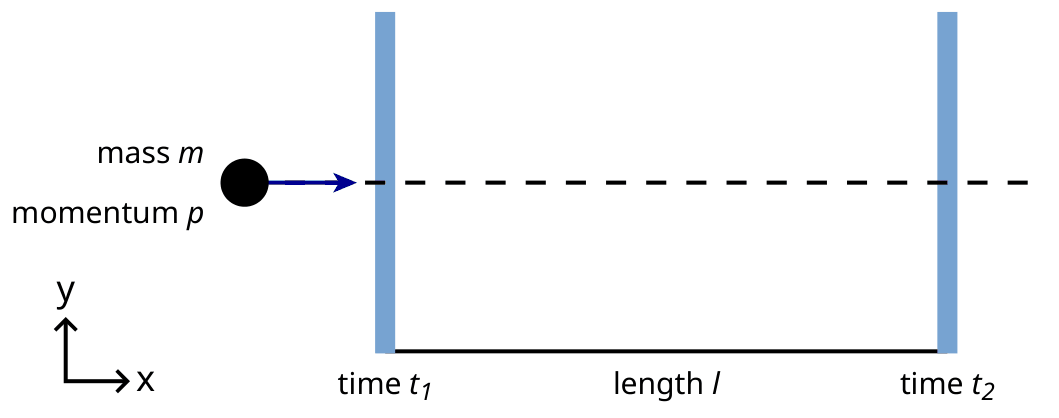
Figure 2: Schematic view of a time-of-flight detector.
B.1 — 0.8pt
Express the particle mass \(m\) in terms of of the momentum \(p\), the flight length \(l\) and the flight time \(t\), assuming that particles have elementary charge \(e\) and travel with velocity close to \(c\) on straight tracks in the ToF detector and that they travel perpendicular to the two detection planes (see figure 2).
B.2 — 0.7pt
Calculate the minimal length \(l\) of a ToF detector that allows to safely distinguish a charged kaon from a charged pion, given both their momenta are measured to be \(1.00\,\mathrm{GeV}/c\). For a good separation it is required that the difference in the time-of-flight is larger than three times the time resolution of the detector. The typical resolution of a ToF detector is \(150\,\mathrm{ps}\) (\(1\,\mathrm{ps}=10^{-12}\,\mathrm{s}\)).
In the following, particles produced in a typical LHC detector are identified in a two stage detector consisting of a tracking detector and a ToF detector. Figure 3 shows the setup in the plane transverse and longitudinal to the proton beams. Both detectors are tubes surrounding the interaction region with the beam passing in the middle of the tubes. The tracking detector measures the trajectory of a charged particle which passes through a magnetic field whose direction is parallel to the proton beams. The radius \(r\) of the trajectory allows one to determine the transverse momentum \(p_{\mathrm{T}}\) of the particle. Since the collision time is known the ToF detector only needs one tube to measure the flight time (time between the collision and the detection in the ToF tube). This ToF tube is situated just outside the tracking chamber. For this task you may assume that all particles created by the collision travel perpendicular to the proton beams, which means that the created particles have no momentum along the direction of the proton beams.
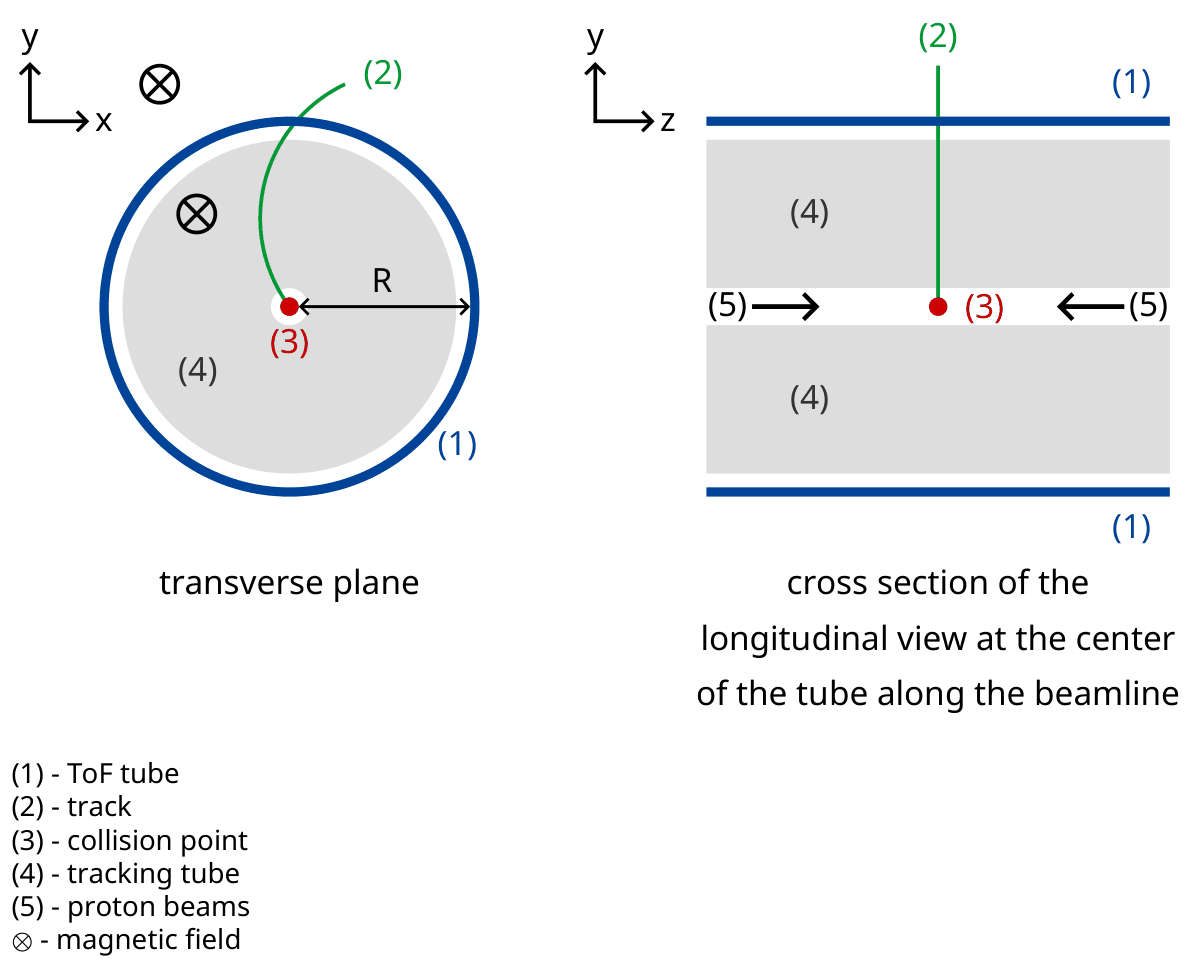
Figure 3 : Experimental setup for particle identification with a tracking chamber and a ToF detector. Both detectors are tubes surrounding the collision point in the middle. Left : transverse view perpendicular to the beamline. Right : longitudinal view parallel to the beam line. The particle is travelling perpendicular to the beam line.
B.3 — 1.7pt
Express the particle mass in terms of the magnetic flux density \(B\), the radius \(R\) of the ToF tube, fundamental constants and the measured quantities: radius \(r\) of the track and time-of-flight \(t\).
We detected four particles and want to identify them. The magnetic flux density in the tracking detector was \(B=0.500\,\mathrm{T}\). The radius \(R\) of the ToF tube was \(3.70\,\mathrm{m}\). Here are the measurements (\(1\,\mathrm{ns}=10^{-9}\,\mathrm{s}\)):
| Particle | Radius of the trajectory \(r\) [m] | Time of flight \(t\) [ns] |
|---|---|---|
| A | \(5.10\) | \(20\) |
| B | \(2.94\) | \(14\) |
| C | \(6.06\) | \(18\) |
| D | \(2.31\) | \(25\) |
B.4 — 0.8pt
Identify the four particles by calculating their mass.
General Data Sheet
| Speed of light in vacuum | \(c\) | \(=299\,792\,458\,\mathrm{m\cdot s^{-1}}\) |
| Vacuum permeability (magnetic constant) | \(\mu_0\) | \(=4\pi\times10^{-7}\,\mathrm{kg\cdot m\cdot A^{-2}\cdot s^{-2}}\) |
| Vacuum permittivity (electrical constant) | \(\varepsilon_0\) | \(=8.854\,187\,817\times10^{-12}\,\mathrm{A^2\cdot s^4\cdot kg^{-1}\cdot m^{-3}}\) |
| Elementary charge | \(e\) | \(=1.602\,176\,620\,8(98)\times10^{-19}\,\mathrm{A\cdot s}\) |
| Mass of the electron | \(m_{\mathrm e}\) | \(=9.109\,383\,56(11)\times10^{-31}\,\mathrm{kg}\) |
| \(=0.510\,998\,946\,1(31)\,\dfrac{\mathrm{MeV}}{c^2}\) | ||
| Mass of the proton | \(m_{\mathrm p}\) | \(=1.672\,621\,898(21)\times10^{-27}\,\mathrm{kg}\) |
| \(=938.272\,081\,3(58)\,\dfrac{\mathrm{MeV}}{c^2}\) | ||
| Mass of the neutron | \(m_{\mathrm n}\) | \(=1.674\,927\,471(21)\times10^{-27}\,\mathrm{kg}\) |
| \(=939.565\,413\,3(58)\,\dfrac{\mathrm{MeV}}{c^2}\) | ||
| Unified atomic mass unit | \(u\) | \(=1.660\,539\,040(20)\times10^{-27}\,\mathrm{kg}\) |
| Rydberg constant | \(R_\infty\) | \(=10\,973\,731.568\,508(65)\,\mathrm{m^{-1}}\) |
| Universal constant of gravitation | \(G\) | \(=6.674\,08(31)\times10^{-11}\,\mathrm{m^3\cdot kg^{-1}\cdot s^{-2}}\) |
| Acceleration due to gravity (in Zurich) | \(g\) | \(=9.81\,\mathrm{m\cdot s^{-2}}\) |
| Planck’s constant | \(h\) | \(=6.626\,070\,040(81)\times10^{-34}\,\mathrm{kg\cdot m^2\cdot s^{-1}}\) |
| Avogadro number | \(N_{\mathrm A}\) | \(=6.022\,140\,857(74)\times10^{23}\,\mathrm{mol^{-1}}\) |
| Molar gas constant | \(R\) | \(=8.314\,4598(48)\,\mathrm{kg\cdot m^2\cdot s^{-2}\cdot mol^{-1}\cdot K^{-1}}\) |
| Molar mass constant | \(M_{\mathrm u}\) | \(=1\times10^{-3}\,\mathrm{kg\cdot mol^{-1}}\) |
| Boltzmann constant | \(k_{\mathrm B}\) | \(=1.380\,648\,52(79)\times10^{-23}\,\mathrm{kg\cdot m^2\cdot s^{-2}\cdot K^{-1}}\) |
| Stefan-Boltzmann constant | \(\sigma\) | \(=5.670\,367(13)\times10^{-8}\,\mathrm{kg\cdot s^{-3}\cdot K^{-4}}\) |
Official English text of the problem.
Answers
-
A.1: For acceleration from rest, \[ \boxed{v=c\sqrt{1-\left(1+\frac{eV}{m_{\mathrm p}c^2}\right)^{-2}}.} \]
-
A.2: \[ \boxed{\Delta\simeq\frac{1}{2}\left(1+\frac{eV}{mc^2}\right)^{-2} \simeq\frac{m^2c^4}{2e^2V^2}.} \] For the \(60.0\,\mathrm{GeV}\) electrons, \[ \boxed{\Delta=3.63\times10^{-11}.} \]
-
A.3: \[ \boxed{B=\frac{2\pi}{ecL}\sqrt{E^2-m_{\mathrm p}^2c^4} \simeq\frac{2\pi E}{ecL}=5.50\,\mathrm T.} \]
-
A.4: \[ \boxed{P_{\mathrm{rad}}=C\,\frac{q^2a^2}{\varepsilon_0c^3},} \] where dimensional analysis cannot determine the dimensionless constant \(C\).
-
A.5: Including both proton beams, \[ \boxed{P_{\mathrm{tot}}=5.12\,\mathrm{kW}.} \]
-
A.6: \[ \boxed{T=\frac{d}{c}\sqrt{1+\frac{2m_{\mathrm p}c^2}{eV}} =2.18\times10^{-7}\,\mathrm s=0.218\,\mu\mathrm s.} \]
-
B.1: \[ \boxed{m=\frac{p}{c}\sqrt{\left(\frac{ct}{l}\right)^2-1}.} \]
-
B.2: The threshold length is \[ \boxed{l_{\mathrm{crit}}=1.27739\ldots\,\mathrm m.} \] The stated strict separation criterion requires \(l>l_{\mathrm{crit}}\), giving a minimum practical length of approximately \(\boxed{1.28\,\mathrm m}\).
-
B.3: \[ \boxed{ m=\frac{eBr}{c} \sqrt{\left[\frac{ct}{2r\arcsin(R/(2r))}\right]^2-1}. } \]
-
B.4: A: proton, \(m\approx0.94\,\mathrm{GeV}/c^2\); B: charged pion, \(m\approx0.14\,\mathrm{GeV}/c^2\); C: proton, \(m\approx0.94\,\mathrm{GeV}/c^2\); D: charged kaon, \(m\approx0.50\,\mathrm{GeV}/c^2\).
Solution
A.1
For a proton accelerated from rest, conservation of energy gives \[ eV=K=(\gamma-1)m_{\mathrm p}c^2, \qquad \gamma=\frac{1}{\sqrt{1-v^2/c^2}}. \] Thus \[ \gamma=1+\frac{eV}{m_{\mathrm p}c^2}. \] Solving for \(v\), \[ \boxed{ v=c\sqrt{1-\left(1+\frac{eV}{m_{\mathrm p}c^2}\right)^{-2}}. } \] This expression is exact under the assumption of acceleration from rest without energy losses.
A.2
For a particle of mass \(m\), \[ \Delta=1-\frac vc=1-\sqrt{1-\gamma^{-2}}. \] At high energy, \(\gamma^{-2}\ll1\). Using the first-order expansion \[ \sqrt{1-x}=1-\frac{x}{2}+O(x^2), \] we obtain \[ \Delta=\frac{1}{2\gamma^2}+O(\gamma^{-4}). \] In terms of the accelerating voltage, \[ \boxed{ \Delta\simeq\frac12 \left(1+\frac{eV}{mc^2}\right)^{-2}. } \] When \(eV\gg mc^2\), this further reduces to \[ \boxed{\Delta\simeq\frac{m^2c^4}{2e^2V^2}.} \]
Equivalently, using the total energy \(E=\gamma mc^2\), \[ \Delta\simeq\frac12\left(\frac{mc^2}{E}\right)^2. \] For the electrons, \[ m_{\mathrm e}c^2=0.5109989461\,\mathrm{MeV}, \qquad E=60.0\,\mathrm{GeV}=6.00\times10^4\,\mathrm{MeV}, \] so \[ \Delta\simeq \frac12\left(\frac{0.5109989461}{6.00\times10^4}\right)^2 =\boxed{3.63\times10^{-11}}. \]
A.3
Let the circular orbit radius be \[ \rho=\frac{L}{2\pi}. \] The magnetic force changes the direction of the relativistic momentum while leaving its magnitude constant. For uniform circular motion, \[ \left|\frac{d\mathbf p}{dt}\right|=\frac{pv}{\rho}. \] Equating this to the magnetic force, \[ evB=\frac{pv}{\rho}, \] gives \[ B=\frac{p}{e\rho}. \]
The relativistic energy–momentum relation is \[ E^2=p^2c^2+m_{\mathrm p}^2c^4, \] where \(E\) is the total proton energy. Therefore, \[ \boxed{ B=\frac{2\pi}{ecL}\sqrt{E^2-m_{\mathrm p}^2c^4}. } \]
At \(E=7.00\,\mathrm{TeV}\), \[ \frac{m_{\mathrm p}c^2}{E} =\frac{938.2720813\,\mathrm{MeV}}{7.00\times10^6\,\mathrm{MeV}} \approx1.34\times10^{-4}. \] Replacing \(pc\) by \(E\) produces a relative correction of only \[ \frac12\left(\frac{m_{\mathrm p}c^2}{E}\right)^2 \approx8.98\times10^{-9}, \] far below the precision of the given energy. Hence \[ B\simeq\frac{2\pi E}{ecL}. \] Using \(E=7.00\times10^{12}e\,\mathrm J\), \[ B\simeq \frac{2\pi(7.00\times10^{12})} {(299792458)(26659)}\,\mathrm T =\boxed{5.50\,\mathrm T}. \]
A.4
Write \[ P_{\mathrm{rad}}=Cq^\alpha a^\beta c^\delta\varepsilon_0^\eta, \] where \(C\) is dimensionless. Using mass, length, time and charge as base dimensions, \[ [P]=ML^2T^{-3},\quad [q]=Q,\quad [a]=LT^{-2},\quad [c]=LT^{-1}, \] and \[ [\varepsilon_0]=Q^2T^2M^{-1}L^{-3}. \] Matching powers gives \[ -\eta=1,\qquad \alpha+2\eta=0, \] \[ \beta+\delta-3\eta=2,\qquad -2\beta-\delta+2\eta=-3. \] Thus \[ \eta=-1,\qquad \alpha=2,\qquad \beta=2,\qquad \delta=-3. \] Consequently, \[ \boxed{P_{\mathrm{rad}}=C\,\frac{q^2a^2}{\varepsilon_0c^3}.} \] Dimensional analysis determines the dependence on the physical quantities but cannot determine \(C\).
A.5
Including the numerical factor and relativistic correction specified in the problem, one proton radiates \[ P_1=\frac{e^2a^2\gamma^4}{6\pi\varepsilon_0c^3}. \] For circular motion, \[ a=\frac{v^2}{\rho}\simeq\frac{c^2}{\rho}, \qquad \rho=\frac{L}{2\pi}, \qquad \gamma=\frac{E}{m_{\mathrm p}c^2}. \] Hence \[ P_1\simeq \frac{e^2c}{6\pi\varepsilon_0\rho^2} \left(\frac{E}{m_{\mathrm p}c^2}\right)^4. \]
Numerically, \[ \rho=\frac{26659}{2\pi}\,\mathrm m =4242.91\,\mathrm m, \qquad \gamma=\frac{7.00\times10^6}{938.2720813} =7460.52. \] Substitution yields \[ P_1\simeq7.93\times10^{-12}\,\mathrm W. \]
There are two beams, each containing \(2808\) bunches with \(1.15\times10^{11}\) protons per bunch. Thus the total number of protons is \[ N=2(2808)(1.15\times10^{11}) =6.4584\times10^{14}. \] Adding the individual radiated powers, \[ P_{\mathrm{tot}}=NP_1 \simeq5.12467\times10^3\,\mathrm W. \] Therefore, \[ \boxed{P_{\mathrm{tot}}=5.12\,\mathrm{kW}.} \]
A.6
The homogeneous electric field has magnitude \(V/d\), so the force on a proton is constant: \[ F=\frac{eV}{d}. \] Relativistically, the equation of motion is \[ \frac{dp}{dt}=F. \] Since the proton starts from rest, \[ p_{\mathrm f}=FT, \qquad T=\frac{p_{\mathrm f}}{F}. \]
The work done over the accelerator is \(eV\), giving final total energy \[ E_{\mathrm f}=m_{\mathrm p}c^2+eV. \] Therefore, \[ p_{\mathrm f}c =\sqrt{E_{\mathrm f}^2-m_{\mathrm p}^2c^4} =\sqrt{(eV)^2+2eVm_{\mathrm p}c^2}. \] Combining these expressions, \[ T=\frac{d}{eVc} \sqrt{(eV)^2+2eVm_{\mathrm p}c^2}, \] or \[ \boxed{T=\frac{d}{c}\sqrt{1+\frac{2m_{\mathrm p}c^2}{eV}}.} \]
Here \(eV=500\,\mathrm{MeV}\). Thus \[ T= \frac{30.0}{299792458} \sqrt{1+\frac{2(938.2720813)}{500}}\,\mathrm s =\boxed{2.18\times10^{-7}\,\mathrm s}. \] The use of constant force, rather than constant acceleration, accounts for the relativistic change in velocity.
B.1
For the straight path, \[ v=\frac lt. \] Relativistic momentum satisfies \[ p=\gamma mv=\frac{mv}{\sqrt{1-v^2/c^2}}. \] Solving for \(m\), \[ m=\frac pv\sqrt{1-\frac{v^2}{c^2}} =p\sqrt{\frac{t^2}{l^2}-\frac1{c^2}}. \] Therefore, \[ \boxed{m=\frac pc\sqrt{\left(\frac{ct}{l}\right)^2-1}.} \] This expression is exact; no expansion about \(v=c\) is needed.
B.2
Solving the result of B.1 for flight time gives \[ t(m)=\frac lc\sqrt{1+\left(\frac{mc}{p}\right)^2}. \] At equal momentum, the heavier kaon arrives later. Their time difference is \[ t_K-t_\pi =\frac lc \left[ \sqrt{1+\left(\frac{m_Kc}{p}\right)^2} -\sqrt{1+\left(\frac{m_\pi c}{p}\right)^2} \right]. \] The required separation is \[ t_K-t_\pi>3(150\,\mathrm{ps})=450\,\mathrm{ps}. \] The threshold length is therefore \[ l_{\mathrm{crit}} = \frac{3\sigma_t c}{ \sqrt{1+(m_Kc/p)^2} -\sqrt{1+(m_\pi c/p)^2} }, \qquad \sigma_t=150\,\mathrm{ps}. \]
Using \(p=1000\,\mathrm{MeV}/c\), \[ l_{\mathrm{crit}} = \frac{(450\times10^{-12})(299792458)} {\sqrt{1+(494/1000)^2}-\sqrt{1+(140/1000)^2}} \,\mathrm m. \] The dimensionless denominator is \(0.10561117\), yielding \[ \boxed{l_{\mathrm{crit}}=1.27739\ldots\,\mathrm m.} \] Thus \(l\) must exceed this threshold; approximately \(\boxed{1.28\,\mathrm m}\) is required. The exact relativistic expression is used because the kaon's mass is not negligible compared with \(p/c\).
B.3
Because the particle has no momentum parallel to the beamline, its entire momentum is transverse to the magnetic field. As in A.3, \[ p=eBr. \] The magnetic field does no work, so the speed is constant along the circular track.
Let \(\theta\) be the angle swept out about the centre of the trajectory before the particle first reaches the ToF tube. The collision point and detection point are separated by the tube radius \(R\). They are also the endpoints of a chord of the trajectory circle, whose radius is \(r\). Therefore, \[ R=2r\sin\frac{\theta}{2}. \] For the first encounter with the tube, \[ \theta=2\arcsin\frac{R}{2r}, \] and the flight path length is \[ s=r\theta=2r\arcsin\frac{R}{2r}. \] This requires \(r\ge R/2\); a smaller orbit never reaches the tube.
The speed is \[ v=\frac st. \] Using the mass formula from B.1 with the actual path length \(s\), together with \(p=eBr\), \[ m=\frac{eBr}{c}\sqrt{\left(\frac{ct}{s}\right)^2-1}. \] Consequently, \[ \boxed{ m=\frac{eBr}{c} \sqrt{ \left[ \frac{ct}{2r\arcsin(R/(2r))} \right]^2-1 }. } \] The inverse sine is evaluated in radians.
B.4
For each particle, use \[ s=2r\arcsin\frac{3.70\,\mathrm m}{2r}, \qquad p=e(0.500\,\mathrm T)r, \] and \[ m=\frac pc\sqrt{\left(\frac{ct}{s}\right)^2-1}. \]
The momentum conversion follows directly from \(p=eBr\): \[ p\,[\mathrm{GeV}/c] =0.299792458\,B\,[\mathrm T]\,r\,[\mathrm m]. \] Retaining guard digits to compare the calculated masses with Table 2 gives:
| Particle | Path length \(s\) [m] | Momentum \(p\) [MeV/\(c\)] | Calculated mass [MeV/\(c^2\)] | Identification |
|---|---|---|---|---|
| A | \(3.7864\) | \(764.47\) | \(938.65\) | Proton |
| B | \(4.0019\) | \(440.69\) | \(139.32\) | Charged pion |
| C | \(3.7600\) | \(908.37\) | \(935.10\) | Proton |
| D | \(4.2908\) | \(346.26\) | \(495.90\) | Charged kaon |
The small differences from the tabulated masses are consistent with the rounded measurement values. To sensible precision, \[ \boxed{ \begin{aligned} A &: \quad m\approx0.94\,\mathrm{GeV}/c^2 &&\text{proton},\\ B &: \quad m\approx0.14\,\mathrm{GeV}/c^2 &&\text{charged pion},\\ C &: \quad m\approx0.94\,\mathrm{GeV}/c^2 &&\text{proton},\\ D &: \quad m\approx0.50\,\mathrm{GeV}/c^2 &&\text{charged kaon}. \end{aligned} } \]
The solution was checked against the official solution.
IPhO 2016 · Theorieaufgabe 3
Large Hadron Collider
Bitte lesen Sie die allgemeinen Anweisungen im separaten Umschlag, bevor Sie mit dieser Aufgabe beginnen.
In dieser Aufgabe wird die Physik des Teilchenbeschleunigers LHC (Large Hadron Collider) am CERN behandelt. CERN ist das weltweit größte Labor für Teilchenphysik. Sein Hauptziel ist es, Einblicke in die grundlegenden Naturgesetze zu gewinnen. Zwei Teilchenstrahlen werden auf hohe Energien beschleunigt, durch ein starkes Magnetfeld auf der Kreisbahn des Beschleunigers geführt und anschließend miteinander zur Kollision gebracht. Die Protonen sind nicht gleichmäßig über den Umfang des Beschleunigers verteilt, sondern in sogenannten Teilchenpaketen gebündelt. Die bei den Kollisionen entstehenden Teilchen werden mit großen Detektoren beobachtet. Einige Parameter des LHC sind in Tabelle 1 aufgeführt.
| LHC-Ring | |
|---|---|
| Umfang des Rings | \(26659\,\mathrm{m}\) |
| Anzahl der Teilchenpakete pro Protonenstrahl | \(2808\) |
| Anzahl der Protonen pro Teilchenpaket | \(1.15\times10^{11}\) |
| Protonenstrahlen | |
| Energie der Protonen | \(7.00\,\mathrm{TeV}\) |
| Schwerpunktsenergie | \(14.0\,\mathrm{TeV}\) |
Tabelle 1: Typische Zahlenwerte relevanter LHC-Parameter.
Teilchenphysiker verwenden zweckmäßige Einheiten für Energie, Impuls und Masse: Die Energie wird in Elektronenvolt [eV] gemessen. Definitionsgemäß ist \(1\,\mathrm{eV}\) die Energiemenge, die ein Teilchen mit der Elementarladung \(e\) beim Durchlaufen einer Potentialdifferenz von einem Volt gewinnt (\(1\,\mathrm{eV}=1.602\cdot10^{-19}\,\mathrm{kg\,m^2s^{-2}}\)).
Der Impuls wird in Einheiten von \(\mathrm{eV}/c\) und die Masse in Einheiten von \(\mathrm{eV}/c^2\) gemessen, wobei \(c\) die Lichtgeschwindigkeit im Vakuum ist. Da \(1\,\mathrm{eV}\) eine sehr kleine Energiemenge ist, verwenden Teilchenphysiker häufig MeV (\(1\,\mathrm{MeV}=10^6\,\mathrm{eV}\)), GeV (\(1\,\mathrm{GeV}=10^9\,\mathrm{eV}\)) oder TeV (\(1\,\mathrm{TeV}=10^{12}\,\mathrm{eV}\)).
Teil A behandelt die Beschleunigung von Protonen oder Elektronen. Teil B befasst sich mit der Identifizierung von Teilchen, die bei den Kollisionen am CERN entstehen.
Teil A. LHC-Beschleuniger (6 Punkte)
Beschleunigung:
Nehmen Sie an, dass die Protonen durch eine Spannung \(V\) so beschleunigt wurden, dass ihre Geschwindigkeit sehr nahe an der Lichtgeschwindigkeit liegt, und vernachlässigen Sie jeglichen Energieverlust durch Strahlung oder Kollisionen mit anderen Teilchen.
A.1 — 0.7 Punkte
Bestimmen Sie den exakten Ausdruck für die Endgeschwindigkeit \(v\) der Protonen als Funktion der Beschleunigungsspannung \(V\) und physikalischer Konstanten.
Ein Entwurf für ein zukünftiges Experiment am CERN sieht vor, die Protonen aus dem LHC zu verwenden und sie mit Elektronen mit einer Energie von \(60.0\,\mathrm{GeV}\) kollidieren zu lassen.
A.2 — 0.8 Punkte
Für Teilchen mit hoher Energie und geringer Masse ist die relative Abweichung \(\Delta=(c-v)/c\) der Endgeschwindigkeit \(v\) von der Lichtgeschwindigkeit sehr klein. Bestimmen Sie eine Näherung erster Ordnung für \(\Delta\) und berechnen Sie \(\Delta\) für Elektronen mit einer Energie von \(60.0\,\mathrm{GeV}\) mithilfe der Beschleunigungsspannung \(V\) und physikalischer Konstanten.
Wir kehren nun zu den Protonen im LHC zurück. Nehmen Sie an, dass das Strahlrohr kreisförmig ist.
A.3 — 1.0 Punkte
Leiten Sie einen Ausdruck für die homogene magnetische Flussdichte \(B\) her, die erforderlich ist, um den Protonenstrahl auf einer Kreisbahn zu halten. Der Ausdruck soll nur die Energie der Protonen \(E\), den Umfang \(L\), fundamentale Konstanten und Zahlen enthalten. Sie dürfen geeignete Näherungen verwenden, sofern deren Einfluss kleiner ist als die durch die geringste Anzahl signifikanter Stellen vorgegebene Genauigkeit.
Berechnen Sie die magnetische Flussdichte \(B\) für eine Protonenenergie von \(E=7.00\,\mathrm{TeV}\) unter Vernachlässigung der Wechselwirkungen zwischen den Protonen.
Abgestrahlte Leistung:
Ein beschleunigtes geladenes Teilchen strahlt Energie in Form elektromagnetischer Wellen ab. Die abgestrahlte Leistung \(P_{\mathrm{rad}}\) eines geladenen Teilchens, das mit konstanter Winkelgeschwindigkeit umläuft, hängt nur von seiner Beschleunigung \(a\), seiner Ladung \(q\), der Lichtgeschwindigkeit \(c\) und der Permittivität des Vakuums \(\varepsilon_0\) ab.
A.4 — 1.0 Punkte
Bestimmen Sie mithilfe einer Dimensionsanalyse einen Ausdruck für die abgestrahlte Leistung \(P_{\mathrm{rad}}\).
Die tatsächliche Formel für die abgestrahlte Leistung enthält einen Faktor \(1/(6\pi)\); außerdem ergibt eine vollständig relativistische Herleitung einen zusätzlichen multiplikativen Faktor \(\gamma^4\) mit \(\gamma=(1-v^2/c^2)^{-1/2}\).
A.5 — 1.0 Punkte
Berechnen Sie \(P_{\mathrm{tot}}\), die insgesamt abgestrahlte Leistung des LHC, für eine Protonenenergie von \(E=7.00\,\mathrm{TeV}\) (beachten Sie Tabelle 1). Sie dürfen geeignete Näherungen verwenden.
Lineare Beschleunigung:
Am CERN werden anfangs ruhende Protonen in einem Linearbeschleuniger der Länge \(d=30.0\,\mathrm{m}\) durch eine Potentialdifferenz von \(V=500\,\mathrm{MV}\) beschleunigt. Nehmen Sie an, dass das elektrische Feld homogen ist. Ein Linearbeschleuniger besteht aus zwei Platten, wie in Abbildung 1 skizziert.
A.6 — 1.5 Punkte
Bestimmen Sie die Zeit \(T\), die die Protonen benötigen, um dieses Feld zu durchlaufen.
Abbildung 1: Skizze eines Beschleunigermoduls.
Teil B. Teilchenidentifizierung (4 Punkte)
Flugzeit:
Um den Wechselwirkungsprozess zu interpretieren, ist es wichtig, die bei der Kollision erzeugten hochenergetischen Teilchen zu identifizieren. Eine einfache Methode besteht darin, die Zeit \((t)\) zu messen, die ein Teilchen mit bekanntem Impuls benötigt, um eine Strecke \(l\) in einem sogenannten Flugzeitdetektor (Time-of-Flight, ToF) zurückzulegen. Typische Teilchen, die im Detektor identifiziert werden, sind zusammen mit ihren Massen in Tabelle 2 aufgeführt.
| Teilchen | Masse \([\mathrm{MeV}/c^2]\) |
|---|---|
| Deuteron | \(1876\) |
| Proton | \(938\) |
| geladenes Kaon | \(494\) |
| geladenes Pion | \(140\) |
| Elektron | \(0.511\) |
Tabelle 2: Teilchen und ihre Massen.
Abbildung 2: Schematische Darstellung eines Flugzeitdetektors.
B.1 — 0.8 Punkte
Drücken Sie die Teilchenmasse \(m\) durch den Impuls \(p\), die Flugstrecke \(l\) und die Flugzeit \(t\) aus. Nehmen Sie dabei an, dass die Teilchen die Elementarladung \(e\) tragen, sich mit einer Geschwindigkeit nahe \(c\) auf geraden Bahnen im ToF-Detektor bewegen und senkrecht zu den beiden Nachweisebenen fliegen (siehe Abbildung 2).
B.2 — 0.7 Punkte
Berechnen Sie die minimale Länge \(l\) eines ToF-Detektors, mit dem sich ein geladenes Kaon sicher von einem geladenen Pion unterscheiden lässt, wenn für beide ein Impuls von \(1.00\,\mathrm{GeV}/c\) gemessen wird. Für eine gute Trennung muss die Differenz der Flugzeiten größer als das Dreifache der Zeitauflösung des Detektors sein. Die typische Auflösung eines ToF-Detektors beträgt \(150\,\mathrm{ps}\) (\(1\,\mathrm{ps}=10^{-12}\,\mathrm{s}\)).
Im Folgenden werden Teilchen, die in einem typischen LHC-Detektor erzeugt werden, in einem zweistufigen Detektor identifiziert, der aus einem Spurdetektor und einem ToF-Detektor besteht. Abbildung 3 zeigt den Aufbau in der Ebene quer und längs zu den Protonenstrahlen. Beide Detektoren sind Röhren, die den Wechselwirkungsbereich umgeben, wobei der Strahl durch die Mitte der Röhren verläuft. Der Spurdetektor misst die Bahn eines geladenen Teilchens, das ein Magnetfeld durchläuft, dessen Richtung parallel zu den Protonenstrahlen ist. Aus dem Radius \(r\) der Bahn lässt sich der Transversalimpuls \(p_{\mathrm{T}}\) des Teilchens bestimmen. Da der Kollisionszeitpunkt bekannt ist, benötigt der ToF-Detektor nur eine Röhre, um die Flugzeit zu messen (die Zeit zwischen der Kollision und dem Nachweis in der ToF-Röhre). Diese ToF-Röhre befindet sich unmittelbar außerhalb der Spurkammer. Für diese Aufgabe dürfen Sie annehmen, dass sich alle bei der Kollision erzeugten Teilchen senkrecht zu den Protonenstrahlen bewegen, also keinen Impuls entlang der Richtung der Protonenstrahlen besitzen.
Abbildung 3: Versuchsaufbau zur Teilchenidentifizierung mit einer Spurkammer und einem ToF-Detektor. Beide Detektoren sind Röhren, die den Kollisionspunkt in der Mitte umgeben. Links: Querschnitt senkrecht zur Strahlachse. Rechts: Längsschnitt parallel zur Strahlachse. Das Teilchen bewegt sich senkrecht zur Strahlachse.
B.3 — 1.7 Punkte
Drücken Sie die Teilchenmasse durch die magnetische Flussdichte \(B\), den Radius \(R\) der ToF-Röhre, fundamentale Konstanten und die gemessenen Größen aus: den Radius \(r\) der Bahn und die Flugzeit \(t\).
Wir haben vier Teilchen nachgewiesen und möchten sie identifizieren. Die magnetische Flussdichte im Spurdetektor betrug \(B=0.500\,\mathrm{T}\). Der Radius \(R\) der ToF-Röhre betrug \(3.70\,\mathrm{m}\). Hier sind die Messwerte (\(1\,\mathrm{ns}=10^{-9}\,\mathrm{s}\)):
| Teilchen | Radius der Bahn \(r\) [m] | Flugzeit \(t\) [ns] |
|---|---|---|
| A | \(5.10\) | \(20\) |
| B | \(2.94\) | \(14\) |
| C | \(6.06\) | \(18\) |
| D | \(2.31\) | \(25\) |
B.4 — 0.8 Punkte
Identifizieren Sie die vier Teilchen, indem Sie ihre Massen berechnen.
Allgemeines Datenblatt
| Lichtgeschwindigkeit im Vakuum | \(c\) | \(=299\,792\,458\,\mathrm{m\cdot s^{-1}}\) |
| Permeabilität des Vakuums (magnetische Feldkonstante) | \(\mu_0\) | \(=4\pi\times10^{-7}\,\mathrm{kg\cdot m\cdot A^{-2}\cdot s^{-2}}\) |
| Permittivität des Vakuums (elektrische Feldkonstante) | \(\varepsilon_0\) | \(=8.854\,187\,817\times10^{-12}\,\mathrm{A^2\cdot s^4\cdot kg^{-1}\cdot m^{-3}}\) |
| Elementarladung | \(e\) | \(=1.602\,176\,620\,8(98)\times10^{-19}\,\mathrm{A\cdot s}\) |
| Masse des Elektrons | \(m_{\mathrm e}\) | \(=9.109\,383\,56(11)\times10^{-31}\,\mathrm{kg}\) |
| \(=0.510\,998\,946\,1(31)\,\dfrac{\mathrm{MeV}}{c^2}\) | ||
| Masse des Protons | \(m_{\mathrm p}\) | \(=1.672\,621\,898(21)\times10^{-27}\,\mathrm{kg}\) |
| \(=938.272\,081\,3(58)\,\dfrac{\mathrm{MeV}}{c^2}\) | ||
| Masse des Neutrons | \(m_{\mathrm n}\) | \(=1.674\,927\,471(21)\times10^{-27}\,\mathrm{kg}\) |
| \(=939.565\,413\,3(58)\,\dfrac{\mathrm{MeV}}{c^2}\) | ||
| Vereinheitlichte atomare Masseneinheit | \(u\) | \(=1.660\,539\,040(20)\times10^{-27}\,\mathrm{kg}\) |
| Rydberg-Konstante | \(R_\infty\) | \(=10\,973\,731.568\,508(65)\,\mathrm{m^{-1}}\) |
| Universelle Gravitationskonstante | \(G\) | \(=6.674\,08(31)\times10^{-11}\,\mathrm{m^3\cdot kg^{-1}\cdot s^{-2}}\) |
| Fallbeschleunigung (in Zürich) | \(g\) | \(=9.81\,\mathrm{m\cdot s^{-2}}\) |
| Plancksches Wirkungsquantum | \(h\) | \(=6.626\,070\,040(81)\times10^{-34}\,\mathrm{kg\cdot m^2\cdot s^{-1}}\) |
| Avogadro-Konstante | \(N_{\mathrm A}\) | \(=6.022\,140\,857(74)\times10^{23}\,\mathrm{mol^{-1}}\) |
| Molare Gaskonstante | \(R\) | \(=8.314\,4598(48)\,\mathrm{kg\cdot m^2\cdot s^{-2}\cdot mol^{-1}\cdot K^{-1}}\) |
| Molare Massenkonstante | \(M_{\mathrm u}\) | \(=1\times10^{-3}\,\mathrm{kg\cdot mol^{-1}}\) |
| Boltzmann-Konstante | \(k_{\mathrm B}\) | \(=1.380\,648\,52(79)\times10^{-23}\,\mathrm{kg\cdot m^2\cdot s^{-2}\cdot K^{-1}}\) |
| Stefan-Boltzmann-Konstante | \(\sigma\) | \(=5.670\,367(13)\times10^{-8}\,\mathrm{kg\cdot s^{-3}\cdot K^{-4}}\) |
Aufgabentext aus dem offiziellen englischen Text übersetzt.
Antworten
-
A.1: Für eine Beschleunigung aus der Ruhe gilt \[ \boxed{v=c\sqrt{1-\left(1+\frac{eV}{m_{\mathrm p}c^2}\right)^{-2}}.} \]
-
A.2: \[ \boxed{\Delta\simeq\frac{1}{2}\left(1+\frac{eV}{mc^2}\right)^{-2} \simeq\frac{m^2c^4}{2e^2V^2}.} \] Für die Elektronen mit \(60.0\,\mathrm{GeV}\) gilt \[ \boxed{\Delta=3.63\times10^{-11}.} \]
-
A.3: \[ \boxed{B=\frac{2\pi}{ecL}\sqrt{E^2-m_{\mathrm p}^2c^4} \simeq\frac{2\pi E}{ecL}=5.50\,\mathrm T.} \]
-
A.4: \[ \boxed{P_{\mathrm{rad}}=C\,\frac{q^2a^2}{\varepsilon_0c^3},} \] wobei die dimensionslose Konstante \(C\) durch eine Dimensionsanalyse nicht bestimmt werden kann.
-
A.5: Unter Berücksichtigung beider Protonenstrahlen gilt \[ \boxed{P_{\mathrm{tot}}=5.12\,\mathrm{kW}.} \]
-
A.6: \[ \boxed{T=\frac{d}{c}\sqrt{1+\frac{2m_{\mathrm p}c^2}{eV}} =2.18\times10^{-7}\,\mathrm s=0.218\,\mu\mathrm s.} \]
-
B.1: \[ \boxed{m=\frac{p}{c}\sqrt{\left(\frac{ct}{l}\right)^2-1}.} \]
-
B.2: Der Schwellenwert für die Länge ist \[ \boxed{l_{\mathrm{crit}}=1.27739\ldots\,\mathrm m.} \] Das angegebene strikte Trennkriterium erfordert \(l>l_{\mathrm{crit}}\), sodass sich eine praktisch erforderliche Mindestlänge von etwa \(\boxed{1.28\,\mathrm m}\) ergibt.
-
B.3: \[ \boxed{ m=\frac{eBr}{c} \sqrt{\left[\frac{ct}{2r\arcsin(R/(2r))}\right]^2-1}. } \]
-
B.4: A: Proton, \(m\approx0.94\,\mathrm{GeV}/c^2\); B: geladenes Pion, \(m\approx0.14\,\mathrm{GeV}/c^2\); C: Proton, \(m\approx0.94\,\mathrm{GeV}/c^2\); D: geladenes Kaon, \(m\approx0.50\,\mathrm{GeV}/c^2\).
Lösung
A.1
Für ein aus der Ruhe beschleunigtes Proton ergibt die Energieerhaltung \[ eV=K=(\gamma-1)m_{\mathrm p}c^2, \qquad \gamma=\frac{1}{\sqrt{1-v^2/c^2}}. \] Damit gilt \[ \gamma=1+\frac{eV}{m_{\mathrm p}c^2}. \] Auflösen nach \(v\) ergibt \[ \boxed{ v=c\sqrt{1-\left(1+\frac{eV}{m_{\mathrm p}c^2}\right)^{-2}}. } \] Dieser Ausdruck ist unter der Annahme einer Beschleunigung aus der Ruhe ohne Energieverluste exakt.
A.2
Für ein Teilchen der Masse \(m\) gilt \[ \Delta=1-\frac vc=1-\sqrt{1-\gamma^{-2}}. \] Bei hoher Energie gilt \(\gamma^{-2}\ll1\). Mit der Entwicklung erster Ordnung \[ \sqrt{1-x}=1-\frac{x}{2}+O(x^2), \] erhalten wir \[ \Delta=\frac{1}{2\gamma^2}+O(\gamma^{-4}). \] Ausgedrückt durch die Beschleunigungsspannung gilt \[ \boxed{ \Delta\simeq\frac12 \left(1+\frac{eV}{mc^2}\right)^{-2}. } \] Für \(eV\gg mc^2\) vereinfacht sich dies weiter zu \[ \boxed{\Delta\simeq\frac{m^2c^4}{2e^2V^2}.} \]
Gleichwertig lässt sich mit der Gesamtenergie \(E=\gamma mc^2\) schreiben: \[ \Delta\simeq\frac12\left(\frac{mc^2}{E}\right)^2. \] Für die Elektronen gilt \[ m_{\mathrm e}c^2=0.5109989461\,\mathrm{MeV}, \qquad E=60.0\,\mathrm{GeV}=6.00\times10^4\,\mathrm{MeV}, \] also \[ \Delta\simeq \frac12\left(\frac{0.5109989461}{6.00\times10^4}\right)^2 =\boxed{3.63\times10^{-11}}. \]
A.3
Der Radius der Kreisbahn sei \[ \rho=\frac{L}{2\pi}. \] Die magnetische Kraft ändert die Richtung des relativistischen Impulses, während sein Betrag konstant bleibt. Für eine gleichförmige Kreisbewegung gilt \[ \left|\frac{d\mathbf p}{dt}\right|=\frac{pv}{\rho}. \] Gleichsetzen mit der magnetischen Kraft, \[ evB=\frac{pv}{\rho}, \] ergibt \[ B=\frac{p}{e\rho}. \]
Die relativistische Energie-Impuls-Beziehung lautet \[ E^2=p^2c^2+m_{\mathrm p}^2c^4, \] wobei \(E\) die Gesamtenergie des Protons ist. Daher gilt \[ \boxed{ B=\frac{2\pi}{ecL}\sqrt{E^2-m_{\mathrm p}^2c^4}. } \]
Bei \(E=7.00\,\mathrm{TeV}\) gilt \[ \frac{m_{\mathrm p}c^2}{E} =\frac{938.2720813\,\mathrm{MeV}}{7.00\times10^6\,\mathrm{MeV}} \approx1.34\times10^{-4}. \] Das Ersetzen von \(pc\) durch \(E\) bewirkt eine relative Korrektur von nur \[ \frac12\left(\frac{m_{\mathrm p}c^2}{E}\right)^2 \approx8.98\times10^{-9}, \] die weit unterhalb der Genauigkeit der angegebenen Energie liegt. Somit gilt \[ B\simeq\frac{2\pi E}{ecL}. \] Mit \(E=7.00\times10^{12}e\,\mathrm J\) ergibt sich \[ B\simeq \frac{2\pi(7.00\times10^{12})} {(299792458)(26659)}\,\mathrm T =\boxed{5.50\,\mathrm T}. \]
A.4
Wir setzen an: \[ P_{\mathrm{rad}}=Cq^\alpha a^\beta c^\delta\varepsilon_0^\eta, \] wobei \(C\) dimensionslos ist. Mit Masse, Länge, Zeit und Ladung als Basisdimensionen gilt \[ [P]=ML^2T^{-3},\quad [q]=Q,\quad [a]=LT^{-2},\quad [c]=LT^{-1}, \] und \[ [\varepsilon_0]=Q^2T^2M^{-1}L^{-3}. \] Der Vergleich der Exponenten ergibt \[ -\eta=1,\qquad \alpha+2\eta=0, \] \[ \beta+\delta-3\eta=2,\qquad -2\beta-\delta+2\eta=-3. \] Damit gilt \[ \eta=-1,\qquad \alpha=2,\qquad \beta=2,\qquad \delta=-3. \] Folglich ergibt sich \[ \boxed{P_{\mathrm{rad}}=C\,\frac{q^2a^2}{\varepsilon_0c^3}.} \] Die Dimensionsanalyse bestimmt die Abhängigkeit von den physikalischen Größen, kann aber \(C\) nicht bestimmen.
A.5
Unter Berücksichtigung des in der Aufgabe angegebenen Zahlenfaktors und der relativistischen Korrektur strahlt ein Proton die Leistung \[ P_1=\frac{e^2a^2\gamma^4}{6\pi\varepsilon_0c^3} \] ab. Für eine Kreisbewegung gilt \[ a=\frac{v^2}{\rho}\simeq\frac{c^2}{\rho}, \qquad \rho=\frac{L}{2\pi}, \qquad \gamma=\frac{E}{m_{\mathrm p}c^2}. \] Somit gilt \[ P_1\simeq \frac{e^2c}{6\pi\varepsilon_0\rho^2} \left(\frac{E}{m_{\mathrm p}c^2}\right)^4. \]
Numerisch ergibt sich \[ \rho=\frac{26659}{2\pi}\,\mathrm m =4242.91\,\mathrm m, \qquad \gamma=\frac{7.00\times10^6}{938.2720813} =7460.52. \] Einsetzen liefert \[ P_1\simeq7.93\times10^{-12}\,\mathrm W. \]
Es gibt zwei Strahlen mit jeweils \(2808\) Teilchenpaketen und \(1.15\times10^{11}\) Protonen pro Teilchenpaket. Die Gesamtzahl der Protonen beträgt somit \[ N=2(2808)(1.15\times10^{11}) =6.4584\times10^{14}. \] Die Addition der einzeln abgestrahlten Leistungen ergibt \[ P_{\mathrm{tot}}=NP_1 \simeq5.12467\times10^3\,\mathrm W. \] Daher gilt \[ \boxed{P_{\mathrm{tot}}=5.12\,\mathrm{kW}.} \]
A.6
Das homogene elektrische Feld hat den Betrag \(V/d\), sodass die Kraft auf ein Proton konstant ist: \[ F=\frac{eV}{d}. \] Die relativistische Bewegungsgleichung lautet \[ \frac{dp}{dt}=F. \] Da das Proton aus der Ruhe startet, gilt \[ p_{\mathrm f}=FT, \qquad T=\frac{p_{\mathrm f}}{F}. \]
Die beim Durchlaufen des Beschleunigers verrichtete Arbeit beträgt \(eV\), sodass die Gesamtenergie am Ende \[ E_{\mathrm f}=m_{\mathrm p}c^2+eV \] beträgt. Daher gilt \[ p_{\mathrm f}c =\sqrt{E_{\mathrm f}^2-m_{\mathrm p}^2c^4} =\sqrt{(eV)^2+2eVm_{\mathrm p}c^2}. \] Die Kombination dieser Ausdrücke ergibt \[ T=\frac{d}{eVc} \sqrt{(eV)^2+2eVm_{\mathrm p}c^2}, \] oder \[ \boxed{T=\frac{d}{c}\sqrt{1+\frac{2m_{\mathrm p}c^2}{eV}}.} \]
Hier gilt \(eV=500\,\mathrm{MeV}\). Somit ergibt sich \[ T= \frac{30.0}{299792458} \sqrt{1+\frac{2(938.2720813)}{500}}\,\mathrm s =\boxed{2.18\times10^{-7}\,\mathrm s}. \] Die Verwendung einer konstanten Kraft anstelle einer konstanten Beschleunigung berücksichtigt die relativistische Geschwindigkeitsänderung.
B.1
Für die geradlinige Bahn gilt \[ v=\frac lt. \] Für den relativistischen Impuls gilt \[ p=\gamma mv=\frac{mv}{\sqrt{1-v^2/c^2}}. \] Auflösen nach \(m\) ergibt \[ m=\frac pv\sqrt{1-\frac{v^2}{c^2}} =p\sqrt{\frac{t^2}{l^2}-\frac1{c^2}}. \] Daher gilt \[ \boxed{m=\frac pc\sqrt{\left(\frac{ct}{l}\right)^2-1}.} \] Dieser Ausdruck ist exakt; eine Entwicklung um \(v=c\) ist nicht erforderlich.
B.2
Auflösen des Ergebnisses aus B.1 nach der Flugzeit ergibt \[ t(m)=\frac lc\sqrt{1+\left(\frac{mc}{p}\right)^2}. \] Bei gleichem Impuls kommt das schwerere Kaon später an. Die Zeitdifferenz beträgt \[ t_K-t_\pi =\frac lc \left[ \sqrt{1+\left(\frac{m_Kc}{p}\right)^2} -\sqrt{1+\left(\frac{m_\pi c}{p}\right)^2} \right]. \] Die erforderliche zeitliche Trennung ist \[ t_K-t_\pi>3(150\,\mathrm{ps})=450\,\mathrm{ps}. \] Der Schwellenwert für die Länge beträgt daher \[ l_{\mathrm{crit}} = \frac{3\sigma_t c}{ \sqrt{1+(m_Kc/p)^2} -\sqrt{1+(m_\pi c/p)^2} }, \qquad \sigma_t=150\,\mathrm{ps}. \]
Mit \(p=1000\,\mathrm{MeV}/c\) ergibt sich \[ l_{\mathrm{crit}} = \frac{(450\times10^{-12})(299792458)} {\sqrt{1+(494/1000)^2}-\sqrt{1+(140/1000)^2}} \,\mathrm m. \] Der dimensionslose Nenner beträgt \(0.10561117\), woraus folgt: \[ \boxed{l_{\mathrm{crit}}=1.27739\ldots\,\mathrm m.} \] Somit muss \(l\) diesen Schwellenwert überschreiten; erforderlich sind etwa \(\boxed{1.28\,\mathrm m}\). Der exakte relativistische Ausdruck wird verwendet, weil die Masse des Kaons gegenüber \(p/c\) nicht vernachlässigbar ist.
B.3
Da das Teilchen keinen Impuls parallel zur Strahlachse besitzt, steht sein gesamter Impuls senkrecht zum Magnetfeld. Wie in A.3 gilt \[ p=eBr. \] Das Magnetfeld verrichtet keine Arbeit, sodass der Geschwindigkeitsbetrag entlang der Kreisbahn konstant bleibt.
Sei \(\theta\) der Winkel, den das Teilchen um den Mittelpunkt seiner Bahn überstreicht, bevor es die ToF-Röhre zum ersten Mal erreicht. Der Kollisionspunkt und der Nachweispunkt haben einen Abstand, der dem Röhrenradius \(R\) entspricht. Zugleich sind sie die Endpunkte einer Sehne des Bahnkreises mit Radius \(r\). Daher gilt \[ R=2r\sin\frac{\theta}{2}. \] Für das erste Erreichen der Röhre gilt \[ \theta=2\arcsin\frac{R}{2r}, \] und die Länge der Flugstrecke beträgt \[ s=r\theta=2r\arcsin\frac{R}{2r}. \] Dies setzt \(r\ge R/2\) voraus; eine kleinere Kreisbahn erreicht die Röhre niemals.
Die Geschwindigkeit beträgt \[ v=\frac st. \] Mit der Massenformel aus B.1 für die tatsächliche Weglänge \(s\) und mit \(p=eBr\) ergibt sich \[ m=\frac{eBr}{c}\sqrt{\left(\frac{ct}{s}\right)^2-1}. \] Folglich gilt \[ \boxed{ m=\frac{eBr}{c} \sqrt{ \left[ \frac{ct}{2r\arcsin(R/(2r))} \right]^2-1 }. } \] Der Arkussinus wird im Bogenmaß ausgewertet.
B.4
Für jedes Teilchen verwenden wir \[ s=2r\arcsin\frac{3.70\,\mathrm m}{2r}, \qquad p=e(0.500\,\mathrm T)r, \] und \[ m=\frac pc\sqrt{\left(\frac{ct}{s}\right)^2-1}. \]
Die Umrechnung des Impulses folgt unmittelbar aus \(p=eBr\): \[ p\,[\mathrm{GeV}/c] =0.299792458\,B\,[\mathrm T]\,r\,[\mathrm m]. \] Wenn für den Vergleich der berechneten Massen mit Tabelle 2 zusätzliche Rechenstellen beibehalten werden, ergibt sich:
| Teilchen | Weglänge \(s\) [m] | Impuls \(p\) [MeV/\(c\)] | Berechnete Masse [MeV/\(c^2\)] | Identifizierung |
|---|---|---|---|---|
| A | \(3.7864\) | \(764.47\) | \(938.65\) | Proton |
| B | \(4.0019\) | \(440.69\) | \(139.32\) | Geladenes Pion |
| C | \(3.7600\) | \(908.37\) | \(935.10\) | Proton |
| D | \(4.2908\) | \(346.26\) | \(495.90\) | Geladenes Kaon |
Die kleinen Abweichungen von den tabellierten Massen sind mit den gerundeten Messwerten vereinbar. Mit einer sinnvollen Genauigkeit gilt \[ \boxed{ \begin{aligned} A &: \quad m\approx0.94\,\mathrm{GeV}/c^2 &&\text{Proton},\\ B &: \quad m\approx0.14\,\mathrm{GeV}/c^2 &&\text{geladenes Pion},\\ C &: \quad m\approx0.94\,\mathrm{GeV}/c^2 &&\text{Proton},\\ D &: \quad m\approx0.50\,\mathrm{GeV}/c^2 &&\text{geladenes Kaon}. \end{aligned} } \]
Die Lösung wurde mit der offiziellen Lösung abgeglichen.
IPhO 2016 · Teori sorusu 3
Büyük Hadron Çarpıştırıcısı
Bu soruya başlamadan önce lütfen ayrı zarfta bulunan genel yönergeleri okuyunuz.
Bu soruda, CERN'deki LHC (Büyük Hadron Çarpıştırıcısı) parçacık hızlandırıcısının fiziği ele alınmaktadır. CERN, dünyanın en büyük parçacık fiziği laboratuvarıdır. Temel amacı, doğanın temel yasalarını anlamaktır. İki parçacık demeti yüksek enerjilere kadar hızlandırılır, güçlü bir manyetik alanla hızlandırıcı halkası boyunca yönlendirilir ve ardından birbiriyle çarpıştırılır. Protonlar hızlandırıcının çevresi boyunca düzgün dağılmaz; paket adı verilen kümeler hâlinde toplanır. Çarpışmalar sonucunda oluşan parçacıklar büyük dedektörlerle gözlenir. LHC'nin bazı parametreleri tablo 1'de verilmiştir.
| LHC halkası | |
|---|---|
| Halkanın çevresi | \(26659\,\mathrm{m}\) |
| Her proton demetindeki paket sayısı | \(2808\) |
| Her paketteki proton sayısı | \(1.15\times10^{11}\) |
| Proton demetleri | |
| Protonların enerjisi | \(7.00\,\mathrm{TeV}\) |
| Kütle merkezi enerjisi | \(14.0\,\mathrm{TeV}\) |
Tablo 1: İlgili LHC parametrelerinin tipik sayısal değerleri.
Parçacık fizikçileri enerji, momentum ve kütle için kullanışlı birimler kullanır: Enerji, elektronvolt [eV] cinsinden ölçülür. Tanım gereği \(1\,\mathrm{eV}\), temel yük \(e\)'ye sahip bir parçacığın bir voltluk potansiyel farkından geçerken kazandığı enerji miktarıdır (\(1\,\mathrm{eV}=1.602\cdot10^{-19}\,\mathrm{kg\,m^2s^{-2}}\)).
Momentum \(\mathrm{eV}/c\), kütle ise \(\mathrm{eV}/c^2\) birimleriyle ölçülür; burada \(c\), ışığın boşluktaki hızıdır. \(1\,\mathrm{eV}\) çok küçük bir enerji miktarı olduğundan, parçacık fizikçileri sıklıkla MeV (\(1\,\mathrm{MeV}=10^6\,\mathrm{eV}\)), GeV (\(1\,\mathrm{GeV}=10^9\,\mathrm{eV}\)) veya TeV (\(1\,\mathrm{TeV}=10^{12}\,\mathrm{eV}\)) kullanır.
Kısım A, protonların veya elektronların hızlandırılmasını ele alır. Kısım B ise CERN'deki çarpışmalarda üretilen parçacıkların tanımlanmasıyla ilgilidir.
Kısım A. LHC hızlandırıcısı (6 puan)
Hızlandırma:
Protonların, hızları ışık hızına çok yakın olacak şekilde bir \(V\) gerilimiyle hızlandırıldığını varsayınız ve ışıma veya diğer parçacıklarla çarpışma nedeniyle oluşan tüm enerji kayıplarını ihmal ediniz.
A.1 — 0.7 puan
Protonların son hızı \(v\)'nin, hızlandırma gerilimi \(V\) ve fiziksel sabitler cinsinden tam ifadesini bulunuz.
CERN'de gelecekte yapılacak bir deney için hazırlanan bir tasarımda, LHC'den gelen protonların kullanılması ve bunların enerjileri \(60.0\,\mathrm{GeV}\) olan elektronlarla çarpıştırılması planlanmaktadır.
A.2 — 0.8 puan
Enerjisi yüksek ve kütlesi küçük parçacıklar için son hız \(v\)'nin ışık hızından bağıl sapması \(\Delta=(c-v)/c\) çok küçüktür. \(\Delta\) için birinci mertebeden bir yaklaşım bulunuz ve hızlandırma gerilimi \(V\) ile fiziksel sabitleri kullanarak, enerjisi \(60.0\,\mathrm{GeV}\) olan elektronlar için \(\Delta\)'yı hesaplayınız.
Şimdi LHC'deki protonlara dönüyoruz. Demet borusunun dairesel olduğunu varsayınız.
A.3 — 1.0 puan
Proton demetini dairesel bir yörüngede tutmak için gereken düzgün manyetik akı yoğunluğu \(B\) için bir ifade türetiniz. Bu ifade yalnızca protonların enerjisi \(E\)'yi, çevre uzunluğu \(L\)'yi, temel sabitleri ve sayıları içermelidir. Etkileri, en az anlamlı basamak sayısının belirlediği hassasiyetten küçük olmak koşuluyla uygun yaklaşımlar kullanabilirsiniz.
Protonlar arasındaki etkileşimleri ihmal ederek, \(E=7.00\,\mathrm{TeV}\) proton enerjisi için manyetik akı yoğunluğu \(B\)'yi hesaplayınız.
Işıma gücü:
İvmelenen yüklü bir parçacık, elektromanyetik dalgalar biçiminde enerji yayar. Sabit açısal hızla dairesel hareket yapan yüklü bir parçacığın ışıma gücü \(P_{\mathrm{rad}}\), yalnızca ivmesi \(a\)'ya, yükü \(q\)'ya, ışık hızı \(c\)'ye ve boşluğun elektriksel geçirgenliği \(\varepsilon_0\)'a bağlıdır.
A.4 — 1.0 puan
Boyut analizini kullanarak ışıma gücü \(P_{\mathrm{rad}}\) için bir ifade bulunuz.
Işıma gücünün gerçek formülü \(1/(6\pi)\) çarpanını içerir; ayrıca, tam bir görelilik hesabı, \(\gamma=(1-v^2/c^2)^{-1/2}\) olmak üzere ek bir \(\gamma^4\) çarpanı verir.
A.5 — 1.0 puan
\(E=7.00\,\mathrm{TeV}\) proton enerjisi için LHC'nin toplam ışıma gücü \(P_{\mathrm{tot}}\)'u hesaplayınız (tablo 1'i dikkate alınız). Uygun yaklaşımlar kullanabilirsiniz.
Doğrusal hızlandırma:
CERN'de, başlangıçta durgun olan protonlar, uzunluğu \(d=30.0\,\mathrm{m}\) olan doğrusal bir hızlandırıcıda \(V=500\,\mathrm{MV}\) potansiyel farkı boyunca hızlandırılır. Elektrik alanının homojen olduğunu varsayınız. Doğrusal bir hızlandırıcı, Şekil 1'de şematik olarak gösterildiği gibi iki levhadan oluşur.
A.6 — 1.5 puan
Protonların bu alanı geçmesi için gereken \(T\) süresini belirleyiniz.
Şekil 1: Bir hızlandırıcı modülünün şeması.
Kısım B. Parçacıkların tanımlanması (4 puan)
Uçuş süresi:
Etkileşim sürecini yorumlayabilmek için çarpışmada oluşan yüksek enerjili parçacıkların tanımlanması önemlidir. Basit bir yöntem, momentumu bilinen bir parçacığın, Uçuş Süresi (ToF) dedektörü adı verilen bir dedektörde \(l\) uzunluğunu katetmesi için gereken süreyi \((t)\) ölçmektir. Dedektörde tanımlanan tipik parçacıklar, kütleleriyle birlikte tablo 2'de listelenmiştir.
| Parçacık | Kütle \([\mathrm{MeV}/c^2]\) |
|---|---|
| Döteron | \(1876\) |
| Proton | \(938\) |
| Yüklü kaon | \(494\) |
| Yüklü pion | \(140\) |
| Elektron | \(0.511\) |
Tablo 2: Parçacıklar ve kütleleri.
Şekil 2: Bir uçuş süresi dedektörünün şematik görünümü.
B.1 — 0.8 puan
Parçacıkların temel yük \(e\)'ye sahip olduğunu, ToF dedektöründe doğrusal yörüngeler boyunca \(c\)'ye yakın hızlarla ilerlediğini ve iki algılama düzlemine dik hareket ettiğini varsayarak (bkz. şekil 2), parçacık kütlesi \(m\)'yi momentum \(p\), uçuş uzunluğu \(l\) ve uçuş süresi \(t\) cinsinden ifade ediniz.
B.2 — 0.7 puan
Her ikisinin de momentumu \(1.00\,\mathrm{GeV}/c\) olarak ölçülen yüklü bir kaonu yüklü bir piondan güvenilir biçimde ayırt etmeyi sağlayan bir ToF dedektörünün en küçük \(l\) uzunluğunu hesaplayınız. İyi bir ayrım için uçuş süreleri arasındaki farkın, dedektörün zaman çözünürlüğünün üç katından büyük olması gerekir. Bir ToF dedektörünün tipik çözünürlüğü \(150\,\mathrm{ps}\)'dir (\(1\,\mathrm{ps}=10^{-12}\,\mathrm{s}\)).
Aşağıda, tipik bir LHC dedektöründe üretilen parçacıklar, bir iz dedektörü ile bir ToF dedektöründen oluşan iki aşamalı bir dedektörde tanımlanmaktadır. Şekil 3, düzeneğin proton demetlerine göre enine ve boyuna düzlemlerdeki görünümlerini göstermektedir. Her iki dedektör de etkileşim bölgesini çevreleyen tüplerden oluşur ve demet bu tüplerin ortasından geçer. İz dedektörü, proton demetlerine paralel yöndeki bir manyetik alandan geçen yüklü bir parçacığın yörüngesini ölçer. Yörüngenin yarıçapı \(r\), parçacığın enine momentumu \(p_{\mathrm{T}}\)'nin belirlenmesini sağlar. Çarpışma anı bilindiğinden, ToF dedektörünün uçuş süresini (çarpışma ile ToF tüpünde algılanma arasındaki süreyi) ölçmek için yalnızca bir tüpe ihtiyacı vardır. Bu ToF tüpü, iz odasının hemen dışında yer alır. Bu soru için, çarpışmada oluşan tüm parçacıkların proton demetlerine dik hareket ettiğini varsayabilirsiniz; başka bir deyişle, oluşan parçacıkların proton demetleri doğrultusunda momentumu yoktur.
Şekil 3: Bir iz odası ve bir ToF dedektörüyle parçacık tanımlamak için kullanılan deney düzeneği. Her iki dedektör de ortadaki çarpışma noktasını çevreleyen tüplerdir. Sol: demet hattına dik enine görünüm. Sağ: demet hattına paralel boyuna görünüm. Parçacık, demet hattına dik hareket etmektedir.
B.3 — 1.7 puan
Parçacık kütlesini, manyetik akı yoğunluğu \(B\), ToF tüpünün yarıçapı \(R\), temel sabitler ve ölçülen büyüklükler olan iz yarıçapı \(r\) ile uçuş süresi \(t\) cinsinden ifade ediniz.
Dört parçacık algıladık ve bunları tanımlamak istiyoruz. İz dedektöründeki manyetik akı yoğunluğu \(B=0.500\,\mathrm{T}\) idi. ToF tüpünün yarıçapı \(R\), \(3.70\,\mathrm{m}\) idi. Ölçümler aşağıdadır (\(1\,\mathrm{ns}=10^{-9}\,\mathrm{s}\)):
| Parçacık | Yörüngenin yarıçapı \(r\) [m] | Uçuş süresi \(t\) [ns] |
|---|---|---|
| A | \(5.10\) | \(20\) |
| B | \(2.94\) | \(14\) |
| C | \(6.06\) | \(18\) |
| D | \(2.31\) | \(25\) |
B.4 — 0.8 puan
Kütlelerini hesaplayarak dört parçacığı tanımlayınız.
Genel veri tablosu
| Işığın boşluktaki hızı | \(c\) | \(=299\,792\,458\,\mathrm{m\cdot s^{-1}}\) |
| Boşluğun manyetik geçirgenliği (manyetik sabit) | \(\mu_0\) | \(=4\pi\times10^{-7}\,\mathrm{kg\cdot m\cdot A^{-2}\cdot s^{-2}}\) |
| Boşluğun elektriksel geçirgenliği (elektrik sabiti) | \(\varepsilon_0\) | \(=8.854\,187\,817\times10^{-12}\,\mathrm{A^2\cdot s^4\cdot kg^{-1}\cdot m^{-3}}\) |
| Temel yük | \(e\) | \(=1.602\,176\,620\,8(98)\times10^{-19}\,\mathrm{A\cdot s}\) |
| Elektronun kütlesi | \(m_{\mathrm e}\) | \(=9.109\,383\,56(11)\times10^{-31}\,\mathrm{kg}\) |
| \(=0.510\,998\,946\,1(31)\,\dfrac{\mathrm{MeV}}{c^2}\) | ||
| Protonun kütlesi | \(m_{\mathrm p}\) | \(=1.672\,621\,898(21)\times10^{-27}\,\mathrm{kg}\) |
| \(=938.272\,081\,3(58)\,\dfrac{\mathrm{MeV}}{c^2}\) | ||
| Nötronun kütlesi | \(m_{\mathrm n}\) | \(=1.674\,927\,471(21)\times10^{-27}\,\mathrm{kg}\) |
| \(=939.565\,413\,3(58)\,\dfrac{\mathrm{MeV}}{c^2}\) | ||
| Birleşik atomik kütle birimi | \(u\) | \(=1.660\,539\,040(20)\times10^{-27}\,\mathrm{kg}\) |
| Rydberg sabiti | \(R_\infty\) | \(=10\,973\,731.568\,508(65)\,\mathrm{m^{-1}}\) |
| Evrensel kütle çekim sabiti | \(G\) | \(=6.674\,08(31)\times10^{-11}\,\mathrm{m^3\cdot kg^{-1}\cdot s^{-2}}\) |
| Yer çekimi ivmesi (Zürih'te) | \(g\) | \(=9.81\,\mathrm{m\cdot s^{-2}}\) |
| Planck sabiti | \(h\) | \(=6.626\,070\,040(81)\times10^{-34}\,\mathrm{kg\cdot m^2\cdot s^{-1}}\) |
| Avogadro sayısı | \(N_{\mathrm A}\) | \(=6.022\,140\,857(74)\times10^{23}\,\mathrm{mol^{-1}}\) |
| Molar gaz sabiti | \(R\) | \(=8.314\,4598(48)\,\mathrm{kg\cdot m^2\cdot s^{-2}\cdot mol^{-1}\cdot K^{-1}}\) |
| Molar kütle sabiti | \(M_{\mathrm u}\) | \(=1\times10^{-3}\,\mathrm{kg\cdot mol^{-1}}\) |
| Boltzmann sabiti | \(k_{\mathrm B}\) | \(=1.380\,648\,52(79)\times10^{-23}\,\mathrm{kg\cdot m^2\cdot s^{-2}\cdot K^{-1}}\) |
| Stefan-Boltzmann sabiti | \(\sigma\) | \(=5.670\,367(13)\times10^{-8}\,\mathrm{kg\cdot s^{-3}\cdot K^{-4}}\) |
Soru metni resmi İngilizce metinden çevrilmiştir.
Cevaplar
-
A.1: Durgun hâlden hızlandırma için, \[ \boxed{v=c\sqrt{1-\left(1+\frac{eV}{m_{\mathrm p}c^2}\right)^{-2}}.} \]
-
A.2: \[ \boxed{\Delta\simeq\frac{1}{2}\left(1+\frac{eV}{mc^2}\right)^{-2} \simeq\frac{m^2c^4}{2e^2V^2}.} \] \(60.0\,\mathrm{GeV}\) enerjili elektronlar için, \[ \boxed{\Delta=3.63\times10^{-11}.} \]
-
A.3: \[ \boxed{B=\frac{2\pi}{ecL}\sqrt{E^2-m_{\mathrm p}^2c^4} \simeq\frac{2\pi E}{ecL}=5.50\,\mathrm T.} \]
-
A.4: \[ \boxed{P_{\mathrm{rad}}=C\,\frac{q^2a^2}{\varepsilon_0c^3},} \] burada boyutsuz sabit \(C\), boyut analiziyle belirlenemez.
-
A.5: Her iki proton demeti de hesaba katıldığında, \[ \boxed{P_{\mathrm{tot}}=5.12\,\mathrm{kW}.} \]
-
A.6: \[ \boxed{T=\frac{d}{c}\sqrt{1+\frac{2m_{\mathrm p}c^2}{eV}} =2.18\times10^{-7}\,\mathrm s=0.218\,\mu\mathrm s.} \]
-
B.1: \[ \boxed{m=\frac{p}{c}\sqrt{\left(\frac{ct}{l}\right)^2-1}.} \]
-
B.2: Eşik uzunluğu \[ \boxed{l_{\mathrm{crit}}=1.27739\ldots\,\mathrm m.} \] Belirtilen kesin eşitsizlikli ayırma ölçütü \(l>l_{\mathrm{crit}}\) olmasını gerektirir; bu da pratikte gereken en küçük uzunluğun yaklaşık \(\boxed{1.28\,\mathrm m}\) olmasını sağlar.
-
B.3: \[ \boxed{ m=\frac{eBr}{c} \sqrt{\left[\frac{ct}{2r\arcsin(R/(2r))}\right]^2-1}. } \]
-
B.4: A: proton, \(m\approx0.94\,\mathrm{GeV}/c^2\); B: yüklü pion, \(m\approx0.14\,\mathrm{GeV}/c^2\); C: proton, \(m\approx0.94\,\mathrm{GeV}/c^2\); D: yüklü kaon, \(m\approx0.50\,\mathrm{GeV}/c^2\).
Çözüm
A.1
Durgun hâlden hızlandırılan bir proton için enerjinin korunumu \[ eV=K=(\gamma-1)m_{\mathrm p}c^2, \qquad \gamma=\frac{1}{\sqrt{1-v^2/c^2}}. \] bağıntısını verir. Dolayısıyla \[ \gamma=1+\frac{eV}{m_{\mathrm p}c^2}. \] \(v\) için çözüldüğünde, \[ \boxed{ v=c\sqrt{1-\left(1+\frac{eV}{m_{\mathrm p}c^2}\right)^{-2}}. } \] Bu ifade, enerji kaybı olmadan durgun hâlden hızlandırma varsayımı altında tamdır.
A.2
Kütlesi \(m\) olan bir parçacık için, \[ \Delta=1-\frac vc=1-\sqrt{1-\gamma^{-2}}. \] Yüksek enerjide \(\gamma^{-2}\ll1\) olur. Birinci mertebeden \[ \sqrt{1-x}=1-\frac{x}{2}+O(x^2), \] açılımını kullanarak \[ \Delta=\frac{1}{2\gamma^2}+O(\gamma^{-4}). \] sonucunu elde ederiz. Hızlandırma gerilimi cinsinden, \[ \boxed{ \Delta\simeq\frac12 \left(1+\frac{eV}{mc^2}\right)^{-2}. } \] \(eV\gg mc^2\) olduğunda bu ifade daha da sadeleşir: \[ \boxed{\Delta\simeq\frac{m^2c^4}{2e^2V^2}.} \]
Eşdeğer olarak, toplam enerji \(E=\gamma mc^2\) kullanıldığında, \[ \Delta\simeq\frac12\left(\frac{mc^2}{E}\right)^2. \] Elektronlar için, \[ m_{\mathrm e}c^2=0.5109989461\,\mathrm{MeV}, \qquad E=60.0\,\mathrm{GeV}=6.00\times10^4\,\mathrm{MeV}, \] dolayısıyla \[ \Delta\simeq \frac12\left(\frac{0.5109989461}{6.00\times10^4}\right)^2 =\boxed{3.63\times10^{-11}}. \]
A.3
Dairesel yörüngenin yarıçapı \[ \rho=\frac{L}{2\pi}. \] olsun. Manyetik kuvvet, göreli momentumun büyüklüğünü sabit tutarken yönünü değiştirir. Düzgün çembersel hareket için, \[ \left|\frac{d\mathbf p}{dt}\right|=\frac{pv}{\rho}. \] Bu ifade manyetik kuvvete eşitlendiğinde, \[ evB=\frac{pv}{\rho}, \] buradan \[ B=\frac{p}{e\rho}. \] elde edilir.
Göreli enerji–momentum bağıntısı \[ E^2=p^2c^2+m_{\mathrm p}^2c^4, \] şeklindedir; burada \(E\), protonun toplam enerjisidir. Bu nedenle, \[ \boxed{ B=\frac{2\pi}{ecL}\sqrt{E^2-m_{\mathrm p}^2c^4}. } \]
\(E=7.00\,\mathrm{TeV}\) için, \[ \frac{m_{\mathrm p}c^2}{E} =\frac{938.2720813\,\mathrm{MeV}}{7.00\times10^6\,\mathrm{MeV}} \approx1.34\times10^{-4}. \] \(pc\) yerine \(E\) alınması, yalnızca \[ \frac12\left(\frac{m_{\mathrm p}c^2}{E}\right)^2 \approx8.98\times10^{-9}, \] kadar bir bağıl düzeltmeye yol açar; bu, verilen enerjinin hassasiyetinin çok altındadır. Dolayısıyla \[ B\simeq\frac{2\pi E}{ecL}. \] \(E=7.00\times10^{12}e\,\mathrm J\) kullanıldığında, \[ B\simeq \frac{2\pi(7.00\times10^{12})} {(299792458)(26659)}\,\mathrm T =\boxed{5.50\,\mathrm T}. \]
A.4
\[ P_{\mathrm{rad}}=Cq^\alpha a^\beta c^\delta\varepsilon_0^\eta, \] yazalım; burada \(C\) boyutsuzdur. Temel boyutlar olarak kütle, uzunluk, zaman ve yük kullanıldığında, \[ [P]=ML^2T^{-3},\quad [q]=Q,\quad [a]=LT^{-2},\quad [c]=LT^{-1}, \] ve \[ [\varepsilon_0]=Q^2T^2M^{-1}L^{-3}. \] Üslerin eşitlenmesiyle \[ -\eta=1,\qquad \alpha+2\eta=0, \] \[ \beta+\delta-3\eta=2,\qquad -2\beta-\delta+2\eta=-3. \] elde edilir. Dolayısıyla \[ \eta=-1,\qquad \alpha=2,\qquad \beta=2,\qquad \delta=-3. \] Sonuç olarak, \[ \boxed{P_{\mathrm{rad}}=C\,\frac{q^2a^2}{\varepsilon_0c^3}.} \] Boyut analizi, fiziksel büyüklüklere bağımlılığı belirler ancak \(C\)'yi belirleyemez.
A.5
Soruda belirtilen sayısal çarpan ve görelilik düzeltmesi hesaba katıldığında, bir protonun ışıma gücü \[ P_1=\frac{e^2a^2\gamma^4}{6\pi\varepsilon_0c^3}. \] olur. Çembersel hareket için, \[ a=\frac{v^2}{\rho}\simeq\frac{c^2}{\rho}, \qquad \rho=\frac{L}{2\pi}, \qquad \gamma=\frac{E}{m_{\mathrm p}c^2}. \] Dolayısıyla \[ P_1\simeq \frac{e^2c}{6\pi\varepsilon_0\rho^2} \left(\frac{E}{m_{\mathrm p}c^2}\right)^4. \]
Sayısal olarak, \[ \rho=\frac{26659}{2\pi}\,\mathrm m =4242.91\,\mathrm m, \qquad \gamma=\frac{7.00\times10^6}{938.2720813} =7460.52. \] Değerler yerine konulduğunda \[ P_1\simeq7.93\times10^{-12}\,\mathrm W. \] elde edilir.
Her biri \(2808\) paket içeren ve her paketinde \(1.15\times10^{11}\) proton bulunan iki demet vardır. Dolayısıyla toplam proton sayısı \[ N=2(2808)(1.15\times10^{11}) =6.4584\times10^{14}. \] olur. Tek tek protonların ışıma güçleri toplandığında, \[ P_{\mathrm{tot}}=NP_1 \simeq5.12467\times10^3\,\mathrm W. \] Bu nedenle, \[ \boxed{P_{\mathrm{tot}}=5.12\,\mathrm{kW}.} \]
A.6
Homojen elektrik alanının büyüklüğü \(V/d\) olduğundan, bir protona etki eden kuvvet sabittir: \[ F=\frac{eV}{d}. \] Göreliliğe göre hareket denklemi \[ \frac{dp}{dt}=F. \] şeklindedir. Proton durgun hâlden harekete başladığı için, \[ p_{\mathrm f}=FT, \qquad T=\frac{p_{\mathrm f}}{F}. \]
Hızlandırıcı boyunca yapılan iş \(eV\) olduğundan, son toplam enerji \[ E_{\mathrm f}=m_{\mathrm p}c^2+eV. \] olur. Dolayısıyla, \[ p_{\mathrm f}c =\sqrt{E_{\mathrm f}^2-m_{\mathrm p}^2c^4} =\sqrt{(eV)^2+2eVm_{\mathrm p}c^2}. \] Bu ifadeler birleştirildiğinde, \[ T=\frac{d}{eVc} \sqrt{(eV)^2+2eVm_{\mathrm p}c^2}, \] veya \[ \boxed{T=\frac{d}{c}\sqrt{1+\frac{2m_{\mathrm p}c^2}{eV}}.} \]
Burada \(eV=500\,\mathrm{MeV}\)'dir. Dolayısıyla \[ T= \frac{30.0}{299792458} \sqrt{1+\frac{2(938.2720813)}{500}}\,\mathrm s =\boxed{2.18\times10^{-7}\,\mathrm s}. \] Sabit ivme yerine sabit kuvvet kullanılması, hızdaki göreli değişimi hesaba katar.
B.1
Doğrusal yol için, \[ v=\frac lt. \] Göreli momentum \[ p=\gamma mv=\frac{mv}{\sqrt{1-v^2/c^2}}. \] bağıntısını sağlar. \(m\) için çözüldüğünde, \[ m=\frac pv\sqrt{1-\frac{v^2}{c^2}} =p\sqrt{\frac{t^2}{l^2}-\frac1{c^2}}. \] Bu nedenle, \[ \boxed{m=\frac pc\sqrt{\left(\frac{ct}{l}\right)^2-1}.} \] Bu ifade tamdır; \(v=c\) çevresinde bir açılım yapılması gerekmez.
B.2
B.1'deki sonuç uçuş süresi için çözüldüğünde \[ t(m)=\frac lc\sqrt{1+\left(\frac{mc}{p}\right)^2}. \] elde edilir. Momentumlar eşit olduğunda, daha ağır olan kaon daha geç ulaşır. Aralarındaki süre farkı \[ t_K-t_\pi =\frac lc \left[ \sqrt{1+\left(\frac{m_Kc}{p}\right)^2} -\sqrt{1+\left(\frac{m_\pi c}{p}\right)^2} \right]. \] olur. Gerekli ayrım koşulu \[ t_K-t_\pi>3(150\,\mathrm{ps})=450\,\mathrm{ps}. \] şeklindedir. Dolayısıyla eşik uzunluğu \[ l_{\mathrm{crit}} = \frac{3\sigma_t c}{ \sqrt{1+(m_Kc/p)^2} -\sqrt{1+(m_\pi c/p)^2} }, \qquad \sigma_t=150\,\mathrm{ps}. \]
\(p=1000\,\mathrm{MeV}/c\) kullanıldığında, \[ l_{\mathrm{crit}} = \frac{(450\times10^{-12})(299792458)} {\sqrt{1+(494/1000)^2}-\sqrt{1+(140/1000)^2}} \,\mathrm m. \] Boyutsuz payda \(0.10561117\)'dir ve buradan \[ \boxed{l_{\mathrm{crit}}=1.27739\ldots\,\mathrm m.} \] elde edilir. Dolayısıyla \(l\), bu eşik değerini aşmalıdır; yaklaşık \(\boxed{1.28\,\mathrm m}\) gereklidir. Kaonun kütlesi \(p/c\)'ye kıyasla ihmal edilebilir olmadığından, tam göreli ifade kullanılmıştır.
B.3
Parçacığın demet hattına paralel momentumu olmadığından, momentumunun tamamı manyetik alana diktir. A.3'te olduğu gibi, \[ p=eBr. \] Manyetik alan iş yapmadığından, sürat dairesel yörünge boyunca sabittir.
Parçacığın ToF tüpüne ilk kez ulaşıncaya kadar yörünge merkezi etrafında taradığı açı \(\theta\) olsun. Çarpışma noktası ile algılama noktası arasındaki uzaklık, tüp yarıçapı \(R\)'ye eşittir. Bu iki nokta aynı zamanda yarıçapı \(r\) olan yörünge çemberinin bir kirişinin uç noktalarıdır. Dolayısıyla, \[ R=2r\sin\frac{\theta}{2}. \] Tüple ilk karşılaşma için, \[ \theta=2\arcsin\frac{R}{2r}, \] ve uçuş yolu uzunluğu \[ s=r\theta=2r\arcsin\frac{R}{2r}. \] olur. Bunun için \(r\ge R/2\) gereklidir; daha küçük bir yörünge tüpe hiçbir zaman ulaşmaz.
Sürat \[ v=\frac st. \] olur. B.1'deki kütle formülünde gerçek yol uzunluğu \(s\) kullanılıp \(p=eBr\) bağıntısıyla birleştirildiğinde, \[ m=\frac{eBr}{c}\sqrt{\left(\frac{ct}{s}\right)^2-1}. \] Sonuç olarak, \[ \boxed{ m=\frac{eBr}{c} \sqrt{ \left[ \frac{ct}{2r\arcsin(R/(2r))} \right]^2-1 }. } \] Ters sinüs radyan cinsinden hesaplanır.
B.4
Her parçacık için, \[ s=2r\arcsin\frac{3.70\,\mathrm m}{2r}, \qquad p=e(0.500\,\mathrm T)r, \] ve \[ m=\frac pc\sqrt{\left(\frac{ct}{s}\right)^2-1}. \] bağıntılarını kullanınız.
Momentum birimi dönüşümü doğrudan \(p=eBr\) bağıntısından elde edilir: \[ p\,[\mathrm{GeV}/c] =0.299792458\,B\,[\mathrm T]\,r\,[\mathrm m]. \] Hesaplanan kütleleri Tablo 2 ile karşılaştırmak için ara hesaplarda ek basamaklar korunduğunda şu sonuçlar elde edilir:
| Parçacık | Yol uzunluğu \(s\) [m] | Momentum \(p\) [MeV/\(c\)] | Hesaplanan kütle [MeV/\(c^2\)] | Tanımlanan parçacık |
|---|---|---|---|---|
| A | \(3.7864\) | \(764.47\) | \(938.65\) | Proton |
| B | \(4.0019\) | \(440.69\) | \(139.32\) | Yüklü pion |
| C | \(3.7600\) | \(908.37\) | \(935.10\) | Proton |
| D | \(4.2908\) | \(346.26\) | \(495.90\) | Yüklü kaon |
Tablodaki kütlelerden küçük sapmalar, ölçüm değerlerinin yuvarlatılmış olmasıyla tutarlıdır. Uygun bir hassasiyetle, \[ \boxed{ \begin{aligned} A &: \quad m\approx0.94\,\mathrm{GeV}/c^2 &&\text{proton},\\ B &: \quad m\approx0.14\,\mathrm{GeV}/c^2 &&\text{yüklü pion},\\ C &: \quad m\approx0.94\,\mathrm{GeV}/c^2 &&\text{proton},\\ D &: \quad m\approx0.50\,\mathrm{GeV}/c^2 &&\text{yüklü kaon}. \end{aligned} } \]
Çözüm, resmi çözümle karşılaştırılarak kontrol edildi.
IPhO 2016 · Problema teórico 3
Gran Colisionador de Hadrones
Antes de comenzar este problema, lea las instrucciones generales que se encuentran en el sobre aparte.
En este problema se estudia la física del acelerador de partículas LHC (Gran Colisionador de Hadrones) del CERN. El CERN es el mayor laboratorio de física de partículas del mundo. Su principal objetivo es comprender las leyes fundamentales de la naturaleza. Dos haces de partículas se aceleran hasta alcanzar energías elevadas, se guían a lo largo del anillo del acelerador mediante un intenso campo magnético y después se hacen colisionar entre sí. Los protones no se distribuyen uniformemente a lo largo de la circunferencia del acelerador, sino que se agrupan en los llamados paquetes. Las partículas producidas en las colisiones se observan mediante grandes detectores. En la tabla 1 se presentan algunos parámetros del LHC.
| Anillo del LHC | |
|---|---|
| Circunferencia del anillo | \(26659\,\mathrm{m}\) |
| Número de paquetes por haz de protones | \(2808\) |
| Número de protones por paquete | \(1.15\times10^{11}\) |
| Haces de protones | |
| Energía de los protones | \(7.00\,\mathrm{TeV}\) |
| Energía en el sistema del centro de masas | \(14.0\,\mathrm{TeV}\) |
Tabla 1: Valores numéricos típicos de los parámetros relevantes del LHC.
Los físicos de partículas utilizan unidades convenientes para la energía, el momento lineal y la masa: la energía se mide en electronvoltios [eV]. Por definición, \(1\,\mathrm{eV}\) es la cantidad de energía que adquiere una partícula con carga elemental, \(e\), al atravesar una diferencia de potencial de un voltio (\(1\,\mathrm{eV}=1.602\cdot10^{-19}\,\mathrm{kg\,m^2s^{-2}}\)).
El momento lineal se mide en unidades de \(\mathrm{eV}/c\) y la masa en unidades de \(\mathrm{eV}/c^2\), donde \(c\) es la velocidad de la luz en el vacío. Dado que \(1\,\mathrm{eV}\) es una cantidad de energía muy pequeña, los físicos de partículas suelen utilizar MeV (\(1\,\mathrm{MeV}=10^6\,\mathrm{eV}\)), GeV (\(1\,\mathrm{GeV}=10^9\,\mathrm{eV}\)) o TeV (\(1\,\mathrm{TeV}=10^{12}\,\mathrm{eV}\)).
La Parte A trata de la aceleración de protones o electrones. La Parte B se ocupa de la identificación de las partículas producidas en las colisiones en el CERN.
Parte A. Acelerador LHC (6 puntos)
Aceleración:
Suponga que los protones se han acelerado mediante una tensión \(V\) de modo que su velocidad es muy próxima a la de la luz, y desprecie cualquier pérdida de energía debida a la radiación o a las colisiones con otras partículas.
A.1 — 0.7pt
Halle la expresión exacta de la velocidad final \(v\) de los protones en función de la tensión de aceleración \(V\) y de las constantes físicas.
El diseño de un futuro experimento en el CERN prevé utilizar los protones del LHC y hacerlos colisionar con electrones de energía \(60.0\,\mathrm{GeV}\).
A.2 — 0.8pt
Para partículas de energía elevada y masa pequeña, la desviación relativa \(\Delta=(c-v)/c\) de la velocidad final \(v\) respecto a la velocidad de la luz es muy pequeña. Halle una aproximación de primer orden para \(\Delta\) y calcule \(\Delta\) para electrones con una energía de \(60.0\,\mathrm{GeV}\) utilizando la tensión de aceleración \(V\) y las constantes físicas.
Volvamos ahora a los protones del LHC. Suponga que el tubo del haz tiene forma circular.
A.3 — 1.0pt
Deduzca una expresión para la densidad de flujo magnético uniforme \(B\) necesaria para mantener el haz de protones en una trayectoria circular. La expresión debe contener únicamente la energía de los protones \(E\), la circunferencia \(L\), constantes fundamentales y números. Puede utilizar aproximaciones adecuadas si su efecto es menor que la precisión correspondiente al menor número de cifras significativas de los datos.
Calcule la densidad de flujo magnético \(B\) para una energía de los protones de \(E=7.00\,\mathrm{TeV}\), despreciando las interacciones entre los protones.
Potencia radiada:
Una partícula cargada acelerada emite energía en forma de ondas electromagnéticas. La potencia radiada \(P_{\mathrm{rad}}\) por una partícula cargada que describe una trayectoria circular con velocidad angular constante depende únicamente de su aceleración \(a\), su carga \(q\), la velocidad de la luz \(c\) y la permitividad del vacío \(\varepsilon_0\).
A.4 — 1.0pt
Utilice el análisis dimensional para hallar una expresión de la potencia radiada \(P_{\mathrm{rad}}\).
La fórmula real de la potencia radiada contiene un factor \(1/(6\pi)\); además, una deducción relativista completa introduce un factor multiplicativo adicional \(\gamma^4\), con \(\gamma=(1-v^2/c^2)^{-1/2}\).
A.5 — 1.0pt
Calcule \(P_{\mathrm{tot}}\), la potencia total radiada por el LHC, para una energía de los protones de \(E=7.00\,\mathrm{TeV}\) (consulte la tabla 1). Puede utilizar aproximaciones adecuadas.
Aceleración lineal:
En el CERN, los protones inicialmente en reposo se aceleran mediante un acelerador lineal de longitud \(d=30.0\,\mathrm{m}\), atravesando una diferencia de potencial de \(V=500\,\mathrm{MV}\). Suponga que el campo eléctrico es homogéneo. Un acelerador lineal consta de dos placas, como se muestra esquemáticamente en la figura 1.
A.6 — 1.5pt
Determine el tiempo \(T\) que tardan los protones en atravesar este campo.
Figura 1: Esquema de un módulo acelerador.
Parte B. Identificación de partículas (4 puntos)
Tiempo de vuelo:
Es importante identificar las partículas de alta energía generadas en la colisión para interpretar el proceso de interacción. Un método sencillo consiste en medir el tiempo \((t)\) que necesita una partícula de momento lineal conocido para recorrer una longitud \(l\) en un detector denominado de tiempo de vuelo (ToF). En la tabla 2 se enumeran algunas partículas típicas identificadas en el detector, junto con sus masas.
| Partícula | Masa \([\mathrm{MeV}/c^2]\) |
|---|---|
| Deuterón | \(1876\) |
| Protón | \(938\) |
| Kaón cargado | \(494\) |
| Pión cargado | \(140\) |
| Electrón | \(0.511\) |
Tabla 2: Partículas y sus masas.
Figura 2: Vista esquemática de un detector de tiempo de vuelo.
B.1 — 0.8pt
Exprese la masa de la partícula \(m\) en función del momento lineal \(p\), la longitud de vuelo \(l\) y el tiempo de vuelo \(t\), suponiendo que las partículas tienen carga elemental \(e\), se desplazan con una velocidad próxima a \(c\) siguiendo trayectorias rectas en el detector ToF y se mueven perpendicularmente a los dos planos de detección (véase la figura 2).
B.2 — 0.7pt
Calcule la longitud mínima \(l\) de un detector ToF que permita distinguir con seguridad un kaón cargado de un pión cargado, si el momento lineal medido de ambos es \(1.00\,\mathrm{GeV}/c\). Para una buena separación, se requiere que la diferencia entre los tiempos de vuelo sea mayor que tres veces la resolución temporal del detector. La resolución típica de un detector ToF es \(150\,\mathrm{ps}\) (\(1\,\mathrm{ps}=10^{-12}\,\mathrm{s}\)).
A continuación, las partículas producidas en un detector típico del LHC se identifican en un detector de dos etapas, compuesto por un detector de trazas y un detector ToF. La figura 3 muestra el montaje en los planos transversal y longitudinal respecto a los haces de protones. Ambos detectores son tubos que rodean la región de interacción, y el haz pasa por el centro de los tubos. El detector de trazas mide la trayectoria de una partícula cargada que atraviesa un campo magnético cuya dirección es paralela a los haces de protones. El radio \(r\) de la trayectoria permite determinar el momento lineal transversal \(p_{\mathrm{T}}\) de la partícula. Como se conoce el instante de la colisión, el detector ToF solo necesita un tubo para medir el tiempo de vuelo (el tiempo transcurrido entre la colisión y la detección en el tubo ToF). Este tubo ToF se sitúa justo fuera de la cámara de trazas. Para este problema puede suponer que todas las partículas creadas en la colisión se desplazan perpendicularmente a los haces de protones, lo que significa que las partículas creadas no tienen momento lineal en la dirección de los haces de protones.
Figura 3: Montaje experimental para la identificación de partículas mediante una cámara de trazas y un detector ToF. Ambos detectores son tubos que rodean el punto de colisión situado en el centro. Izquierda: vista transversal perpendicular a la línea del haz. Derecha: vista longitudinal paralela a la línea del haz. La partícula se desplaza perpendicularmente a la línea del haz.
B.3 — 1.7pt
Exprese la masa de la partícula en función de la densidad de flujo magnético \(B\), el radio \(R\) del tubo ToF, las constantes fundamentales y las magnitudes medidas: el radio \(r\) de la traza y el tiempo de vuelo \(t\).
Hemos detectado cuatro partículas y queremos identificarlas. La densidad de flujo magnético en el detector de trazas era \(B=0.500\,\mathrm{T}\). El radio \(R\) del tubo ToF era \(3.70\,\mathrm{m}\). Estas son las medidas (\(1\,\mathrm{ns}=10^{-9}\,\mathrm{s}\)):
| Partícula | Radio de la trayectoria \(r\) [m] | Tiempo de vuelo \(t\) [ns] |
|---|---|---|
| A | \(5.10\) | \(20\) |
| B | \(2.94\) | \(14\) |
| C | \(6.06\) | \(18\) |
| D | \(2.31\) | \(25\) |
B.4 — 0.8pt
Identifique las cuatro partículas calculando sus masas.
Hoja de datos generales
| Velocidad de la luz en el vacío | \(c\) | \(=299\,792\,458\,\mathrm{m\cdot s^{-1}}\) |
| Permeabilidad del vacío (constante magnética) | \(\mu_0\) | \(=4\pi\times10^{-7}\,\mathrm{kg\cdot m\cdot A^{-2}\cdot s^{-2}}\) |
| Permitividad del vacío (constante eléctrica) | \(\varepsilon_0\) | \(=8.854\,187\,817\times10^{-12}\,\mathrm{A^2\cdot s^4\cdot kg^{-1}\cdot m^{-3}}\) |
| Carga elemental | \(e\) | \(=1.602\,176\,620\,8(98)\times10^{-19}\,\mathrm{A\cdot s}\) |
| Masa del electrón | \(m_{\mathrm e}\) | \(=9.109\,383\,56(11)\times10^{-31}\,\mathrm{kg}\) |
| \(=0.510\,998\,946\,1(31)\,\dfrac{\mathrm{MeV}}{c^2}\) | ||
| Masa del protón | \(m_{\mathrm p}\) | \(=1.672\,621\,898(21)\times10^{-27}\,\mathrm{kg}\) |
| \(=938.272\,081\,3(58)\,\dfrac{\mathrm{MeV}}{c^2}\) | ||
| Masa del neutrón | \(m_{\mathrm n}\) | \(=1.674\,927\,471(21)\times10^{-27}\,\mathrm{kg}\) |
| \(=939.565\,413\,3(58)\,\dfrac{\mathrm{MeV}}{c^2}\) | ||
| Unidad de masa atómica unificada | \(u\) | \(=1.660\,539\,040(20)\times10^{-27}\,\mathrm{kg}\) |
| Constante de Rydberg | \(R_\infty\) | \(=10\,973\,731.568\,508(65)\,\mathrm{m^{-1}}\) |
| Constante de gravitación universal | \(G\) | \(=6.674\,08(31)\times10^{-11}\,\mathrm{m^3\cdot kg^{-1}\cdot s^{-2}}\) |
| Aceleración de la gravedad (en Zúrich) | \(g\) | \(=9.81\,\mathrm{m\cdot s^{-2}}\) |
| Constante de Planck | \(h\) | \(=6.626\,070\,040(81)\times10^{-34}\,\mathrm{kg\cdot m^2\cdot s^{-1}}\) |
| Número de Avogadro | \(N_{\mathrm A}\) | \(=6.022\,140\,857(74)\times10^{23}\,\mathrm{mol^{-1}}\) |
| Constante molar de los gases | \(R\) | \(=8.314\,4598(48)\,\mathrm{kg\cdot m^2\cdot s^{-2}\cdot mol^{-1}\cdot K^{-1}}\) |
| Constante de masa molar | \(M_{\mathrm u}\) | \(=1\times10^{-3}\,\mathrm{kg\cdot mol^{-1}}\) |
| Constante de Boltzmann | \(k_{\mathrm B}\) | \(=1.380\,648\,52(79)\times10^{-23}\,\mathrm{kg\cdot m^2\cdot s^{-2}\cdot K^{-1}}\) |
| Constante de Stefan-Boltzmann | \(\sigma\) | \(=5.670\,367(13)\times10^{-8}\,\mathrm{kg\cdot s^{-3}\cdot K^{-4}}\) |
Enunciado traducido del texto oficial en inglés.
Respuestas
-
A.1: Para una aceleración desde el reposo, \[ \boxed{v=c\sqrt{1-\left(1+\frac{eV}{m_{\mathrm p}c^2}\right)^{-2}}.} \]
-
A.2: \[ \boxed{\Delta\simeq\frac{1}{2}\left(1+\frac{eV}{mc^2}\right)^{-2} \simeq\frac{m^2c^4}{2e^2V^2}.} \] Para los electrones de \(60.0\,\mathrm{GeV}\), \[ \boxed{\Delta=3.63\times10^{-11}.} \]
-
A.3: \[ \boxed{B=\frac{2\pi}{ecL}\sqrt{E^2-m_{\mathrm p}^2c^4} \simeq\frac{2\pi E}{ecL}=5.50\,\mathrm T.} \]
-
A.4: \[ \boxed{P_{\mathrm{rad}}=C\,\frac{q^2a^2}{\varepsilon_0c^3},} \] donde el análisis dimensional no permite determinar la constante adimensional \(C\).
-
A.5: Incluyendo ambos haces de protones, \[ \boxed{P_{\mathrm{tot}}=5.12\,\mathrm{kW}.} \]
-
A.6: \[ \boxed{T=\frac{d}{c}\sqrt{1+\frac{2m_{\mathrm p}c^2}{eV}} =2.18\times10^{-7}\,\mathrm s=0.218\,\mu\mathrm s.} \]
-
B.1: \[ \boxed{m=\frac{p}{c}\sqrt{\left(\frac{ct}{l}\right)^2-1}.} \]
-
B.2: La longitud umbral es \[ \boxed{l_{\mathrm{crit}}=1.27739\ldots\,\mathrm m.} \] El criterio estricto de separación indicado exige \(l>l_{\mathrm{crit}}\), lo que da una longitud mínima práctica de aproximadamente \(\boxed{1.28\,\mathrm m}\).
-
B.3: \[ \boxed{ m=\frac{eBr}{c} \sqrt{\left[\frac{ct}{2r\arcsin(R/(2r))}\right]^2-1}. } \]
-
B.4: A: protón, \(m\approx0.94\,\mathrm{GeV}/c^2\); B: pión cargado, \(m\approx0.14\,\mathrm{GeV}/c^2\); C: protón, \(m\approx0.94\,\mathrm{GeV}/c^2\); D: kaón cargado, \(m\approx0.50\,\mathrm{GeV}/c^2\).
Solución
A.1
Para un protón acelerado desde el reposo, la conservación de la energía da \[ eV=K=(\gamma-1)m_{\mathrm p}c^2, \qquad \gamma=\frac{1}{\sqrt{1-v^2/c^2}}. \] Por tanto, \[ \gamma=1+\frac{eV}{m_{\mathrm p}c^2}. \] Despejando \(v\), \[ \boxed{ v=c\sqrt{1-\left(1+\frac{eV}{m_{\mathrm p}c^2}\right)^{-2}}. } \] Esta expresión es exacta bajo la hipótesis de una aceleración desde el reposo sin pérdidas de energía.
A.2
Para una partícula de masa \(m\), \[ \Delta=1-\frac vc=1-\sqrt{1-\gamma^{-2}}. \] A energías elevadas, \(\gamma^{-2}\ll1\). Utilizando el desarrollo de primer orden \[ \sqrt{1-x}=1-\frac{x}{2}+O(x^2), \] obtenemos \[ \Delta=\frac{1}{2\gamma^2}+O(\gamma^{-4}). \] En función de la tensión de aceleración, \[ \boxed{ \Delta\simeq\frac12 \left(1+\frac{eV}{mc^2}\right)^{-2}. } \] Cuando \(eV\gg mc^2\), esta expresión se reduce además a \[ \boxed{\Delta\simeq\frac{m^2c^4}{2e^2V^2}.} \]
De manera equivalente, utilizando la energía total \(E=\gamma mc^2\), \[ \Delta\simeq\frac12\left(\frac{mc^2}{E}\right)^2. \] Para los electrones, \[ m_{\mathrm e}c^2=0.5109989461\,\mathrm{MeV}, \qquad E=60.0\,\mathrm{GeV}=6.00\times10^4\,\mathrm{MeV}, \] de modo que \[ \Delta\simeq \frac12\left(\frac{0.5109989461}{6.00\times10^4}\right)^2 =\boxed{3.63\times10^{-11}}. \]
A.3
Sea el radio de la órbita circular \[ \rho=\frac{L}{2\pi}. \] La fuerza magnética cambia la dirección del momento lineal relativista, manteniendo constante su módulo. Para el movimiento circular uniforme, \[ \left|\frac{d\mathbf p}{dt}\right|=\frac{pv}{\rho}. \] Igualando esta expresión a la fuerza magnética, \[ evB=\frac{pv}{\rho}, \] se obtiene \[ B=\frac{p}{e\rho}. \]
La relación relativista entre la energía y el momento lineal es \[ E^2=p^2c^2+m_{\mathrm p}^2c^4, \] donde \(E\) es la energía total del protón. Por tanto, \[ \boxed{ B=\frac{2\pi}{ecL}\sqrt{E^2-m_{\mathrm p}^2c^4}. } \]
Para \(E=7.00\,\mathrm{TeV}\), \[ \frac{m_{\mathrm p}c^2}{E} =\frac{938.2720813\,\mathrm{MeV}}{7.00\times10^6\,\mathrm{MeV}} \approx1.34\times10^{-4}. \] Sustituir \(pc\) por \(E\) introduce una corrección relativa de tan solo \[ \frac12\left(\frac{m_{\mathrm p}c^2}{E}\right)^2 \approx8.98\times10^{-9}, \] muy inferior a la precisión de la energía dada. Por consiguiente, \[ B\simeq\frac{2\pi E}{ecL}. \] Utilizando \(E=7.00\times10^{12}e\,\mathrm J\), \[ B\simeq \frac{2\pi(7.00\times10^{12})} {(299792458)(26659)}\,\mathrm T =\boxed{5.50\,\mathrm T}. \]
A.4
Escribimos \[ P_{\mathrm{rad}}=Cq^\alpha a^\beta c^\delta\varepsilon_0^\eta, \] donde \(C\) es adimensional. Utilizando la masa, la longitud, el tiempo y la carga como dimensiones fundamentales, \[ [P]=ML^2T^{-3},\quad [q]=Q,\quad [a]=LT^{-2},\quad [c]=LT^{-1}, \] y \[ [\varepsilon_0]=Q^2T^2M^{-1}L^{-3}. \] Igualando los exponentes se obtiene \[ -\eta=1,\qquad \alpha+2\eta=0, \] \[ \beta+\delta-3\eta=2,\qquad -2\beta-\delta+2\eta=-3. \] Por tanto, \[ \eta=-1,\qquad \alpha=2,\qquad \beta=2,\qquad \delta=-3. \] En consecuencia, \[ \boxed{P_{\mathrm{rad}}=C\,\frac{q^2a^2}{\varepsilon_0c^3}.} \] El análisis dimensional determina la dependencia respecto de las magnitudes físicas, pero no permite determinar \(C\).
A.5
Incluyendo el factor numérico y la corrección relativista especificados en el enunciado, un protón radia una potencia \[ P_1=\frac{e^2a^2\gamma^4}{6\pi\varepsilon_0c^3}. \] Para el movimiento circular, \[ a=\frac{v^2}{\rho}\simeq\frac{c^2}{\rho}, \qquad \rho=\frac{L}{2\pi}, \qquad \gamma=\frac{E}{m_{\mathrm p}c^2}. \] Por consiguiente, \[ P_1\simeq \frac{e^2c}{6\pi\varepsilon_0\rho^2} \left(\frac{E}{m_{\mathrm p}c^2}\right)^4. \]
Numéricamente, \[ \rho=\frac{26659}{2\pi}\,\mathrm m =4242.91\,\mathrm m, \qquad \gamma=\frac{7.00\times10^6}{938.2720813} =7460.52. \] Al sustituir se obtiene \[ P_1\simeq7.93\times10^{-12}\,\mathrm W. \]
Hay dos haces, cada uno de los cuales contiene \(2808\) paquetes con \(1.15\times10^{11}\) protones por paquete. Por tanto, el número total de protones es \[ N=2(2808)(1.15\times10^{11}) =6.4584\times10^{14}. \] Sumando las potencias radiadas individuales, \[ P_{\mathrm{tot}}=NP_1 \simeq5.12467\times10^3\,\mathrm W. \] Por tanto, \[ \boxed{P_{\mathrm{tot}}=5.12\,\mathrm{kW}.} \]
A.6
El campo eléctrico homogéneo tiene un módulo \(V/d\), por lo que la fuerza sobre un protón es constante: \[ F=\frac{eV}{d}. \] En el régimen relativista, la ecuación de movimiento es \[ \frac{dp}{dt}=F. \] Como el protón parte del reposo, \[ p_{\mathrm f}=FT, \qquad T=\frac{p_{\mathrm f}}{F}. \]
El trabajo realizado a lo largo del acelerador es \(eV\), lo que da una energía total final \[ E_{\mathrm f}=m_{\mathrm p}c^2+eV. \] Por tanto, \[ p_{\mathrm f}c =\sqrt{E_{\mathrm f}^2-m_{\mathrm p}^2c^4} =\sqrt{(eV)^2+2eVm_{\mathrm p}c^2}. \] Combinando estas expresiones, \[ T=\frac{d}{eVc} \sqrt{(eV)^2+2eVm_{\mathrm p}c^2}, \] o bien \[ \boxed{T=\frac{d}{c}\sqrt{1+\frac{2m_{\mathrm p}c^2}{eV}}.} \]
Aquí \(eV=500\,\mathrm{MeV}\). Por tanto, \[ T= \frac{30.0}{299792458} \sqrt{1+\frac{2(938.2720813)}{500}}\,\mathrm s =\boxed{2.18\times10^{-7}\,\mathrm s}. \] El uso de una fuerza constante, en lugar de una aceleración constante, tiene en cuenta la variación relativista de la velocidad.
B.1
Para la trayectoria rectilínea, \[ v=\frac lt. \] El momento lineal relativista satisface \[ p=\gamma mv=\frac{mv}{\sqrt{1-v^2/c^2}}. \] Despejando \(m\), \[ m=\frac pv\sqrt{1-\frac{v^2}{c^2}} =p\sqrt{\frac{t^2}{l^2}-\frac1{c^2}}. \] Por tanto, \[ \boxed{m=\frac pc\sqrt{\left(\frac{ct}{l}\right)^2-1}.} \] Esta expresión es exacta; no se necesita ningún desarrollo en torno a \(v=c\).
B.2
Al despejar el tiempo de vuelo en el resultado de B.1 se obtiene \[ t(m)=\frac lc\sqrt{1+\left(\frac{mc}{p}\right)^2}. \] A igualdad de momento lineal, el kaón, que es más pesado, llega más tarde. La diferencia entre sus tiempos de vuelo es \[ t_K-t_\pi =\frac lc \left[ \sqrt{1+\left(\frac{m_Kc}{p}\right)^2} -\sqrt{1+\left(\frac{m_\pi c}{p}\right)^2} \right]. \] La separación requerida es \[ t_K-t_\pi>3(150\,\mathrm{ps})=450\,\mathrm{ps}. \] La longitud umbral es, por tanto, \[ l_{\mathrm{crit}} = \frac{3\sigma_t c}{ \sqrt{1+(m_Kc/p)^2} -\sqrt{1+(m_\pi c/p)^2} }, \qquad \sigma_t=150\,\mathrm{ps}. \]
Utilizando \(p=1000\,\mathrm{MeV}/c\), \[ l_{\mathrm{crit}} = \frac{(450\times10^{-12})(299792458)} {\sqrt{1+(494/1000)^2}-\sqrt{1+(140/1000)^2}} \,\mathrm m. \] El denominador adimensional es \(0.10561117\), lo que da \[ \boxed{l_{\mathrm{crit}}=1.27739\ldots\,\mathrm m.} \] Por tanto, \(l\) debe superar este umbral; se requieren aproximadamente \(\boxed{1.28\,\mathrm m}\). Se utiliza la expresión relativista exacta porque la masa del kaón no es despreciable en comparación con \(p/c\).
B.3
Como la partícula no tiene momento lineal paralelo a la línea del haz, todo su momento lineal es transversal al campo magnético. Como en A.3, \[ p=eBr. \] El campo magnético no realiza trabajo, por lo que el módulo de la velocidad es constante a lo largo de la trayectoria circular.
Sea \(\theta\) el ángulo barrido respecto al centro de la trayectoria antes de que la partícula alcance por primera vez el tubo ToF. El punto de colisión y el punto de detección están separados por el radio del tubo \(R\). También son los extremos de una cuerda de la circunferencia de la trayectoria, cuyo radio es \(r\). Por tanto, \[ R=2r\sin\frac{\theta}{2}. \] Para el primer encuentro con el tubo, \[ \theta=2\arcsin\frac{R}{2r}, \] y la longitud de la trayectoria de vuelo es \[ s=r\theta=2r\arcsin\frac{R}{2r}. \] Esto exige \(r\ge R/2\); una órbita más pequeña nunca alcanza el tubo.
El módulo de la velocidad es \[ v=\frac st. \] Utilizando la fórmula de la masa de B.1 con la longitud real de la trayectoria \(s\), junto con \(p=eBr\), \[ m=\frac{eBr}{c}\sqrt{\left(\frac{ct}{s}\right)^2-1}. \] En consecuencia, \[ \boxed{ m=\frac{eBr}{c} \sqrt{ \left[ \frac{ct}{2r\arcsin(R/(2r))} \right]^2-1 }. } \] El arcoseno se evalúa en radianes.
B.4
Para cada partícula, se utiliza \[ s=2r\arcsin\frac{3.70\,\mathrm m}{2r}, \qquad p=e(0.500\,\mathrm T)r, \] y \[ m=\frac pc\sqrt{\left(\frac{ct}{s}\right)^2-1}. \]
La conversión de unidades del momento lineal se deduce directamente de \(p=eBr\): \[ p\,[\mathrm{GeV}/c] =0.299792458\,B\,[\mathrm T]\,r\,[\mathrm m]. \] Conservando cifras adicionales para comparar las masas calculadas con la tabla 2, se obtiene:
| Partícula | Longitud de la trayectoria \(s\) [m] | Momento lineal \(p\) [MeV/\(c\)] | Masa calculada [MeV/\(c^2\)] | Identificación |
|---|---|---|---|---|
| A | \(3.7864\) | \(764.47\) | \(938.65\) | Protón |
| B | \(4.0019\) | \(440.69\) | \(139.32\) | Pión cargado |
| C | \(3.7600\) | \(908.37\) | \(935.10\) | Protón |
| D | \(4.2908\) | \(346.26\) | \(495.90\) | Kaón cargado |
Las pequeñas diferencias respecto a las masas tabuladas son compatibles con el redondeo de los valores medidos. Con una precisión razonable, \[ \boxed{ \begin{aligned} A &: \quad m\approx0.94\,\mathrm{GeV}/c^2 &&\text{protón},\\ B &: \quad m\approx0.14\,\mathrm{GeV}/c^2 &&\text{pión cargado},\\ C &: \quad m\approx0.94\,\mathrm{GeV}/c^2 &&\text{protón},\\ D &: \quad m\approx0.50\,\mathrm{GeV}/c^2 &&\text{kaón cargado}. \end{aligned} } \]
La solución se comprobó con la solución oficial.
IPhO 2016 · 理论题 3
大型强子对撞机
开始作答本题前,请先阅读另一个信封中的总说明。
本题讨论 CERN 的粒子加速器 LHC(大型强子对撞机)所涉及的物理。CERN 是世界上最大的粒子物理实验室,其主要目标是深入了解自然界的基本规律。两束粒子被加速到高能量,在强磁场的引导下沿加速器环运行,然后相互碰撞。质子并非沿加速器的圆周均匀分布,而是聚集成所谓的束团。碰撞产生的粒子由大型探测器观测。表 1 列出了 LHC 的一些参数。
| LHC 环 | |
|---|---|
| 环的周长 | \(26659\,\mathrm{m}\) |
| 每束质子束的束团数 | \(2808\) |
| 每个束团的质子数 | \(1.15\times10^{11}\) |
| 质子束 | |
| 质子的能量 | \(7.00\,\mathrm{TeV}\) |
| 质心能量 | \(14.0\,\mathrm{TeV}\) |
表 1:LHC 相关参数的典型数值。
粒子物理学家使用便于计算的能量、动量和质量单位:能量以电子伏特 [eV] 为单位。按照定义,\(1\,\mathrm{eV}\) 是一个带有元电荷 \(e\) 的粒子经过一伏特的电势差所获得的能量(\(1\,\mathrm{eV}=1.602\cdot10^{-19}\,\mathrm{kg\,m^2s^{-2}}\))。
动量以 \(\mathrm{eV}/c\) 为单位,质量以 \(\mathrm{eV}/c^2\) 为单位,其中 \(c\) 为真空中的光速。由于 \(1\,\mathrm{eV}\) 是非常小的能量,粒子物理学家常使用 MeV(\(1\,\mathrm{MeV}=10^6\,\mathrm{eV}\))、GeV(\(1\,\mathrm{GeV}=10^9\,\mathrm{eV}\))或 TeV(\(1\,\mathrm{TeV}=10^{12}\,\mathrm{eV}\))。
部分 A 讨论质子或电子的加速。部分 B 讨论 CERN 的碰撞中所产生粒子的鉴别。
部分 A. LHC 加速器(6 分)
加速:
假设质子已由电压 \(V\) 加速,其速度非常接近光速,并忽略辐射或与其他粒子碰撞所造成的任何能量损失。
A.1 — 0.7 分
求质子的最终速度 \(v\) 关于加速电压 \(V\) 和物理常量的精确表达式。
CERN 的一项未来实验设计计划使用 LHC 中的质子,使它们与能量为 \(60.0\,\mathrm{GeV}\) 的电子碰撞。
A.2 — 0.8 分
对于能量高、质量小的粒子,其最终速度 \(v\) 相对于光速的相对偏差 \(\Delta=(c-v)/c\) 非常小。利用加速电压 \(V\) 和物理常量,求 \(\Delta\) 的一阶近似式,并计算能量为 \(60.0\,\mathrm{GeV}\) 的电子的 \(\Delta\)。
现在回到 LHC 中的质子。假设束流管呈圆形。
A.3 — 1.0 分
推导使质子束保持在圆形轨道上所需的均匀磁感应强度 \(B\) 的表达式。表达式中只能包含质子的能量 \(E\)、周长 \(L\)、基本常量和数值。如果近似带来的影响小于最少有效数字位数所对应的精度,则可采用适当近似。
对于质子能量 \(E=7.00\,\mathrm{TeV}\),计算磁感应强度 \(B\),忽略质子之间的相互作用。
辐射功率:
加速运动的带电粒子会以电磁波的形式辐射能量。以恒定角速度做圆周运动的带电粒子的辐射功率 \(P_{\mathrm{rad}}\) 仅取决于其加速度 \(a\)、电荷量 \(q\)、光速 \(c\) 和真空介电常数 \(\varepsilon_0\)。
A.4 — 1.0 分
利用量纲分析求辐射功率 \(P_{\mathrm{rad}}\) 的表达式。
辐射功率的实际公式中含有因子 \(1/(6\pi)\);此外,完整的相对论推导还给出一个额外的乘法因子 \(\gamma^4\),其中 \(\gamma=(1-v^2/c^2)^{-1/2}\)。
A.5 — 1.0 分
对于质子能量 \(E=7.00\,\mathrm{TeV}\),计算 LHC 的总辐射功率 \(P_{\mathrm{tot}}\)(注意表 1)。可以采用适当近似。
直线加速:
在 CERN,静止的质子在长度为 \(d=30.0\,\mathrm{m}\) 的直线加速器中,经电势差 \(V=500\,\mathrm{MV}\) 加速。假设电场均匀。直线加速器由两块极板组成,如图 1 所示。
A.6 — 1.5 分
求质子通过该电场所需的时间 \(T\)。
图 1:加速器模块示意图。
部分 B. 粒子鉴别(4 分)
飞行时间:
为了理解相互作用过程,鉴别碰撞产生的高能粒子十分重要。一种简单方法是:在所谓的飞行时间(ToF)探测器中,测量动量已知的粒子通过长度 \(l\) 所需的时间 \((t)\)。表 2 列出了探测器中通常鉴别的粒子及其质量。
| 粒子 | 质量 \([\mathrm{MeV}/c^2]\) |
|---|---|
| 氘核 | \(1876\) |
| 质子 | \(938\) |
| 带电 K 介子 | \(494\) |
| 带电 π 介子 | \(140\) |
| 电子 | \(0.511\) |
表 2:粒子及其质量。
图 2:飞行时间探测器示意图。
B.1 — 0.8 分
用动量 \(p\)、飞行长度 \(l\) 和飞行时间 \(t\) 表示粒子的质量 \(m\)。假设粒子带有元电荷 \(e\),在 ToF 探测器中以接近 \(c\) 的速度沿直线轨迹运动,且运动方向垂直于两个探测平面(见图 2)。
B.2 — 0.7 分
已测得带电 K 介子与带电 π 介子的动量均为 \(1.00\,\mathrm{GeV}/c\),计算能够可靠地区分二者的 ToF 探测器的最小长度 \(l\)。为了实现良好的区分,要求飞行时间之差大于探测器时间分辨率的三倍。ToF 探测器的典型时间分辨率为 \(150\,\mathrm{ps}\)(\(1\,\mathrm{ps}=10^{-12}\,\mathrm{s}\))。
下文使用由径迹探测器和 ToF 探测器组成的两级探测器,鉴别典型 LHC 探测器中产生的粒子。图 3 给出了该装置在垂直于质子束的横截面和平行于质子束的纵截面内的示意图。两个探测器均为围绕相互作用区域的圆筒,束流从圆筒中央穿过。径迹探测器测量带电粒子在磁场中通过时的轨迹,磁场方向平行于质子束。由轨迹半径 \(r\) 可以确定粒子的横向动量 \(p_{\mathrm{T}}\)。由于碰撞时刻已知,ToF 探测器只需一个圆筒即可测量飞行时间(从碰撞到粒子在 ToF 圆筒中被探测到之间的时间)。该 ToF 圆筒位于径迹室的紧外侧。本题中,可假设碰撞产生的所有粒子都沿垂直于质子束的方向运动,也就是说,所产生的粒子沿质子束方向的动量为零。
图 3:利用径迹室和 ToF 探测器进行粒子鉴别的实验装置。两个探测器均为围绕中央碰撞点的圆筒。左图:垂直于束流线的横截面图。右图:平行于束流线的纵截面图。粒子沿垂直于束流线的方向运动。
B.3 — 1.7 分
用磁感应强度 \(B\)、ToF 圆筒的半径 \(R\)、基本常量以及测得的轨迹半径 \(r\) 和飞行时间 \(t\),表示粒子的质量。
我们探测到了四个粒子,希望鉴别它们。径迹探测器中的磁感应强度为 \(B=0.500\,\mathrm{T}\)。ToF 圆筒的半径为 \(R=3.70\,\mathrm{m}\)。测量结果如下(\(1\,\mathrm{ns}=10^{-9}\,\mathrm{s}\)):
| 粒子 | 轨迹半径 \(r\) [m] | 飞行时间 \(t\) [ns] |
|---|---|---|
| A | \(5.10\) | \(20\) |
| B | \(2.94\) | \(14\) |
| C | \(6.06\) | \(18\) |
| D | \(2.31\) | \(25\) |
B.4 — 0.8 分
通过计算质量,鉴别这四个粒子。
通用数据表
| 真空中的光速 | \(c\) | \(=299\,792\,458\,\mathrm{m\cdot s^{-1}}\) |
| 真空磁导率(磁常量) | \(\mu_0\) | \(=4\pi\times10^{-7}\,\mathrm{kg\cdot m\cdot A^{-2}\cdot s^{-2}}\) |
| 真空介电常数(电常量) | \(\varepsilon_0\) | \(=8.854\,187\,817\times10^{-12}\,\mathrm{A^2\cdot s^4\cdot kg^{-1}\cdot m^{-3}}\) |
| 元电荷 | \(e\) | \(=1.602\,176\,620\,8(98)\times10^{-19}\,\mathrm{A\cdot s}\) |
| 电子质量 | \(m_{\mathrm e}\) | \(=9.109\,383\,56(11)\times10^{-31}\,\mathrm{kg}\) |
| \(=0.510\,998\,946\,1(31)\,\dfrac{\mathrm{MeV}}{c^2}\) | ||
| 质子质量 | \(m_{\mathrm p}\) | \(=1.672\,621\,898(21)\times10^{-27}\,\mathrm{kg}\) |
| \(=938.272\,081\,3(58)\,\dfrac{\mathrm{MeV}}{c^2}\) | ||
| 中子质量 | \(m_{\mathrm n}\) | \(=1.674\,927\,471(21)\times10^{-27}\,\mathrm{kg}\) |
| \(=939.565\,413\,3(58)\,\dfrac{\mathrm{MeV}}{c^2}\) | ||
| 统一原子质量单位 | \(u\) | \(=1.660\,539\,040(20)\times10^{-27}\,\mathrm{kg}\) |
| 里德伯常量 | \(R_\infty\) | \(=10\,973\,731.568\,508(65)\,\mathrm{m^{-1}}\) |
| 万有引力常量 | \(G\) | \(=6.674\,08(31)\times10^{-11}\,\mathrm{m^3\cdot kg^{-1}\cdot s^{-2}}\) |
| 重力加速度(苏黎世) | \(g\) | \(=9.81\,\mathrm{m\cdot s^{-2}}\) |
| 普朗克常量 | \(h\) | \(=6.626\,070\,040(81)\times10^{-34}\,\mathrm{kg\cdot m^2\cdot s^{-1}}\) |
| 阿伏伽德罗常量 | \(N_{\mathrm A}\) | \(=6.022\,140\,857(74)\times10^{23}\,\mathrm{mol^{-1}}\) |
| 摩尔气体常量 | \(R\) | \(=8.314\,4598(48)\,\mathrm{kg\cdot m^2\cdot s^{-2}\cdot mol^{-1}\cdot K^{-1}}\) |
| 摩尔质量常量 | \(M_{\mathrm u}\) | \(=1\times10^{-3}\,\mathrm{kg\cdot mol^{-1}}\) |
| 玻尔兹曼常量 | \(k_{\mathrm B}\) | \(=1.380\,648\,52(79)\times10^{-23}\,\mathrm{kg\cdot m^2\cdot s^{-2}\cdot K^{-1}}\) |
| 斯特藩–玻尔兹曼常量 | \(\sigma\) | \(=5.670\,367(13)\times10^{-8}\,\mathrm{kg\cdot s^{-3}\cdot K^{-4}}\) |
题目译自官方英文原文。
答案
-
A.1: 对于从静止开始的加速, \[ \boxed{v=c\sqrt{1-\left(1+\frac{eV}{m_{\mathrm p}c^2}\right)^{-2}}.} \]
-
A.2: \[ \boxed{\Delta\simeq\frac{1}{2}\left(1+\frac{eV}{mc^2}\right)^{-2} \simeq\frac{m^2c^4}{2e^2V^2}.} \] 对于能量为 \(60.0\,\mathrm{GeV}\) 的电子, \[ \boxed{\Delta=3.63\times10^{-11}.} \]
-
A.3: \[ \boxed{B=\frac{2\pi}{ecL}\sqrt{E^2-m_{\mathrm p}^2c^4} \simeq\frac{2\pi E}{ecL}=5.50\,\mathrm T.} \]
-
A.4: \[ \boxed{P_{\mathrm{rad}}=C\,\frac{q^2a^2}{\varepsilon_0c^3},} \] 其中无量纲常数 \(C\) 无法通过量纲分析确定。
-
A.5: 计入两束质子束, \[ \boxed{P_{\mathrm{tot}}=5.12\,\mathrm{kW}.} \]
-
A.6: \[ \boxed{T=\frac{d}{c}\sqrt{1+\frac{2m_{\mathrm p}c^2}{eV}} =2.18\times10^{-7}\,\mathrm s=0.218\,\mu\mathrm s.} \]
-
B.1: \[ \boxed{m=\frac{p}{c}\sqrt{\left(\frac{ct}{l}\right)^2-1}.} \]
-
B.2: 临界长度为 \[ \boxed{l_{\mathrm{crit}}=1.27739\ldots\,\mathrm m.} \] 题目给出的严格区分条件要求 \(l>l_{\mathrm{crit}}\),因此实际所需的最小长度约为 \(\boxed{1.28\,\mathrm m}\)。
-
B.3: \[ \boxed{ m=\frac{eBr}{c} \sqrt{\left[\frac{ct}{2r\arcsin(R/(2r))}\right]^2-1}. } \]
-
B.4: A:质子,\(m\approx0.94\,\mathrm{GeV}/c^2\);B:带电 π 介子,\(m\approx0.14\,\mathrm{GeV}/c^2\);C:质子,\(m\approx0.94\,\mathrm{GeV}/c^2\);D:带电 K 介子,\(m\approx0.50\,\mathrm{GeV}/c^2\)。
解答
A.1
对于从静止开始加速的质子,由能量守恒得 \[ eV=K=(\gamma-1)m_{\mathrm p}c^2, \qquad \gamma=\frac{1}{\sqrt{1-v^2/c^2}}. \] 因此 \[ \gamma=1+\frac{eV}{m_{\mathrm p}c^2}. \] 解出 \(v\),得 \[ \boxed{ v=c\sqrt{1-\left(1+\frac{eV}{m_{\mathrm p}c^2}\right)^{-2}}. } \] 在从静止开始加速且无能量损失的假设下,这一表达式是精确的。
A.2
对于质量为 \(m\) 的粒子, \[ \Delta=1-\frac vc=1-\sqrt{1-\gamma^{-2}}. \] 在高能情况下,\(\gamma^{-2}\ll1\)。利用一阶展开 \[ \sqrt{1-x}=1-\frac{x}{2}+O(x^2), \] 得到 \[ \Delta=\frac{1}{2\gamma^2}+O(\gamma^{-4}). \] 用加速电压表示,得 \[ \boxed{ \Delta\simeq\frac12 \left(1+\frac{eV}{mc^2}\right)^{-2}. } \] 当 \(eV\gg mc^2\) 时,可进一步化简为 \[ \boxed{\Delta\simeq\frac{m^2c^4}{2e^2V^2}.} \]
等价地,利用总能量 \(E=\gamma mc^2\),可写为 \[ \Delta\simeq\frac12\left(\frac{mc^2}{E}\right)^2. \] 对于这些电子, \[ m_{\mathrm e}c^2=0.5109989461\,\mathrm{MeV}, \qquad E=60.0\,\mathrm{GeV}=6.00\times10^4\,\mathrm{MeV}, \] 因此 \[ \Delta\simeq \frac12\left(\frac{0.5109989461}{6.00\times10^4}\right)^2 =\boxed{3.63\times10^{-11}}. \]
A.3
设圆形轨道的半径为 \[ \rho=\frac{L}{2\pi}. \] 磁场力改变相对论动量的方向,但不改变其大小。对于匀速圆周运动, \[ \left|\frac{d\mathbf p}{dt}\right|=\frac{pv}{\rho}. \] 令其等于磁场力, \[ evB=\frac{pv}{\rho}, \] 得到 \[ B=\frac{p}{e\rho}. \]
相对论能量–动量关系为 \[ E^2=p^2c^2+m_{\mathrm p}^2c^4, \] 其中 \(E\) 为质子的总能量。因此, \[ \boxed{ B=\frac{2\pi}{ecL}\sqrt{E^2-m_{\mathrm p}^2c^4}. } \]
当 \(E=7.00\,\mathrm{TeV}\) 时, \[ \frac{m_{\mathrm p}c^2}{E} =\frac{938.2720813\,\mathrm{MeV}}{7.00\times10^6\,\mathrm{MeV}} \approx1.34\times10^{-4}. \] 用 \(E\) 代替 \(pc\) 所对应的相对修正仅为 \[ \frac12\left(\frac{m_{\mathrm p}c^2}{E}\right)^2 \approx8.98\times10^{-9}, \] 远小于给定能量的精度。因此 \[ B\simeq\frac{2\pi E}{ecL}. \] 利用 \(E=7.00\times10^{12}e\,\mathrm J\),得 \[ B\simeq \frac{2\pi(7.00\times10^{12})} {(299792458)(26659)}\,\mathrm T =\boxed{5.50\,\mathrm T}. \]
A.4
设 \[ P_{\mathrm{rad}}=Cq^\alpha a^\beta c^\delta\varepsilon_0^\eta, \] 其中 \(C\) 无量纲。以质量、长度、时间和电荷量作为基本量纲, \[ [P]=ML^2T^{-3},\quad [q]=Q,\quad [a]=LT^{-2},\quad [c]=LT^{-1}, \] 且 \[ [\varepsilon_0]=Q^2T^2M^{-1}L^{-3}. \] 比较各量纲的指数,得 \[ -\eta=1,\qquad \alpha+2\eta=0, \] \[ \beta+\delta-3\eta=2,\qquad -2\beta-\delta+2\eta=-3. \] 因此 \[ \eta=-1,\qquad \alpha=2,\qquad \beta=2,\qquad \delta=-3. \] 于是, \[ \boxed{P_{\mathrm{rad}}=C\,\frac{q^2a^2}{\varepsilon_0c^3}.} \] 量纲分析能确定辐射功率对各物理量的依赖关系,但不能确定 \(C\)。
A.5
计入题目给出的数值因子和相对论修正后,单个质子的辐射功率为 \[ P_1=\frac{e^2a^2\gamma^4}{6\pi\varepsilon_0c^3}. \] 对于圆周运动, \[ a=\frac{v^2}{\rho}\simeq\frac{c^2}{\rho}, \qquad \rho=\frac{L}{2\pi}, \qquad \gamma=\frac{E}{m_{\mathrm p}c^2}. \] 因此 \[ P_1\simeq \frac{e^2c}{6\pi\varepsilon_0\rho^2} \left(\frac{E}{m_{\mathrm p}c^2}\right)^4. \]
数值上, \[ \rho=\frac{26659}{2\pi}\,\mathrm m =4242.91\,\mathrm m, \qquad \gamma=\frac{7.00\times10^6}{938.2720813} =7460.52. \] 代入得 \[ P_1\simeq7.93\times10^{-12}\,\mathrm W. \]
共有两束质子束,每束含 \(2808\) 个束团,每个束团含 \(1.15\times10^{11}\) 个质子。因此质子总数为 \[ N=2(2808)(1.15\times10^{11}) =6.4584\times10^{14}. \] 将各质子的辐射功率相加,得 \[ P_{\mathrm{tot}}=NP_1 \simeq5.12467\times10^3\,\mathrm W. \] 因此, \[ \boxed{P_{\mathrm{tot}}=5.12\,\mathrm{kW}.} \]
A.6
均匀电场的场强大小为 \(V/d\),因此质子所受的力恒定: \[ F=\frac{eV}{d}. \] 相对论运动方程为 \[ \frac{dp}{dt}=F. \] 由于质子从静止开始运动, \[ p_{\mathrm f}=FT, \qquad T=\frac{p_{\mathrm f}}{F}. \]
质子通过加速器的过程中,电场力所做的功为 \(eV\),因此最终总能量为 \[ E_{\mathrm f}=m_{\mathrm p}c^2+eV. \] 所以, \[ p_{\mathrm f}c =\sqrt{E_{\mathrm f}^2-m_{\mathrm p}^2c^4} =\sqrt{(eV)^2+2eVm_{\mathrm p}c^2}. \] 联立以上各式,得 \[ T=\frac{d}{eVc} \sqrt{(eV)^2+2eVm_{\mathrm p}c^2}, \] 或 \[ \boxed{T=\frac{d}{c}\sqrt{1+\frac{2m_{\mathrm p}c^2}{eV}}.} \]
这里 \(eV=500\,\mathrm{MeV}\)。因此 \[ T= \frac{30.0}{299792458} \sqrt{1+\frac{2(938.2720813)}{500}}\,\mathrm s =\boxed{2.18\times10^{-7}\,\mathrm s}. \] 采用恒力而非恒加速度,便考虑到了速度变化的相对论效应。
B.1
对于直线路径, \[ v=\frac lt. \] 相对论动量满足 \[ p=\gamma mv=\frac{mv}{\sqrt{1-v^2/c^2}}. \] 解出 \(m\),得 \[ m=\frac pv\sqrt{1-\frac{v^2}{c^2}} =p\sqrt{\frac{t^2}{l^2}-\frac1{c^2}}. \] 因此, \[ \boxed{m=\frac pc\sqrt{\left(\frac{ct}{l}\right)^2-1}.} \] 这一表达式是精确的;无需在 \(v=c\) 附近展开。
B.2
由 B.1 的结果解出飞行时间,得 \[ t(m)=\frac lc\sqrt{1+\left(\frac{mc}{p}\right)^2}. \] 动量相同时,质量较大的 K 介子到达较晚。两者的时间差为 \[ t_K-t_\pi =\frac lc \left[ \sqrt{1+\left(\frac{m_Kc}{p}\right)^2} -\sqrt{1+\left(\frac{m_\pi c}{p}\right)^2} \right]. \] 要求满足的区分条件为 \[ t_K-t_\pi>3(150\,\mathrm{ps})=450\,\mathrm{ps}. \] 因此临界长度为 \[ l_{\mathrm{crit}} = \frac{3\sigma_t c}{ \sqrt{1+(m_Kc/p)^2} -\sqrt{1+(m_\pi c/p)^2} }, \qquad \sigma_t=150\,\mathrm{ps}. \]
代入 \(p=1000\,\mathrm{MeV}/c\),得 \[ l_{\mathrm{crit}} = \frac{(450\times10^{-12})(299792458)} {\sqrt{1+(494/1000)^2}-\sqrt{1+(140/1000)^2}} \,\mathrm m. \] 无量纲分母的数值为 \(0.10561117\),得到 \[ \boxed{l_{\mathrm{crit}}=1.27739\ldots\,\mathrm m.} \] 因此 \(l\) 必须大于这一临界值;所需长度约为 \(\boxed{1.28\,\mathrm m}\)。这里使用精确的相对论表达式,是因为 K 介子的质量相对于 \(p/c\) 不可忽略。
B.3
由于粒子沿束流线方向的动量为零,其全部动量都垂直于磁场。与 A.3 相同, \[ p=eBr. \] 磁场不做功,因此粒子沿圆形轨迹运动时速率恒定。
设 \(\theta\) 为粒子首次到达 ToF 圆筒之前,绕轨迹圆心扫过的角度。碰撞点与探测点之间的距离为圆筒半径 \(R\)。这两点也是半径为 \(r\) 的轨迹圆上一条弦的两个端点。因此, \[ R=2r\sin\frac{\theta}{2}. \] 对于首次到达圆筒的情况, \[ \theta=2\arcsin\frac{R}{2r}, \] 飞行路径长度为 \[ s=r\theta=2r\arcsin\frac{R}{2r}. \] 这要求 \(r\ge R/2\);半径更小的轨道永远无法到达圆筒。
速率为 \[ v=\frac st. \] 在 B.1 的质量公式中使用实际路径长度 \(s\),并结合 \(p=eBr\),得 \[ m=\frac{eBr}{c}\sqrt{\left(\frac{ct}{s}\right)^2-1}. \] 于是, \[ \boxed{ m=\frac{eBr}{c} \sqrt{ \left[ \frac{ct}{2r\arcsin(R/(2r))} \right]^2-1 }. } \] 反正弦的值以弧度表示。
B.4
对每个粒子,使用 \[ s=2r\arcsin\frac{3.70\,\mathrm m}{2r}, \qquad p=e(0.500\,\mathrm T)r, \] 以及 \[ m=\frac pc\sqrt{\left(\frac{ct}{s}\right)^2-1}. \]
动量的单位换算可直接由 \(p=eBr\) 得到: \[ p\,[\mathrm{GeV}/c] =0.299792458\,B\,[\mathrm T]\,r\,[\mathrm m]. \] 为将计算所得质量与表 2 比较,保留额外位数,得到:
| 粒子 | 路径长度 \(s\) [m] | 动量 \(p\) [MeV/\(c\)] | 计算所得质量 [MeV/\(c^2\)] | 鉴别结果 |
|---|---|---|---|---|
| A | \(3.7864\) | \(764.47\) | \(938.65\) | 质子 |
| B | \(4.0019\) | \(440.69\) | \(139.32\) | 带电 π 介子 |
| C | \(3.7600\) | \(908.37\) | \(935.10\) | 质子 |
| D | \(4.2908\) | \(346.26\) | \(495.90\) | 带电 K 介子 |
与表列质量的微小差异符合测量值经过舍入的情况。取合理精度, \[ \boxed{ \begin{aligned} A &: \quad m\approx0.94\,\mathrm{GeV}/c^2 &&\text{质子},\\ B &: \quad m\approx0.14\,\mathrm{GeV}/c^2 &&\text{带电 π 介子},\\ C &: \quad m\approx0.94\,\mathrm{GeV}/c^2 &&\text{质子},\\ D &: \quad m\approx0.50\,\mathrm{GeV}/c^2 &&\text{带电 K 介子}. \end{aligned} } \]
解答已与官方解答核对。
IPhO 2016 · Теоретическая задача 3
Большой адронный коллайдер
Перед тем как приступить к решению этой задачи, прочитайте общие инструкции в отдельном конверте.
В этой задаче рассматривается физика ускорителя частиц LHC (Большого адронного коллайдера) в ЦЕРН. ЦЕРН — крупнейшая в мире лаборатория физики элементарных частиц. Её главная цель — изучение фундаментальных законов природы. Два пучка частиц ускоряют до высоких энергий, направляют по кольцу ускорителя с помощью сильного магнитного поля, а затем сталкивают друг с другом. Протоны распределены по окружности ускорителя не равномерно, а собраны в так называемые сгустки. Частицы, образующиеся при столкновениях, регистрируют с помощью больших детекторов. Некоторые параметры LHC приведены в таблице 1.
| Кольцо LHC | |
|---|---|
| Длина окружности кольца | \(26659\,\mathrm{m}\) |
| Число сгустков в одном протонном пучке | \(2808\) |
| Число протонов в одном сгустке | \(1.15\times10^{11}\) |
| Протонные пучки | |
| Энергия протонов | \(7.00\,\mathrm{TeV}\) |
| Энергия в системе центра масс | \(14.0\,\mathrm{TeV}\) |
Таблица 1: Типичные численные значения соответствующих параметров LHC.
В физике элементарных частиц используют удобные единицы энергии, импульса и массы: энергию измеряют в электронвольтах [эВ]. По определению, \(1\,\mathrm{eV}\) — это энергия, которую приобретает частица с элементарным зарядом \(e\), проходя разность потенциалов в один вольт (\(1\,\mathrm{eV}=1.602\cdot10^{-19}\,\mathrm{kg\,m^2s^{-2}}\)).
Импульс измеряют в единицах \(\mathrm{eV}/c\), а массу — в единицах \(\mathrm{eV}/c^2\), где \(c\) — скорость света в вакууме. Поскольку \(1\,\mathrm{eV}\) — очень малая энергия, в физике элементарных частиц часто используют МэВ (\(1\,\mathrm{MeV}=10^6\,\mathrm{eV}\)), ГэВ (\(1\,\mathrm{GeV}=10^9\,\mathrm{eV}\)) или ТэВ (\(1\,\mathrm{TeV}=10^{12}\,\mathrm{eV}\)).
Часть A посвящена ускорению протонов или электронов. В части B рассматривается идентификация частиц, образующихся при столкновениях в ЦЕРН.
Часть A. Ускоритель LHC (6 баллов)
Ускорение:
Предположим, что протоны были ускорены напряжением \(V\) так, что их скорость очень близка к скорости света; пренебрегайте любыми потерями энергии на излучение или столкновения с другими частицами.
A.1 — 0.7 балла
Найдите точное выражение для конечной скорости протонов \(v\) как функции ускоряющего напряжения \(V\) и физических постоянных.
В проекте будущего эксперимента в ЦЕРН планируется использовать протоны из LHC и сталкивать их с электронами, имеющими энергию \(60.0\,\mathrm{GeV}\).
A.2 — 0.8 балла
Для частиц с высокой энергией и малой массой относительное отклонение \(\Delta=(c-v)/c\) конечной скорости \(v\) от скорости света очень мало. Найдите приближение первого порядка для \(\Delta\) и вычислите \(\Delta\) для электронов с энергией \(60.0\,\mathrm{GeV}\), используя ускоряющее напряжение \(V\) и физические постоянные.
Теперь вернёмся к протонам в LHC. Предположим, что вакуумная камера пучка имеет форму окружности.
A.3 — 1.0 балла
Выведите выражение для индукции однородного магнитного поля \(B\), необходимого для удержания протонного пучка на круговой траектории. Выражение должно содержать только энергию протонов \(E\), длину окружности \(L\), фундаментальные постоянные и числа. Можно использовать подходящие приближения, если их влияние меньше точности, определяемой наименьшим числом значащих цифр.
Вычислите магнитную индукцию \(B\) для энергии протонов \(E=7.00\,\mathrm{TeV}\), пренебрегая взаимодействием между протонами.
Мощность излучения:
Ускоренно движущаяся заряженная частица излучает энергию в виде электромагнитных волн. Мощность излучения \(P_{\mathrm{rad}}\) заряженной частицы, движущейся по окружности с постоянной угловой скоростью, зависит только от её ускорения \(a\), её заряда \(q\), скорости света \(c\) и электрической постоянной \(\varepsilon_0\).
A.4 — 1.0 балла
Используя анализ размерностей, найдите выражение для мощности излучения \(P_{\mathrm{rad}}\).
Настоящая формула для мощности излучения содержит множитель \(1/(6\pi)\); кроме того, полный релятивистский вывод даёт дополнительный множитель \(\gamma^4\), где \(\gamma=(1-v^2/c^2)^{-1/2}\).
A.5 — 1.0 балла
Вычислите \(P_{\mathrm{tot}}\), полную мощность излучения LHC, при энергии протонов \(E=7.00\,\mathrm{TeV}\) (обратите внимание на таблицу 1). Можно использовать подходящие приближения.
Линейное ускорение:
В ЦЕРН первоначально покоящиеся протоны ускоряют в линейном ускорителе длиной \(d=30.0\,\mathrm{m}\), пропуская их через разность потенциалов \(V=500\,\mathrm{MV}\). Предположим, что электрическое поле однородно. Линейный ускоритель состоит из двух пластин, как схематически показано на рисунке 1.
A.6 — 1.5 балла
Определите время \(T\), за которое протоны проходят через это поле.
Рисунок 1: Схема ускорительного модуля.
Часть B. Идентификация частиц (4 балла)
Время пролёта:
Для интерпретации процесса взаимодействия важно идентифицировать частицы высокой энергии, образующиеся при столкновении. Простой метод заключается в измерении времени \((t)\), за которое частица с известным импульсом проходит расстояние \(l\) в так называемом времяпролётном детекторе (ToF). Типичные частицы, идентифицируемые в детекторе, и их массы приведены в таблице 2.
| Частица | Масса \([\mathrm{MeV}/c^2]\) |
|---|---|
| Дейтрон | \(1876\) |
| Протон | \(938\) |
| Заряженный каон | \(494\) |
| Заряженный пион | \(140\) |
| Электрон | \(0.511\) |
Таблица 2: Частицы и их массы.
Рисунок 2: Схематическое изображение времяпролётного детектора.
B.1 — 0.8 балла
Выразите массу частицы \(m\) через импульс \(p\), длину пути \(l\) и время пролёта \(t\), предполагая, что частицы имеют элементарный заряд \(e\), движутся в ToF-детекторе со скоростью, близкой к \(c\), по прямолинейным траекториям и перпендикулярно двум плоскостям регистрации (см. рисунок 2).
B.2 — 0.7 балла
Вычислите минимальную длину \(l\) ToF-детектора, позволяющую надёжно отличить заряженный каон от заряженного пиона, если измеренные импульсы обеих частиц равны \(1.00\,\mathrm{GeV}/c\). Для хорошего разделения требуется, чтобы разность времён пролёта превышала утроенное временное разрешение детектора. Типичное временное разрешение ToF-детектора составляет \(150\,\mathrm{ps}\) (\(1\,\mathrm{ps}=10^{-12}\,\mathrm{s}\)).
Далее частицы, образующиеся в типичном детекторе LHC, идентифицируются в двухступенчатом детекторе, состоящем из трекового детектора и ToF-детектора. На рисунке 3 показана установка в плоскостях, поперечной и продольной по отношению к протонным пучкам. Оба детектора представляют собой цилиндрические оболочки, окружающие область взаимодействия; пучок проходит по их оси. Трековый детектор измеряет траекторию заряженной частицы, проходящей через магнитное поле, направленное параллельно протонным пучкам. Радиус \(r\) траектории позволяет определить поперечный импульс \(p_{\mathrm{T}}\) частицы. Поскольку момент столкновения известен, ToF-детектору для измерения времени пролёта (времени между столкновением и регистрацией в цилиндрической оболочке ToF) достаточно одной цилиндрической оболочки. Эта оболочка ToF расположена непосредственно снаружи трековой камеры. В этой задаче можно считать, что все частицы, образующиеся при столкновении, движутся перпендикулярно протонным пучкам, то есть у образовавшихся частиц отсутствует составляющая импульса вдоль направления протонных пучков.
Рисунок 3: Экспериментальная установка для идентификации частиц с помощью трековой камеры и ToF-детектора. Оба детектора представляют собой цилиндрические оболочки, окружающие находящуюся в центре точку столкновения. Слева: поперечный вид, перпендикулярный оси пучка. Справа: продольный вид, параллельный оси пучка. Частица движется перпендикулярно оси пучка.
B.3 — 1.7 балла
Выразите массу частицы через магнитную индукцию \(B\), радиус \(R\) цилиндрической оболочки ToF, фундаментальные постоянные и измеренные величины: радиус трека \(r\) и время пролёта \(t\).
Мы зарегистрировали четыре частицы и хотим их идентифицировать. Магнитная индукция в трековом детекторе составляла \(B=0.500\,\mathrm{T}\). Радиус \(R\) цилиндрической оболочки ToF составлял \(3.70\,\mathrm{m}\). Результаты измерений приведены ниже (\(1\,\mathrm{ns}=10^{-9}\,\mathrm{s}\)):
| Частица | Радиус траектории \(r\) [м] | Время пролёта \(t\) [нс] |
|---|---|---|
| A | \(5.10\) | \(20\) |
| B | \(2.94\) | \(14\) |
| C | \(6.06\) | \(18\) |
| D | \(2.31\) | \(25\) |
B.4 — 0.8 балла
Идентифицируйте эти четыре частицы, вычислив их массы.
Общие справочные данные
| Скорость света в вакууме | \(c\) | \(=299\,792\,458\,\mathrm{m\cdot s^{-1}}\) |
| Магнитная проницаемость вакуума (магнитная постоянная) | \(\mu_0\) | \(=4\pi\times10^{-7}\,\mathrm{kg\cdot m\cdot A^{-2}\cdot s^{-2}}\) |
| Диэлектрическая проницаемость вакуума (электрическая постоянная) | \(\varepsilon_0\) | \(=8.854\,187\,817\times10^{-12}\,\mathrm{A^2\cdot s^4\cdot kg^{-1}\cdot m^{-3}}\) |
| Элементарный заряд | \(e\) | \(=1.602\,176\,620\,8(98)\times10^{-19}\,\mathrm{A\cdot s}\) |
| Масса электрона | \(m_{\mathrm e}\) | \(=9.109\,383\,56(11)\times10^{-31}\,\mathrm{kg}\) |
| \(=0.510\,998\,946\,1(31)\,\dfrac{\mathrm{MeV}}{c^2}\) | ||
| Масса протона | \(m_{\mathrm p}\) | \(=1.672\,621\,898(21)\times10^{-27}\,\mathrm{kg}\) |
| \(=938.272\,081\,3(58)\,\dfrac{\mathrm{MeV}}{c^2}\) | ||
| Масса нейтрона | \(m_{\mathrm n}\) | \(=1.674\,927\,471(21)\times10^{-27}\,\mathrm{kg}\) |
| \(=939.565\,413\,3(58)\,\dfrac{\mathrm{MeV}}{c^2}\) | ||
| Унифицированная атомная единица массы | \(u\) | \(=1.660\,539\,040(20)\times10^{-27}\,\mathrm{kg}\) |
| Постоянная Ридберга | \(R_\infty\) | \(=10\,973\,731.568\,508(65)\,\mathrm{m^{-1}}\) |
| Гравитационная постоянная | \(G\) | \(=6.674\,08(31)\times10^{-11}\,\mathrm{m^3\cdot kg^{-1}\cdot s^{-2}}\) |
| Ускорение свободного падения (в Цюрихе) | \(g\) | \(=9.81\,\mathrm{m\cdot s^{-2}}\) |
| Постоянная Планка | \(h\) | \(=6.626\,070\,040(81)\times10^{-34}\,\mathrm{kg\cdot m^2\cdot s^{-1}}\) |
| Число Авогадро | \(N_{\mathrm A}\) | \(=6.022\,140\,857(74)\times10^{23}\,\mathrm{mol^{-1}}\) |
| Универсальная газовая постоянная | \(R\) | \(=8.314\,4598(48)\,\mathrm{kg\cdot m^2\cdot s^{-2}\cdot mol^{-1}\cdot K^{-1}}\) |
| Постоянная молярной массы | \(M_{\mathrm u}\) | \(=1\times10^{-3}\,\mathrm{kg\cdot mol^{-1}}\) |
| Постоянная Больцмана | \(k_{\mathrm B}\) | \(=1.380\,648\,52(79)\times10^{-23}\,\mathrm{kg\cdot m^2\cdot s^{-2}\cdot K^{-1}}\) |
| Постоянная Стефана — Больцмана | \(\sigma\) | \(=5.670\,367(13)\times10^{-8}\,\mathrm{kg\cdot s^{-3}\cdot K^{-4}}\) |
Условие переведено с официального английского текста.
Ответы
-
A.1: При ускорении из состояния покоя \[ \boxed{v=c\sqrt{1-\left(1+\frac{eV}{m_{\mathrm p}c^2}\right)^{-2}}.} \]
-
A.2: \[ \boxed{\Delta\simeq\frac{1}{2}\left(1+\frac{eV}{mc^2}\right)^{-2} \simeq\frac{m^2c^4}{2e^2V^2}.} \] Для электронов с энергией \(60.0\,\mathrm{GeV}\) \[ \boxed{\Delta=3.63\times10^{-11}.} \]
-
A.3: \[ \boxed{B=\frac{2\pi}{ecL}\sqrt{E^2-m_{\mathrm p}^2c^4} \simeq\frac{2\pi E}{ecL}=5.50\,\mathrm T.} \]
-
A.4: \[ \boxed{P_{\mathrm{rad}}=C\,\frac{q^2a^2}{\varepsilon_0c^3},} \] где безразмерную постоянную \(C\) невозможно определить методом анализа размерностей.
-
A.5: С учётом обоих протонных пучков \[ \boxed{P_{\mathrm{tot}}=5.12\,\mathrm{kW}.} \]
-
A.6: \[ \boxed{T=\frac{d}{c}\sqrt{1+\frac{2m_{\mathrm p}c^2}{eV}} =2.18\times10^{-7}\,\mathrm s=0.218\,\mu\mathrm s.} \]
-
B.1: \[ \boxed{m=\frac{p}{c}\sqrt{\left(\frac{ct}{l}\right)^2-1}.} \]
-
B.2: Пороговая длина равна \[ \boxed{l_{\mathrm{crit}}=1.27739\ldots\,\mathrm m.} \] Указанный строгий критерий разделения требует \(l>l_{\mathrm{crit}}\), что даёт минимальную практически необходимую длину приблизительно \(\boxed{1.28\,\mathrm m}\).
-
B.3: \[ \boxed{ m=\frac{eBr}{c} \sqrt{\left[\frac{ct}{2r\arcsin(R/(2r))}\right]^2-1}. } \]
-
B.4: A: протон, \(m\approx0.94\,\mathrm{GeV}/c^2\); B: заряженный пион, \(m\approx0.14\,\mathrm{GeV}/c^2\); C: протон, \(m\approx0.94\,\mathrm{GeV}/c^2\); D: заряженный каон, \(m\approx0.50\,\mathrm{GeV}/c^2\).
Решение
A.1
Для протона, ускоренного из состояния покоя, закон сохранения энергии даёт \[ eV=K=(\gamma-1)m_{\mathrm p}c^2, \qquad \gamma=\frac{1}{\sqrt{1-v^2/c^2}}. \] Следовательно, \[ \gamma=1+\frac{eV}{m_{\mathrm p}c^2}. \] Выражая \(v\), получаем \[ \boxed{ v=c\sqrt{1-\left(1+\frac{eV}{m_{\mathrm p}c^2}\right)^{-2}}. } \] Это выражение является точным при условии ускорения из состояния покоя без потерь энергии.
A.2
Для частицы массы \(m\) \[ \Delta=1-\frac vc=1-\sqrt{1-\gamma^{-2}}. \] При высокой энергии \(\gamma^{-2}\ll1\). Используя разложение до первого порядка \[ \sqrt{1-x}=1-\frac{x}{2}+O(x^2), \] получаем \[ \Delta=\frac{1}{2\gamma^2}+O(\gamma^{-4}). \] Через ускоряющее напряжение это выражается как \[ \boxed{ \Delta\simeq\frac12 \left(1+\frac{eV}{mc^2}\right)^{-2}. } \] При \(eV\gg mc^2\) это выражение дополнительно упрощается: \[ \boxed{\Delta\simeq\frac{m^2c^4}{2e^2V^2}.} \]
Эквивалентно, используя полную энергию \(E=\gamma mc^2\), \[ \Delta\simeq\frac12\left(\frac{mc^2}{E}\right)^2. \] Для электронов \[ m_{\mathrm e}c^2=0.5109989461\,\mathrm{MeV}, \qquad E=60.0\,\mathrm{GeV}=6.00\times10^4\,\mathrm{MeV}, \] поэтому \[ \Delta\simeq \frac12\left(\frac{0.5109989461}{6.00\times10^4}\right)^2 =\boxed{3.63\times10^{-11}}. \]
A.3
Пусть радиус круговой орбиты равен \[ \rho=\frac{L}{2\pi}. \] Магнитная сила изменяет направление релятивистского импульса, оставляя его модуль постоянным. При равномерном движении по окружности \[ \left|\frac{d\mathbf p}{dt}\right|=\frac{pv}{\rho}. \] Приравнивая это выражение магнитной силе, \[ evB=\frac{pv}{\rho}, \] получаем \[ B=\frac{p}{e\rho}. \]
Релятивистская связь между энергией и импульсом имеет вид \[ E^2=p^2c^2+m_{\mathrm p}^2c^4, \] где \(E\) — полная энергия протона. Поэтому \[ \boxed{ B=\frac{2\pi}{ecL}\sqrt{E^2-m_{\mathrm p}^2c^4}. } \]
При \(E=7.00\,\mathrm{TeV}\) \[ \frac{m_{\mathrm p}c^2}{E} =\frac{938.2720813\,\mathrm{MeV}}{7.00\times10^6\,\mathrm{MeV}} \approx1.34\times10^{-4}. \] Замена \(pc\) на \(E\) вносит относительную поправку всего лишь \[ \frac12\left(\frac{m_{\mathrm p}c^2}{E}\right)^2 \approx8.98\times10^{-9}, \] что намного меньше погрешности заданной энергии. Следовательно, \[ B\simeq\frac{2\pi E}{ecL}. \] Используя \(E=7.00\times10^{12}e\,\mathrm J\), получаем \[ B\simeq \frac{2\pi(7.00\times10^{12})} {(299792458)(26659)}\,\mathrm T =\boxed{5.50\,\mathrm T}. \]
A.4
Запишем \[ P_{\mathrm{rad}}=Cq^\alpha a^\beta c^\delta\varepsilon_0^\eta, \] где \(C\) — безразмерная величина. Выбирая массу, длину, время и заряд в качестве основных размерностей, имеем \[ [P]=ML^2T^{-3},\quad [q]=Q,\quad [a]=LT^{-2},\quad [c]=LT^{-1}, \] и \[ [\varepsilon_0]=Q^2T^2M^{-1}L^{-3}. \] Приравнивание показателей степеней даёт \[ -\eta=1,\qquad \alpha+2\eta=0, \] \[ \beta+\delta-3\eta=2,\qquad -2\beta-\delta+2\eta=-3. \] Таким образом, \[ \eta=-1,\qquad \alpha=2,\qquad \beta=2,\qquad \delta=-3. \] Следовательно, \[ \boxed{P_{\mathrm{rad}}=C\,\frac{q^2a^2}{\varepsilon_0c^3}.} \] Анализ размерностей определяет зависимость от физических величин, но не позволяет определить \(C\).
A.5
С учётом численного множителя и релятивистской поправки, указанных в условии, мощность излучения одного протона равна \[ P_1=\frac{e^2a^2\gamma^4}{6\pi\varepsilon_0c^3}. \] При движении по окружности \[ a=\frac{v^2}{\rho}\simeq\frac{c^2}{\rho}, \qquad \rho=\frac{L}{2\pi}, \qquad \gamma=\frac{E}{m_{\mathrm p}c^2}. \] Следовательно, \[ P_1\simeq \frac{e^2c}{6\pi\varepsilon_0\rho^2} \left(\frac{E}{m_{\mathrm p}c^2}\right)^4. \]
Численно \[ \rho=\frac{26659}{2\pi}\,\mathrm m =4242.91\,\mathrm m, \qquad \gamma=\frac{7.00\times10^6}{938.2720813} =7460.52. \] Подстановка даёт \[ P_1\simeq7.93\times10^{-12}\,\mathrm W. \]
Имеются два пучка, каждый из которых содержит \(2808\) сгустков по \(1.15\times10^{11}\) протонов в каждом. Таким образом, полное число протонов равно \[ N=2(2808)(1.15\times10^{11}) =6.4584\times10^{14}. \] Складывая мощности излучения отдельных протонов, получаем \[ P_{\mathrm{tot}}=NP_1 \simeq5.12467\times10^3\,\mathrm W. \] Следовательно, \[ \boxed{P_{\mathrm{tot}}=5.12\,\mathrm{kW}.} \]
A.6
Напряжённость однородного электрического поля равна \(V/d\), поэтому сила, действующая на протон, постоянна: \[ F=\frac{eV}{d}. \] Релятивистское уравнение движения имеет вид \[ \frac{dp}{dt}=F. \] Поскольку протон начинает движение из состояния покоя, \[ p_{\mathrm f}=FT, \qquad T=\frac{p_{\mathrm f}}{F}. \]
Работа, совершаемая на всей длине ускорителя, равна \(eV\), что даёт конечную полную энергию \[ E_{\mathrm f}=m_{\mathrm p}c^2+eV. \] Поэтому \[ p_{\mathrm f}c =\sqrt{E_{\mathrm f}^2-m_{\mathrm p}^2c^4} =\sqrt{(eV)^2+2eVm_{\mathrm p}c^2}. \] Объединяя эти выражения, получаем \[ T=\frac{d}{eVc} \sqrt{(eV)^2+2eVm_{\mathrm p}c^2}, \] или \[ \boxed{T=\frac{d}{c}\sqrt{1+\frac{2m_{\mathrm p}c^2}{eV}}.} \]
Здесь \(eV=500\,\mathrm{MeV}\). Следовательно, \[ T= \frac{30.0}{299792458} \sqrt{1+\frac{2(938.2720813)}{500}}\,\mathrm s =\boxed{2.18\times10^{-7}\,\mathrm s}. \] Использование постоянной силы, а не постоянного ускорения, учитывает релятивистское изменение скорости.
B.1
Для прямолинейного пути \[ v=\frac lt. \] Релятивистский импульс удовлетворяет соотношению \[ p=\gamma mv=\frac{mv}{\sqrt{1-v^2/c^2}}. \] Выражая \(m\), получаем \[ m=\frac pv\sqrt{1-\frac{v^2}{c^2}} =p\sqrt{\frac{t^2}{l^2}-\frac1{c^2}}. \] Следовательно, \[ \boxed{m=\frac pc\sqrt{\left(\frac{ct}{l}\right)^2-1}.} \] Это выражение точное; разложение в окрестности \(v=c\) не требуется.
B.2
Выражая время пролёта из результата B.1, получаем \[ t(m)=\frac lc\sqrt{1+\left(\frac{mc}{p}\right)^2}. \] При одинаковом импульсе более тяжёлый каон приходит позже. Разность времён их пролёта равна \[ t_K-t_\pi =\frac lc \left[ \sqrt{1+\left(\frac{m_Kc}{p}\right)^2} -\sqrt{1+\left(\frac{m_\pi c}{p}\right)^2} \right]. \] Требуемое разделение определяется условием \[ t_K-t_\pi>3(150\,\mathrm{ps})=450\,\mathrm{ps}. \] Поэтому пороговая длина равна \[ l_{\mathrm{crit}} = \frac{3\sigma_t c}{ \sqrt{1+(m_Kc/p)^2} -\sqrt{1+(m_\pi c/p)^2} }, \qquad \sigma_t=150\,\mathrm{ps}. \]
Используя \(p=1000\,\mathrm{MeV}/c\), получаем \[ l_{\mathrm{crit}} = \frac{(450\times10^{-12})(299792458)} {\sqrt{1+(494/1000)^2}-\sqrt{1+(140/1000)^2}} \,\mathrm m. \] Безразмерный знаменатель равен \(0.10561117\), откуда \[ \boxed{l_{\mathrm{crit}}=1.27739\ldots\,\mathrm m.} \] Таким образом, \(l\) должна превышать этот порог; требуется приблизительно \(\boxed{1.28\,\mathrm m}\). Используется точное релятивистское выражение, поскольку массой каона нельзя пренебречь по сравнению с \(p/c\).
B.3
Поскольку у частицы нет составляющей импульса, параллельной оси пучка, весь её импульс направлен поперёк магнитного поля. Как и в A.3, \[ p=eBr. \] Магнитное поле не совершает работы, поэтому модуль скорости остаётся постоянным вдоль кругового трека.
Пусть \(\theta\) — угол, на который частица поворачивается относительно центра траектории до первого достижения цилиндрической оболочки ToF. Расстояние между точкой столкновения и точкой регистрации равно радиусу оболочки \(R\). Эти точки также являются концами хорды окружности траектории, радиус которой равен \(r\). Поэтому \[ R=2r\sin\frac{\theta}{2}. \] Для первого пересечения с оболочкой \[ \theta=2\arcsin\frac{R}{2r}, \] а длина пути равна \[ s=r\theta=2r\arcsin\frac{R}{2r}. \] Для этого необходимо \(r\ge R/2\); при меньшем радиусе орбиты частица никогда не достигает оболочки.
Скорость равна \[ v=\frac st. \] Используя формулу для массы из B.1 с фактической длиной пути \(s\), а также \(p=eBr\), получаем \[ m=\frac{eBr}{c}\sqrt{\left(\frac{ct}{s}\right)^2-1}. \] Следовательно, \[ \boxed{ m=\frac{eBr}{c} \sqrt{ \left[ \frac{ct}{2r\arcsin(R/(2r))} \right]^2-1 }. } \] Арксинус вычисляется в радианах.
B.4
Для каждой частицы используем \[ s=2r\arcsin\frac{3.70\,\mathrm m}{2r}, \qquad p=e(0.500\,\mathrm T)r, \] и \[ m=\frac pc\sqrt{\left(\frac{ct}{s}\right)^2-1}. \]
Пересчёт единиц импульса непосредственно следует из \(p=eBr\): \[ p\,[\mathrm{GeV}/c] =0.299792458\,B\,[\mathrm T]\,r\,[\mathrm m]. \] Сохраняя дополнительные значащие цифры для сравнения вычисленных масс с таблицей 2, получаем:
| Частица | Длина пути \(s\) [м] | Импульс \(p\) [МэВ/\(c\)] | Вычисленная масса [МэВ/\(c^2\)] | Идентификация |
|---|---|---|---|---|
| A | \(3.7864\) | \(764.47\) | \(938.65\) | Протон |
| B | \(4.0019\) | \(440.69\) | \(139.32\) | Заряженный пион |
| C | \(3.7600\) | \(908.37\) | \(935.10\) | Протон |
| D | \(4.2908\) | \(346.26\) | \(495.90\) | Заряженный каон |
Небольшие отличия от табличных масс согласуются с округлением результатов измерений. С разумной точностью \[ \boxed{ \begin{aligned} A &: \quad m\approx0.94\,\mathrm{GeV}/c^2 &&\text{протон},\\ B &: \quad m\approx0.14\,\mathrm{GeV}/c^2 &&\text{заряженный пион},\\ C &: \quad m\approx0.94\,\mathrm{GeV}/c^2 &&\text{протон},\\ D &: \quad m\approx0.50\,\mathrm{GeV}/c^2 &&\text{заряженный каон}. \end{aligned} } \]
Решение проверено по официальному решению.
IPhO 2016 · مسألة نظرية 3
مصادم الهادرونات الكبير
يرجى قراءة التعليمات العامة الموجودة في الظرف المنفصل قبل البدء في هذه المسألة.
تتناول هذه المسألة فيزياء مسرّع الجسيمات LHC (مصادم الهادرونات الكبير) في سيرن. ويُعدّ سيرن أكبر مختبر لفيزياء الجسيمات في العالم. وهدفه الرئيسي هو التعمّق في فهم القوانين الأساسية للطبيعة. تُسرَّع حزمتان من الجسيمات إلى طاقات عالية، ويوجّههما مجال مغناطيسي قوي حول حلقة المسرّع، ثم تُجعَلان تتصادمان. ولا تتوزّع البروتونات بانتظام على محيط المسرّع، بل تتجمّع فيما يُسمّى عناقيد. وتُرصَد الجسيمات الناتجة عن التصادمات باستخدام كواشف كبيرة. يرد بعض معلمات LHC في الجدول 1.
| حلقة LHC | |
|---|---|
| محيط الحلقة | \(26659\,\mathrm{m}\) |
| عدد العناقيد في كل حزمة بروتونات | \(2808\) |
| عدد البروتونات في كل عنقود | \(1.15\times10^{11}\) |
| حزمتا البروتونات | |
| طاقة البروتونات | \(7.00\,\mathrm{TeV}\) |
| الطاقة في إطار مركز الكتلة | \(14.0\,\mathrm{TeV}\) |
الجدول 1: قيم عددية نموذجية لمعلمات LHC ذات الصلة.
يستخدم فيزيائيو الجسيمات وحدات ملائمة للطاقة والزخم والكتلة: تُقاس الطاقة بالإلكترون فولت [eV]. وبحسب التعريف، فإن \(1\,\mathrm{eV}\) هو مقدار الطاقة الذي يكتسبه جسيم يحمل شحنة أولية، \(e\)، عند انتقاله عبر فرق جهد مقداره فولت واحد (\(1\,\mathrm{eV}=1.602\cdot10^{-19}\,\mathrm{kg\,m^2s^{-2}}\)).
يُقاس الزخم بوحدات \(\mathrm{eV}/c\)، والكتلة بوحدات \(\mathrm{eV}/c^2\)، حيث \(c\) هي سرعة الضوء في الفراغ. ولأن \(1\,\mathrm{eV}\) مقدار صغير جدًا من الطاقة، فكثيرًا ما يستخدم فيزيائيو الجسيمات MeV (\(1\,\mathrm{MeV}=10^6\,\mathrm{eV}\)) أو GeV (\(1\,\mathrm{GeV}=10^9\,\mathrm{eV}\)) أو TeV (\(1\,\mathrm{TeV}=10^{12}\,\mathrm{eV}\)).
يتناول الجزء A تسريع البروتونات أو الإلكترونات. ويتعلق الجزء B بالتعرّف على الجسيمات الناتجة عن التصادمات في سيرن.
الجزء A. مسرّع LHC (6 نقاط)
التسريع:
افترض أن البروتونات سُرِّعت بجهد \(V\) بحيث أصبحت سرعتها قريبة جدًا من سرعة الضوء، وأهمل أي فقد للطاقة بسبب الإشعاع أو التصادمات مع جسيمات أخرى.
A.1 — 0.7 نقطة
أوجد التعبير الدقيق للسرعة النهائية \(v\) للبروتونات بدلالة جهد التسريع \(V\) والثوابت الفيزيائية.
يتضمن تصميم تجربة مستقبلية في سيرن استخدام البروتونات من LHC وتصادمها مع إلكترونات طاقتها \(60.0\,\mathrm{GeV}\).
A.2 — 0.8 نقطة
بالنسبة إلى الجسيمات ذات الطاقة العالية والكتلة الصغيرة، يكون الانحراف النسبي \(\Delta=(c-v)/c\) للسرعة النهائية \(v\) عن سرعة الضوء صغيرًا جدًا. أوجد تقريبًا من الرتبة الأولى لـ \(\Delta\)، واحسب \(\Delta\) لإلكترونات طاقتها \(60.0\,\mathrm{GeV}\) باستخدام جهد التسريع \(V\) والثوابت الفيزيائية.
نعود الآن إلى البروتونات في LHC. افترض أن أنبوب الحزمة ذو شكل دائري.
A.3 — 1.0 نقطة
اشتق تعبيرًا لكثافة الفيض المغناطيسي المنتظمة \(B\) اللازمة لإبقاء حزمة البروتونات على مسار دائري. ينبغي أن يقتصر التعبير على طاقة البروتونات \(E\)، والمحيط \(L\)، والثوابت الأساسية والأعداد. يمكنك استخدام تقريبات مناسبة إذا كان تأثيرها أصغر من الدقة التي يحددها أقل عدد من الأرقام المعنوية.
احسب كثافة الفيض المغناطيسي \(B\) عندما تكون طاقة البروتون \(E=7.00\,\mathrm{TeV}\)، مع إهمال التآثرات بين البروتونات.
القدرة الإشعاعية:
يشعّ الجسيم المشحون المتسارع طاقة على هيئة موجات كهرومغناطيسية. وتعتمد القدرة الإشعاعية \(P_{\mathrm{rad}}\) لجسيم مشحون يدور بسرعة زاوية ثابتة فقط على تسارعه \(a\)، وشحنته \(q\)، وسرعة الضوء \(c\)، وسماحية الفراغ \(\varepsilon_0\).
A.4 — 1.0 نقطة
استخدم التحليل البُعدي لإيجاد تعبير للقدرة الإشعاعية \(P_{\mathrm{rad}}\).
تحتوي الصيغة الفعلية للقدرة الإشعاعية على عامل \(1/(6\pi)\)؛ وعلاوة على ذلك، يعطي الاشتقاق النسبي الكامل عامل ضرب إضافيًا \(\gamma^4\)، حيث \(\gamma=(1-v^2/c^2)^{-1/2}\).
A.5 — 1.0 نقطة
احسب \(P_{\mathrm{tot}}\)، القدرة الإشعاعية الكلية لـ LHC، عندما تكون طاقة البروتون \(E=7.00\,\mathrm{TeV}\) (راجع الجدول 1). يمكنك استخدام تقريبات مناسبة.
التسريع الخطي:
في سيرن، تُسرَّع بروتونات ساكنة بواسطة مسرّع خطي طوله \(d=30.0\,\mathrm{m}\) عبر فرق جهد \(V=500\,\mathrm{MV}\). افترض أن المجال الكهربائي متجانس. يتكون المسرّع الخطي من لوحين كما هو موضح في الرسم التخطيطي في الشكل 1.
A.6 — 1.5 نقطة
حدّد الزمن \(T\) الذي تستغرقه البروتونات لعبور هذا المجال.
الشكل 1: رسم تخطيطي لوحدة مسرّع.
الجزء B. التعرّف على الجسيمات (4 نقاط)
زمن الطيران:
من المهم التعرّف على الجسيمات عالية الطاقة التي تتولّد في التصادم من أجل تفسير عملية التآثر. وتتمثل طريقة بسيطة في قياس الزمن \((t)\) الذي يحتاج إليه جسيم معلوم الزخم لقطع طول \(l\) في كاشف يُسمّى كاشف زمن الطيران (ToF). يورد الجدول 2 جسيمات نموذجية يجري التعرّف عليها في الكاشف، مع كتلها.
| الجسيم | الكتلة \([\mathrm{MeV}/c^2]\) |
|---|---|
| الديوترون | \(1876\) |
| البروتون | \(938\) |
| الكاون المشحون | \(494\) |
| البيون المشحون | \(140\) |
| الإلكترون | \(0.511\) |
الجدول 2: الجسيمات وكتلها.
الشكل 2: منظر تخطيطي لكاشف زمن الطيران.
B.1 — 0.8 نقطة
عبّر عن كتلة الجسيم \(m\) بدلالة الزخم \(p\)، وطول مسار الطيران \(l\)، وزمن الطيران \(t\)، بافتراض أن الجسيمات تحمل الشحنة الأولية \(e\)، وتتحرك بسرعة قريبة من \(c\) على مسارات مستقيمة في كاشف ToF، وأنها تتحرك عموديًا على مستويَي الكشف (انظر الشكل 2).
B.2 — 0.7 نقطة
احسب أقل طول \(l\) لكاشف ToF يتيح التمييز بثقة بين كاون مشحون وبيون مشحون، علمًا بأن الزخم المقاس لكل منهما هو \(1.00\,\mathrm{GeV}/c\). ولتحقيق فصل جيد، يُشترط أن يكون الفرق بين زمنَي الطيران أكبر من ثلاثة أمثال الاستبانة الزمنية للكاشف. تبلغ الاستبانة النموذجية لكاشف ToF مقدار \(150\,\mathrm{ps}\) (\(1\,\mathrm{ps}=10^{-12}\,\mathrm{s}\)).
فيما يلي، يجري التعرّف على الجسيمات الناتجة في كاشف نموذجي في LHC باستخدام كاشف ذي مرحلتين، يتكون من كاشف تتبّع وكاشف ToF. يوضّح الشكل 3 ترتيب التجربة في المستويين المستعرض والطولي بالنسبة إلى حزمتَي البروتونات. وكلا الكاشفين أنبوب يحيط بمنطقة التآثر، وتمر الحزمة في وسط الأنبوبين. يقيس كاشف التتبّع مسار جسيم مشحون يمر عبر مجال مغناطيسي اتجاهه موازٍ لحزمتَي البروتونات. ويتيح نصف قطر المسار \(r\) تحديد الزخم المستعرض \(p_{\mathrm{T}}\) للجسيم. ولأن زمن التصادم معلوم، فلا يحتاج كاشف ToF إلا إلى أنبوب واحد لقياس زمن الطيران (الزمن بين التصادم والكشف في أنبوب ToF). يقع أنبوب ToF هذا مباشرةً خارج حجرة التتبّع. في هذه المسألة، يمكنك افتراض أن جميع الجسيمات المتولّدة من التصادم تتحرك عموديًا على حزمتَي البروتونات، أي إن الجسيمات المتولّدة ليس لها زخم على امتداد اتجاه حزمتَي البروتونات.
الشكل 3: ترتيب تجريبي للتعرّف على الجسيمات باستخدام حجرة تتبّع وكاشف ToF. وكلا الكاشفين أنبوب يحيط بنقطة التصادم في الوسط. يسارًا: منظر مستعرض عمودي على خط الحزمة. يمينًا: منظر طولي موازٍ لخط الحزمة. يتحرك الجسيم عموديًا على خط الحزمة.
B.3 — 1.7 نقطة
عبّر عن كتلة الجسيم بدلالة كثافة الفيض المغناطيسي \(B\)، ونصف قطر أنبوب ToF وهو \(R\)، والثوابت الأساسية، والكميات المقاسة: نصف قطر المسار \(r\) وزمن الطيران \(t\).
رصدنا أربعة جسيمات ونريد التعرّف عليها. كانت كثافة الفيض المغناطيسي في كاشف التتبّع \(B=0.500\,\mathrm{T}\). وكان نصف قطر أنبوب ToF وهو \(R\) يساوي \(3.70\,\mathrm{m}\). فيما يلي القياسات (\(1\,\mathrm{ns}=10^{-9}\,\mathrm{s}\)):
| الجسيم | نصف قطر المسار \(r\) [m] | زمن الطيران \(t\) [ns] |
|---|---|---|
| A | \(5.10\) | \(20\) |
| B | \(2.94\) | \(14\) |
| C | \(6.06\) | \(18\) |
| D | \(2.31\) | \(25\) |
B.4 — 0.8 نقطة
تعرّف على الجسيمات الأربعة بحساب كتلها.
ورقة المعطيات العامة
| سرعة الضوء في الفراغ | \(c\) | \(=299\,792\,458\,\mathrm{m\cdot s^{-1}}\) |
| نفاذية الفراغ (الثابت المغناطيسي) | \(\mu_0\) | \(=4\pi\times10^{-7}\,\mathrm{kg\cdot m\cdot A^{-2}\cdot s^{-2}}\) |
| سماحية الفراغ (الثابت الكهربائي) | \(\varepsilon_0\) | \(=8.854\,187\,817\times10^{-12}\,\mathrm{A^2\cdot s^4\cdot kg^{-1}\cdot m^{-3}}\) |
| الشحنة الأولية | \(e\) | \(=1.602\,176\,620\,8(98)\times10^{-19}\,\mathrm{A\cdot s}\) |
| كتلة الإلكترون | \(m_{\mathrm e}\) | \(=9.109\,383\,56(11)\times10^{-31}\,\mathrm{kg}\) |
| \(=0.510\,998\,946\,1(31)\,\dfrac{\mathrm{MeV}}{c^2}\) | ||
| كتلة البروتون | \(m_{\mathrm p}\) | \(=1.672\,621\,898(21)\times10^{-27}\,\mathrm{kg}\) |
| \(=938.272\,081\,3(58)\,\dfrac{\mathrm{MeV}}{c^2}\) | ||
| كتلة النيوترون | \(m_{\mathrm n}\) | \(=1.674\,927\,471(21)\times10^{-27}\,\mathrm{kg}\) |
| \(=939.565\,413\,3(58)\,\dfrac{\mathrm{MeV}}{c^2}\) | ||
| وحدة الكتلة الذرية الموحدة | \(u\) | \(=1.660\,539\,040(20)\times10^{-27}\,\mathrm{kg}\) |
| ثابت ريدبرغ | \(R_\infty\) | \(=10\,973\,731.568\,508(65)\,\mathrm{m^{-1}}\) |
| ثابت الجذب العام | \(G\) | \(=6.674\,08(31)\times10^{-11}\,\mathrm{m^3\cdot kg^{-1}\cdot s^{-2}}\) |
| تسارع الجاذبية (في زيورخ) | \(g\) | \(=9.81\,\mathrm{m\cdot s^{-2}}\) |
| ثابت بلانك | \(h\) | \(=6.626\,070\,040(81)\times10^{-34}\,\mathrm{kg\cdot m^2\cdot s^{-1}}\) |
| عدد أفوغادرو | \(N_{\mathrm A}\) | \(=6.022\,140\,857(74)\times10^{23}\,\mathrm{mol^{-1}}\) |
| ثابت الغاز المولي | \(R\) | \(=8.314\,4598(48)\,\mathrm{kg\cdot m^2\cdot s^{-2}\cdot mol^{-1}\cdot K^{-1}}\) |
| ثابت الكتلة المولية | \(M_{\mathrm u}\) | \(=1\times10^{-3}\,\mathrm{kg\cdot mol^{-1}}\) |
| ثابت بولتزمان | \(k_{\mathrm B}\) | \(=1.380\,648\,52(79)\times10^{-23}\,\mathrm{kg\cdot m^2\cdot s^{-2}\cdot K^{-1}}\) |
| ثابت ستيفان–بولتزمان | \(\sigma\) | \(=5.670\,367(13)\times10^{-8}\,\mathrm{kg\cdot s^{-3}\cdot K^{-4}}\) |
نص المسألة مترجم عن النص الإنجليزي الرسمي.
الإجابات
-
A.1: للتسريع من السكون، \[ \boxed{v=c\sqrt{1-\left(1+\frac{eV}{m_{\mathrm p}c^2}\right)^{-2}}.} \]
-
A.2: \[ \boxed{\Delta\simeq\frac{1}{2}\left(1+\frac{eV}{mc^2}\right)^{-2} \simeq\frac{m^2c^4}{2e^2V^2}.} \] للإلكترونات ذات الطاقة \(60.0\,\mathrm{GeV}\)، \[ \boxed{\Delta=3.63\times10^{-11}.} \]
-
A.3: \[ \boxed{B=\frac{2\pi}{ecL}\sqrt{E^2-m_{\mathrm p}^2c^4} \simeq\frac{2\pi E}{ecL}=5.50\,\mathrm T.} \]
-
A.4: \[ \boxed{P_{\mathrm{rad}}=C\,\frac{q^2a^2}{\varepsilon_0c^3},} \] حيث لا يستطيع التحليل البُعدي تحديد الثابت اللابُعدي \(C\).
-
A.5: باحتساب حزمتَي البروتونات، \[ \boxed{P_{\mathrm{tot}}=5.12\,\mathrm{kW}.} \]
-
A.6: \[ \boxed{T=\frac{d}{c}\sqrt{1+\frac{2m_{\mathrm p}c^2}{eV}} =2.18\times10^{-7}\,\mathrm s=0.218\,\mu\mathrm s.} \]
-
B.1: \[ \boxed{m=\frac{p}{c}\sqrt{\left(\frac{ct}{l}\right)^2-1}.} \]
-
B.2: طول العتبة هو \[ \boxed{l_{\mathrm{crit}}=1.27739\ldots\,\mathrm m.} \] يتطلب معيار الفصل المذكور، بصيغته الصارمة، أن يكون \(l>l_{\mathrm{crit}}\)، مما يعطي أقل طول عملي يقارب \(\boxed{1.28\,\mathrm m}\).
-
B.3: \[ \boxed{ m=\frac{eBr}{c} \sqrt{\left[\frac{ct}{2r\arcsin(R/(2r))}\right]^2-1}. } \]
-
B.4: A: بروتون، \(m\approx0.94\,\mathrm{GeV}/c^2\)؛ B: بيون مشحون، \(m\approx0.14\,\mathrm{GeV}/c^2\)؛ C: بروتون، \(m\approx0.94\,\mathrm{GeV}/c^2\)؛ D: كاون مشحون، \(m\approx0.50\,\mathrm{GeV}/c^2\).
الحل
A.1
لبروتون يُسرَّع من السكون، يعطي انحفاظ الطاقة \[ eV=K=(\gamma-1)m_{\mathrm p}c^2, \qquad \gamma=\frac{1}{\sqrt{1-v^2/c^2}}. \] إذن \[ \gamma=1+\frac{eV}{m_{\mathrm p}c^2}. \] بحل المعادلة لإيجاد \(v\)، \[ \boxed{ v=c\sqrt{1-\left(1+\frac{eV}{m_{\mathrm p}c^2}\right)^{-2}}. } \] هذا التعبير دقيق بافتراض التسريع من السكون دون فقد للطاقة.
A.2
لجسيم كتلته \(m\)، \[ \Delta=1-\frac vc=1-\sqrt{1-\gamma^{-2}}. \] عند الطاقات العالية، يكون \(\gamma^{-2}\ll1\). باستخدام التوسع من الرتبة الأولى \[ \sqrt{1-x}=1-\frac{x}{2}+O(x^2), \] نحصل على \[ \Delta=\frac{1}{2\gamma^2}+O(\gamma^{-4}). \] وبدلالة جهد التسريع، \[ \boxed{ \Delta\simeq\frac12 \left(1+\frac{eV}{mc^2}\right)^{-2}. } \] عندما يكون \(eV\gg mc^2\)، يُختزل هذا التعبير أيضًا إلى \[ \boxed{\Delta\simeq\frac{m^2c^4}{2e^2V^2}.} \]
وبصورة مكافئة، باستخدام الطاقة الكلية \(E=\gamma mc^2\)، \[ \Delta\simeq\frac12\left(\frac{mc^2}{E}\right)^2. \] بالنسبة إلى الإلكترونات، \[ m_{\mathrm e}c^2=0.5109989461\,\mathrm{MeV}, \qquad E=60.0\,\mathrm{GeV}=6.00\times10^4\,\mathrm{MeV}, \] ومن ثم \[ \Delta\simeq \frac12\left(\frac{0.5109989461}{6.00\times10^4}\right)^2 =\boxed{3.63\times10^{-11}}. \]
A.3
ليكن نصف قطر المدار الدائري \[ \rho=\frac{L}{2\pi}. \] تغيّر القوة المغناطيسية اتجاه الزخم النسبي مع إبقاء مقداره ثابتًا. وللحركة الدائرية المنتظمة، \[ \left|\frac{d\mathbf p}{dt}\right|=\frac{pv}{\rho}. \] بمساواة ذلك بالقوة المغناطيسية، \[ evB=\frac{pv}{\rho}, \] نحصل على \[ B=\frac{p}{e\rho}. \]
العلاقة النسبية بين الطاقة والزخم هي \[ E^2=p^2c^2+m_{\mathrm p}^2c^4, \] حيث \(E\) هي الطاقة الكلية للبروتون. لذلك، \[ \boxed{ B=\frac{2\pi}{ecL}\sqrt{E^2-m_{\mathrm p}^2c^4}. } \]
عند \(E=7.00\,\mathrm{TeV}\)، \[ \frac{m_{\mathrm p}c^2}{E} =\frac{938.2720813\,\mathrm{MeV}}{7.00\times10^6\,\mathrm{MeV}} \approx1.34\times10^{-4}. \] إن استبدال \(pc\) بـ \(E\) لا يُحدث إلا تصحيحًا نسبيًا مقداره \[ \frac12\left(\frac{m_{\mathrm p}c^2}{E}\right)^2 \approx8.98\times10^{-9}, \] وهو أدنى بكثير من دقة الطاقة المعطاة. ومن ثم \[ B\simeq\frac{2\pi E}{ecL}. \] باستخدام \(E=7.00\times10^{12}e\,\mathrm J\)، \[ B\simeq \frac{2\pi(7.00\times10^{12})} {(299792458)(26659)}\,\mathrm T =\boxed{5.50\,\mathrm T}. \]
A.4
نكتب \[ P_{\mathrm{rad}}=Cq^\alpha a^\beta c^\delta\varepsilon_0^\eta, \] حيث \(C\) ثابت لابُعدي. باستخدام الكتلة والطول والزمن والشحنة أبعادًا أساسية، \[ [P]=ML^2T^{-3},\quad [q]=Q,\quad [a]=LT^{-2},\quad [c]=LT^{-1}, \] و \[ [\varepsilon_0]=Q^2T^2M^{-1}L^{-3}. \] بمساواة الأسس نحصل على \[ -\eta=1,\qquad \alpha+2\eta=0, \] \[ \beta+\delta-3\eta=2,\qquad -2\beta-\delta+2\eta=-3. \] إذن \[ \eta=-1,\qquad \alpha=2,\qquad \beta=2,\qquad \delta=-3. \] وبالتالي، \[ \boxed{P_{\mathrm{rad}}=C\,\frac{q^2a^2}{\varepsilon_0c^3}.} \] يحدّد التحليل البُعدي كيفية الاعتماد على الكميات الفيزيائية، لكنه لا يستطيع تحديد \(C\).
A.5
بإدراج العامل العددي والتصحيح النسبي المحدّدين في المسألة، يشعّ بروتون واحد قدرةً مقدارها \[ P_1=\frac{e^2a^2\gamma^4}{6\pi\varepsilon_0c^3}. \] للحركة الدائرية، \[ a=\frac{v^2}{\rho}\simeq\frac{c^2}{\rho}, \qquad \rho=\frac{L}{2\pi}, \qquad \gamma=\frac{E}{m_{\mathrm p}c^2}. \] ومن ثم \[ P_1\simeq \frac{e^2c}{6\pi\varepsilon_0\rho^2} \left(\frac{E}{m_{\mathrm p}c^2}\right)^4. \]
عدديًا، \[ \rho=\frac{26659}{2\pi}\,\mathrm m =4242.91\,\mathrm m, \qquad \gamma=\frac{7.00\times10^6}{938.2720813} =7460.52. \] بالتعويض نحصل على \[ P_1\simeq7.93\times10^{-12}\,\mathrm W. \]
توجد حزمتان، تحتوي كل منهما على \(2808\) عناقيد، وفي كل عنقود \(1.15\times10^{11}\) بروتونًا. لذلك يكون العدد الكلي للبروتونات \[ N=2(2808)(1.15\times10^{11}) =6.4584\times10^{14}. \] بجمع القدرات الإشعاعية الفردية، \[ P_{\mathrm{tot}}=NP_1 \simeq5.12467\times10^3\,\mathrm W. \] لذلك، \[ \boxed{P_{\mathrm{tot}}=5.12\,\mathrm{kW}.} \]
A.6
مقدار المجال الكهربائي المتجانس هو \(V/d\)، لذا تكون القوة المؤثرة في البروتون ثابتة: \[ F=\frac{eV}{d}. \] في النسبية، معادلة الحركة هي \[ \frac{dp}{dt}=F. \] بما أن البروتون يبدأ من السكون، \[ p_{\mathrm f}=FT, \qquad T=\frac{p_{\mathrm f}}{F}. \]
الشغل المبذول على امتداد المسرّع هو \(eV\)، مما يعطي طاقة كلية نهائية \[ E_{\mathrm f}=m_{\mathrm p}c^2+eV. \] لذلك، \[ p_{\mathrm f}c =\sqrt{E_{\mathrm f}^2-m_{\mathrm p}^2c^4} =\sqrt{(eV)^2+2eVm_{\mathrm p}c^2}. \] بدمج هذه التعابير، \[ T=\frac{d}{eVc} \sqrt{(eV)^2+2eVm_{\mathrm p}c^2}, \] أو \[ \boxed{T=\frac{d}{c}\sqrt{1+\frac{2m_{\mathrm p}c^2}{eV}}.} \]
هنا \(eV=500\,\mathrm{MeV}\). إذن \[ T= \frac{30.0}{299792458} \sqrt{1+\frac{2(938.2720813)}{500}}\,\mathrm s =\boxed{2.18\times10^{-7}\,\mathrm s}. \] إن استخدام قوة ثابتة، بدلًا من تسارع ثابت، يأخذ في الحسبان التغيّر النسبي في السرعة.
B.1
للمسار المستقيم، \[ v=\frac lt. \] يحقق الزخم النسبي العلاقة \[ p=\gamma mv=\frac{mv}{\sqrt{1-v^2/c^2}}. \] بحل المعادلة لإيجاد \(m\)، \[ m=\frac pv\sqrt{1-\frac{v^2}{c^2}} =p\sqrt{\frac{t^2}{l^2}-\frac1{c^2}}. \] لذلك، \[ \boxed{m=\frac pc\sqrt{\left(\frac{ct}{l}\right)^2-1}.} \] هذا التعبير دقيق؛ ولا حاجة إلى أي توسع حول \(v=c\).
B.2
بحل نتيجة B.1 لإيجاد زمن الطيران نحصل على \[ t(m)=\frac lc\sqrt{1+\left(\frac{mc}{p}\right)^2}. \] عند تساوي الزخم، يصل الكاون الأثقل متأخرًا. ويكون الفرق بين زمنَي وصولهما \[ t_K-t_\pi =\frac lc \left[ \sqrt{1+\left(\frac{m_Kc}{p}\right)^2} -\sqrt{1+\left(\frac{m_\pi c}{p}\right)^2} \right]. \] الفصل المطلوب هو \[ t_K-t_\pi>3(150\,\mathrm{ps})=450\,\mathrm{ps}. \] لذلك يكون طول العتبة \[ l_{\mathrm{crit}} = \frac{3\sigma_t c}{ \sqrt{1+(m_Kc/p)^2} -\sqrt{1+(m_\pi c/p)^2} }, \qquad \sigma_t=150\,\mathrm{ps}. \]
باستخدام \(p=1000\,\mathrm{MeV}/c\)، \[ l_{\mathrm{crit}} = \frac{(450\times10^{-12})(299792458)} {\sqrt{1+(494/1000)^2}-\sqrt{1+(140/1000)^2}} \,\mathrm m. \] المقام اللابُعدي هو \(0.10561117\)، مما يعطي \[ \boxed{l_{\mathrm{crit}}=1.27739\ldots\,\mathrm m.} \] إذن يجب أن يتجاوز \(l\) هذه العتبة؛ ويلزم طول يقارب \(\boxed{1.28\,\mathrm m}\). ويُستخدم التعبير النسبي الدقيق لأن كتلة الكاون ليست مهملة مقارنةً بـ \(p/c\).
B.3
بما أن الجسيم ليس له زخم موازٍ لخط الحزمة، فإن زخمه كله يكون مستعرضًا بالنسبة إلى المجال المغناطيسي. وكما في A.3، \[ p=eBr. \] لا يبذل المجال المغناطيسي شغلًا، لذا يكون مقدار السرعة ثابتًا على امتداد المسار الدائري.
لتكن \(\theta\) الزاوية التي يمسحها الجسيم حول مركز مساره قبل أن يصل إلى أنبوب ToF للمرة الأولى. تفصل بين نقطة التصادم ونقطة الكشف مسافة تساوي نصف قطر الأنبوب \(R\). وهاتان النقطتان أيضًا طرفا وتر في دائرة المسار، التي نصف قطرها \(r\). لذلك، \[ R=2r\sin\frac{\theta}{2}. \] عند الوصول إلى الأنبوب للمرة الأولى، \[ \theta=2\arcsin\frac{R}{2r}, \] ويكون طول مسار الطيران \[ s=r\theta=2r\arcsin\frac{R}{2r}. \] يتطلب ذلك \(r\ge R/2\)؛ فالمدار الأصغر لا يصل إلى الأنبوب مطلقًا.
مقدار السرعة هو \[ v=\frac st. \] باستخدام صيغة الكتلة من B.1 مع طول المسار الفعلي \(s\)، إلى جانب \(p=eBr\)، \[ m=\frac{eBr}{c}\sqrt{\left(\frac{ct}{s}\right)^2-1}. \] وبالتالي، \[ \boxed{ m=\frac{eBr}{c} \sqrt{ \left[ \frac{ct}{2r\arcsin(R/(2r))} \right]^2-1 }. } \] تُحسب دالة الجيب العكسية بالراديان.
B.4
لكل جسيم، نستخدم \[ s=2r\arcsin\frac{3.70\,\mathrm m}{2r}, \qquad p=e(0.500\,\mathrm T)r, \] و \[ m=\frac pc\sqrt{\left(\frac{ct}{s}\right)^2-1}. \]
ينتج تحويل وحدات الزخم مباشرةً من \(p=eBr\): \[ p\,[\mathrm{GeV}/c] =0.299792458\,B\,[\mathrm T]\,r\,[\mathrm m]. \] بالاحتفاظ بأرقام إضافية لتجنّب أخطاء التقريب عند مقارنة الكتل المحسوبة بالجدول 2، نحصل على:
| الجسيم | طول المسار \(s\) [m] | الزخم \(p\) [MeV/\(c\)] | الكتلة المحسوبة [MeV/\(c^2\)] | هوية الجسيم |
|---|---|---|---|---|
| A | \(3.7864\) | \(764.47\) | \(938.65\) | بروتون |
| B | \(4.0019\) | \(440.69\) | \(139.32\) | بيون مشحون |
| C | \(3.7600\) | \(908.37\) | \(935.10\) | بروتون |
| D | \(4.2908\) | \(346.26\) | \(495.90\) | كاون مشحون |
تتوافق الفروق الصغيرة عن الكتل الواردة في الجدول مع كون قيم القياسات مقرّبة. وبدقة مناسبة، \[ \boxed{ \begin{aligned} A &: \quad m\approx0.94\,\mathrm{GeV}/c^2 &&\text{بروتون},\\ B &: \quad m\approx0.14\,\mathrm{GeV}/c^2 &&\text{بيون مشحون},\\ C &: \quad m\approx0.94\,\mathrm{GeV}/c^2 &&\text{بروتون},\\ D &: \quad m\approx0.50\,\mathrm{GeV}/c^2 &&\text{كاون مشحون}. \end{aligned} } \]
تمت مراجعة الحل بمقارنته بالحل الرسمي.