International Chemistry Olympiad
IChO 1998
Melbourne, Australia · 7 theory problems with complete solutions
Problem 1: EDTA titration of tin and lead in an alloy
The following 8 steps describe the procedure for analysing a sample of alloy that contains both tin and lead.
-
A 0.4062 g sample of alloy was dissolved by heating it in a small beaker with a mixture of 11 M hydrochloric and 16 M nitric acid. The beaker was heated until the entire alloy dissolved. In this procedure, lead is oxidised to Pb(II) and tin becomes Sn(IV).
-
After 5 minutes of heating to expel oxides of nitrogen and chlorine, some acid remained. When the solution was cooled, a precipitate of some tin compounds and a lead compound appeared.
-
A 25.00 \(\mathrm{cm^3}\) aliquot of 0.2000 M \(\ce{Na2H2EDTA}\) solution was added. The precipitate dissolved and a clear, colourless solution was obtained.
-
This solution was quantitatively transferred to a 250.0 \(\mathrm{cm^3}\) volumetric flask and made up to the mark with distilled water.
-
A 25.00 \(\mathrm{cm^3}\) aliquot of this solution was treated with 15 \(\mathrm{cm^3}\) of a 30 % w/v solution of hexamine (hexamethylenetetramine), some water and two drops of Xylenol Orange solution. The pH of each aliquot was 6.
-
The clear, yellow solution from Step 5 was titrated with standard 0.009970 M lead nitrate solution until the colour just changed from yellow to red. The titre at this endpoint was 24.05 \(\mathrm{cm^3}\).
-
2.0 g of solid \(\ce{NaF}\) was added to the titration flask. The solution turned back to yellow.
-
The solution was titrated with more standard 0.009970 M lead nitrate solution until the colour changed to red again. The titre at this endpoint was 15.00 \(\mathrm{cm^3}\).
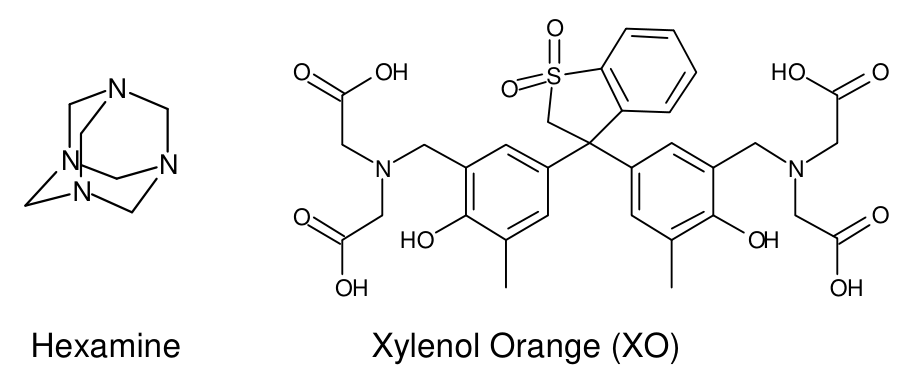
Hexamine and Xylenol Orange have the structures shown below. The \(pK_b\) of hexamine is 9.5. Xylenol Orange is red below \(pH\) 4, yellow above \(pH\) 5.
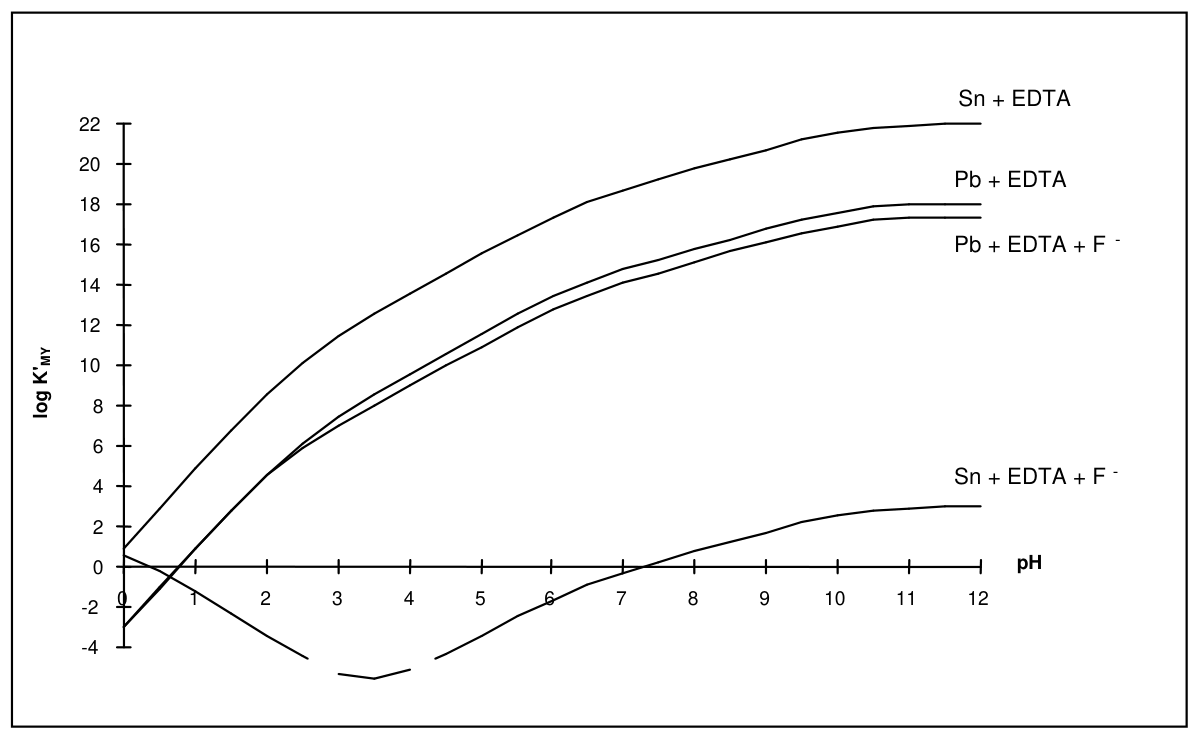
\(K'_{\mathrm{MY}}\) is the conditional formation constant \(=\alpha K_{\mathrm{MY}}\).
\(K'_{\mathrm{MY}}\) for the formation of the EDTA complexes of Pb(II) and Sn(IV), in the presence and absence of fluoride, are shown in the following Figure.
1.1 What is the lead compound that precipitates in Step 2?
1.2 Write a balanced ionic equation that explains the disappearance of the precipitate in Step 3 (at \(pH\) 6).
1.3 What is the purpose of hexamine in Step 5 of the analysis?
1.4 What is the purpose of Xylenol Orange in the analysis?
1.5 Write balanced ionic equations for the reactions occurring during the titration and responsible for the colour change at the endpoint in Step 6 of the analysis
1.6 What is the purpose of \(\ce{NaF}\) in Step 7 of the analysis?
1.7 Write a balanced ionic equation for the reaction that occurs in Step 7.
1.8 Write a balanced ionic equation that explains why the colour changed from red to yellow in Step 7 of the analysis.
1.9 Write a balanced ionic equation that explains why the lines on the graph below of \(\log K_{\mathrm{MY}}\) vs \(pH\) for \(\ce{Pb}\) + EDTA and \(\ce{Pb}\) + EDTA + \(\ce{F-}\) are coincident below \(pH\) 2.
1.10 Calculate the percentage by weight of \(\ce{Sn}\) and \(\ce{Pb}\) in the alloy.
Official English text of the problem.
-
Problem 2: Dating historical events using Pb-210; separation of radionuclides for nuclear medicine
Part A: Dating Historical Events Using Pb-210
Nathan Thompson, one of the first inhabitants of Lord Howe Island, decided to plant some European deciduous trees in his garden. Unfortunately the exact timing of the planting of the seeds is not known. Over the years, pollen produced by the European oak and elm accumulated at the bottom of the lake near Nathan’s house. Very small quantities of radioactive Pb-210 (half-life = 22.0 years) were deposited at the same time. Note that the European oak and elm trees pollinate in their first year of growth.
In 1995, a team of researchers sampled a sediment core from the bottom of the lake. The sediment core was cut into 1 cm slices and examined for pollen and radioactive Pb-210.
The examination of the sediment core found that:
- Pollen of European oak and elm first occur at a depth of 50 cm.
- The activity of Pb-210 at the top of the sediment core is 356 Bq/kg and at 50 cm depth 1.40 Bq/kg.
2.1 In what year did Nathan Thompson plant the seeds?
Radioactive Pb-210 is one of the daughters of U-238. U-238 is present in the earth’s crust and for some reason a certain amount of Pb-210 rains out of the atmosphere and attaches itself to sediment particles that accumulate at the bottom of lakes.
- The U-238 decay chain is:

* Very short half-lives: minutes and days
2.2 Which step in the decay scheme explains how Pb-210 ends up in rainwater while its parent U-238 is only present in the earth’s crust?
Part B: Separation of Radionuclides for Nuclear Medicine Applications.
The Ga-67 is used to image lymphoma. It is preferentially produced by bombarding a target enriched in Zn-68 (> 98%) with high energy protons for 11 hrs. Zn-68 has a natural abundance of 18.8%. Due to the target design other radionuclides may be produced (see Table 1). Twelve hours after the end of bombardment, Ga-67 is bound on a cation exchange. Then the other radionuclides and the Zn-68 are eluted in the wash solution leaving Ga-67 bound to the column.
Table 1
Radionuclide Half-life Co-55 18.2 hr Ni-57 36.0 hr Co-57(daughter of Ni-57) 270 days Cu-64 12.7 hr Cu-67 61.7 hr Zn-65 244 days Ga-67 78.35 hr Ga-66 9.4 hr Cu-64 and Co-55 have ideal half-lives for use in nuclear medicine applications and it would be useful to isolate them from the wash solution.
The distribution coefficient \(D\) is a measure of the partition of a metal ion between the ion-exchange resin and the eluant.
For a given ion-exchange resin and eluant, \(D\) is given by
\[ D= \frac{\text{radioactivity per mg of resin}} {\text{radioactivity per }\mathrm{cm^3}\text{ of eluant}} \]
For a reasonable separation of two metal ions their \(D\) values should differ by at least 10 units.
2.3 The wash solution is evaporated to dryness and the residue resuspended in a small amount of 0.2 M \(\ce{HCl}\) 96 % methanol and loaded onto an anion exchange column. Use the distribution coefficients \(D\) given in Figures 1 and 2 and rank the best solvent systems (from given alternatives) for eluting Cu-64 and Co-55.
2.4 Having isolated relevant radionuclides, the presence of some long-lived radionuclides could interfere with medical use of Cu-64 or Co-55 or Ga-67. Indicate which of the following statements is either true or false (one or more may be true).
a) Ni-57 may be present as a contaminant of Co-55.
b) Co-57 will interfere with the medical use of Co-55.
c) Cu-67 will interfere with the medical use of Cu-64.
d) Ga-66 will interfere with the use of Ga-67.
e) Ga-67 will interfere with the medical use of Cu-64.
2.5 If radionuclide contamination of Cu-64 or Co-55 or Ga-67 occurred, which method would reduce the amount of radionuclide contaminant/s? Indicate which of the following statements is either true or false. ( one or more may be true).
a) Remove Ni-57 before isolating Co-55.
b) Separate the Ni-57 from the bombarded target material before isolating the Ga-67.
c) Separate the radionuclides closer to the end of bombardment.
d) Allow the Ni-57 to decay before isolation of Co-55.
2.6 If zinc of natural isotopic abundance, instead of enriched Zn-68, was bombarded with high energy protons, indicate which of the following statements is either true or false. (one or more may be true).
a) Ga-67 would be produced at 5 fold higher yields.
b) Ga-67 would be produced at 5 fold lower yields.
c) Ga-67 would be produced at lower yields and contamination of Cu-64, Co-55, Co-57, Ni-57 would increase.
d) Ga-67 would be produced at lower yields and contamination of Cu-64, Co-55, Co-57, Ni-57 would remain the same.
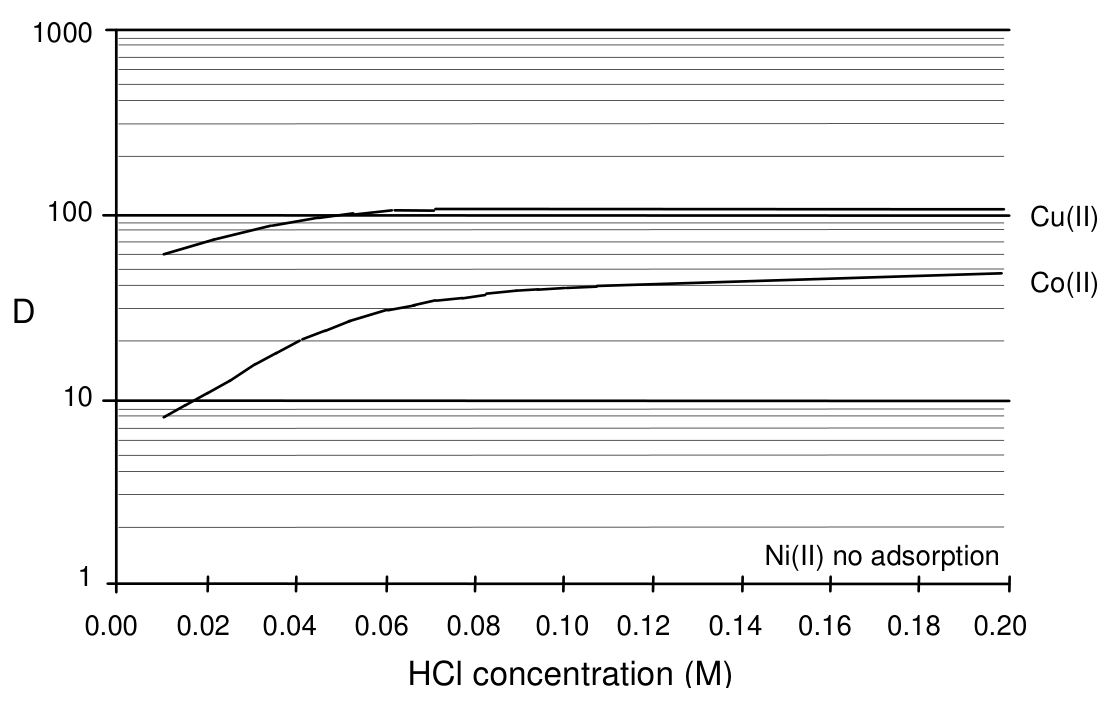
Figure 1. Distribution coefficients, \(D\) of metal ions between anion exchange resin and 96 % methanol at varying \(\ce{HCl}\) concentrations. (note \(D\) value for \(\ce{Zn}\) > 1000)
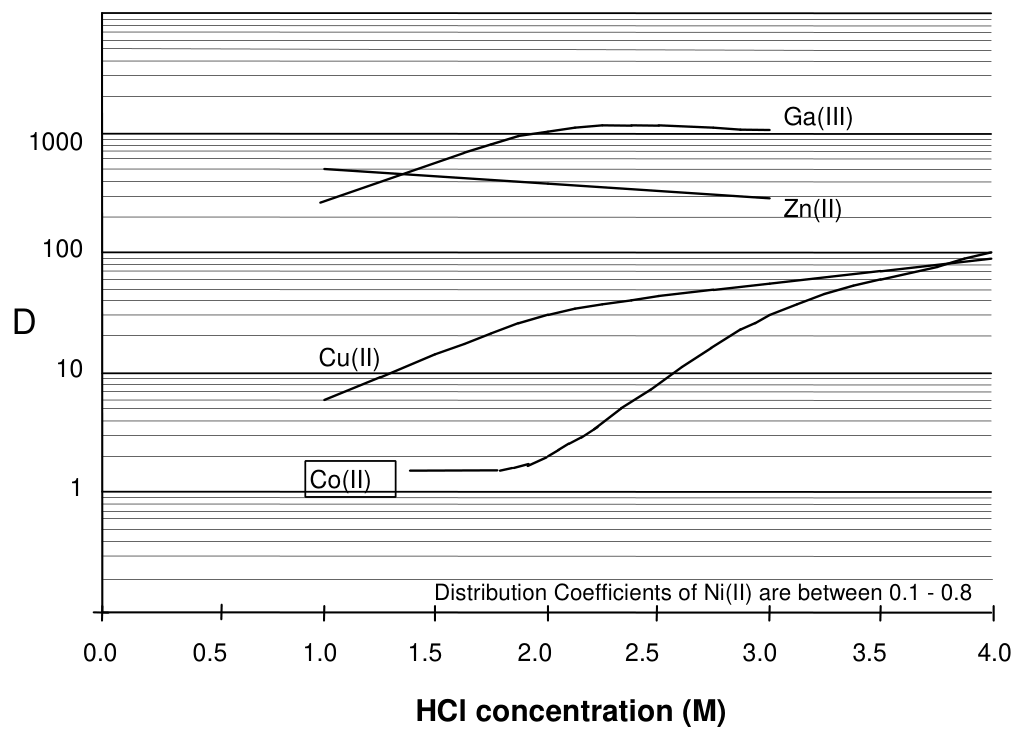
Figure 2. Distribution coefficients, \(D\) of metal ions between anion exchange resin and 55 % isopropyl alcohol at varying \(\ce{HCl}\) concentrations.
Official English text of the problem.
Problem 3: Angle strain, hybridization and fullerenes
The three-dimensional structures of polycyclic molecules can often be explained in terms of the minimisation of angle strain. Consider the following molecules:
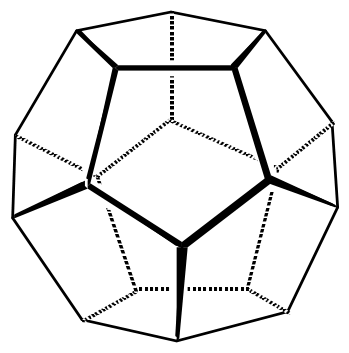
Dodecahedrane, \(\ce{C20H20}\)
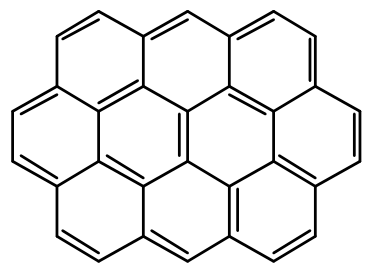
and Ovalene, \(\ce{C32H14}\).
Each \(\ce{C5}\) ring of dodecahedrane is a regular pentagon, while each \(\ce{C6}\) ring of ovalene can be regarded as a regular hexagon.
3.1 What are the \(\angle(\mathrm{CCC})\) angles for each of these rings?
3.2 Which configuration (trigonal planar, \(120^\circ\); tetrahedral, \(109.5^\circ\); or octahedral, \(90^\circ\)) do the above \(\angle(\mathrm{CCC})\) angles most closely match?
3.3 What is the hybridization (\(sp\), \(sp^2\), or \(sp^3\)) which most closely conforms to the geometric structure of dodecahedrane, and of ovalene?
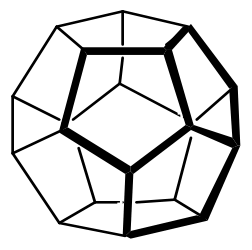
A “juncture” is defined here to mean any 3-ring system, sharing a common central carbon atom, within a molecule. Compare the junctures (shown in bold) of three pentagons within dodecahedrane:
and of three hexagons within ovalene:
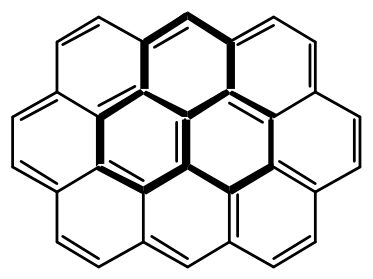
Consider an axis passing through the central carbon atom of each juncture such that the angle the axis forms with all three \(\ce{C-C}\) bonds radiating from this \(\ce{C}\) atom is identical.
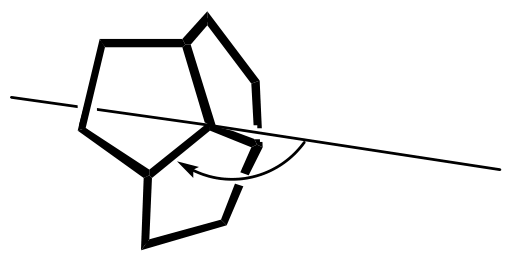
3.4 What is the value of this angle for dodecahedrane (make an “educated guess”, to the nearest three degrees), and for ovalene?
3.5 Subtracting \(90^\circ\) from each of the above angles describes the deviation from planarity for each juncture. Which juncture is planar?
Now consider two polycyclic 'alkenes', dodecahedrene (\(\ce{C20H18}\)):
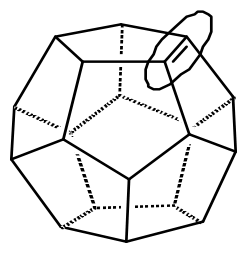
and ovalene:
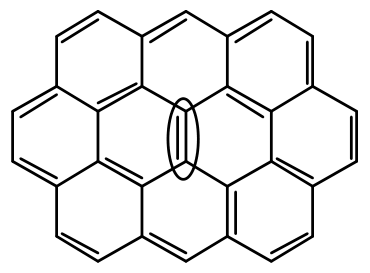
Assume that the molecular framework is rigid and is not significantly distorted by \(\ce{H2}\) addition to the (indicated) double bond on each structure. Assume also that all double bonds are localized in assessing these systems.
3.6 Compare the indicated pairs of carbon atoms (encircled above). For which \(\ce{C=C}\) pair is \(\ce{H2}\) addition expected to be more exothermic?
And now, on to fullerenes. For all known fullerenes, the deviation from planarity at any juncture is less than is the case for dodecadedrane.
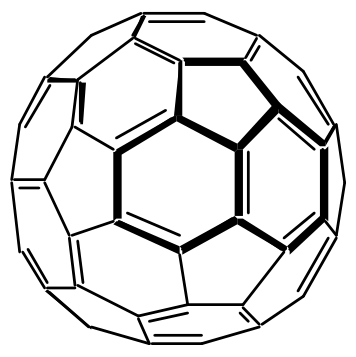
For \(\ce{C60}\), all junctures are entirely equivalent. Now consider \(\ce{H2}\) addition at a \(\ce{C=C}\) bond of \(\ce{C60}\):
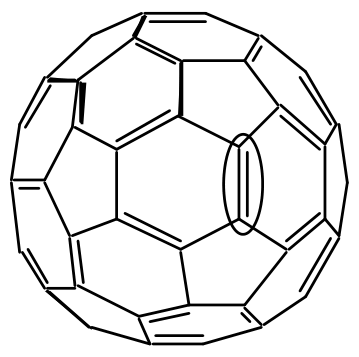
3.7 For which of \(\ce{C60}\), dodecahedrene, or ovalene is \(\ce{H2}\) addition most exothermic?
(Again, assume localization of double bonds.)3.8 For which of \(\ce{C60}\), dodecahedrene, or ovalene is \(\ce{H2}\) addition least exothermic?
There is evidence for fullerenes smaller than \(\ce{C60}\), such as \(\ce{C58}\). The \(\ce{C58}\) structure (ignoring any distinction between 'double' and 'single' bonds) is shown below:
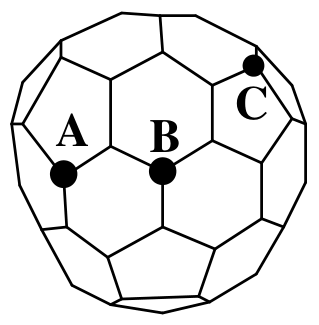
The junctures centred on atoms A, B and C on the above structure can be redrawn for greater clarity:
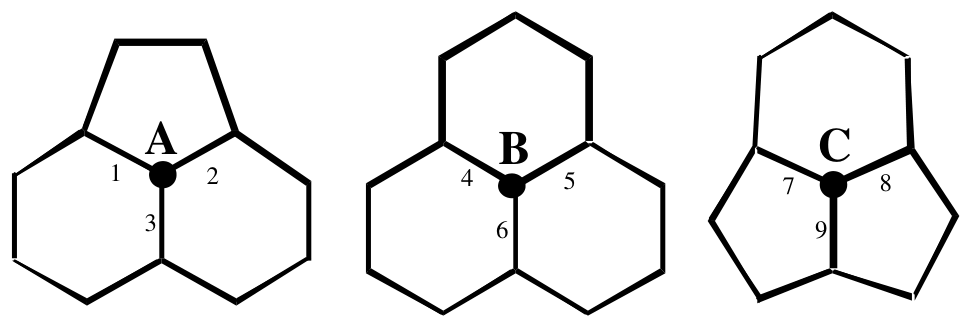
3.9 Which juncture has the least deviation from planarity?
3.10 Which juncture has the greatest deviation from planarity?
3.11 Of the above carbon-carbon bonds, numbered from 1 to 9, which represents the most favourable site for \(\ce{H2}\) addition?
Finally, consider a larger fullerene, \(\ce{C180}\):
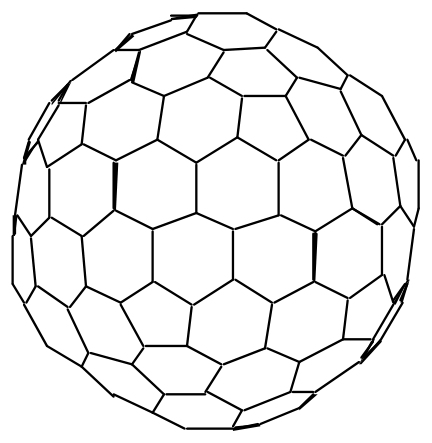
To a first approximation, both \(\ce{C60}\) and \(\ce{C180}\) are "perfect" spheres.
3.12 Which has the larger average deviation from planarity at each juncture? \(\ce{C60}\) or \(\ce{C180}\)?
3.13 Compare the geometries of \(\ce{C60}\) and \(\ce{C180}\), and graphite. Which of the statements shown on the answer sheet (concerning enthalpies of formation, in \(\mathrm{kJ\,g^{-1}}\) units) is correct?
Fullerenes are generated on a very rapid timescale, typically milliseconds. In all techniques, C60 is produced in much greater quantities than C180.
3.14 Which of the graphs shown on the answer template best represents the dependence of potential energy upon reaction progress for the two processes:
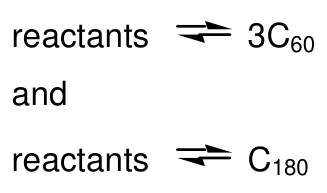
Official English text of the problem.
Problem 4: Molecular orbitals of ozone and the Walsh diagram
When two hydrogen atoms come together, the 1s atomic orbitals combine to form bonding and anti-bonding molecular orbitals:
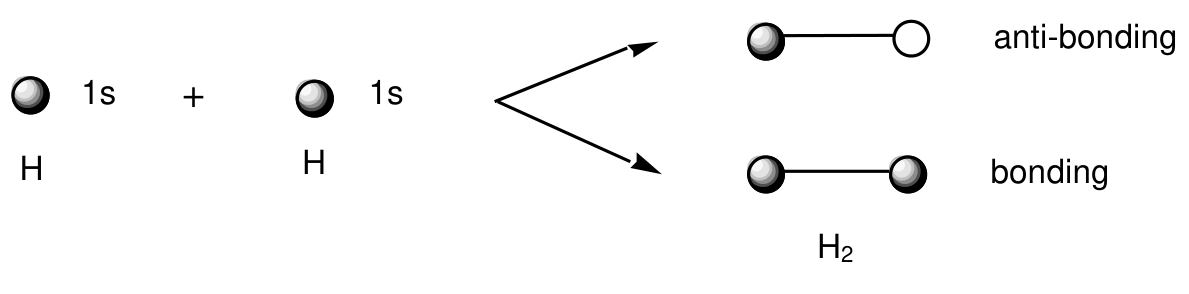
In a similar way, we may combine the atomic orbitals of more complicated atoms to form molecular orbitals, taking into account the symmetry of the molecule.
Consider the ozone molecule, \(\ce{O3}\), which is shaped like an Australian boomerang. We can arrange the oxygens as follows (in the \(yz\) plane) and assume that there are \(1s\), \(2s\), \(2p_x\), \(2p_y\) and \(2p_z\) orbitals on each atom.

The atoms \(\ce{O}_{a}\) and \(\ce{O}_{c}\) are "related by symmetry" and the 1s orbitals on these atoms form symmetric and anti-symmetric combinations:
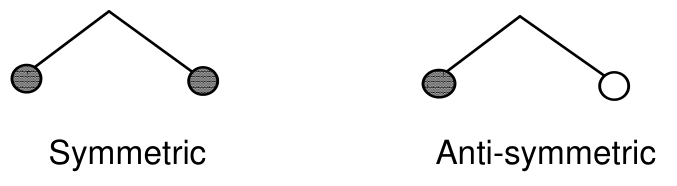
In this molecule the 1s atomic orbital on \(\ce{O}_{b}\) is classified as symmetric. It can combine with the symmetric combination of \(\ce{O}_{a}\) and \(\ce{O}_{c}\) given above (but not with the anti-symmetric combination) to form bonding and anti-bonding molecular orbitals. The anti-symmetric combination is non-bonding. The final three molecular orbitals are:
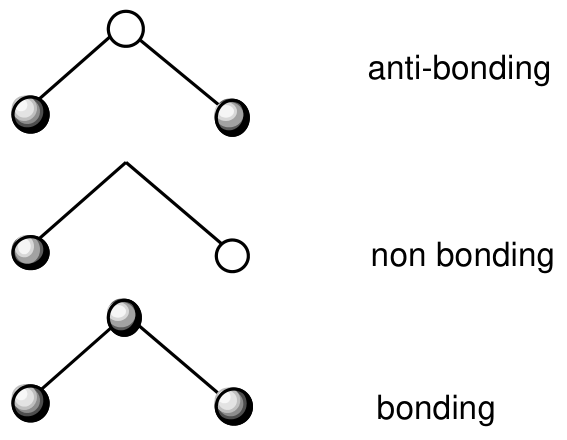
4.1 On the answer sheet, use a similar approach to construct the molecular orbitals arising from the separate interaction of the \(2s\), \(2p_x\), \(2p_y\), and \(2p_z\) atomic orbitals. (Remember to form the symmetric and anti-symmetric combinations of \(\ce{O}_{a}\) and \(\ce{O}_{c}\) first.)
We may now rearrange these molecular orbitals in order of increasing energy. This can be generalised to other triatomic molecules. The energy of these orbitals is different in a bent triatomic molecule (like ozone) compared to a linear molecule (like carbon dioxide). The variation in orbital energy may be represented in a "Walsh diagram" for \(\ce{XY2}\) molecules as shown on the answer sheet. It shows a plot of the energy of each orbital versus the \(\ce{Y-X-Y}\) bond angle. The orbitals have been given labels which we call “symmetry labels”.
The \(6a_1\) orbital referred to in the Walsh diagram is shown below.
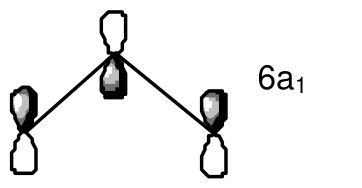
4.2 Why does the energy of the \(6a_1\) orbital increase so rapidly as the bond angle changes from \(90^\circ\) to \(180^\circ\)?
Only occupied molecular orbitals affect the geometry, and a doubly occupied orbital has more influence than a singly occupied orbital. For example, \(\ce{O3}\) has 24 electrons and so at a bond angle of \(135^\circ\) the orbitals are doubly occupied up to \(6a_1\). Thus, the lowest-energy geometry of ozone (taking into account steric repulsion and the contrasting energy behaviour of the \(4b_2\), \(1a_2\) and \(6a_1\) orbitals) is probably towards the left of the Walsh diagram, which is consistent with the observed bond angle of \(116^\circ\).
4.3 At a bond angle of \(135^\circ\), what are the highest occupied orbitals for the molecules \(\ce{BO2}\), \(\ce{CO2}\), \(\ce{NO2}\) and \(\ce{FO2}\)?
4.4 The bond angles of \(\ce{BO2}\), \(\ce{CO2}\) and \(\ce{O3}\) are known experimentally to be \(180^\circ\), \(180^\circ\) and \(116^\circ\), respectively. Use the Walsh diagram on the answer sheet to predict whether \(\ce{NO2}\) and \(\ce{FO2}\) are more or less bent than \(\ce{O3}\).
Official English text of the problem.
Problem 5: Cyanide extraction of gold
Metallic gold frequently is found in aluminosilicate rocks and it is finely dispersed among other minerals. It may be extracted by treating the crushed rock with aerated sodium cyanide solution. During this process metallic gold is slowly converted to \(\ce{[Au(CN)2]-}\), which is soluble in water (reaction 1).
After equilibrium has been reached, the aqueous phase is pumped off and the metallic gold is recovered from it by reacting the gold complex with zinc, which is converted to \(\ce{[Zn(CN)4]^2-}\) (reaction 2).
5.1 Write balanced ionic equations for reactions (1) and (2).
Gold in nature is frequently alloyed with silver which is also oxidized by aerated sodium cyanide solution.
5.2 Five hundred litres (500 L) of a solution 0.0100 M in \(\ce{[Au(CN)2]-}\) and 0.0030 M in \(\ce{[Ag(CN)2]-}\) was evaporated to one third of the original volume and was treated with zinc (40 g). Assuming that deviation from standard conditions is unimportant and that all these redox reactions go essentially to completion, calculate the concentrations of \(\ce{[Au(CN)2]-}\) and of \(\ce{[Ag(CN)2]-}\) after reaction has ceased.
\(\ce{[Zn(CN)4]^2- + 2e- -> Zn + 4CN-}\) \(E^\circ=-1.26\ \mathrm{V}\) \(\ce{[Au(CN)2]- + e- -> Au + 2CN-}\) \(E^\circ=-0.60\ \mathrm{V}\) \(\ce{[Ag(CN)2]- + e- -> Ag + 2CN-}\) \(E^\circ=-0.31\ \mathrm{V}\) 5.3 \(\ce{[Au(CN)2]-}\) is a very stable complex under certain conditions. What concentration of sodium cyanide is required to keep 99 mol% of the gold in solution in the form of the cyanide complex? \(\{\ce{[Au(CN)2]-}:K_f=4\times10^{28}\}\)
5.4 There have been several efforts to develop alternative gold extraction processes which could replace this one. Why? Choose one of the options on the answer sheet.
Official English text of the problem.
Problem 6: Tin(IV) halide complexes: geometry, electrospray MS and 119Sn NMR
Unlike carbon, tin can increase its coordination number beyond four. Like carbon, tin forms a chloride, \(\ce{SnCl4}\).
6.1 Draw two alternative geometries for \(\ce{SnCl4}\).
Lewis acids such as \(\ce{SnCl4}\) react with Lewis bases such as chloride ion or amines. In the case of chloride the following two reactions are observed.
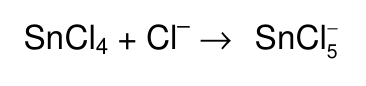
and
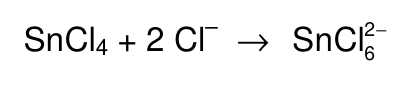
6.2 Draw three alternative geometries for \(\ce{SnCl5^-}\).
6.3 Use Valence Shell Electron Pair Repulsion (VSEPR) theory to predict which geometry is likely to be preferred for \(\ce{SnCl5^-}\).
6.4 Draw three alternative geometries for \(\ce{SnCl6^2-}\).
6.5 Use VSEPR theory to predict which of these geometries is likely to be preferred for \(\ce{SnCl6^2-}\).
A solution containing \(\ce{SnCl6^2-}\) (as the tetrabutylammonium salt) was examined by negative ion electrospray mass spectrometry (ESMS). The spectrum contains a single peak at \(m/z = 295\).
You may assume that the only isotopes observed in this species are \(\ce{^{120}Sn}\) and \(\ce{^{35}Cl}\).
6.6 Write the empirical formula for the tin-containing species detected by this technique.
A solution containing \(\ce{SnBr6^2-}\) (as the tetrabutylammonium salt) was examined by negative ion electrospray mass spectrometry (ESMS). The spectrum contains a single peak at \(m/z=515\).
You may assume that the only isotopes observed in this species are \(\ce{^{120}Sn}\) and \(\ce{^{79}Br}\).
6.7 Write the formula for the tin-containing species detected by this technique.
The ESMS spectrum of a solution made by mixing equimolar amounts of \(\ce{SnCl6^2-}\) and \(\ce{SnBr6^2-}\) (as tetrabutylammonium salts) shows six major species (Fig. 1).
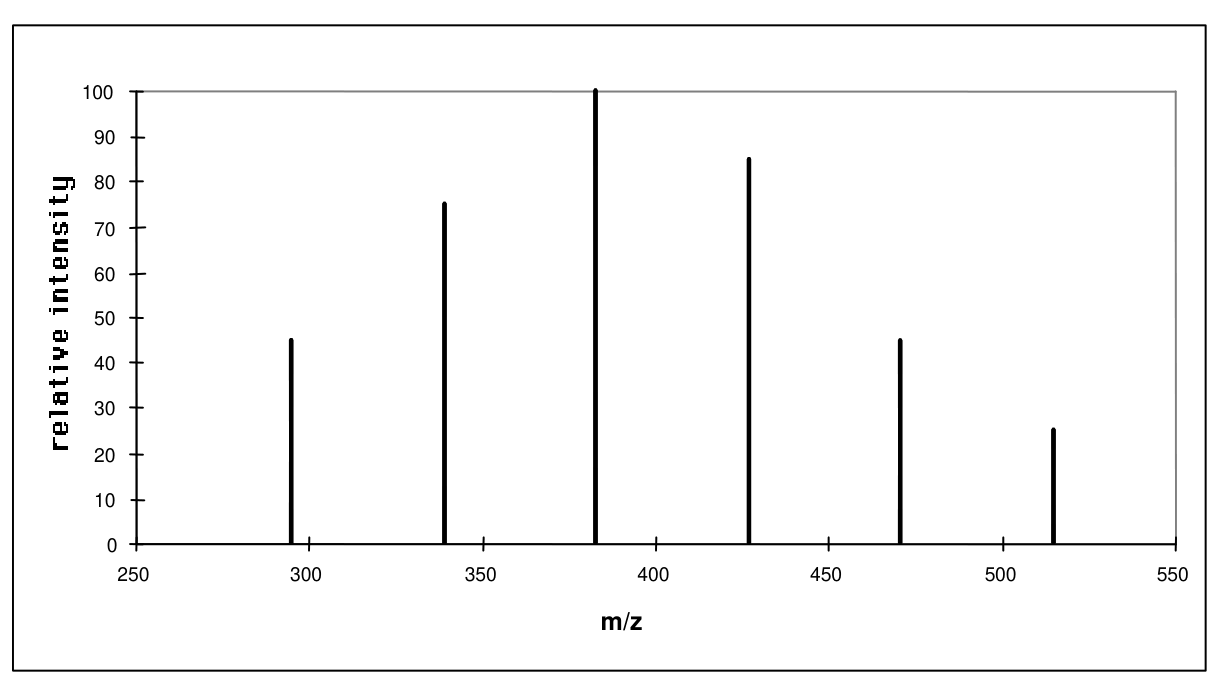
Fig. 1
6.8 Write the empirical formula for each of the four new species.
\(\ce{^{1}H}\) and \(\ce{^{13}C}\) NMR spectroscopy of molecules enable detection of a separate signal for each proton and \(\ce{^{13}C}\) nucleus which is in a different environment. These signals are recorded on dimensionless parts per million (ppm) scale relative to some agreed standard reference compound. Similarly, \(\ce{^{119}Sn}\) NMR gives a signal for each tin atom which is in a different environment.
The \(\ce{^{119}Sn}\) NMR spectrum of a solution of \(\ce{SnCl6^2-}\) (as the tetrabutylammonium salt) contains only one signal which occurs at \(-732\) ppm (relative to tetramethyltin, \(\ce{Me4Sn}\)). The \(\ce{^{119}Sn}\) NMR spectrum of a solution of \(\ce{SnBr6^2-}\) (as the tetrabutylammonium salt) occurs at \(2064\) ppm. The \(\ce{^{119}Sn}\) NMR spectrum at \(60~^\circ\mathrm{C}\) of a solution formed by mixing equimolar amounts of \(\ce{SnCl6^2-}\) and \(\ce{SnBr6^2-}\) contains seven peaks (Fig. 2).
6.9 Write the empirical formula for the tin-containing species in this mixture that give rise to the peaks listed on the answer template.
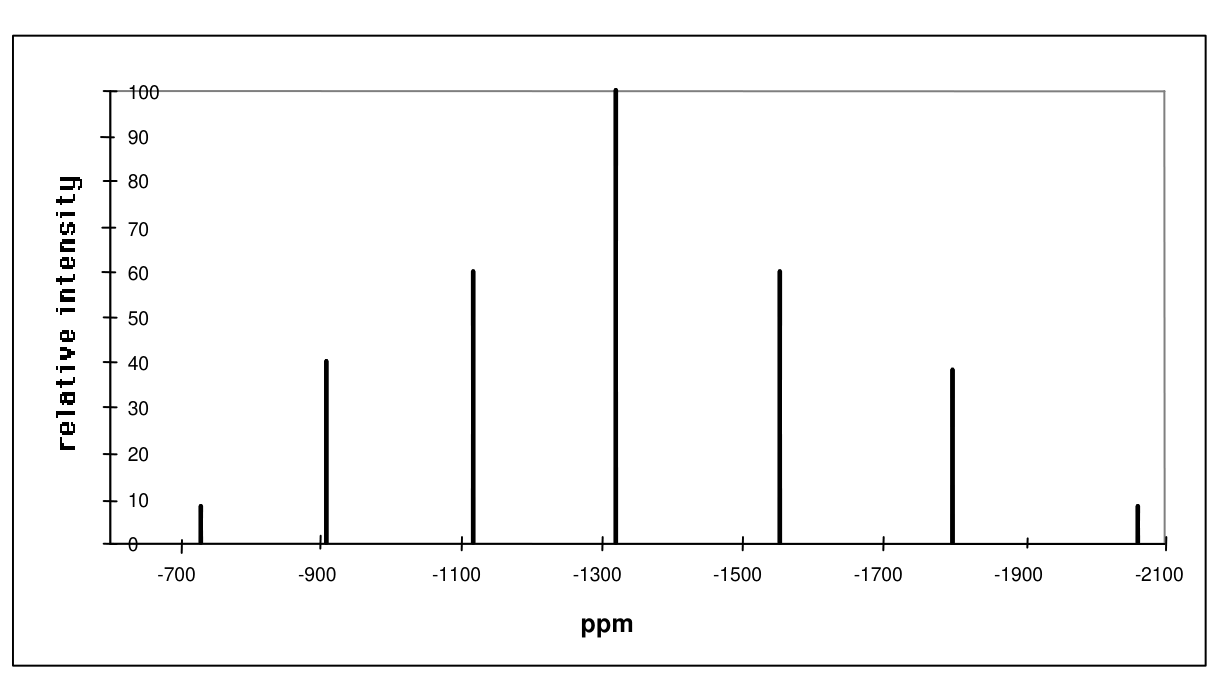
Fig. 2
Cooling the solution causes a change to this \(\ce{^{119}Sn}\) NMR spectrum and at \(-30~^\circ\mathrm{C}\) ten peaks are observed (Fig. 3).
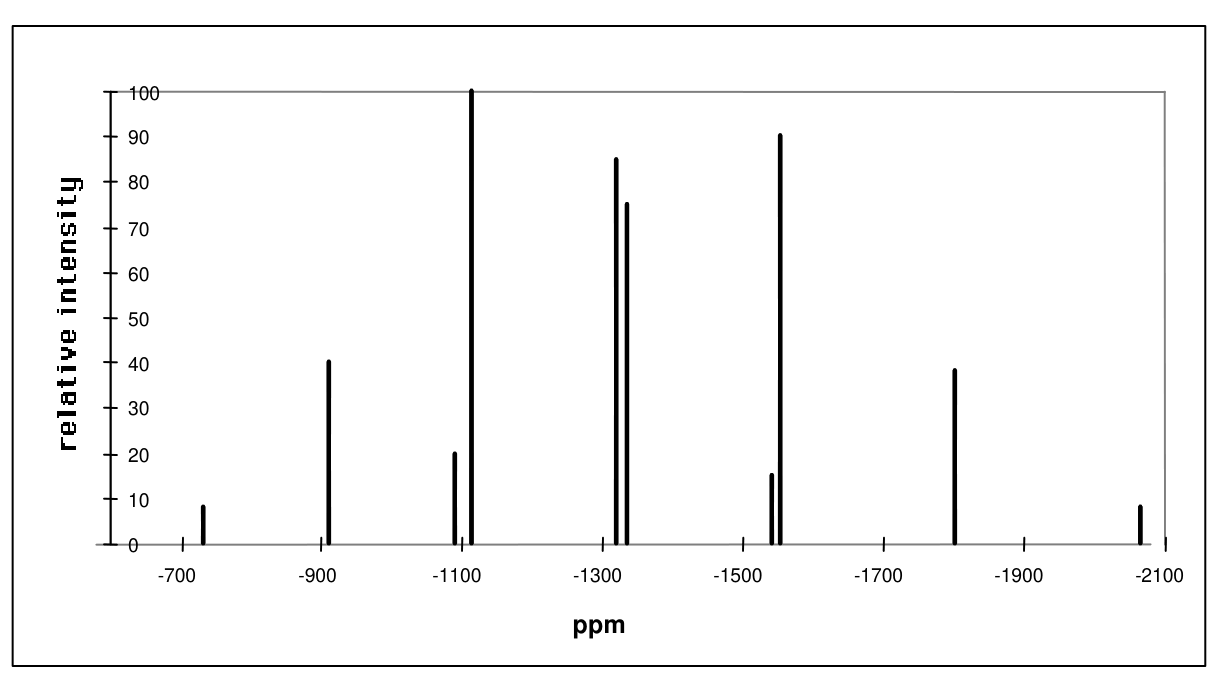
Fig. 3
6.10 Draw the geometry for the four tin-containing species present in this solution at \(-30~^\circ\mathrm{C}\) that give rise to the peaks at \(-1092\) and \(-1115\), \(-1322\) and \(-1336\) ppm.
Official English text of the problem.
Problem 7: Aromatic lactones of Aspergillus nidulans and a synthesis of D
The structures needed to read this question are shown in the answer template.
The fungus Aspergillus nidulans produces two isomeric aromatic lactones (cyclic esters) A and B (\(\ce{C10H10O4}\)) each of which dissolved in cold aqueous \(\ce{NaOH}\) but not in aqueous \(\ce{NaHCO3}\). Both A and B gave a violet colour with aqueous \(\ce{FeCl3}\). Reaction of A with \(\ce{CH3I}\) in the presence of \(\ce{K2CO3}\) gave C (\(\ce{C11H12O4}\)) which was shown by \({}^{1}\mathrm{H}\) NMR spectroscopy to contain three non-identical methyl groups one of which was bonded directly to an aromatic ring. Selective demethylation of C with \(\ce{BCl3}\) followed by aqueous work up gave D a new isomer of A. The \({}^{1}\mathrm{H}\) NMR spectrum of compound D clearly showed the presence of an intramolecularly hydrogen bonded hydroxyl group at \(\delta\) 11.8 ppm.
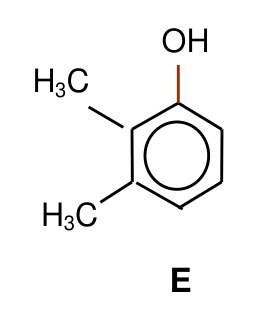
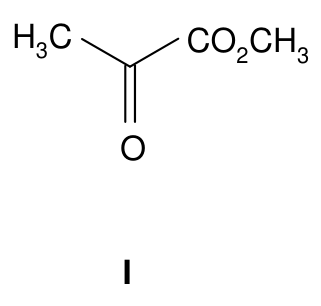
Compound D was synthesised as follows: The phenol E was methylated (\(\ce{MeI/K2CO3}\)) to afford F (\(\ce{C9H12O2}\)) which in turn was reduced with lithium metal in liquid ammonia and 2-methyl-propan-2-ol to give the symmetrical unconjugated diene G. Conjugation of this diene was achieved by reaction with \(\ce{KNH2}\) in liquid ammonia followed by aqueous work up, a process which afforded only one product H. Ozonolysis of H followed by non reductive work up afforded amongst other products the ketoester I.
Compound H underwent a Diels-Alder reaction with dimethyl but-2-ynedioate J to give the adduct K (\(\ce{C15H20O6}\)) which upon heating expelled ethene to afford an aromatic ester L. Basic hydrolysis of L followed by acidification of the solution gave M (\(\ce{C11H12O6}\)) which when heated under vacuum yielded N (\(\ce{C11H10O5}\)). Reduction of N with \(\ce{NaBH4}\) in dimethylformamide gave C and an isomeric lactone O which could also be obtained by the methylation of B.
7.1 Using the answer template provided fill in the structures A to O.
7.2 Using the last space on the answer template provide a second structure for B.
Official English text of the problem.
Internationale Chemie-Olympiade
IChO 1998
Melbourne, Australien · 7 Theorieaufgaben mit vollständigen Lösungen
Aufgabe 1: EDTA-Titration von Zinn und Blei in einer Legierung
Die folgenden 8 Schritte beschreiben das Verfahren zur Analyse einer Legierungsprobe, die sowohl Zinn als auch Blei enthält.
-
Eine Legierungsprobe von 0.4062 g wurde durch Erhitzen in einem kleinen Becherglas mit einem Gemisch aus 11 M Salzsäure und 16 M Salpetersäure gelöst. Das Becherglas wurde erhitzt, bis sich die gesamte Legierung aufgelöst hatte. Bei diesem Verfahren wird Blei zu Pb(II) oxidiert, und Zinn geht in Sn(IV) über.
-
Nach 5 Minuten Erhitzen zum Austreiben von Stickstoffoxiden und Chlor war noch etwas Säure vorhanden. Beim Abkühlen der Lösung bildete sich ein Niederschlag aus einigen Zinnverbindungen und einer Bleiverbindung.
-
Ein Aliquot von 25.00 \(\mathrm{cm^3}\) einer 0.2000 M \(\ce{Na2H2EDTA}\)-Lösung wurde zugegeben. Der Niederschlag löste sich auf, und es entstand eine klare, farblose Lösung.
-
Diese Lösung wurde quantitativ in einen 250.0-\(\mathrm{cm^3}\)-Messkolben überführt und mit destilliertem Wasser bis zur Marke aufgefüllt.
-
Ein Aliquot von 25.00 \(\mathrm{cm^3}\) dieser Lösung wurde mit 15 \(\mathrm{cm^3}\) einer 30%igen (m/V) Lösung von Hexamin (Hexamethylentetramin), etwas Wasser und zwei Tropfen Xylenolorange-Lösung versetzt. Der pH-Wert jedes Aliquots betrug 6.
-
Die klare, gelbe Lösung aus Schritt 5 wurde mit einer 0.009970 M Bleinitrat-Maßlösung titriert, bis die Farbe gerade von Gelb nach Rot umschlug. Der Verbrauch bis zu diesem Endpunkt betrug 24.05 \(\mathrm{cm^3}\).
-
In den Titrierkolben wurden 2.0 g festes \(\ce{NaF}\) gegeben. Die Lösung wurde wieder gelb.
-
Die Lösung wurde mit weiterer 0.009970 M Bleinitrat-Maßlösung titriert, bis die Farbe erneut nach Rot umschlug. Der Verbrauch bis zu diesem Endpunkt betrug 15.00 \(\mathrm{cm^3}\).
Hexamin und Xylenolorange haben die unten gezeigten Strukturen. Der \(pK_b\) von Hexamin beträgt 9.5. Xylenolorange ist unterhalb von \(pH\) 4 rot und oberhalb von \(pH\) 5 gelb.
\(K'_{\mathrm{MY}}\) ist die bedingte Bildungskonstante \(=\alpha K_{\mathrm{MY}}\).
Die Werte von \(K'_{\mathrm{MY}}\) für die Bildung der EDTA-Komplexe von Pb(II) und Sn(IV) in Gegenwart und Abwesenheit von Fluorid sind in der folgenden Abbildung dargestellt.
1.1 Welche Bleiverbindung fällt in Schritt 2 aus?
1.2 Geben Sie eine ausgeglichene Ionengleichung an, die das Verschwinden des Niederschlags in Schritt 3 (bei \(pH\) 6) erklärt.
1.3 Welchen Zweck erfüllt Hexamin in Schritt 5 der Analyse?
1.4 Welchen Zweck erfüllt Xylenolorange bei der Analyse?
1.5 Geben Sie ausgeglichene Ionengleichungen für die Reaktionen an, die während der Titration ablaufen und für den Farbumschlag am Endpunkt in Schritt 6 der Analyse verantwortlich sind
1.6 Welchen Zweck erfüllt \(\ce{NaF}\) in Schritt 7 der Analyse?
1.7 Geben Sie eine ausgeglichene Ionengleichung für die Reaktion an, die in Schritt 7 abläuft.
1.8 Geben Sie eine ausgeglichene Ionengleichung an, die erklärt, warum die Farbe in Schritt 7 der Analyse von Rot nach Gelb umschlug.
1.9 Geben Sie eine ausgeglichene Ionengleichung an, die erklärt, warum die Kurven für \(\ce{Pb}\) + EDTA und \(\ce{Pb}\) + EDTA + \(\ce{F-}\) im unten stehenden Diagramm von \(\log K_{\mathrm{MY}}\) gegen \(pH\) unterhalb von \(pH\) 2 zusammenfallen.
1.10 Berechnen Sie die Massenanteile von \(\ce{Sn}\) und \(\ce{Pb}\) in der Legierung in Prozent.
Aufgabentext aus dem offiziellen englischen Text übersetzt.
-
Aufgabe 2: Datierung historischer Ereignisse mit Pb-210; Trennung von Radionukliden für die Nuklearmedizin
Teil A: Datierung historischer Ereignisse mit Pb-210
Nathan Thompson, einer der ersten Bewohner der Lord-Howe-Insel, beschloss, einige europäische Laubbäume in seinem Garten anzupflanzen. Leider ist der genaue Zeitpunkt der Aussaat nicht bekannt. Im Laufe der Jahre sammelten sich am Grund des Sees in der Nähe von Nathans Haus Pollen europäischer Eichen und Ulmen an. Gleichzeitig wurden sehr geringe Mengen an radioaktivem Pb-210 (Halbwertszeit = 22.0 Jahre) abgelagert. Beachten Sie, dass europäische Eichen und Ulmen bereits in ihrem ersten Wachstumsjahr Pollen abgeben.
Im Jahr 1995 entnahm ein Forschungsteam einen Sedimentkern vom Grund des Sees. Der Sedimentkern wurde in 1 cm dicke Scheiben geschnitten und auf Pollen und radioaktives Pb-210 untersucht.
Die Untersuchung des Sedimentkerns ergab Folgendes:
- Pollen europäischer Eichen und Ulmen treten erstmals in einer Tiefe von 50 cm auf.
- Die Aktivität von Pb-210 beträgt am oberen Ende des Sedimentkerns 356 Bq/kg und in 50 cm Tiefe 1.40 Bq/kg.
2.1 In welchem Jahr säte Nathan Thompson die Samen aus?
Radioaktives Pb-210 ist eines der Tochternuklide von U-238. U-238 kommt in der Erdkruste vor, und aus irgendeinem Grund wird eine gewisse Menge Pb-210 mit dem Regen aus der Atmosphäre ausgewaschen und lagert sich an Sedimentpartikel an, die sich am Grund von Seen ansammeln.
- Die Zerfallsreihe von U-238 lautet:
* Sehr kurze Halbwertszeiten: Minuten und Tage
2.2 Welcher Schritt im Zerfallsschema erklärt, wie Pb-210 ins Regenwasser gelangt, obwohl sein Mutternuklid U-238 nur in der Erdkruste vorkommt?
Teil B: Trennung von Radionukliden für nuklearmedizinische Anwendungen.
Ga-67 wird zur bildgebenden Diagnostik von Lymphomen verwendet. Es wird vorzugsweise hergestellt, indem ein an Zn-68 angereichertes Target (> 98%) 11 Stunden lang mit hochenergetischen Protonen beschossen wird. Zn-68 hat eine natürliche Isotopenhäufigkeit von 18.8%. Aufgrund des Targetaufbaus können weitere Radionuklide entstehen (siehe Tabelle 1). Zwölf Stunden nach dem Ende des Beschusses wird Ga-67 an einem Kationenaustauscher gebunden. Anschließend werden die übrigen Radionuklide und das Zn-68 mit der Waschlösung eluiert, während Ga-67 an der Säule gebunden bleibt.
Tabelle 1
Radionuklid Halbwertszeit Co-55 18.2 h Ni-57 36.0 h Co-57(Tochternuklid von Ni-57) 270 Tage Cu-64 12.7 h Cu-67 61.7 h Zn-65 244 Tage Ga-67 78.35 h Ga-66 9.4 h Cu-64 und Co-55 besitzen ideale Halbwertszeiten für nuklearmedizinische Anwendungen, und es wäre nützlich, sie aus der Waschlösung zu isolieren.
Der Verteilungskoeffizient \(D\) ist ein Maß für die Verteilung eines Metallions zwischen dem Ionenaustauscherharz und dem Elutionsmittel.
Für ein gegebenes Ionenaustauscherharz und Elutionsmittel ist \(D\) gegeben durch
\[ D= \frac{\text{Radioaktivität pro mg Harz}} {\text{Radioaktivität pro }\mathrm{cm^3}\text{ Elutionsmittel}} \]
Für eine hinreichende Trennung zweier Metallionen sollten sich ihre \(D\)-Werte um mindestens 10 Einheiten unterscheiden.
2.3 Die Waschlösung wird zur Trockne eingedampft und der Rückstand in einer kleinen Menge 0.2 M \(\ce{HCl}\) in 96 % Methanol resuspendiert und auf eine Anionenaustauschersäule aufgetragen. Verwenden Sie die in den Abbildungen 1 und 2 angegebenen Verteilungskoeffizienten \(D\) und ordnen Sie die besten Lösungsmittelsysteme (aus den gegebenen Alternativen) zur Elution von Cu-64 und Co-55 nach ihrer Eignung.
2.4 Nach der Isolierung der relevanten Radionuklide könnte die Anwesenheit einiger langlebiger Radionuklide die medizinische Verwendung von Cu-64, Co-55 oder Ga-67 beeinträchtigen. Geben Sie für jede der folgenden Aussagen an, ob sie richtig oder falsch ist (eine oder mehrere können richtig sein).
a) Ni-57 kann als Verunreinigung von Co-55 vorliegen.
b) Co-57 beeinträchtigt die medizinische Verwendung von Co-55.
c) Cu-67 beeinträchtigt die medizinische Verwendung von Cu-64.
d) Ga-66 beeinträchtigt die Verwendung von Ga-67.
e) Ga-67 beeinträchtigt die medizinische Verwendung von Cu-64.
2.5 Falls Cu-64, Co-55 oder Ga-67 durch Radionuklide verunreinigt wären, mit welcher Methode ließe sich die Menge der verunreinigenden Radionuklide verringern? Geben Sie für jede der folgenden Aussagen an, ob sie richtig oder falsch ist. (Eine oder mehrere können richtig sein.)
a) Ni-57 vor der Isolierung von Co-55 entfernen.
b) Ni-57 vor der Isolierung von Ga-67 vom beschossenen Targetmaterial abtrennen.
c) Die Radionuklide zeitlich näher am Ende des Beschusses trennen.
d) Ni-57 vor der Isolierung von Co-55 zerfallen lassen.
2.6 Wenn Zink mit natürlicher Isotopenhäufigkeit anstelle von angereichertem Zn-68 mit hochenergetischen Protonen beschossen würde, geben Sie für jede der folgenden Aussagen an, ob sie richtig oder falsch ist. (Eine oder mehrere können richtig sein.)
a) Ga-67 würde mit einer fünfmal höheren Ausbeute erzeugt.
b) Ga-67 würde mit einer fünfmal niedrigeren Ausbeute erzeugt.
c) Ga-67 würde mit einer niedrigeren Ausbeute erzeugt, und die Verunreinigung durch Cu-64, Co-55, Co-57 und Ni-57 würde zunehmen.
d) Ga-67 würde mit einer niedrigeren Ausbeute erzeugt, und die Verunreinigung durch Cu-64, Co-55, Co-57 und Ni-57 bliebe gleich.
Abbildung 1. Verteilungskoeffizienten \(D\) von Metallionen zwischen Anionenaustauscherharz und 96 % Methanol bei unterschiedlichen \(\ce{HCl}\)-Konzentrationen. (Beachten Sie: \(D\)-Wert für \(\ce{Zn}\) > 1000)
Abbildung 2. Verteilungskoeffizienten \(D\) von Metallionen zwischen Anionenaustauscherharz und 55 % Isopropanol bei unterschiedlichen \(\ce{HCl}\)-Konzentrationen.
Aufgabentext aus dem offiziellen englischen Text übersetzt.
Aufgabe 3: Winkelspannung, Hybridisierung und Fullerene
Die dreidimensionalen Strukturen polycyclischer Moleküle lassen sich häufig durch die Minimierung der Winkelspannung erklären. Betrachten Sie die folgenden Moleküle:
Dodecahedran, \(\ce{C20H20}\)
und Ovalen, \(\ce{C32H14}\).
Jeder \(\ce{C5}\)-Ring des Dodecahedrans ist ein regelmäßiges Fünfeck, während jeder \(\ce{C6}\)-Ring des Ovalens als regelmäßiges Sechseck betrachtet werden kann.
3.1 Wie groß sind die \(\angle(\mathrm{CCC})\)-Winkel in diesen beiden Ringarten?
3.2 Welcher Konfiguration (trigonal-planar, \(120^\circ\); tetraedrisch, \(109.5^\circ\); oder oktaedrisch, \(90^\circ\)) entsprechen die obigen \(\angle(\mathrm{CCC})\)-Winkel am ehesten?
3.3 Welche Hybridisierung (\(sp\), \(sp^2\) oder \(sp^3\)) entspricht am ehesten der geometrischen Struktur des Dodecahedrans bzw. des Ovalens?
Als „Verknüpfungsstelle“ wird hier jedes System aus drei Ringen innerhalb eines Moleküls bezeichnet, die ein gemeinsames zentrales Kohlenstoffatom besitzen. Vergleichen Sie die Verknüpfungsstellen (fett dargestellt) dreier Fünfecke im Dodecahedran:
und dreier Sechsecke im Ovalen:
Betrachten Sie eine Achse durch das zentrale Kohlenstoffatom jeder Verknüpfungsstelle, die mit allen drei von diesem \(\ce{C}\)-Atom ausgehenden \(\ce{C-C}\)-Bindungen den gleichen Winkel bildet.
3.4 Wie groß ist dieser Winkel für Dodecahedran (geben Sie eine begründete Schätzung auf drei Grad genau an) und für Ovalen?
3.5 Zieht man von jedem der obigen Winkel \(90^\circ\) ab, erhält man die Abweichung von der Planarität für die jeweilige Verknüpfungsstelle. Welche Verknüpfungsstelle ist planar?
Betrachten Sie nun zwei polycyclische „Alkene“, Dodecahedren (\(\ce{C20H18}\)):
und Ovalen:
Nehmen Sie an, dass das Molekülgerüst starr ist und durch die Addition von \(\ce{H2}\) an die (markierte) Doppelbindung der jeweiligen Struktur nicht wesentlich verzerrt wird. Nehmen Sie bei der Beurteilung dieser Systeme außerdem an, dass alle Doppelbindungen lokalisiert sind.
3.6 Vergleichen Sie die markierten Kohlenstoffatompaare (oben eingekreist). Bei welchem \(\ce{C=C}\)-Paar ist eine stärker exotherme Addition von \(\ce{H2}\) zu erwarten?
Nun zu den Fullerenen. Bei allen bekannten Fullerenen ist die Abweichung von der Planarität an jeder Verknüpfungsstelle geringer als beim Dodecahedran.
Bei \(\ce{C60}\) sind alle Verknüpfungsstellen vollständig äquivalent. Betrachten Sie nun die Addition von \(\ce{H2}\) an eine \(\ce{C=C}\)-Bindung von \(\ce{C60}\):
3.7 Bei welcher der Verbindungen \(\ce{C60}\), Dodecahedren oder Ovalen ist die Addition von \(\ce{H2}\) am stärksten exotherm?
(Nehmen Sie erneut lokalisierte Doppelbindungen an.)3.8 Bei welcher der Verbindungen \(\ce{C60}\), Dodecahedren oder Ovalen ist die Addition von \(\ce{H2}\) am wenigsten exotherm?
Es gibt Hinweise auf Fullerene, die kleiner als \(\ce{C60}\) sind, beispielsweise \(\ce{C58}\). Die Struktur von \(\ce{C58}\) (ohne Unterscheidung zwischen „Doppel-“ und „Einfachbindungen“) ist unten dargestellt:
Die Verknüpfungsstellen mit den Atomen A, B und C der obigen Struktur als Zentren lassen sich zur besseren Übersicht folgendermaßen neu zeichnen:
3.9 Welche Verknüpfungsstelle weist die geringste Abweichung von der Planarität auf?
3.10 Welche Verknüpfungsstelle weist die größte Abweichung von der Planarität auf?
3.11 Welche der obigen, von 1 bis 9 nummerierten Kohlenstoff-Kohlenstoff-Bindungen stellt die günstigste Stelle für die Addition von \(\ce{H2}\) dar?
Betrachten Sie abschließend ein größeres Fulleren, \(\ce{C180}\):
In erster Näherung sind sowohl \(\ce{C60}\) als auch \(\ce{C180}\) „perfekte“ Kugeln.
3.12 Welches weist die größere durchschnittliche Abweichung von der Planarität an jeder Verknüpfungsstelle auf: \(\ce{C60}\) oder \(\ce{C180}\)?
3.13 Vergleichen Sie die Geometrien von \(\ce{C60}\), \(\ce{C180}\) und Graphit. Welche der auf dem Antwortbogen angegebenen Aussagen (zu den Bildungsenthalpien in der Einheit \(\mathrm{kJ\,g^{-1}}\)) ist richtig?
Fullerene entstehen innerhalb sehr kurzer Zeit, typischerweise innerhalb von Millisekunden. Bei allen Verfahren wird C60 in wesentlich größeren Mengen als C180 gebildet.
3.14 Welcher der auf dem Antwortbogen dargestellten Graphen gibt die Abhängigkeit der potenziellen Energie vom Reaktionsfortschritt für die beiden Prozesse am besten wieder:
Aufgabentext aus dem offiziellen englischen Text übersetzt.
Aufgabe 4: Molekülorbitale von Ozon und das Walsh-Diagramm
Wenn sich zwei Wasserstoffatome einander nähern, kombinieren ihre 1s-Atomorbitale zu bindenden und antibindenden Molekülorbitalen:
Auf ähnliche Weise können wir die Atomorbitale komplexerer Atome unter Berücksichtigung der Symmetrie des Moleküls zu Molekülorbitalen kombinieren.
Betrachten Sie das Ozonmolekül, \(\ce{O3}\), das die Form eines australischen Bumerangs hat. Wir können die Sauerstoffatome wie folgt (in der \(yz\)-Ebene) anordnen und annehmen, dass an jedem Atom \(1s\)-, \(2s\)-, \(2p_x\)-, \(2p_y\)- und \(2p_z\)-Orbitale vorhanden sind.
Die Atome \(\ce{O}_{a}\) und \(\ce{O}_{c}\) sind „durch Symmetrie miteinander verknüpft“, und die 1s-Orbitale an diesen Atomen bilden symmetrische und antisymmetrische Kombinationen:
In diesem Molekül wird das 1s-Atomorbital an \(\ce{O}_{b}\) als symmetrisch eingestuft. Es kann mit der oben angegebenen symmetrischen Kombination von \(\ce{O}_{a}\) und \(\ce{O}_{c}\) (aber nicht mit der antisymmetrischen Kombination) zu bindenden und antibindenden Molekülorbitalen kombinieren. Die antisymmetrische Kombination ist nichtbindend. Die drei resultierenden Molekülorbitale sind:
4.1 Konstruieren Sie auf dem Antwortblatt mit einem ähnlichen Vorgehen die Molekülorbitale, die aus der jeweils getrennten Wechselwirkung der \(2s\)-, \(2p_x\)-, \(2p_y\)- und \(2p_z\)-Atomorbitale entstehen. (Denken Sie daran, zuerst die symmetrischen und antisymmetrischen Kombinationen von \(\ce{O}_{a}\) und \(\ce{O}_{c}\) zu bilden.)
Wir können diese Molekülorbitale nun nach zunehmender Energie ordnen. Dies lässt sich auf andere dreiatomige Moleküle verallgemeinern. Die Energie dieser Orbitale ist in einem gewinkelten dreiatomigen Molekül (wie Ozon) anders als in einem linearen Molekül (wie Kohlenstoffdioxid). Die Änderung der Orbitalenergie kann in einem „Walsh-Diagramm“ für \(\ce{XY2}\)-Moleküle dargestellt werden, wie auf dem Antwortblatt gezeigt. Darin ist die Energie jedes Orbitals gegen den \(\ce{Y-X-Y}\)-Bindungswinkel aufgetragen. Die Orbitale sind mit Bezeichnungen versehen, die wir „Symmetriebezeichnungen“ nennen.
Das im Walsh-Diagramm angegebene \(6a_1\)-Orbital ist unten dargestellt.
4.2 Warum steigt die Energie des \(6a_1\)-Orbitals so rasch an, wenn sich der Bindungswinkel von \(90^\circ\) auf \(180^\circ\) ändert?
Nur besetzte Molekülorbitale beeinflussen die Geometrie, und ein doppelt besetztes Orbital hat einen größeren Einfluss als ein einfach besetztes Orbital. Beispielsweise besitzt \(\ce{O3}\) 24 Elektronen, sodass bei einem Bindungswinkel von \(135^\circ\) die Orbitale bis einschließlich \(6a_1\) doppelt besetzt sind. Daher liegt die energieärmste Geometrie von Ozon (unter Berücksichtigung der sterischen Abstoßung und der gegenläufigen Energieverläufe der Orbitale \(4b_2\), \(1a_2\) und \(6a_1\)) wahrscheinlich eher auf der linken Seite des Walsh-Diagramms, was mit dem beobachteten Bindungswinkel von \(116^\circ\) übereinstimmt.
4.3 Welche Orbitale sind bei einem Bindungswinkel von \(135^\circ\) die höchsten besetzten Orbitale der Moleküle \(\ce{BO2}\), \(\ce{CO2}\), \(\ce{NO2}\) und \(\ce{FO2}\)?
4.4 Die Bindungswinkel von \(\ce{BO2}\), \(\ce{CO2}\) und \(\ce{O3}\) sind experimentell als \(180^\circ\), \(180^\circ\) bzw. \(116^\circ\) bekannt. Sagen Sie mithilfe des Walsh-Diagramms auf dem Antwortblatt voraus, ob \(\ce{NO2}\) und \(\ce{FO2}\) stärker oder schwächer gewinkelt sind als \(\ce{O3}\).
Aufgabentext aus dem offiziellen englischen Text übersetzt.
Aufgabe 5: Goldgewinnung durch Cyanidlaugung
Metallisches Gold kommt häufig in Alumosilikatgesteinen vor und ist darin zwischen anderen Mineralien fein verteilt. Es kann durch Behandlung des zerkleinerten Gesteins mit einer belüfteten Natriumcyanidlösung gewonnen werden. Während dieses Vorgangs wird metallisches Gold langsam in \(\ce{[Au(CN)2]-}\) umgewandelt, das in Wasser löslich ist (Reaktion 1).
Nachdem sich das Gleichgewicht eingestellt hat, wird die wässrige Phase abgepumpt und das metallische Gold daraus zurückgewonnen, indem der Goldkomplex mit Zink umgesetzt wird, das dabei in \(\ce{[Zn(CN)4]^2-}\) umgewandelt wird (Reaktion 2).
5.1 Stellen Sie die ausgeglichenen Ionengleichungen für die Reaktionen (1) und (2) auf.
In der Natur ist Gold häufig mit Silber legiert, das ebenfalls durch belüftete Natriumcyanidlösung oxidiert wird.
5.2 Fünfhundert Liter (500 L) einer Lösung mit einer Konzentration von 0.0100 M an \(\ce{[Au(CN)2]-}\) und 0.0030 M an \(\ce{[Ag(CN)2]-}\) wurden auf ein Drittel des ursprünglichen Volumens eingedampft und mit Zink (40 g) behandelt. Berechnen Sie unter der Annahme, dass die Abweichung von den Standardbedingungen unerheblich ist und alle diese Redoxreaktionen praktisch vollständig ablaufen, die Konzentrationen von \(\ce{[Au(CN)2]-}\) und \(\ce{[Ag(CN)2]-}\) nach Abschluss der Reaktion.
\(\ce{[Zn(CN)4]^2- + 2e- -> Zn + 4CN-}\) \(E^\circ=-1.26\ \mathrm{V}\) \(\ce{[Au(CN)2]- + e- -> Au + 2CN-}\) \(E^\circ=-0.60\ \mathrm{V}\) \(\ce{[Ag(CN)2]- + e- -> Ag + 2CN-}\) \(E^\circ=-0.31\ \mathrm{V}\) 5.3 \(\ce{[Au(CN)2]-}\) ist unter bestimmten Bedingungen ein sehr stabiler Komplex. Welche Natriumcyanidkonzentration ist erforderlich, um 99 Mol-% des Goldes in der Lösung in Form des Cyanidkomplexes zu halten? \(\{\ce{[Au(CN)2]-}:K_f=4\times10^{28}\}\)
5.4 Es gab mehrere Versuche, alternative Verfahren zur Goldgewinnung zu entwickeln, die dieses Verfahren ersetzen könnten. Warum? Wählen Sie eine der Optionen auf dem Antwortbogen aus.
Aufgabentext aus dem offiziellen englischen Text übersetzt.
Aufgabe 6: Zinn(IV)-Halogenidkomplexe: Geometrie, Elektrospray-MS und 119Sn-NMR
Anders als Kohlenstoff kann Zinn seine Koordinationszahl über vier hinaus erhöhen. Wie Kohlenstoff bildet Zinn ein Chlorid, \(\ce{SnCl4}\).
6.1 Zeichnen Sie zwei alternative Geometrien für \(\ce{SnCl4}\).
Lewis-Säuren wie \(\ce{SnCl4}\) reagieren mit Lewis-Basen wie Chloridionen oder Aminen. Im Fall von Chlorid werden die folgenden beiden Reaktionen beobachtet.
und
6.2 Zeichnen Sie drei alternative Geometrien für \(\ce{SnCl5^-}\).
6.3 Sagen Sie mithilfe des Elektronenpaarabstoßungsmodells der Valenzschale (VSEPR-Theorie) voraus, welche Geometrie für \(\ce{SnCl5^-}\) vermutlich bevorzugt wird.
6.4 Zeichnen Sie drei alternative Geometrien für \(\ce{SnCl6^2-}\).
6.5 Sagen Sie mithilfe der VSEPR-Theorie voraus, welche dieser Geometrien für \(\ce{SnCl6^2-}\) vermutlich bevorzugt wird.
Eine Lösung, die \(\ce{SnCl6^2-}\) (als Tetrabutylammoniumsalz) enthält, wurde mittels Elektrospray-Massenspektrometrie im Negativionenmodus (ESMS) untersucht. Das Spektrum enthält einen einzigen Peak bei \(m/z = 295\).
Sie dürfen annehmen, dass die einzigen in dieser Spezies beobachteten Isotope \(\ce{^{120}Sn}\) und \(\ce{^{35}Cl}\) sind.
6.6 Geben Sie die Verhältnisformel der mit dieser Methode nachgewiesenen zinnhaltigen Spezies an.
Eine Lösung, die \(\ce{SnBr6^2-}\) (als Tetrabutylammoniumsalz) enthält, wurde mittels Elektrospray-Massenspektrometrie im Negativionenmodus (ESMS) untersucht. Das Spektrum enthält einen einzigen Peak bei \(m/z=515\).
Sie dürfen annehmen, dass die einzigen in dieser Spezies beobachteten Isotope \(\ce{^{120}Sn}\) und \(\ce{^{79}Br}\) sind.
6.7 Geben Sie die Formel der mit dieser Methode nachgewiesenen zinnhaltigen Spezies an.
Das ESMS-Spektrum einer Lösung, die durch Mischen äquimolarer Mengen von \(\ce{SnCl6^2-}\) und \(\ce{SnBr6^2-}\) (als Tetrabutylammoniumsalze) hergestellt wurde, zeigt sechs Hauptspezies (Abb. 1).
Abb. 1
6.8 Geben Sie die Verhältnisformel jeder der vier neuen Spezies an.
Die \(\ce{^{1}H}\)- und \(\ce{^{13}C}\)-NMR-Spektroskopie von Molekülen ermöglicht den Nachweis eines gesonderten Signals für jedes Proton und jeden \(\ce{^{13}C}\)-Kern, das bzw. der sich in einer unterschiedlichen Umgebung befindet. Diese Signale werden auf einer dimensionslosen Skala in Teilen pro Million (ppm) relativ zu einer vereinbarten Standardreferenzverbindung aufgezeichnet. Entsprechend liefert die \(\ce{^{119}Sn}\)-NMR-Spektroskopie ein Signal für jedes Zinnatom, das sich in einer unterschiedlichen Umgebung befindet.
Das \(\ce{^{119}Sn}\)-NMR-Spektrum einer Lösung von \(\ce{SnCl6^2-}\) (als Tetrabutylammoniumsalz) enthält nur ein Signal, das bei \(-732\) ppm auftritt (relativ zu Tetramethylzinn, \(\ce{Me4Sn}\)). Das \(\ce{^{119}Sn}\)-NMR-Spektrum einer Lösung von \(\ce{SnBr6^2-}\) (als Tetrabutylammoniumsalz) zeigt ein Signal bei \(2064\) ppm. Das bei \(60~^\circ\mathrm{C}\) aufgenommene \(\ce{^{119}Sn}\)-NMR-Spektrum einer Lösung, die durch Mischen äquimolarer Mengen von \(\ce{SnCl6^2-}\) und \(\ce{SnBr6^2-}\) hergestellt wurde, enthält sieben Peaks (Abb. 2).
6.9 Geben Sie die Verhältnisformeln der zinnhaltigen Spezies in diesem Gemisch an, die die auf dem Antwortbogen aufgeführten Peaks verursachen.
Abb. 2
Beim Abkühlen der Lösung verändert sich dieses \(\ce{^{119}Sn}\)-NMR-Spektrum, und bei \(-30~^\circ\mathrm{C}\) werden zehn Peaks beobachtet (Abb. 3).
Abb. 3
6.10 Zeichnen Sie die Geometrie der vier zinnhaltigen Spezies, die bei \(-30~^\circ\mathrm{C}\) in dieser Lösung vorliegen und die Peaks bei \(-1092\) und \(-1115\), \(-1322\) und \(-1336\) ppm verursachen.
Aufgabentext aus dem offiziellen englischen Text übersetzt.
Aufgabe 7: Aromatische Lactone von Aspergillus nidulans und eine Synthese von D
Die zum Verständnis dieser Aufgabe benötigten Strukturen sind in der Antwortvorlage dargestellt.
Der Pilz Aspergillus nidulans produziert zwei isomere aromatische Lactone (cyclische Ester) A und B (\(\ce{C10H10O4}\)), die sich beide in kalter wässriger \(\ce{NaOH}\), jedoch nicht in wässrigem \(\ce{NaHCO3}\) lösten. Sowohl A als auch B ergaben mit wässrigem \(\ce{FeCl3}\) eine violette Färbung. Die Reaktion von A mit \(\ce{CH3I}\) in Gegenwart von \(\ce{K2CO3}\) ergab C (\(\ce{C11H12O4}\)), für das mittels \({}^{1}\mathrm{H}\)-NMR-Spektroskopie nachgewiesen wurde, dass es drei nicht äquivalente Methylgruppen enthält, von denen eine direkt an einen aromatischen Ring gebunden war. Die selektive Demethylierung von C mit \(\ce{BCl3}\) und anschließende wässrige Aufarbeitung ergaben D, ein neues Isomer von A. Das \({}^{1}\mathrm{H}\)-NMR-Spektrum der Verbindung D zeigte bei \(\delta\) 11.8 ppm eindeutig das Vorliegen einer Hydroxygruppe, die an einer intramolekularen Wasserstoffbrückenbindung beteiligt ist.
Verbindung D wurde wie folgt synthetisiert: Das Phenol E wurde methyliert (\(\ce{MeI/K2CO3}\)), wobei F (\(\ce{C9H12O2}\)) entstand. Dieses wurde anschließend mit metallischem Lithium in flüssigem Ammoniak und 2-Methylpropan-2-ol zum symmetrischen, nicht konjugierten Dien G reduziert. Die Konjugation dieses Diens wurde durch Reaktion mit \(\ce{KNH2}\) in flüssigem Ammoniak und anschließende wässrige Aufarbeitung erreicht; dabei entstand nur ein Produkt H. Die Ozonolyse von H mit anschließender nichtreduktiver Aufarbeitung ergab neben anderen Produkten den Ketoester I.
Verbindung H ging mit But-2-indisäuredimethylester J eine Diels-Alder-Reaktion ein und lieferte das Addukt K (\(\ce{C15H20O6}\)), das beim Erhitzen Ethen abspaltete und den aromatischen Ester L bildete. Die basische Hydrolyse von L und anschließendes Ansäuern der Lösung ergaben M (\(\ce{C11H12O6}\)), das beim Erhitzen unter Vakuum N (\(\ce{C11H10O5}\)) lieferte. Die Reduktion von N mit \(\ce{NaBH4}\) in Dimethylformamid ergab C und ein isomeres Lacton O, das auch durch Methylierung von B erhalten werden konnte.
7.1 Tragen Sie die Strukturen A bis O in die bereitgestellte Antwortvorlage ein.
7.2 Geben Sie im letzten Feld der Antwortvorlage eine zweite Struktur für B an.
Aufgabentext aus dem offiziellen englischen Text übersetzt.
Uluslararası Kimya Olimpiyatı
IChO 1998
Melbourne, Avustralya · 7 teori sorusu, tam çözümleriyle
Soru 1: Bir alaşımdaki kalay ve kurşunun EDTA ile titrasyonu
Aşağıdaki 8 adım, hem kalay hem de kurşun içeren bir alaşım numunesinin analiz yöntemini açıklamaktadır.
-
0.4062 g alaşım numunesi, küçük bir beherde 11 M hidroklorik asit ve 16 M nitrik asit karışımıyla ısıtılarak çözüldü. Alaşımın tamamı çözünene kadar beher ısıtıldı. Bu işlemde kurşun Pb(II)'ye yükseltgenirken kalay Sn(IV)'e dönüşür.
-
Azot oksitlerini ve kloru uzaklaştırmak için 5 dakika ısıtıldıktan sonra bir miktar asit kaldı. Çözelti soğutulduğunda bazı kalay bileşikleri ile bir kurşun bileşiğinden oluşan bir çökelek ortaya çıktı.
-
0.2000 M \(\ce{Na2H2EDTA}\) çözeltisinden 25.00 \(\mathrm{cm^3}\) hacminde bir alikot eklendi. Çökelek çözündü ve berrak, renksiz bir çözelti elde edildi.
-
Bu çözelti, nicel olarak 250.0 \(\mathrm{cm^3}\) hacminde bir balonjojeye aktarıldı ve damıtık suyla işaret çizgisine kadar tamamlandı.
-
Bu çözeltiden alınan 25.00 \(\mathrm{cm^3}\) hacmindeki bir alikota, kütle/hacimce % 30'luk hekzamin (hekzametilentetramin) çözeltisinden 15 \(\mathrm{cm^3}\), bir miktar su ve iki damla Ksilenol Turuncusu çözeltisi eklendi. Her alikotun pH değeri 6 idi.
-
- Adımda elde edilen berrak, sarı çözelti, renk sarıdan kırmızıya döner dönmez durulacak şekilde standart 0.009970 M kurşun nitrat çözeltisiyle titre edildi. Bu dönüm noktasına kadar harcanan titrant hacmi 24.05 \(\mathrm{cm^3}\) idi.
-
Titrasyon erlenine 2.0 g katı \(\ce{NaF}\) eklendi. Çözelti yeniden sarıya döndü.
-
Çözelti, renk yeniden kırmızıya dönene kadar standart 0.009970 M kurşun nitrat çözeltisi eklenerek titre edildi. Bu dönüm noktasına kadar harcanan titrant hacmi 15.00 \(\mathrm{cm^3}\) idi.
Hekzamin ve Ksilenol Turuncusu aşağıda gösterilen yapılara sahiptir. Hekzaminin \(pK_b\) değeri 9.5'tir. Ksilenol Turuncusu, \(pH\) 4'ün altında kırmızı, \(pH\) 5'in üzerinde sarıdır.
\(K'_{\mathrm{MY}}\), koşullu oluşum sabitidir \(=\alpha K_{\mathrm{MY}}\).
Florür varlığında ve yokluğunda Pb(II) ve Sn(IV)'ün EDTA komplekslerinin oluşumuna ilişkin \(K'_{\mathrm{MY}}\) değerleri aşağıdaki Şekilde gösterilmiştir.
1.1 2. Adımda çöken kurşun bileşiği nedir?
1.2 3. Adımda (\(pH\) 6'da) çökeleğin kaybolmasını açıklayan denkleştirilmiş bir iyon denklemi yazınız.
1.3 Analizin 5. Adımında hekzaminin kullanılma amacı nedir?
1.4 Analizde Ksilenol Turuncusunun kullanılma amacı nedir?
1.5 Analizin 6. Adımında titrasyon sırasında gerçekleşen ve dönüm noktasındaki renk değişiminden sorumlu olan tepkimeler için denkleştirilmiş iyon denklemleri yazınız
1.6 Analizin 7. Adımında \(\ce{NaF}\)'nin kullanılma amacı nedir?
1.7 7. Adımda gerçekleşen tepkime için denkleştirilmiş bir iyon denklemi yazınız.
1.8 Analizin 7. Adımında rengin neden kırmızıdan sarıya döndüğünü açıklayan denkleştirilmiş bir iyon denklemi yazınız.
1.9 Aşağıdaki \(\log K_{\mathrm{MY}}\)–\(pH\) grafiğinde \(\ce{Pb}\) + EDTA ve \(\ce{Pb}\) + EDTA + \(\ce{F-}\) için çizilen eğrilerin \(pH\) 2'nin altında neden çakıştığını açıklayan denkleştirilmiş bir iyon denklemi yazınız.
1.10 Alaşımdaki \(\ce{Sn}\) ve \(\ce{Pb}\)'nin kütlece yüzdelerini hesaplayınız.
Soru metni resmi İngilizce metinden çevrilmiştir.
-
Soru 2: Pb-210 kullanılarak tarihsel olayların tarihlendirilmesi; nükleer tıp için radyonüklitlerin ayrılması
Bölüm A: Pb-210 Kullanılarak Tarihsel Olayların Tarihlendirilmesi
Lord Howe Adası'nın ilk sakinlerinden biri olan Nathan Thompson, bahçesine Avrupa kökenli, yaprak döken bazı ağaçlar dikmeye karar verdi. Ne yazık ki tohumların tam olarak ne zaman ekildiği bilinmiyor. Yıllar boyunca, Avrupa meşesi ve karaağacının ürettiği polenler Nathan'ın evinin yakınındaki gölün dibinde birikti. Aynı zamanda çok küçük miktarlarda radyoaktif Pb-210 (yarı ömür = 22.0 yıl) da birikti. Avrupa meşesi ve karaağaçlarının büyümelerinin ilk yılında polen ürettiğine dikkat ediniz.
1995 yılında bir araştırma ekibi gölün dibinden bir tortu karotu örneği aldı. Tortu karotu 1 cm kalınlığında dilimlere kesildi ve polen ile radyoaktif Pb-210 bakımından incelendi.
Tortu karotunun incelenmesi sonucunda şunlar bulundu:
- Avrupa meşesi ve karaağacı polenlerine ilk kez 50 cm derinlikte rastlanmaktadır.
- Pb-210'un aktivitesi tortu karotunun en üst kısmında 356 Bq/kg, 50 cm derinlikte ise 1.40 Bq/kg'dır.
2.1 Nathan Thompson tohumları hangi yıl ekmiştir?
Radyoaktif Pb-210, U-238'in bozunma ürünlerinden biridir. U-238 yer kabuğunda bulunur ve bir nedenle belirli bir miktar Pb-210 atmosferden yağmurla yeryüzüne iner ve göllerin dibinde biriken tortu parçacıklarına tutunur.
- U-238 bozunma zinciri şöyledir:
* Çok kısa yarı ömürler: dakikalar ve günler
2.2 Bozunma şemasındaki hangi basamak, ana nüklidi U-238 yalnızca yer kabuğunda bulunurken Pb-210'un yağmur suyuna nasıl geçtiğini açıklar?
Bölüm B: Nükleer Tıp Uygulamaları için Radyonüklitlerin Ayrılması.
Ga-67, lenfoma görüntülemesinde kullanılır. Üretiminde tercih edilen yöntem, Zn-68 bakımından zenginleştirilmiş (> 98%) bir hedefin 11 saat boyunca yüksek enerjili protonlarla bombardıman edilmesidir. Zn-68'in doğal bolluğu 18.8%'dir. Hedefin tasarımı nedeniyle başka radyonüklitler de üretilebilir (bkz. Tablo 1). Bombardımanın sona ermesinden on iki saat sonra Ga-67, bir katyon değiştiriciye bağlanır. Ardından diğer radyonüklitler ve Zn-68 yıkama çözeltisiyle elüe edilirken Ga-67 kolona bağlı kalır.
Tablo 1
Radyonüklit Yarı ömür Co-55 18.2 saat Ni-57 36.0 saat Co-57(Ni-57'nin bozunma ürünü) 270 gün Cu-64 12.7 saat Cu-67 61.7 saat Zn-65 244 gün Ga-67 78.35 saat Ga-66 9.4 saat Cu-64 ve Co-55, nükleer tıp uygulamalarında kullanım için ideal yarı ömürlere sahiptir ve bunların yıkama çözeltisinden ayrılarak elde edilmesi yararlı olacaktır.
Dağılım katsayısı \(D\), bir metal iyonunun iyon değiştirici reçine ile elüent arasındaki dağılımının bir ölçüsüdür.
Belirli bir iyon değiştirici reçine ve elüent için \(D\) şu şekilde verilir:
\[ D= \frac{\text{reçinenin mg'ı başına radyoaktivite}} {\text{elüentin }\mathrm{cm^3}\text{'ü başına radyoaktivite}} \]
İki metal iyonunun yeterli düzeyde ayrılabilmesi için \(D\) değerleri arasında en az 10 birim fark olmalıdır.
2.3 Yıkama çözeltisi kuruluğa kadar buharlaştırılır ve kalıntı, az miktarda 0.2 M \(\ce{HCl}\) içeren 96 % metanolde yeniden süspanse edilerek bir anyon değişim kolonuna yüklenir. Şekil 1 ve 2'de verilen dağılım katsayılarını, \(D\), kullanarak Cu-64 ve Co-55'i elüe etmek için en uygun çözücü sistemlerini (verilen seçenekler arasından) sıralayınız.
2.4 İlgili radyonüklitler ayrılarak elde edildikten sonra, bazı uzun ömürlü radyonüklitlerin varlığı Cu-64, Co-55 veya Ga-67'nin tıbbi kullanımını olumsuz etkileyebilir. Aşağıdaki ifadelerin her birinin doğru mu yanlış mı olduğunu belirtiniz (bir veya birden fazlası doğru olabilir).
a) Ni-57, Co-55'te bir safsızlık olarak bulunabilir.
b) Co-57, Co-55'in tıbbi kullanımını olumsuz etkiler.
c) Cu-67, Cu-64'ün tıbbi kullanımını olumsuz etkiler.
d) Ga-66, Ga-67'nin kullanımını olumsuz etkiler.
e) Ga-67, Cu-64'ün tıbbi kullanımını olumsuz etkiler.
2.5 Cu-64, Co-55 veya Ga-67'de radyonüklit safsızlığı bulunması durumunda, hangi yöntem radyonüklit safsızlıklarının miktarını azaltır? Aşağıdaki ifadelerin her birinin doğru mu yanlış mı olduğunu belirtiniz. (Bir veya birden fazlası doğru olabilir).
a) Co-55'i ayırmadan önce Ni-57'yi uzaklaştırmak.
b) Ga-67'yi ayırmadan önce Ni-57'yi bombardıman edilmiş hedef malzemesinden ayırmak.
c) Radyonüklitleri bombardımanın bitimine daha yakın bir zamanda ayırmak.
d) Co-55'i ayırmadan önce Ni-57'nin bozunmasını beklemek.
2.6 Zenginleştirilmiş Zn-68 yerine doğal izotop bolluğuna sahip çinko yüksek enerjili protonlarla bombardıman edilseydi, aşağıdaki ifadelerin her birinin doğru mu yanlış mı olacağını belirtiniz. (Bir veya birden fazlası doğru olabilir).
a) Ga-67, 5 kat daha yüksek verimle üretilirdi.
b) Ga-67, 5 kat daha düşük verimle üretilirdi.
c) Ga-67 daha düşük verimle üretilir ve Cu-64, Co-55, Co-57, Ni-57 safsızlıkları artardı.
d) Ga-67 daha düşük verimle üretilir ve Cu-64, Co-55, Co-57, Ni-57 safsızlıkları aynı kalırdı.
Şekil 1. Farklı \(\ce{HCl}\) derişimlerinde metal iyonlarının anyon değiştirici reçine ile 96 % metanol arasındaki dağılım katsayıları, \(D\). (\(\ce{Zn}\) için \(D\) değerinin > 1000 olduğuna dikkat ediniz)
Şekil 2. Farklı \(\ce{HCl}\) derişimlerinde metal iyonlarının anyon değiştirici reçine ile 55 % izopropil alkol arasındaki dağılım katsayıları, \(D\).
Soru metni resmi İngilizce metinden çevrilmiştir.
Soru 3: Açı gerilimi, hibritleşme ve fullerenler
Polisiklik moleküllerin üç boyutlu yapıları çoğu zaman açı geriliminin en aza indirilmesiyle açıklanabilir. Aşağıdaki molekülleri ele alınız:
Dodekahedran, \(\ce{C20H20}\)
ve ovalen, \(\ce{C32H14}\).
Dodekahedranın her bir \(\ce{C5}\) halkası düzgün bir beşgendir; ovalenin her bir \(\ce{C6}\) halkası ise düzgün bir altıgen olarak kabul edilebilir.
3.1 Bu halkaların her biri için \(\angle(\mathrm{CCC})\) açıları kaç derecedir?
3.2 Yukarıdaki \(\angle(\mathrm{CCC})\) açıları hangi konfigürasyona (üçgen düzlemsel, \(120^\circ\); tetrahedral, \(109.5^\circ\); veya oktahedral, \(90^\circ\)) en yakındır?
3.3 Dodekahedranın ve ovalenin geometrik yapılarına en uygun hibritleşme (\(sp\), \(sp^2\) veya \(sp^3\)) hangisidir?
Burada “birleşim”, bir molekül içinde ortak bir merkez karbon atomunu paylaşan herhangi bir 3 halkalı sistem olarak tanımlanmaktadır. Dodekahedrandaki üç beşgenin birleşimini (kalın çizgilerle gösterilmiştir):
ovalen içindeki üç altıgenin birleşimiyle karşılaştırınız:
Her birleşimin merkez karbon atomundan geçen ve bu \(\ce{C}\) atomundan çıkan üç \(\ce{C-C}\) bağının her biriyle aynı açıyı yapan bir eksen düşününüz.
3.4 Bu açının değeri dodekahedran için (üç derecelik hassasiyetle “bilgiye dayalı bir tahminde” bulununuz) ve ovalen için kaç derecedir?
3.5 Yukarıdaki açıların her birinden \(90^\circ\) çıkarılması, her birleşimin düzlemsellikten sapmasını verir. Hangi birleşim düzlemseldir?
Şimdi iki polisiklik 'alken' olan dodekahedreni (\(\ce{C20H18}\)):
ve ovaleni ele alınız:
Moleküler iskeletin rijit olduğunu ve her yapıdaki (işaretlenmiş) çift bağa \(\ce{H2}\) katılmasıyla önemli ölçüde bozulmadığını varsayınız. Bu sistemleri değerlendirirken tüm çift bağların lokalize olduğunu da varsayınız.
3.6 İşaretlenmiş karbon atomu çiftlerini (yukarıda daire içine alınmıştır) karşılaştırınız. Hangi \(\ce{C=C}\) çiftine \(\ce{H2}\) katılmasının daha ekzotermik olması beklenir?
Şimdi de fullerenlere geçelim. Bilinen tüm fullerenlerde herhangi bir birleşimdeki düzlemsellikten sapma, dodekahedrandakinden daha azdır.
\(\ce{C60}\) için tüm birleşimler tamamen eşdeğerdir. Şimdi \(\ce{C60}\)'ın bir \(\ce{C=C}\) bağına \(\ce{H2}\) katılmasını ele alınız:
3.7 \(\ce{C60}\), dodekahedren ve ovalenden hangisine \(\ce{H2}\) katılması en ekzotermiktir?
(Yine çift bağların lokalize olduğunu varsayınız.)3.8 \(\ce{C60}\), dodekahedren ve ovalenden hangisine \(\ce{H2}\) katılması en az ekzotermiktir?
\(\ce{C58}\) gibi, \(\ce{C60}\)'tan daha küçük fullerenlerin varlığına ilişkin kanıtlar bulunmaktadır. \(\ce{C58}\) yapısı ('çift' ve 'tek' bağlar arasındaki ayrım göz ardı edilerek) aşağıda gösterilmiştir:
Yukarıdaki yapıda merkezlerinde A, B ve C atomlarının bulunduğu birleşimler, daha açık görülebilmeleri için yeniden çizilebilir:
3.9 Hangi birleşimin düzlemsellikten sapması en azdır?
3.10 Hangi birleşimin düzlemsellikten sapması en fazladır?
3.11 Yukarıdaki, 1'den 9'a kadar numaralandırılmış karbon-karbon bağlarından hangisi \(\ce{H2}\) katılması için en elverişli yerdir?
Son olarak, daha büyük bir fulleren olan \(\ce{C180}\)'ı ele alınız:
İlk yaklaşım olarak, hem \(\ce{C60}\) hem de \(\ce{C180}\) “kusursuz” kürelerdir.
3.12 Hangisinin her bir birleşimdeki ortalama düzlemsellikten sapması daha büyüktür? \(\ce{C60}\) mı, \(\ce{C180}\) mı?
3.13 \(\ce{C60}\), \(\ce{C180}\) ve grafitin geometrilerini karşılaştırınız. Cevap kâğıdında verilen (\(\mathrm{kJ\,g^{-1}}\) birimindeki oluşum entalpileriyle ilgili) ifadelerden hangisi doğrudur?
Fullerenler çok kısa bir zaman ölçeğinde, tipik olarak milisaniyeler içinde oluşur. Tüm tekniklerde C60, C180'den çok daha fazla miktarda üretilir.
3.14 Cevap şablonunda gösterilen grafiklerden hangisi, aşağıdaki iki süreç için potansiyel enerjinin tepkime ilerlemesine bağlılığını en iyi temsil eder:
Soru metni resmi İngilizce metinden çevrilmiştir.
Soru 4: Ozonun moleküler orbitalleri ve Walsh diyagramı
İki hidrojen atomu bir araya geldiğinde, 1s atomik orbitalleri birleşerek bağ yapan ve karşıt bağ yapan moleküler orbitalleri oluşturur:
Benzer biçimde, molekülün simetrisini dikkate alarak daha karmaşık atomların atomik orbitallerini birleştirip moleküler orbitaller oluşturabiliriz.
Avustralya bumerangı biçimindeki ozon molekülünü, \(\ce{O3}\), ele alalım. Oksijen atomlarını aşağıdaki gibi (\(yz\) düzleminde) yerleştirebilir ve her atomda \(1s\), \(2s\), \(2p_x\), \(2p_y\) ve \(2p_z\) orbitallerinin bulunduğunu varsayabiliriz.
\(\ce{O}_{a}\) ve \(\ce{O}_{c}\) atomları "simetri yoluyla birbiriyle ilişkilidir" ve bu atomlardaki 1s orbitalleri simetrik ve antisimetrik birleşimler oluşturur:
Bu molekülde, \(\ce{O}_{b}\) üzerindeki 1s atomik orbitali simetrik olarak sınıflandırılır. Bu orbital, yukarıda verilen \(\ce{O}_{a}\) ve \(\ce{O}_{c}\) orbitallerinin simetrik birleşimiyle (ancak antisimetrik birleşimiyle değil) birleşerek bağ yapan ve karşıt bağ yapan moleküler orbitalleri oluşturabilir. Antisimetrik birleşim bağ yapmayandır. Sonuçta elde edilen üç moleküler orbital şunlardır:
4.1 Cevap kâğıdında benzer bir yaklaşım kullanarak \(2s\), \(2p_x\), \(2p_y\) ve \(2p_z\) atomik orbitallerinin ayrı ayrı etkileşiminden doğan moleküler orbitalleri oluşturunuz. (Önce \(\ce{O}_{a}\) ve \(\ce{O}_{c}\) orbitallerinin simetrik ve antisimetrik birleşimlerini oluşturmayı unutmayınız.)
Şimdi bu moleküler orbitalleri artan enerji sırasına göre yeniden düzenleyebiliriz. Bu yaklaşım diğer üç atomlu moleküllere de genellenebilir. Bu orbitallerin enerjileri, açısal bir üç atomlu molekülde (ozon gibi), doğrusal bir moleküldekinden (karbon dioksit gibi) farklıdır. Orbital enerjisindeki değişim, cevap kâğıdında gösterildiği gibi, \(\ce{XY2}\) molekülleri için bir "Walsh diyagramı" ile gösterilebilir. Bu diyagramda her orbitalin enerjisi, \(\ce{Y-X-Y}\) bağ açısına karşı çizilmiştir. Orbitallere, “simetri etiketleri” adını verdiğimiz etiketler atanmıştır.
Walsh diyagramında belirtilen \(6a_1\) orbitali aşağıda gösterilmiştir.
4.2 Bağ açısı \(90^\circ\)'den \(180^\circ\)'ye değişirken \(6a_1\) orbitalinin enerjisi neden bu kadar hızlı artar?
Geometriyi yalnızca elektron içeren moleküler orbitaller etkiler ve iki elektron içeren bir orbital, tek elektron içeren bir orbitalden daha fazla etkiye sahiptir. Örneğin, \(\ce{O3}\) 24 elektrona sahiptir; dolayısıyla \(135^\circ\) bağ açısında \(6a_1\)'e kadar olan orbitallerin her biri iki elektron içerir. Bu nedenle, ozonun en düşük enerjili geometrisi (sterik itme ve \(4b_2\), \(1a_2\) ve \(6a_1\) orbitallerinin zıt yöndeki enerji değişimleri dikkate alındığında) muhtemelen Walsh diyagramının sol tarafına doğrudur; bu da gözlenen \(116^\circ\) bağ açısıyla uyumludur.
4.3 \(135^\circ\) bağ açısında, \(\ce{BO2}\), \(\ce{CO2}\), \(\ce{NO2}\) ve \(\ce{FO2}\) moleküllerinin elektron içeren en yüksek enerjili orbitalleri hangileridir?
4.4 \(\ce{BO2}\), \(\ce{CO2}\) ve \(\ce{O3}\) moleküllerinin bağ açılarının sırasıyla \(180^\circ\), \(180^\circ\) ve \(116^\circ\) olduğu deneysel olarak bilinmektedir. Cevap kâğıdındaki Walsh diyagramını kullanarak \(\ce{NO2}\) ve \(\ce{FO2}\) moleküllerinin \(\ce{O3}\)'ten daha fazla mı yoksa daha az mı bükülmüş olduğunu tahmin ediniz.
Soru metni resmi İngilizce metinden çevrilmiştir.
Soru 5: Altının siyanürle ekstraksiyonu
Metalik altın sıklıkla alüminosilikat kayaçlarda bulunur ve diğer mineraller arasında ince dağılmış hâldedir. Kırılmış kayacın hava verilmiş sodyum siyanür çözeltisiyle işleme tabi tutulmasıyla özütlenebilir. Bu işlem sırasında metalik altın yavaşça suda çözünen \(\ce{[Au(CN)2]-}\) kompleksine dönüşür (tepkime 1).
Dengeye ulaşıldıktan sonra sulu faz pompalanarak ayrılır ve altın kompleksi, \(\ce{[Zn(CN)4]^2-}\) kompleksine dönüşen çinko ile tepkimeye sokularak metalik altın bu fazdan geri kazanılır (tepkime 2).
5.1 (1) ve (2) tepkimeleri için denkleştirilmiş iyon denklemlerini yazınız.
Doğadaki altın sıklıkla gümüşle alaşım hâlindedir; gümüş de hava verilmiş sodyum siyanür çözeltisiyle yükseltgenir.
5.2 \(\ce{[Au(CN)2]-}\) bakımından 0.0100 M ve \(\ce{[Ag(CN)2]-}\) bakımından 0.0030 M olan bir çözeltinin beş yüz litresi (500 L), başlangıç hacminin üçte birine kadar buharlaştırılmış ve çinko (40 g) ile işleme tabi tutulmuştur. Standart koşullardan sapmanın önemsiz olduğunu ve tüm bu redoks tepkimelerinin esasen tamamlanıncaya kadar ilerlediğini varsayarak, tepkime durduktan sonraki \(\ce{[Au(CN)2]-}\) ve \(\ce{[Ag(CN)2]-}\) derişimlerini hesaplayınız.
\(\ce{[Zn(CN)4]^2- + 2e- -> Zn + 4CN-}\) \(E^\circ=-1.26\ \mathrm{V}\) \(\ce{[Au(CN)2]- + e- -> Au + 2CN-}\) \(E^\circ=-0.60\ \mathrm{V}\) \(\ce{[Ag(CN)2]- + e- -> Ag + 2CN-}\) \(E^\circ=-0.31\ \mathrm{V}\) 5.3 \(\ce{[Au(CN)2]-}\), belirli koşullarda çok kararlı bir komplekstir. Altının molce %99'unu çözeltide siyanür kompleksi biçiminde tutmak için gerekli sodyum siyanür derişimi nedir? \(\{\ce{[Au(CN)2]-}:K_f=4\times10^{28}\}\)
5.4 Bu işlemin yerini alabilecek alternatif altın ekstraksiyonu süreçleri geliştirmek için çeşitli çalışmalar yapılmıştır. Neden? Cevap kâğıdındaki seçeneklerden birini seçiniz.
Soru metni resmi İngilizce metinden çevrilmiştir.
Soru 6: Kalay(IV) halojenür kompleksleri: geometri, elektrosprey MS ve 119Sn NMR
Karbonun aksine kalay, koordinasyon sayısını dördün üzerine çıkarabilir. Karbon gibi kalay da bir klorür bileşiği, \(\ce{SnCl4}\), oluşturur.
6.1 \(\ce{SnCl4}\) için iki alternatif geometri çiziniz.
\(\ce{SnCl4}\) gibi Lewis asitleri, klorür iyonu veya aminler gibi Lewis bazlarıyla tepkimeye girer. Klorür durumunda aşağıdaki iki tepkime gözlenir.
ve
6.2 \(\ce{SnCl5^-}\) için üç alternatif geometri çiziniz.
6.3 Değerlik Kabuğu Elektron Çifti İtmesi (VSEPR) kuramını kullanarak \(\ce{SnCl5^-}\) için hangi geometrinin tercih edilmesinin olası olduğunu öngörünüz.
6.4 \(\ce{SnCl6^2-}\) için üç alternatif geometri çiziniz.
6.5 VSEPR kuramını kullanarak bu geometrilerden hangisinin \(\ce{SnCl6^2-}\) için tercih edilmesinin olası olduğunu öngörünüz.
\(\ce{SnCl6^2-}\) içeren bir çözelti (tetrabütilamonyum tuzu olarak), negatif iyon elektrosprey kütle spektrometrisi (ESMS) ile incelenmiştir. Spektrumda \(m/z = 295\) değerinde tek bir pik bulunmaktadır.
Bu türde gözlenen tek izotopların \(\ce{^{120}Sn}\) ve \(\ce{^{35}Cl}\) olduğunu varsayabilirsiniz.
6.6 Bu teknikle saptanan, kalay içeren türün basit formülünü yazınız.
\(\ce{SnBr6^2-}\) içeren bir çözelti (tetrabütilamonyum tuzu olarak), negatif iyon elektrosprey kütle spektrometrisi (ESMS) ile incelenmiştir. Spektrumda \(m/z=515\) değerinde tek bir pik bulunmaktadır.
Bu türde gözlenen tek izotopların \(\ce{^{120}Sn}\) ve \(\ce{^{79}Br}\) olduğunu varsayabilirsiniz.
6.7 Bu teknikle saptanan, kalay içeren türün formülünü yazınız.
Eşmolar miktarlarda \(\ce{SnCl6^2-}\) ve \(\ce{SnBr6^2-}\) (tetrabütilamonyum tuzları olarak) karıştırılarak hazırlanan bir çözeltinin ESMS spektrumunda altı ana tür görülmektedir (Şekil 1).
Şekil 1
6.8 Dört yeni türün her birinin basit formülünü yazınız.
Moleküllerin \(\ce{^{1}H}\) ve \(\ce{^{13}C}\) NMR spektroskopisi, farklı bir çevrede bulunan her bir proton ve \(\ce{^{13}C}\) çekirdeği için ayrı bir sinyal saptanmasını sağlar. Bu sinyaller, üzerinde uzlaşılmış bir standart referans bileşiğe göre boyutsuz milyonda bir (ppm) ölçeğinde kaydedilir. Benzer biçimde, \(\ce{^{119}Sn}\) NMR, farklı bir çevrede bulunan her bir kalay atomu için bir sinyal verir.
\(\ce{SnCl6^2-}\) çözeltisinin (tetrabütilamonyum tuzu olarak) \(\ce{^{119}Sn}\) NMR spektrumu, \(-732\) ppm'de (tetrametilkalaya, \(\ce{Me4Sn}\), göre) görülen tek bir sinyal içerir. \(\ce{SnBr6^2-}\) çözeltisinin (tetrabütilamonyum tuzu olarak) \(\ce{^{119}Sn}\) NMR spektrumu \(2064\) ppm'de görülür. Eşmolar miktarlarda \(\ce{SnCl6^2-}\) ve \(\ce{SnBr6^2-}\) karıştırılarak oluşturulan bir çözeltinin \(60~^\circ\mathrm{C}\)'deki \(\ce{^{119}Sn}\) NMR spektrumu yedi pik içerir (Şekil 2).
6.9 Bu karışımda bulunan ve cevap şablonunda listelenen pikleri oluşturan kalay içeren türlerin basit formüllerini yazınız.
Şekil 2
Çözeltinin soğutulması bu \(\ce{^{119}Sn}\) NMR spektrumunda bir değişime yol açar ve \(-30~^\circ\mathrm{C}\)'de on pik gözlenir (Şekil 3).
Şekil 3
6.10 Bu çözeltide \(-30~^\circ\mathrm{C}\)'de bulunan ve \(-1092\) ile \(-1115\), \(-1322\) ile \(-1336\) ppm'deki pikleri oluşturan, kalay içeren dört türün geometrilerini çiziniz.
Soru metni resmi İngilizce metinden çevrilmiştir.
Soru 7: Aspergillus nidulans'ın aromatik laktonları ve D'nin bir sentezi
Bu soruyu okumak için gerekli yapılar cevap şablonunda gösterilmiştir.
Aspergillus nidulans mantarı, her biri soğuk sulu \(\ce{NaOH}\) çözeltisinde çözünen, ancak sulu \(\ce{NaHCO3}\) çözeltisinde çözünmeyen, birbirinin izomeri iki aromatik lakton (halkalı ester), A ve B (\(\ce{C10H10O4}\)), üretir. Hem A hem de B, sulu \(\ce{FeCl3}\) çözeltisiyle mor renk vermiştir. A'nın \(\ce{K2CO3}\) varlığında \(\ce{CH3I}\) ile tepkimesi sonucunda C (\(\ce{C11H12O4}\)) elde edilmiştir; \({}^{1}\mathrm{H}\) NMR spektroskopisi, bu bileşiğin biri doğrudan aromatik halkaya bağlı olan, birbirinden farklı üç metil grubu içerdiğini göstermiştir. C'nin \(\ce{BCl3}\) ile seçici demetilasyonunun ardından sulu ortamda işleme tabi tutulmasıyla A'nın yeni bir izomeri olan D elde edilmiştir. D bileşiğinin \({}^{1}\mathrm{H}\) NMR spektrumu, \(\delta\) 11.8 ppm'de molekül içi hidrojen bağı oluşturan bir hidroksil grubunun varlığını açıkça göstermiştir.
D bileşiği şu şekilde sentezlenmiştir: Fenol E, metillenerek (\(\ce{MeI/K2CO3}\)) F (\(\ce{C9H12O2}\)) elde edilmiş; ardından bu bileşik, sıvı amonyak ve 2-metilpropan-2-ol ortamında metalik lityum ile indirgenerek simetrik, konjuge olmayan dien G'ye dönüştürülmüştür. Bu dienin konjugasyonu, sıvı amonyak içinde \(\ce{KNH2}\) ile tepkimeye sokulması ve ardından sulu ortamda işleme tabi tutulmasıyla sağlanmış; bu işlem yalnızca tek bir ürün, H, vermiştir. H'nin ozonolizinin ardından indirgen olmayan koşullarda işleme tabi tutulmasıyla, diğer ürünlerin yanı sıra ketoester I elde edilmiştir.
H bileşiği, dimetil büt-2-indioat J ile Diels-Alder tepkimesine girerek katılma ürünü K'yi (\(\ce{C15H20O6}\)) vermiş; bu ürün ısıtıldığında eten ayrılarak aromatik bir ester olan L oluşmuştur. L'nin bazik hidrolizinin ardından çözeltinin asitlendirilmesiyle M (\(\ce{C11H12O6}\)) elde edilmiş; bu bileşik vakum altında ısıtıldığında N'yi (\(\ce{C11H10O5}\)) vermiştir. N'nin dimetilformamit içinde \(\ce{NaBH4}\) ile indirgenmesi sonucunda C ve B'nin metillenmesiyle de elde edilebilen izomerik lakton O oluşmuştur.
7.1 Verilen cevap şablonunu kullanarak A'dan O'ya kadar olan yapıları doldurunuz.
7.2 Cevap şablonundaki son boşluğa B için ikinci bir yapı yazınız.
Soru metni resmi İngilizce metinden çevrilmiştir.
Olimpiada Internacional de Química
IChO 1998
Melbourne, Australia · 7 problemas teóricos con soluciones completas
Problema 1: Valoración con EDTA del estaño y el plomo en una aleación
Los siguientes 8 pasos describen el procedimiento para analizar una muestra de una aleación que contiene tanto estaño como plomo.
-
Se disolvió una muestra de aleación de 0.4062 g calentándola en un vaso de precipitados pequeño con una mezcla de ácido clorhídrico 11 M y ácido nítrico 16 M. Se calentó el vaso de precipitados hasta que se disolvió toda la aleación. En este procedimiento, el plomo se oxida a Pb(II) y el estaño se convierte en Sn(IV).
-
Tras 5 minutos de calentamiento para expulsar los óxidos de nitrógeno y el cloro, quedaba algo de ácido. Al enfriarse la disolución, apareció un precipitado de algunos compuestos de estaño y un compuesto de plomo.
-
Se añadió una alícuota de 25.00 \(\mathrm{cm^3}\) de una disolución de \(\ce{Na2H2EDTA}\) 0.2000 M. El precipitado se disolvió y se obtuvo una disolución transparente e incolora.
-
Esta disolución se transfirió cuantitativamente a un matraz aforado de 250.0 \(\mathrm{cm^3}\) y se enrasó con agua destilada.
-
Se trató una alícuota de 25.00 \(\mathrm{cm^3}\) de esta disolución con 15 \(\mathrm{cm^3}\) de una disolución de hexamina (hexametilentetramina) al 30 % m/v, algo de agua y dos gotas de disolución de naranja de xilenol. El pH de cada alícuota era 6.
-
La disolución transparente y amarilla del paso 5 se valoró con una disolución patrón de nitrato de plomo 0.009970 M hasta que el color acabó de cambiar de amarillo a rojo. El volumen de valorante consumido hasta este punto final fue de 24.05 \(\mathrm{cm^3}\).
-
Se añadieron 2.0 g de \(\ce{NaF}\) sólido al matraz de valoración. La disolución volvió a adquirir un color amarillo.
-
La disolución se valoró con más disolución patrón de nitrato de plomo 0.009970 M hasta que el color volvió a cambiar a rojo. El volumen de valorante consumido hasta este punto final fue de 15.00 \(\mathrm{cm^3}\).
La hexamina y el naranja de xilenol tienen las estructuras que se muestran a continuación. El \(pK_b\) de la hexamina es 9.5. El naranja de xilenol es rojo por debajo de \(pH\) 4 y amarillo por encima de \(pH\) 5.
\(K'_{\mathrm{MY}}\) es la constante condicional de formación \(=\alpha K_{\mathrm{MY}}\).
Los valores de \(K'_{\mathrm{MY}}\) para la formación de los complejos de EDTA con Pb(II) y Sn(IV), en presencia y en ausencia de fluoruro, se muestran en la siguiente figura.
1.1 ¿Cuál es el compuesto de plomo que precipita en el paso 2?
1.2 Escriba una ecuación iónica ajustada que explique la desaparición del precipitado en el paso 3 (a \(pH\) 6).
1.3 ¿Cuál es la función de la hexamina en el paso 5 del análisis?
1.4 ¿Cuál es la función del naranja de xilenol en el análisis?
1.5 Escriba ecuaciones iónicas ajustadas para las reacciones que tienen lugar durante la valoración y que son responsables del cambio de color en el punto final del paso 6 del análisis
1.6 ¿Cuál es la función del \(\ce{NaF}\) en el paso 7 del análisis?
1.7 Escriba una ecuación iónica ajustada para la reacción que tiene lugar en el paso 7.
1.8 Escriba una ecuación iónica ajustada que explique por qué el color cambió de rojo a amarillo en el paso 7 del análisis.
1.9 Escriba una ecuación iónica ajustada que explique por qué las líneas de la gráfica siguiente de \(\log K_{\mathrm{MY}}\) frente a \(pH\) para \(\ce{Pb}\) + EDTA y \(\ce{Pb}\) + EDTA + \(\ce{F-}\) coinciden por debajo de \(pH\) 2.
1.10 Calcule el porcentaje en masa de \(\ce{Sn}\) y \(\ce{Pb}\) en la aleación.
Enunciado traducido del texto oficial en inglés.
-
Problema 2: Datación de acontecimientos históricos mediante Pb-210; separación de radionúclidos para medicina nuclear
Parte A: Datación de acontecimientos históricos mediante Pb-210
Nathan Thompson, uno de los primeros habitantes de la isla de Lord Howe, decidió plantar algunos árboles europeos de hoja caduca en su jardín. Por desgracia, no se conoce la fecha exacta en que sembró las semillas. A lo largo de los años, el polen producido por los robles y olmos europeos se acumuló en el fondo del lago cercano a la casa de Nathan. Al mismo tiempo se depositaron cantidades muy pequeñas de Pb-210 radiactivo (período de semidesintegración = 22.0 años). Téngase en cuenta que los robles y olmos europeos polinizan en su primer año de crecimiento.
En 1995, un equipo de investigadores extrajo un testigo de sedimento del fondo del lago. El testigo de sedimento se cortó en secciones de 1 cm y se examinó para detectar polen y Pb-210 radiactivo.
El examen del testigo de sedimento reveló que:
- El polen de roble y olmo europeos aparece por primera vez a una profundidad de 50 cm.
- La actividad del Pb-210 en la parte superior del testigo de sedimento es de 356 Bq/kg y, a 50 cm de profundidad, de 1.40 Bq/kg.
2.1 ¿En qué año sembró Nathan Thompson las semillas?
El Pb-210 radiactivo es uno de los descendientes del U-238. El U-238 está presente en la corteza terrestre y, por alguna razón, una cierta cantidad de Pb-210 precipita desde la atmósfera con la lluvia y se adhiere a las partículas de sedimento que se acumulan en el fondo de los lagos.
- La cadena de desintegración del U-238 es:
* Períodos de semidesintegración muy cortos: minutos y días
2.2 ¿Qué etapa del esquema de desintegración explica cómo el Pb-210 acaba en el agua de lluvia, mientras que su precursor U-238 solo está presente en la corteza terrestre?
Parte B: Separación de radionúclidos para aplicaciones en medicina nuclear.
El Ga-67 se utiliza para obtener imágenes de linfomas. Se produce preferentemente bombardeando un blanco enriquecido en Zn-68 (> 98%) con protones de alta energía durante 11 h. El Zn-68 tiene una abundancia natural del 18.8%. Debido al diseño del blanco, pueden producirse otros radionúclidos (véase la Tabla 1). Doce horas después de finalizar el bombardeo, el Ga-67 se fija en un intercambiador catiónico. A continuación, los otros radionúclidos y el Zn-68 se eluyen con la solución de lavado, de modo que el Ga-67 permanece retenido en la columna.
Tabla 1
Radionúclido Período de semidesintegración Co-55 18.2 h Ni-57 36.0 h Co-57(descendiente del Ni-57) 270 días Cu-64 12.7 h Cu-67 61.7 h Zn-65 244 días Ga-67 78.35 h Ga-66 9.4 h El Cu-64 y el Co-55 tienen períodos de semidesintegración ideales para su uso en aplicaciones de medicina nuclear y sería útil aislarlos de la solución de lavado.
El coeficiente de distribución \(D\) es una medida del reparto de un ion metálico entre la resina de intercambio iónico y el eluyente.
Para una resina de intercambio iónico y un eluyente dados, \(D\) viene dado por
\[ D= \frac{\text{radiactividad por mg de resina}} {\text{radiactividad por }\mathrm{cm^3}\text{ de eluyente}} \]
Para lograr una separación razonable de dos iones metálicos, sus valores de \(D\) deben diferir en al menos 10 unidades.
2.3 La solución de lavado se evapora hasta sequedad y el residuo se resuspende en una pequeña cantidad de \(\ce{HCl}\) 0.2 M en metanol al 96 % y se carga en una columna de intercambio aniónico. Utilice los coeficientes de distribución \(D\) indicados en las Figuras 1 y 2 y ordene los mejores sistemas de disolventes (entre las alternativas dadas) para eluir el Cu-64 y el Co-55.
2.4 Una vez aislados los radionúclidos pertinentes, la presencia de algunos radionúclidos de vida larga podría interferir con el uso médico del Cu-64, del Co-55 o del Ga-67. Indique cuáles de las siguientes afirmaciones son verdaderas o falsas (una o más pueden ser verdaderas).
a) El Ni-57 puede estar presente como contaminante del Co-55.
b) El Co-57 interferirá con el uso médico del Co-55.
c) El Cu-67 interferirá con el uso médico del Cu-64.
d) El Ga-66 interferirá con el uso del Ga-67.
e) El Ga-67 interferirá con el uso médico del Cu-64.
2.5 Si se produjera contaminación por radionúclidos del Cu-64, del Co-55 o del Ga-67, ¿qué método reduciría la cantidad de radionúclidos contaminantes? Indique cuáles de las siguientes afirmaciones son verdaderas o falsas. (Una o más pueden ser verdaderas).
a) Eliminar el Ni-57 antes de aislar el Co-55.
b) Separar el Ni-57 del material del blanco bombardeado antes de aislar el Ga-67.
c) Separar los radionúclidos en un momento más próximo al final del bombardeo.
d) Dejar que el Ni-57 se desintegre antes de aislar el Co-55.
2.6 Si se bombardeara con protones de alta energía zinc con abundancia isotópica natural, en lugar de Zn-68 enriquecido, indique cuáles de las siguientes afirmaciones son verdaderas o falsas. (Una o más pueden ser verdaderas).
a) El Ga-67 se produciría con un rendimiento 5 veces mayor.
b) El Ga-67 se produciría con un rendimiento 5 veces menor.
c) El Ga-67 se produciría con un rendimiento menor y aumentaría la contaminación por Cu-64, Co-55, Co-57 y Ni-57.
d) El Ga-67 se produciría con un rendimiento menor y la contaminación por Cu-64, Co-55, Co-57 y Ni-57 permanecería igual.
Figura 1. Coeficientes de distribución, \(D\), de iones metálicos entre una resina de intercambio aniónico y metanol al 96 % a distintas concentraciones de \(\ce{HCl}\). (Obsérvese que el valor de \(D\) para el \(\ce{Zn}\) es > 1000)
Figura 2. Coeficientes de distribución, \(D\), de iones metálicos entre una resina de intercambio aniónico y alcohol isopropílico al 55 % a distintas concentraciones de \(\ce{HCl}\).
Enunciado traducido del texto oficial en inglés.
Problema 3: Tensión angular, hibridación y fullerenos
Las estructuras tridimensionales de las moléculas policíclicas pueden explicarse a menudo en términos de la minimización de la tensión angular. Considere las siguientes moléculas:
Dodecaedrano, \(\ce{C20H20}\)
y ovaleno, \(\ce{C32H14}\).
Cada anillo de \(\ce{C5}\) del dodecaedrano es un pentágono regular, mientras que cada anillo de \(\ce{C6}\) del ovaleno puede considerarse un hexágono regular.
3.1 ¿Cuáles son los ángulos \(\angle(\mathrm{CCC})\) de cada uno de estos anillos?
3.2 ¿A qué configuración (trigonal plana, \(120^\circ\); tetraédrica, \(109.5^\circ\); u octaédrica, \(90^\circ\)) se aproximan más los ángulos \(\angle(\mathrm{CCC})\) anteriores?
3.3 ¿Qué hibridación (\(sp\), \(sp^2\) o \(sp^3\)) se ajusta mejor a la estructura geométrica del dodecaedrano y del ovaleno?
Aquí se define una «unión» como cualquier sistema de 3 anillos que comparten un átomo de carbono central dentro de una molécula. Compare las uniones (resaltadas en negrita) de tres pentágonos en el dodecaedrano:
y de tres hexágonos en el ovaleno:
Considere un eje que pase por el átomo de carbono central de cada unión, de modo que el ángulo que forme el eje con cada uno de los tres enlaces \(\ce{C-C}\) que parten de este átomo de \(\ce{C}\) sea idéntico.
3.4 ¿Cuál es el valor de este ángulo para el dodecaedrano (haga una «estimación razonada», redondeando al múltiplo de tres grados más cercano) y para el ovaleno?
3.5 Al restar \(90^\circ\) de cada uno de los ángulos anteriores se obtiene la desviación de la planaridad de cada unión. ¿Qué unión es plana?
Considere ahora dos «alquenos» policíclicos, el dodecaedreno (\(\ce{C20H18}\)):
y el ovaleno:
Suponga que el armazón molecular es rígido y no se deforma de manera significativa por la adición de \(\ce{H2}\) al doble enlace (indicado) de cada estructura. Suponga también que todos los dobles enlaces están localizados al evaluar estos sistemas.
3.6 Compare los pares de átomos de carbono indicados (rodeados por un círculo arriba). ¿Para qué par \(\ce{C=C}\) se espera que la adición de \(\ce{H2}\) sea más exotérmica?
Y ahora, pasemos a los fullerenos. En todos los fullerenos conocidos, la desviación de la planaridad en cualquier unión es menor que en el dodecaedrano.
En el \(\ce{C60}\), todas las uniones son completamente equivalentes. Considere ahora la adición de \(\ce{H2}\) a un enlace \(\ce{C=C}\) del \(\ce{C60}\):
3.7 ¿Para cuál de los compuestos, \(\ce{C60}\), dodecaedreno u ovaleno, es más exotérmica la adición de \(\ce{H2}\)?
(Suponga de nuevo que los dobles enlaces están localizados.)3.8 ¿Para cuál de los compuestos, \(\ce{C60}\), dodecaedreno u ovaleno, es menos exotérmica la adición de \(\ce{H2}\)?
Existen indicios de fullerenos más pequeños que el \(\ce{C60}\), como el \(\ce{C58}\). La estructura del \(\ce{C58}\) (sin distinguir entre enlaces «dobles» y «simples») se muestra a continuación:
Las uniones centradas en los átomos A, B y C de la estructura anterior pueden dibujarse de nuevo para mayor claridad:
3.9 ¿Qué unión presenta la menor desviación de la planaridad?
3.10 ¿Qué unión presenta la mayor desviación de la planaridad?
3.11 De los enlaces carbono-carbono anteriores, numerados del 1 al 9, ¿cuál representa el sitio más favorable para la adición de \(\ce{H2}\)?
Por último, considere un fullereno más grande, el \(\ce{C180}\):
En una primera aproximación, tanto el \(\ce{C60}\) como el \(\ce{C180}\) son esferas «perfectas».
3.12 ¿Cuál presenta la mayor desviación media de la planaridad en cada unión, el \(\ce{C60}\) o el \(\ce{C180}\)?
3.13 Compare las geometrías del \(\ce{C60}\), del \(\ce{C180}\) y del grafito. ¿Cuál de las afirmaciones que aparecen en la hoja de respuestas (relativas a las entalpías de formación, en unidades de \(\mathrm{kJ\,g^{-1}}\)) es correcta?
Los fullerenos se generan en una escala de tiempo muy breve, normalmente de milisegundos. En todas las técnicas, se produce C60 en cantidades mucho mayores que C180.
3.14 ¿Cuál de las gráficas que aparecen en la plantilla de respuestas representa mejor la dependencia de la energía potencial con el avance de la reacción para los dos procesos:
Enunciado traducido del texto oficial en inglés.
Problema 4: Orbitales moleculares del ozono y el diagrama de Walsh
Cuando dos átomos de hidrógeno se aproximan, los orbitales atómicos 1s se combinan para formar orbitales moleculares enlazantes y antienlazantes:
De manera similar, podemos combinar los orbitales atómicos de átomos más complejos para formar orbitales moleculares, teniendo en cuenta la simetría de la molécula.
Consideremos la molécula de ozono, \(\ce{O3}\), que tiene la forma de un bumerán australiano. Podemos disponer los oxígenos de la siguiente manera (en el plano \(yz\)) y suponer que hay orbitales \(1s\), \(2s\), \(2p_x\), \(2p_y\) y \(2p_z\) en cada átomo.
Los átomos \(\ce{O}_{a}\) y \(\ce{O}_{c}\) están «relacionados por simetría», y los orbitales 1s de estos átomos forman combinaciones simétricas y antisimétricas:
En esta molécula, el orbital atómico 1s de \(\ce{O}_{b}\) se clasifica como simétrico. Puede combinarse con la combinación simétrica de \(\ce{O}_{a}\) y \(\ce{O}_{c}\) indicada arriba (pero no con la combinación antisimétrica) para formar orbitales moleculares enlazantes y antienlazantes. La combinación antisimétrica es no enlazante. Los tres orbitales moleculares finales son:
4.1 En la hoja de respuestas, utilice un procedimiento similar para construir los orbitales moleculares que surgen de la interacción por separado de los orbitales atómicos \(2s\), \(2p_x\), \(2p_y\) y \(2p_z\). (Recuerde formar primero las combinaciones simétricas y antisimétricas de \(\ce{O}_{a}\) y \(\ce{O}_{c}\).)
Ahora podemos ordenar estos orbitales moleculares por energía creciente. Esto puede generalizarse a otras moléculas triatómicas. La energía de estos orbitales es diferente en una molécula triatómica angular (como el ozono) y en una molécula lineal (como el dióxido de carbono). La variación de la energía de los orbitales puede representarse mediante un «diagrama de Walsh» para moléculas \(\ce{XY2}\), como el que se muestra en la hoja de respuestas. En él se representa la energía de cada orbital en función del ángulo de enlace \(\ce{Y-X-Y}\). A los orbitales se les han asignado etiquetas que denominamos «etiquetas de simetría».
El orbital \(6a_1\) al que se hace referencia en el diagrama de Walsh se muestra a continuación.
4.2 ¿Por qué aumenta tan rápidamente la energía del orbital \(6a_1\) cuando el ángulo de enlace cambia de \(90^\circ\) a \(180^\circ\)?
Solo los orbitales moleculares ocupados afectan a la geometría, y un orbital doblemente ocupado tiene más influencia que uno ocupado por un solo electrón. Por ejemplo, \(\ce{O3}\) tiene 24 electrones, por lo que, para un ángulo de enlace de \(135^\circ\), los orbitales están doblemente ocupados hasta \(6a_1\). Así pues, la geometría de menor energía del ozono (teniendo en cuenta la repulsión estérica y el comportamiento energético contrapuesto de los orbitales \(4b_2\), \(1a_2\) y \(6a_1\)) probablemente se sitúe hacia la izquierda del diagrama de Walsh, lo cual es coherente con el ángulo de enlace observado de \(116^\circ\).
4.3 Para un ángulo de enlace de \(135^\circ\), ¿cuáles son los orbitales ocupados de mayor energía de las moléculas \(\ce{BO2}\), \(\ce{CO2}\), \(\ce{NO2}\) y \(\ce{FO2}\)?
4.4 Se sabe experimentalmente que los ángulos de enlace de \(\ce{BO2}\), \(\ce{CO2}\) y \(\ce{O3}\) son \(180^\circ\), \(180^\circ\) y \(116^\circ\), respectivamente. Utilice el diagrama de Walsh de la hoja de respuestas para predecir si \(\ce{NO2}\) y \(\ce{FO2}\) presentan una mayor o menor flexión que \(\ce{O3}\).
Enunciado traducido del texto oficial en inglés.
Problema 5: Extracción de oro con cianuro
El oro metálico se encuentra frecuentemente en rocas de aluminosilicatos y está finamente disperso entre otros minerales. Puede extraerse tratando la roca triturada con una disolución aireada de cianuro de sodio. Durante este proceso, el oro metálico se transforma lentamente en \(\ce{[Au(CN)2]-}\), que es soluble en agua (reacción 1).
Una vez alcanzado el equilibrio, la fase acuosa se extrae por bombeo y el oro metálico se recupera de ella haciendo reaccionar el complejo de oro con zinc, que se transforma en \(\ce{[Zn(CN)4]^2-}\) (reacción 2).
5.1 Escriba las ecuaciones iónicas ajustadas de las reacciones (1) y (2).
En la naturaleza, el oro suele estar aleado con plata, que también se oxida mediante una disolución aireada de cianuro de sodio.
5.2 Quinientos litros (500 L) de una disolución 0.0100 M en \(\ce{[Au(CN)2]-}\) y 0.0030 M en \(\ce{[Ag(CN)2]-}\) se concentraron por evaporación hasta un tercio del volumen original y se trataron con zinc (40 g). Suponiendo que la desviación respecto de las condiciones estándar es despreciable y que todas estas reacciones redox transcurren prácticamente hasta completarse, calcule las concentraciones de \(\ce{[Au(CN)2]-}\) y de \(\ce{[Ag(CN)2]-}\) una vez finalizada la reacción.
\(\ce{[Zn(CN)4]^2- + 2e- -> Zn + 4CN-}\) \(E^\circ=-1.26\ \mathrm{V}\) \(\ce{[Au(CN)2]- + e- -> Au + 2CN-}\) \(E^\circ=-0.60\ \mathrm{V}\) \(\ce{[Ag(CN)2]- + e- -> Ag + 2CN-}\) \(E^\circ=-0.31\ \mathrm{V}\) 5.3 El \(\ce{[Au(CN)2]-}\) es un complejo muy estable en determinadas condiciones. ¿Qué concentración de cianuro de sodio se requiere para mantener el 99 mol% del oro en disolución en forma del complejo de cianuro? \(\{\ce{[Au(CN)2]-}:K_f=4\times10^{28}\}\)
5.4 Se han realizado varios intentos de desarrollar procesos alternativos de extracción de oro que puedan sustituir a este. ¿Por qué? Elija una de las opciones de la hoja de respuestas.
Enunciado traducido del texto oficial en inglés.
Problema 6: Complejos de haluros de estaño(IV): geometría, espectrometría de masas por electropulverización y RMN de 119Sn
A diferencia del carbono, el estaño puede aumentar su número de coordinación por encima de cuatro. Al igual que el carbono, el estaño forma un cloruro, \(\ce{SnCl4}\).
6.1 Dibuje dos geometrías alternativas para \(\ce{SnCl4}\).
Los ácidos de Lewis, como \(\ce{SnCl4}\), reaccionan con bases de Lewis, como el ion cloruro o las aminas. En el caso del cloruro se observan las dos reacciones siguientes.
y
6.2 Dibuje tres geometrías alternativas para \(\ce{SnCl5^-}\).
6.3 Utilice la teoría de repulsión de pares de electrones de la capa de valencia (VSEPR) para predecir qué geometría es probable que sea la preferida para \(\ce{SnCl5^-}\).
6.4 Dibuje tres geometrías alternativas para \(\ce{SnCl6^2-}\).
6.5 Utilice la teoría VSEPR para predecir cuál de estas geometrías es probable que sea la preferida para \(\ce{SnCl6^2-}\).
Se examinó una disolución que contenía \(\ce{SnCl6^2-}\) (como sal de tetrabutilamonio) mediante espectrometría de masas por electropulverización en modo de iones negativos (ESMS). El espectro contiene un único pico a \(m/z = 295\).
Puede suponer que los únicos isótopos observados en esta especie son \(\ce{^{120}Sn}\) y \(\ce{^{35}Cl}\).
6.6 Escriba la fórmula empírica de la especie que contiene estaño detectada mediante esta técnica.
Se examinó una disolución que contenía \(\ce{SnBr6^2-}\) (como sal de tetrabutilamonio) mediante espectrometría de masas por electropulverización en modo de iones negativos (ESMS). El espectro contiene un único pico a \(m/z=515\).
Puede suponer que los únicos isótopos observados en esta especie son \(\ce{^{120}Sn}\) y \(\ce{^{79}Br}\).
6.7 Escriba la fórmula de la especie que contiene estaño detectada mediante esta técnica.
El espectro ESMS de una disolución preparada mezclando cantidades equimolares de \(\ce{SnCl6^2-}\) y \(\ce{SnBr6^2-}\) (como sales de tetrabutilamonio) muestra seis especies principales (Fig. 1).
Fig. 1
6.8 Escriba la fórmula empírica de cada una de las cuatro especies nuevas.
La espectroscopia de RMN de \(\ce{^{1}H}\) y \(\ce{^{13}C}\) de las moléculas permite detectar una señal distinta para cada protón y cada núcleo de \(\ce{^{13}C}\) que se encuentre en un entorno diferente. Estas señales se registran en una escala adimensional de partes por millón (ppm) con respecto a un compuesto de referencia estándar acordado. De manera similar, la RMN de \(\ce{^{119}Sn}\) da una señal para cada átomo de estaño que se encuentre en un entorno diferente.
El espectro de RMN de \(\ce{^{119}Sn}\) de una disolución de \(\ce{SnCl6^2-}\) (como sal de tetrabutilamonio) contiene una sola señal, que aparece a \(-732\) ppm (con respecto al tetrametilestaño, \(\ce{Me4Sn}\)). El espectro de RMN de \(\ce{^{119}Sn}\) de una disolución de \(\ce{SnBr6^2-}\) (como sal de tetrabutilamonio) aparece a \(2064\) ppm. El espectro de RMN de \(\ce{^{119}Sn}\) a \(60~^\circ\mathrm{C}\) de una disolución formada mezclando cantidades equimolares de \(\ce{SnCl6^2-}\) y \(\ce{SnBr6^2-}\) contiene siete picos (Fig. 2).
6.9 Escriba la fórmula empírica de las especies que contienen estaño en esta mezcla y que dan lugar a los picos indicados en la plantilla de respuestas.
Fig. 2
Al enfriar la disolución, este espectro de RMN de \(\ce{^{119}Sn}\) cambia y a \(-30~^\circ\mathrm{C}\) se observan diez picos (Fig. 3).
Fig. 3
6.10 Dibuje la geometría de las cuatro especies que contienen estaño presentes en esta disolución a \(-30~^\circ\mathrm{C}\) y que dan lugar a los picos a \(-1092\) y \(-1115\), \(-1322\) y \(-1336\) ppm.
Enunciado traducido del texto oficial en inglés.
Problema 7: Lactonas aromáticas de Aspergillus nidulans y una síntesis de D
Las estructuras necesarias para interpretar esta pregunta se muestran en la plantilla de respuestas.
El hongo Aspergillus nidulans produce dos lactonas aromáticas (ésteres cíclicos) isómeras A y B (\(\ce{C10H10O4}\)), cada una de las cuales se disolvía en \(\ce{NaOH}\) acuoso frío, pero no en \(\ce{NaHCO3}\) acuoso. Tanto A como B daban una coloración violeta con \(\ce{FeCl3}\) acuoso. La reacción de A con \(\ce{CH3I}\) en presencia de \(\ce{K2CO3}\) dio C (\(\ce{C11H12O4}\)), que, según se demostró mediante espectroscopia de RMN de \({}^{1}\mathrm{H}\), contenía tres grupos metilo no idénticos, uno de los cuales estaba unido directamente a un anillo aromático. La desmetilación selectiva de C con \(\ce{BCl3}\), seguida de un tratamiento acuoso, dio D, un nuevo isómero de A. El espectro de RMN de \({}^{1}\mathrm{H}\) del compuesto D mostraba claramente la presencia de un grupo hidroxilo que formaba un enlace de hidrógeno intramolecular, a \(\delta\) 11.8 ppm.
El compuesto D se sintetizó como sigue: el fenol E se metiló (\(\ce{MeI/K2CO3}\)) para obtener F (\(\ce{C9H12O2}\)), que a su vez se redujo con litio metálico en amoníaco líquido y 2-metilpropan-2-ol para dar el dieno simétrico no conjugado G. La conjugación de este dieno se logró mediante reacción con \(\ce{KNH2}\) en amoníaco líquido, seguida de un tratamiento acuoso, proceso que proporcionó un único producto H. La ozonólisis de H, seguida de un tratamiento no reductor, proporcionó, entre otros productos, el cetoéster I.
El compuesto H experimentó una reacción de Diels-Alder con but-2-inodioato de dimetilo J para dar el aducto K (\(\ce{C15H20O6}\)), que al calentarse liberó eteno para dar un éster aromático L. La hidrólisis básica de L, seguida de la acidificación de la disolución, dio M (\(\ce{C11H12O6}\)), que al calentarse a vacío produjo N (\(\ce{C11H10O5}\)). La reducción de N con \(\ce{NaBH4}\) en dimetilformamida dio C y una lactona isómera O, que también podía obtenerse por metilación de B.
7.1 Utilizando la plantilla de respuestas proporcionada, complete las estructuras A a O.
7.2 Utilizando el último espacio de la plantilla de respuestas, proponga una segunda estructura para B.
Enunciado traducido del texto oficial en inglés.
国际化学奥林匹克
IChO 1998
澳大利亚墨尔本 · 7 道理论题及完整解答
题目 1:合金中锡和铅的 EDTA 滴定
以下 8 个步骤描述了分析一种同时含有锡和铅的合金试样的操作过程。
-
将 0.4062 g 合金试样置于小烧杯中,加入 11 M 盐酸与 16 M 硝酸的混合液,加热溶解。持续加热烧杯,直至合金全部溶解。在此过程中,铅被氧化为 Pb(II),锡转化为 Sn(IV)。
-
加热 5 分钟以除去氮的氧化物和氯气后,仍有部分酸残留。溶液冷却后,析出了某些锡化合物和一种铅化合物的沉淀。
-
加入 25.00 \(\mathrm{cm^3}\) 0.2000 M \(\ce{Na2H2EDTA}\) 溶液。沉淀溶解,得到澄清、无色的溶液。
-
将该溶液定量转移至 250.0 \(\mathrm{cm^3}\) 容量瓶中,用蒸馏水稀释至刻度。
-
移取 25.00 \(\mathrm{cm^3}\) 该溶液,加入 15 \(\mathrm{cm^3}\) 30 % w/v 的乌洛托品(六亚甲基四胺)溶液、少量水和两滴二甲酚橙溶液。每份分取液的 pH 均为 6。
-
用 0.009970 M 硝酸铅标准溶液滴定步骤 5 所得的澄清黄色溶液,直至颜色刚好由黄色变为红色。到达该终点时消耗的滴定液体积为 24.05 \(\mathrm{cm^3}\)。
-
向滴定瓶中加入 2.0 g 固体 \(\ce{NaF}\)。溶液重新变为黄色。
-
继续用 0.009970 M 硝酸铅标准溶液滴定该溶液,直至颜色再次变为红色。到达该终点时消耗的滴定液体积为 15.00 \(\mathrm{cm^3}\)。
六亚甲基四胺和二甲酚橙的结构如下所示。六亚甲基四胺的 \(pK_b\) 为 9.5。二甲酚橙在 \(pH\) 低于 4 时呈红色,在 \(pH\) 高于 5 时呈黄色。
\(K'_{\mathrm{MY}}\) 为条件形成常数 \(=\alpha K_{\mathrm{MY}}\)。
下图给出了在有氟离子和无氟离子时,Pb(II) 和 Sn(IV) 的 EDTA 配合物的形成反应所对应的 \(K'_{\mathrm{MY}}\)。
1.1 步骤 2 中析出的铅化合物是什么?
1.2 写出一个配平的离子方程式,解释步骤 3 中沉淀的消失(在 \(pH\) 为 6 时)。
1.3 在分析步骤 5 中,六亚甲基四胺的作用是什么?
1.4 二甲酚橙在该分析中的作用是什么?
1.5 写出配平的离子方程式,分别表示分析步骤 6 中滴定过程中发生的反应以及引起终点颜色变化的反应
1.6 在分析步骤 7 中,\(\ce{NaF}\) 的作用是什么?
1.7 写出步骤 7 中所发生反应的配平离子方程式。
1.8 写出一个配平的离子方程式,解释分析步骤 7 中颜色为何由红色变为黄色。
1.9 写出一个配平的离子方程式,解释下方的 \(\log K_{\mathrm{MY}}\) 对 \(pH\) 关系图中,\(\ce{Pb}\) + EDTA 与 \(\ce{Pb}\) + EDTA + \(\ce{F-}\) 的曲线为何在 \(pH\) 低于 2 时重合。
1.10 计算合金中 \(\ce{Sn}\) 和 \(\ce{Pb}\) 的质量百分含量。
题目译自官方英文原文。
-
题目 2:利用 Pb-210 测定历史事件的年代;核医学用放射性核素的分离
部分 A: 利用 Pb-210 测定历史事件的年代
Nathan Thompson 是豪勋爵岛最早的居民之一,他决定在自家花园里种植一些欧洲落叶树。不幸的是,播种的确切时间已无从知晓。多年来,欧洲栎树和榆树产生的花粉不断沉积在 Nathan 住宅附近的湖底。与此同时,极微量的放射性 Pb-210(半衰期 = 22.0 年)也沉积下来。注意,欧洲栎树和榆树在生长的第一年就会散粉。
1995 年,一组研究人员从湖底采集了一根沉积物岩芯。将该岩芯切成厚度为 1 cm 的薄片,并检测其中的花粉和放射性 Pb-210。
对沉积物岩芯的检测发现:
- 欧洲栎树和榆树的花粉首次出现在 50 cm 深处。
- 沉积物岩芯顶部 Pb-210 的放射性活度为 356 Bq/kg,而在 50 cm 深处为 1.40 Bq/kg。
2.1 Nathan Thompson 是在哪一年播下种子的?
放射性 Pb-210 是 U-238 的子体核素之一。U-238 存在于地壳中,而由于某种原因,一定量的 Pb-210 随雨水从大气中降落,并附着在沉积于湖底的沉积物颗粒上。
- U-238 的衰变链如下:
* 半衰期很短:以分钟和天计
2.2 衰变图式中的哪一步可以解释:母体 U-238 仅存在于地壳中,而 Pb-210 却最终出现在雨水中?
部分 B: 核医学应用中放射性核素的分离。
Ga-67 用于淋巴瘤显像。其优选制备方法是用高能质子轰击富集 Zn-68(> 98%)的靶 11 小时。Zn-68 的天然丰度为 18.8%。由于靶的设计,还可能产生其他放射性核素(见表 1)。轰击结束 12 小时后,使 Ga-67 结合在阳离子交换树脂上。随后,将其他放射性核素和 Zn-68 洗脱到洗涤液中,而 Ga-67 仍结合在柱上。
表 1
放射性核素 半衰期 Co-55 18.2 小时 Ni-57 36.0 小时 Co-57(Ni-57 的子体) 270 天 Cu-64 12.7 小时 Cu-67 61.7 小时 Zn-65 244 天 Ga-67 78.35 小时 Ga-66 9.4 小时 Cu-64 和 Co-55 的半衰期非常适合核医学应用,因此将它们从洗涤液中分离出来很有价值。
分配系数 \(D\) 是衡量金属离子在离子交换树脂与洗脱液之间分配情况的量。
对于给定的离子交换树脂和洗脱液,\(D\) 定义为
\[ D= \frac{\text{每 mg 树脂的放射性活度}} {\text{每 }\mathrm{cm^3}\text{ 洗脱液的放射性活度}} \]
要使两种金属离子得到较好的分离,它们的 \(D\) 值应至少相差 10 个单位。
2.3 将洗涤液蒸干,再用少量含 0.2 M \(\ce{HCl}\) 的 96 % 甲醇将残渣重新悬浮,然后上样至阴离子交换柱。利用图 1 和图 2 给出的分配系数 \(D\),对用于洗脱 Cu-64 和 Co-55 的最佳溶剂体系(从所给选项中选择)进行排序。
2.4 分离出所需的放射性核素后,某些长寿命放射性核素的存在可能会妨碍 Cu-64、Co-55 或 Ga-67 的医学应用。判断下列各项陈述是对还是错(一项或多项可能正确)。
a) Ni-57 可能作为 Co-55 的杂质存在。
b) Co-57 会妨碍 Co-55 的医学应用。
c) Cu-67 会妨碍 Cu-64 的医学应用。
d) Ga-66 会妨碍 Ga-67 的应用。
e) Ga-67 会妨碍 Cu-64 的医学应用。
2.5 如果 Cu-64、Co-55 或 Ga-67 受到其他放射性核素的污染,哪种方法能够减少放射性核素杂质的量?判断下列各项陈述是对还是错(一项或多项可能正确)。
a) 在分离 Co-55 之前除去 Ni-57。
b) 在分离 Ga-67 之前,从受轰击的靶材料中分离出 Ni-57。
c) 在更接近轰击结束的时间分离放射性核素。
d) 在分离 Co-55 之前,先让 Ni-57 衰变。
2.6 如果用高能质子轰击具有天然同位素丰度的锌,而不是富集的 Zn-68,判断下列各项陈述是对还是错(一项或多项可能正确)。
a) Ga-67 的产额将提高至原来的 5 倍。
b) Ga-67 的产额将降低至原来的五分之一。
c) Ga-67 的产额将降低,而 Cu-64、Co-55、Co-57、Ni-57 的污染将增加。
d) Ga-67 的产额将降低,而 Cu-64、Co-55、Co-57、Ni-57 的污染将保持不变。
图 1. 不同 \(\ce{HCl}\) 浓度下,金属离子在阴离子交换树脂与 96 % 甲醇之间的分配系数 \(D\)。(注意,\(\ce{Zn}\) 的 \(D\) 值 > 1000)
图 2. 不同 \(\ce{HCl}\) 浓度下,金属离子在阴离子交换树脂与 55 % 异丙醇之间的分配系数 \(D\)。
题目译自官方英文原文。
题目 3:角张力、杂化与富勒烯
多环分子的三维结构通常可以用角张力最小化来解释。考虑以下分子:
十二面体烷,\(\ce{C20H20}\)
以及卵苯,\(\ce{C32H14}\)。
十二面体烷中的每个 \(\ce{C5}\) 环都是正五边形,而卵苯中的每个 \(\ce{C6}\) 环都可以视为正六边形。
3.1 这两种环的 \(\angle(\mathrm{CCC})\) 角各是多少?
3.2 上述 \(\angle(\mathrm{CCC})\) 角与哪种构型(平面三角形,\(120^\circ\);四面体,\(109.5^\circ\);或八面体,\(90^\circ\))最为接近?
3.3 哪种杂化方式(\(sp\)、\(sp^2\) 或 \(sp^3\))最符合十二面体烷和卵苯各自的几何结构?
这里将“交汇部位”定义为分子内共用一个中心碳原子的任意三个环所组成的体系。比较十二面体烷中三个五边形的交汇部位(以粗线表示):
以及卵苯中三个六边形的交汇部位:
考虑一条穿过各交汇部位中心碳原子的轴,使该轴与从这个 \(\ce{C}\) 原子伸出的三条 \(\ce{C-C}\) 键所成的角均相等。
3.4 对于十二面体烷(作出“有依据的估计”,取最接近的三度的整数倍)和卵苯,这个角各是多少?
3.5 将上述各角减去 \(90^\circ\),即可描述各交汇部位偏离平面性的程度。哪个交汇部位是平面的?
现在考虑两种多环“烯烃”,十二面体烯(\(\ce{C20H18}\)):
以及卵苯:
假设分子骨架是刚性的,且向各结构中(所标示的)双键加成 \(\ce{H2}\) 不会使其发生显著变形。在分析这些体系时,还假设所有双键都是定域的。
3.6 比较所标示的两对碳原子(上图中圈出的原子)。预计向哪一对 \(\ce{C=C}\) 加成 \(\ce{H2}\) 的放热更多?
现在转向富勒烯。对于所有已知的富勒烯,任一交汇部位偏离平面性的程度都小于十二面体烷中的情况。
对于 \(\ce{C60}\),所有交汇部位都完全等价。现在考虑向 \(\ce{C60}\) 的一个 \(\ce{C=C}\) 键加成 \(\ce{H2}\):
3.7 在 \(\ce{C60}\)、十二面体烯和卵苯中,向哪一种加成 \(\ce{H2}\) 的放热最多?
(仍假设双键是定域的。)3.8 在 \(\ce{C60}\)、十二面体烯和卵苯中,向哪一种加成 \(\ce{H2}\) 的放热最少?
已有证据表明,存在比 \(\ce{C60}\) 更小的富勒烯,例如 \(\ce{C58}\)。\(\ce{C58}\) 的结构(不区分“双”键和“单”键)如下所示:
为更加清晰地表示上述结构中以原子 A、B 和 C 为中心的交汇部位,可以将其重绘如下:
3.9 哪个交汇部位偏离平面性的程度最小?
3.10 哪个交汇部位偏离平面性的程度最大?
3.11 在上述编号为 1 至 9 的碳—碳键中,哪一个是最有利于 \(\ce{H2}\) 加成的位置?
最后,考虑一种更大的富勒烯 \(\ce{C180}\):
在一级近似下,\(\ce{C60}\) 和 \(\ce{C180}\) 都是“完美”的球体。
3.12 哪一种在各交汇部位的平均平面性偏离程度更大?\(\ce{C60}\) 还是 \(\ce{C180}\)?
3.13 比较 \(\ce{C60}\)、\(\ce{C180}\) 和石墨的几何结构。答题纸上所列的陈述(关于以 \(\mathrm{kJ\,g^{-1}}\) 为单位的生成焓)中,哪一项正确?
富勒烯的生成过程极为迅速,通常在毫秒时间尺度内完成。在所有制备技术中,C60 的产量都远大于 C180。
3.14 答题模板中所示的哪幅图最能表示以下两个过程的势能随反应进程的变化关系:
题目译自官方英文原文。
题目 4:臭氧的分子轨道与 Walsh 图
当两个氢原子相互接近时,1s 原子轨道组合形成成键分子轨道和反键分子轨道:
类似地,考虑分子的对称性,我们也可以将更复杂原子的原子轨道组合成分子轨道。
考虑臭氧分子 \(\ce{O3}\),其形状类似于澳大利亚回旋镖。我们可以将氧原子如下排列(位于 \(yz\) 平面内),并假设每个原子上都有 \(1s\)、\(2s\)、\(2p_x\)、\(2p_y\) 和 \(2p_z\) 轨道。
原子 \(\ce{O}_{a}\) 和 \(\ce{O}_{c}\)“通过对称操作相互关联”,这些原子上的 1s 轨道形成对称组合和反对称组合:
在该分子中,\(\ce{O}_{b}\) 上的 1s 原子轨道被归类为对称轨道。它可以与上面给出的 \(\ce{O}_{a}\) 和 \(\ce{O}_{c}\) 的对称组合相组合(但不能与反对称组合相组合),形成成键分子轨道和反键分子轨道。反对称组合是非键轨道。最终得到的三个分子轨道为:
4.1 在答题纸上,用类似的方法构建由 \(2s\)、\(2p_x\)、\(2p_y\) 和 \(2p_z\) 各组原子轨道分别相互作用而形成的分子轨道。(记住,先形成 \(\ce{O}_{a}\) 和 \(\ce{O}_{c}\) 的对称组合与反对称组合。)
现在,我们可以按能量从低到高的顺序重新排列这些分子轨道。这一方法可以推广到其他三原子分子。弯曲形三原子分子(如臭氧)中这些轨道的能量与直线形分子(如二氧化碳)中的不同。轨道能量的变化可以用答题纸所示的 \(\ce{XY2}\) 分子的“Walsh 图”表示。该图绘出了各轨道能量随 \(\ce{Y-X-Y}\) 键角的变化。图中为各轨道标注了我们称为“对称性标记”的标签。
Walsh 图中提到的 \(6a_1\) 轨道如下所示。
4.2 当键角从 \(90^\circ\) 变为 \(180^\circ\) 时,为什么 \(6a_1\) 轨道的能量会如此迅速地升高?
只有被占据的分子轨道才影响分子的几何构型,而且双占据轨道的影响比单占据轨道更大。例如,\(\ce{O3}\) 有 24 个电子,因此在键角为 \(135^\circ\) 时,直到 \(6a_1\) 为止的各轨道均为双占据。因此,考虑到空间排斥以及 \(4b_2\)、\(1a_2\) 和 \(6a_1\) 轨道相互对立的能量变化趋势,臭氧的最低能量构型可能位于 Walsh 图偏左的位置,这与观测到的 \(116^\circ\) 键角一致。
4.3 在键角为 \(135^\circ\) 时,分子 \(\ce{BO2}\)、\(\ce{CO2}\)、\(\ce{NO2}\) 和 \(\ce{FO2}\) 的最高占据轨道分别是什么?
4.4 实验已知 \(\ce{BO2}\)、\(\ce{CO2}\) 和 \(\ce{O3}\) 的键角分别为 \(180^\circ\)、\(180^\circ\) 和 \(116^\circ\)。利用答题纸上的 Walsh 图,预测 \(\ce{NO2}\) 和 \(\ce{FO2}\) 相比于 \(\ce{O3}\) 是更弯曲还是更不弯曲。
题目译自官方英文原文。
题目 5:氰化法提金
金属金常见于铝硅酸盐岩石中,并以细小颗粒分散在其他矿物之间。用通入空气的氰化钠溶液处理粉碎后的岩石,即可提取其中的金。在此过程中,金属金缓慢转化为可溶于水的 \(\ce{[Au(CN)2]-}\)(反应 1)。
达到平衡后,将水相泵出,使其中的金配合物与锌反应以回收金属金,锌则转化为 \(\ce{[Zn(CN)4]^2-}\)(反应 2)。
5.1 写出反应 (1) 和 (2) 配平后的离子方程式。
自然界中的金常与银形成合金,银也会被通入空气的氰化钠溶液氧化。
5.2 将五百升(500 L)含有 0.0100 M \(\ce{[Au(CN)2]-}\) 和 0.0030 M \(\ce{[Ag(CN)2]-}\) 的溶液蒸发至原体积的三分之一,然后用锌(40 g)处理。假设偏离标准条件的影响可以忽略,且所有这些氧化还原反应均基本进行完全,计算反应停止后 \(\ce{[Au(CN)2]-}\) 和 \(\ce{[Ag(CN)2]-}\) 的浓度。
\(\ce{[Zn(CN)4]^2- + 2e- -> Zn + 4CN-}\) \(E^\circ=-1.26\ \mathrm{V}\) \(\ce{[Au(CN)2]- + e- -> Au + 2CN-}\) \(E^\circ=-0.60\ \mathrm{V}\) \(\ce{[Ag(CN)2]- + e- -> Ag + 2CN-}\) \(E^\circ=-0.31\ \mathrm{V}\) 5.3 在一定条件下,\(\ce{[Au(CN)2]-}\) 是一种非常稳定的配合物。要使溶液中 99 mol% 的金以氰配合物的形式存在,需要多大浓度的氰化钠?\(\{\ce{[Au(CN)2]-}:K_f=4\times10^{28}\}\)
5.4 人们曾多次尝试开发其他提金工艺,以替代这一工艺。为什么?请从答题纸上的选项中选择一项。
题目译自官方英文原文。
题目 6:卤化锡(IV)配合物:几何构型、电喷雾质谱和119Sn核磁共振
与碳不同,锡的配位数可以超过四。与碳类似,锡也能形成氯化物 \(\ce{SnCl4}\)。
6.1 画出 \(\ce{SnCl4}\) 的两种可能的几何构型。
\(\ce{SnCl4}\) 等路易斯酸能与氯离子或胺等路易斯碱反应。对于氯离子,可观察到以下两个反应。
以及
6.2 画出 \(\ce{SnCl5^-}\) 的三种可能的几何构型。
6.3 利用价层电子对互斥(VSEPR)理论,预测 \(\ce{SnCl5^-}\) 最可能采取哪种几何构型。
6.4 画出 \(\ce{SnCl6^2-}\) 的三种可能的几何构型。
6.5 利用 VSEPR 理论,预测 \(\ce{SnCl6^2-}\) 最可能采取上述哪种几何构型。
用负离子电喷雾质谱法(ESMS)分析含有 \(\ce{SnCl6^2-}\)(以四丁基铵盐形式存在)的溶液。谱图中仅有一个峰,位于 \(m/z = 295\)。
可以假定,该物种中能观察到的同位素只有 \(\ce{^{120}Sn}\) 和 \(\ce{^{35}Cl}\)。
6.6 写出用此技术检测到的含锡物种的实验式。
用负离子电喷雾质谱法(ESMS)分析含有 \(\ce{SnBr6^2-}\)(以四丁基铵盐形式存在)的溶液。谱图中仅有一个峰,位于 \(m/z=515\)。
可以假定,该物种中能观察到的同位素只有 \(\ce{^{120}Sn}\) 和 \(\ce{^{79}Br}\)。
6.7 写出用此技术检测到的含锡物种的化学式。
将等物质的量的 \(\ce{SnCl6^2-}\) 和 \(\ce{SnBr6^2-}\)(均以四丁基铵盐形式存在)混合,所得溶液的 ESMS 谱图显示出六种主要物种(图1)。
图1
6.8 写出四种新物种各自的实验式。
分子的 \(\ce{^{1}H}\) 和 \(\ce{^{13}C}\) 核磁共振(NMR)谱能检测到处于不同环境中的各个质子和 \(\ce{^{13}C}\) 核各自独立的信号。这些信号以某种约定的标准参比化合物为基准,用无量纲的百万分数(ppm)标度记录。类似地,\(\ce{^{119}Sn}\) NMR 为每个处于不同环境中的锡原子给出一个信号。
\(\ce{SnCl6^2-}\)(以四丁基铵盐形式存在)溶液的 \(\ce{^{119}Sn}\) NMR 谱仅有一个信号,位于 \(-732\) ppm(以四甲基锡 \(\ce{Me4Sn}\) 为参比)。\(\ce{SnBr6^2-}\)(以四丁基铵盐形式存在)溶液的 \(\ce{^{119}Sn}\) NMR 信号位于 \(2064\) ppm。将等物质的量的 \(\ce{SnCl6^2-}\) 和 \(\ce{SnBr6^2-}\) 混合,所得溶液在 \(60~^\circ\mathrm{C}\) 下的 \(\ce{^{119}Sn}\) NMR 谱包含七个峰(图2)。
6.9 写出此混合物中产生答题模板所列各峰的含锡物种的实验式。
图2
冷却溶液会使这一 \(\ce{^{119}Sn}\) NMR 谱发生变化,在 \(-30~^\circ\mathrm{C}\) 下可观察到十个峰(图3)。
图3
6.10 画出此溶液在 \(-30~^\circ\mathrm{C}\) 下存在的四种含锡物种的几何构型,它们产生位于 \(-1092\) 和 \(-1115\)、\(-1322\) 和 \(-1336\) ppm 的峰。
题目译自官方英文原文。
题目 7:Aspergillus nidulans 的芳香族内酯及 D 的一种合成方法
阅读本题所需的结构式见答题模板。
真菌构巢曲霉(Aspergillus nidulans)产生两种互为异构体的芳香族内酯(环状酯)A 和 B(\(\ce{C10H10O4}\)),二者均溶于冷的 \(\ce{NaOH}\) 水溶液,但不溶于 \(\ce{NaHCO3}\) 水溶液。A 和 B 均与 \(\ce{FeCl3}\) 水溶液显紫色。A 在 \(\ce{K2CO3}\) 存在下与 \(\ce{CH3I}\) 反应,生成 C(\(\ce{C11H12O4}\));\({}^{1}\mathrm{H}\) NMR 光谱表明,C 含有三个不等价的甲基,其中一个直接连接在芳环上。用 \(\ce{BCl3}\) 对 C 进行选择性脱甲基反应,随后经水处理,得到 D,它是 A 的另一种异构体。化合物 D 的 \({}^{1}\mathrm{H}\) NMR 谱在 \(\delta\) 11.8 ppm 处清楚地显示出参与分子内氢键的羟基的存在。
化合物 D 的合成如下:酚 E 经甲基化(\(\ce{MeI/K2CO3}\))得到 F(\(\ce{C9H12O2}\)),后者在液氨和 2-甲基丙-2-醇中用金属锂还原,得到对称的非共轭二烯 G。该二烯在液氨中与 \(\ce{KNH2}\) 反应,随后经水处理,实现双键共轭化,此过程仅生成一种产物 H。H 经臭氧分解及非还原性后处理后,所得产物中包括酮酯 I。
化合物 H 与丁-2-炔二酸二甲酯 J 发生 Diels-Alder 反应,得到加成产物 K(\(\ce{C15H20O6}\)),后者受热脱去乙烯,生成芳香族酯 L。L 经碱性水解,随后将溶液酸化,得到 M(\(\ce{C11H12O6}\)),其在真空下加热生成 N(\(\ce{C11H10O5}\))。在二甲基甲酰胺中用 \(\ce{NaBH4}\) 还原 N,得到 C 及其异构内酯 O,后者也可由 B 甲基化得到。
7.1 在所提供的答题模板中填写 A 至 O 的结构式。
7.2 在答题模板的最后一个空格中给出 B 的第二种结构式。
题目译自官方英文原文。
Международная химическая олимпиада
IChO 1998
Мельбурн, Австралия · 7 теоретических задач с полными решениями
Задача 1: Титрование олова и свинца в сплаве с помощью ЭДТА
Следующие 8 этапов описывают методику анализа образца сплава, содержащего олово и свинец.
-
Навеску сплава массой 0.4062 г растворили при нагревании в небольшом химическом стакане в смеси 11 М соляной и 16 М азотной кислот. Стакан нагревали до полного растворения сплава. При этом свинец окисляется до Pb(II), а олово — до Sn(IV).
-
После 5 минут нагревания для удаления оксидов азота и хлора в растворе оставалось некоторое количество кислоты. При охлаждении раствора выпал осадок некоторых соединений олова и одного соединения свинца.
-
Добавили аликвоту объёмом 25.00 \(\mathrm{cm^3}\) 0.2000 М раствора \(\ce{Na2H2EDTA}\). Осадок растворился, и образовался прозрачный бесцветный раствор.
-
Этот раствор количественно перенесли в мерную колбу вместимостью 250.0 \(\mathrm{cm^3}\) и довели до метки дистиллированной водой.
-
К аликвоте этого раствора объёмом 25.00 \(\mathrm{cm^3}\) добавили 15 \(\mathrm{cm^3}\) 30 % раствора гексамина (гексаметилентетрамина; 30 г на 100 мл раствора), некоторое количество воды и две капли раствора ксиленолового оранжевого. Значение pH каждой аликвоты составляло 6.
-
Прозрачный жёлтый раствор, полученный на этапе 5, титровали стандартным 0.009970 М раствором нитрата свинца до первого изменения окраски с жёлтой на красную. Объём титранта, израсходованный до этой конечной точки, составил 24.05 \(\mathrm{cm^3}\).
-
В колбу для титрования добавили 2.0 г твёрдого \(\ce{NaF}\). Раствор вновь стал жёлтым.
-
Раствор продолжили титровать стандартным 0.009970 М раствором нитрата свинца до повторного изменения окраски на красную. Объём титранта, израсходованный до этой конечной точки, составил 15.00 \(\mathrm{cm^3}\).
Структуры гексамина и ксиленолового оранжевого приведены ниже. Значение \(pK_b\) гексамина равно 9.5. Ксиленоловый оранжевый имеет красную окраску при \(pH\) ниже 4 и жёлтую при \(pH\) выше 5.
\(K'_{\mathrm{MY}}\) — условная константа образования \(=\alpha K_{\mathrm{MY}}\).
Значения \(K'_{\mathrm{MY}}\) для образования комплексов Pb(II) и Sn(IV) с ЭДТА в присутствии и в отсутствие фторида показаны на следующем рисунке.
1.1 Какое соединение свинца выпадает в осадок на этапе 2?
1.2 Напишите сбалансированное ионное уравнение, объясняющее исчезновение осадка на этапе 3 (при \(pH\) 6).
1.3 Для чего используют гексамин на этапе 5 анализа?
1.4 Для чего используют ксиленоловый оранжевый в этом анализе?
1.5 Напишите сбалансированные ионные уравнения реакций, протекающих при титровании и вызывающих изменение окраски в конечной точке на этапе 6 анализа
1.6 Для чего используют \(\ce{NaF}\) на этапе 7 анализа?
1.7 Напишите сбалансированное ионное уравнение реакции, протекающей на этапе 7.
1.8 Напишите сбалансированное ионное уравнение, объясняющее изменение окраски с красной на жёлтую на этапе 7 анализа.
1.9 Напишите сбалансированное ионное уравнение, объясняющее, почему на приведённом ниже графике зависимости \(\log K_{\mathrm{MY}}\) от \(pH\) линии для \(\ce{Pb}\) + ЭДТА и \(\ce{Pb}\) + ЭДТА + \(\ce{F-}\) совпадают при \(pH\) ниже 2.
1.10 Рассчитайте массовые доли \(\ce{Sn}\) и \(\ce{Pb}\) в сплаве в процентах.
Условие переведено с официального английского текста.
-
Задача 2: Датирование исторических событий с помощью Pb-210; разделение радионуклидов для ядерной медицины
Часть A: Датирование исторических событий с помощью Pb-210
Натан Томпсон, один из первых жителей острова Лорд-Хау, решил посадить в своём саду несколько европейских листопадных деревьев. К сожалению, точное время посева семян неизвестно. На протяжении многих лет пыльца европейских дубов и вязов накапливалась на дне озера неподалёку от дома Натана. Одновременно осаждались очень небольшие количества радиоактивного Pb-210 (период полураспада = 22.0 года). Обратите внимание, что европейские дубы и вязы начинают образовывать пыльцу уже в первый год роста.
В 1995 году группа исследователей отобрала керн донных отложений со дна озера. Керн разрезали на слои толщиной 1 см и исследовали на содержание пыльцы и радиоактивного Pb-210.
Исследование керна донных отложений показало следующее:
- Пыльца европейских дубов и вязов впервые появляется на глубине 50 см.
- Удельная активность Pb-210 в верхней части керна составляет 356 Бк/кг, а на глубине 50 см — 1.40 Бк/кг.
2.1 В каком году Натан Томпсон посеял семена?
Радиоактивный Pb-210 является одним из дочерних продуктов распада U-238. U-238 содержится в земной коре, и по некоторой причине определённое количество Pb-210 выпадает из атмосферы с дождём и связывается с частицами осадка, накапливающимися на дне озёр.
- Цепочка распада U-238:
* Очень короткие периоды полураспада: минуты и дни
2.2 Какая стадия схемы распада объясняет, каким образом Pb-210 оказывается в дождевой воде, тогда как его родоначальный нуклид U-238 присутствует только в земной коре?
Часть B: Разделение радионуклидов для применения в ядерной медицине.
Ga-67 используется для визуализации лимфомы. Предпочтительный способ его получения — облучение мишени, обогащённой Zn-68 (> 98%), протонами высокой энергии в течение 11 ч. Природная изотопная распространённость Zn-68 составляет 18.8%. Из-за особенностей конструкции мишени могут образовываться и другие радионуклиды (см. таблицу 1). Через двенадцать часов после окончания облучения Ga-67 сорбируют на катионообменнике. Затем другие радионуклиды и Zn-68 элюируют промывным раствором, оставляя Ga-67 связанным с колонкой.
Таблица 1
Радионуклид Период полураспада Co-55 18.2 ч Ni-57 36.0 ч Co-57(дочерний продукт распада Ni-57) 270 дней Cu-64 12.7 ч Cu-67 61.7 ч Zn-65 244 дня Ga-67 78.35 ч Ga-66 9.4 ч Cu-64 и Co-55 имеют периоды полураспада, идеально подходящие для применения в ядерной медицине, поэтому было бы полезно выделить их из промывного раствора.
Коэффициент распределения \(D\) характеризует распределение иона металла между ионообменной смолой и элюентом.
Для заданных ионообменной смолы и элюента \(D\) определяется выражением
\[ D= \frac{\text{радиоактивность на мг смолы}} {\text{радиоактивность на }\mathrm{cm^3}\text{ элюента}} \]
Для удовлетворительного разделения двух ионов металлов их значения \(D\) должны различаться не менее чем на 10 единиц.
2.3 Промывной раствор выпаривают досуха, остаток вновь суспендируют в небольшом количестве 0.2 М \(\ce{HCl}\) в 96 % метаноле и наносят на анионообменную колонку. Используя коэффициенты распределения \(D\), приведённые на рисунках 1 и 2, расположите лучшие системы растворителей (из предложенных вариантов) в порядке предпочтительности для элюирования Cu-64 и Co-55.
2.4 После выделения нужных радионуклидов присутствие некоторых долгоживущих радионуклидов может мешать медицинскому применению Cu-64, Co-55 или Ga-67. Укажите, какие из следующих утверждений верны, а какие неверны (одно или несколько утверждений могут быть верными).
a) Ni-57 может присутствовать в качестве примеси в Co-55.
b) Co-57 будет мешать медицинскому применению Co-55.
c) Cu-67 будет мешать медицинскому применению Cu-64.
d) Ga-66 будет мешать применению Ga-67.
e) Ga-67 будет мешать медицинскому применению Cu-64.
2.5 Если Cu-64, Co-55 или Ga-67 загрязнены радионуклидными примесями, какой способ позволит уменьшить количество этих примесей? Укажите, какие из следующих утверждений верны, а какие неверны. (Одно или несколько утверждений могут быть верными).
a) Удалить Ni-57 до выделения Co-55.
b) Отделить Ni-57 от облучённого материала мишени до выделения Ga-67.
c) Провести разделение радионуклидов ближе к моменту окончания облучения.
d) Дать Ni-57 распасться до выделения Co-55.
2.6 Если вместо обогащённого Zn-68 облучать протонами высокой энергии цинк с природным изотопным составом, укажите, какие из следующих утверждений верны, а какие неверны. (Одно или несколько утверждений могут быть верными).
a) Выход Ga-67 будет в 5 раз выше.
b) Выход Ga-67 будет в 5 раз ниже.
c) Выход Ga-67 будет ниже, а загрязнение примесями Cu-64, Co-55, Co-57, Ni-57 увеличится.
d) Выход Ga-67 будет ниже, а загрязнение примесями Cu-64, Co-55, Co-57, Ni-57 останется прежним.
Рисунок 1. Коэффициенты распределения \(D\) ионов металлов между анионообменной смолой и 96 % метанолом при различных концентрациях \(\ce{HCl}\). (Обратите внимание: значение \(D\) для \(\ce{Zn}\) > 1000)
Рисунок 2. Коэффициенты распределения \(D\) ионов металлов между анионообменной смолой и 55 % изопропиловым спиртом при различных концентрациях \(\ce{HCl}\).
Условие переведено с официального английского текста.
Задача 3: Угловое напряжение, гибридизация и фуллерены
Трёхмерное строение полициклических молекул часто можно объяснить минимизацией углового напряжения. Рассмотрим следующие молекулы:
Додекаэдран, \(\ce{C20H20}\)
и овален, \(\ce{C32H14}\).
Каждый цикл \(\ce{C5}\) додекаэдрана представляет собой правильный пятиугольник, а каждый цикл \(\ce{C6}\) овалена можно рассматривать как правильный шестиугольник.
3.1 Чему равны углы \(\angle(\mathrm{CCC})\) в каждом из этих циклов?
3.2 Какой конфигурации (тригонально-плоской, \(120^\circ\); тетраэдрической, \(109.5^\circ\); или октаэдрической, \(90^\circ\)) наиболее близки указанные выше углы \(\angle(\mathrm{CCC})\)?
3.3 Какая гибридизация (\(sp\), \(sp^2\) или \(sp^3\)) наиболее соответствует геометрическому строению додекаэдрана и овалена?
«Узлом» здесь называется любая система из трёх циклов внутри молекулы, имеющих общий центральный атом углерода. Сравните узлы (выделенные жирными линиями), образованные тремя пятиугольниками в додекаэдране:
и тремя шестиугольниками в овалене:
Рассмотрим ось, проходящую через центральный атом углерода каждого узла так, чтобы она образовывала одинаковый угол со всеми тремя связями \(\ce{C-C}\), исходящими из этого атома \(\ce{C}\).
3.4 Чему равен этот угол для додекаэдрана (дайте обоснованную оценку с точностью до трёх градусов) и для овалена?
3.5 Вычитание \(90^\circ\) из каждого из указанных выше углов характеризует отклонение каждого узла от плоскостности. Какой узел является плоским?
Теперь рассмотрим два полициклических «алкена»: додекаэдрен (\(\ce{C20H18}\)):
и овален:
Предположите, что молекулярный каркас жёсткий и существенно не деформируется при присоединении \(\ce{H2}\) по указанной двойной связи в каждой структуре. При рассмотрении этих систем также предположите, что все двойные связи локализованы.
3.6 Сравните указанные пары атомов углерода (обведённые выше). Для какой пары \(\ce{C=C}\) ожидается более экзотермическое присоединение \(\ce{H2}\)?
А теперь перейдём к фуллеренам. У всех известных фуллеренов отклонение от плоскостности в любом узле меньше, чем у додекаэдрана.
В \(\ce{C60}\) все узлы полностью эквивалентны. Теперь рассмотрим присоединение \(\ce{H2}\) по связи \(\ce{C=C}\) в \(\ce{C60}\):
3.7 Для какого из соединений — \(\ce{C60}\), додекаэдрена или овалена — присоединение \(\ce{H2}\) наиболее экзотермично?
(Снова предположите, что двойные связи локализованы.)3.8 Для какого из соединений — \(\ce{C60}\), додекаэдрена или овалена — присоединение \(\ce{H2}\) наименее экзотермично?
Имеются свидетельства существования фуллеренов меньшего размера, чем \(\ce{C60}\), например \(\ce{C58}\). Структура \(\ce{C58}\) (без учёта различий между «двойными» и «одинарными» связями) показана ниже:
Узлы с центрами на атомах A, B и C в приведённой выше структуре можно изобразить более наглядно:
3.9 Какой узел имеет наименьшее отклонение от плоскостности?
3.10 Какой узел имеет наибольшее отклонение от плоскостности?
3.11 Какая из показанных выше углерод-углеродных связей, пронумерованных от 1 до 9, представляет собой наиболее благоприятное место для присоединения \(\ce{H2}\)?
Наконец, рассмотрим более крупный фуллерен, \(\ce{C180}\):
В первом приближении и \(\ce{C60}\), и \(\ce{C180}\) представляют собой «идеальные» сферы.
3.12 У какого из них среднее отклонение от плоскостности в каждом узле больше: у \(\ce{C60}\) или у \(\ce{C180}\)?
3.13 Сравните геометрию \(\ce{C60}\), \(\ce{C180}\) и графита. Какое из утверждений, приведённых в бланке ответов (об энтальпиях образования в единицах \(\mathrm{kJ\,g^{-1}}\)), верно?
Фуллерены образуются за очень короткое время, обычно за миллисекунды. При использовании любых методов C60 образуется в значительно больших количествах, чем C180.
3.14 Какой из графиков, приведённых в бланке ответов, лучше всего отражает зависимость потенциальной энергии от хода реакции для двух процессов:
Условие переведено с официального английского текста.
Задача 4: Молекулярные орбитали озона и диаграмма Уолша
При сближении двух атомов водорода их атомные 1s-орбитали комбинируются с образованием связывающей и разрыхляющей молекулярных орбиталей:
Аналогичным образом можно комбинировать атомные орбитали более сложных атомов для построения молекулярных орбиталей, учитывая симметрию молекулы.
Рассмотрим молекулу озона, \(\ce{O3}\), по форме напоминающую австралийский бумеранг. Расположим атомы кислорода следующим образом (в плоскости \(yz\)) и предположим, что каждый атом имеет орбитали \(1s\), \(2s\), \(2p_x\), \(2p_y\) и \(2p_z\).
Атомы \(\ce{O}_{a}\) и \(\ce{O}_{c}\) «связаны операцией симметрии», и 1s-орбитали этих атомов образуют симметричную и антисимметричную комбинации:
В этой молекуле атомная 1s-орбиталь атома \(\ce{O}_{b}\) классифицируется как симметричная. Она может взаимодействовать с приведённой выше симметричной комбинацией орбиталей \(\ce{O}_{a}\) и \(\ce{O}_{c}\) (но не с антисимметричной комбинацией), образуя связывающую и разрыхляющую молекулярные орбитали. Антисимметричная комбинация является несвязывающей. В результате получаются следующие три молекулярные орбитали:
4.1 На листе ответов, используя аналогичный подход, постройте молекулярные орбитали, возникающие при раздельном рассмотрении взаимодействий атомных орбиталей \(2s\), \(2p_x\), \(2p_y\) и \(2p_z\). (Не забудьте сначала составить симметричную и антисимметричную комбинации орбиталей \(\ce{O}_{a}\) и \(\ce{O}_{c}\).)
Теперь можно расположить эти молекулярные орбитали в порядке возрастания энергии. Такой подход можно обобщить и на другие трёхатомные молекулы. Энергия этих орбиталей в угловой трёхатомной молекуле (например, в озоне) отличается от их энергии в линейной молекуле (например, в диоксиде углерода). Изменение энергии орбиталей можно представить с помощью «диаграммы Уолша» для молекул \(\ce{XY2}\), приведённой на листе ответов. На ней показана зависимость энергии каждой орбитали от валентного угла \(\ce{Y-X-Y}\). Орбиталям присвоены обозначения, которые мы называем «обозначениями симметрии».
Орбиталь \(6a_1\), указанная на диаграмме Уолша, показана ниже.
4.2 Почему энергия орбитали \(6a_1\) так быстро возрастает при изменении валентного угла от \(90^\circ\) до \(180^\circ\)?
На геометрию влияют только занятые молекулярные орбитали, причём орбиталь, занятая двумя электронами, оказывает большее влияние, чем орбиталь, занятая одним электроном. Например, \(\ce{O3}\) имеет 24 электрона, поэтому при валентном угле \(135^\circ\) все орбитали вплоть до \(6a_1\) заняты двумя электронами. Таким образом, геометрия озона с наименьшей энергией (с учётом стерического отталкивания и противоположного характера изменения энергии орбиталей \(4b_2\), \(1a_2\) и \(6a_1\)) предположительно соответствует области ближе к левой части диаграммы Уолша, что согласуется с наблюдаемым валентным углом \(116^\circ\).
4.3 Какие орбитали являются высшими занятыми в молекулах \(\ce{BO2}\), \(\ce{CO2}\), \(\ce{NO2}\) и \(\ce{FO2}\) при валентном угле \(135^\circ\)?
4.4 Экспериментально установлено, что валентные углы в \(\ce{BO2}\), \(\ce{CO2}\) и \(\ce{O3}\) равны соответственно \(180^\circ\), \(180^\circ\) и \(116^\circ\). Используя диаграмму Уолша на листе ответов, предскажите, сильнее или слабее изогнуты молекулы \(\ce{NO2}\) и \(\ce{FO2}\) по сравнению с \(\ce{O3}\).
Условие переведено с официального английского текста.
Задача 5: Цианидное извлечение золота
Металлическое золото часто встречается в алюмосиликатных породах в виде мелкодисперсных включений среди других минералов. Его можно извлечь, обрабатывая измельчённую породу аэрируемым раствором цианида натрия. В ходе этого процесса металлическое золото медленно превращается в растворимый в воде комплекс \(\ce{[Au(CN)2]-}\) (реакция 1).
После достижения равновесия водную фазу откачивают, а металлическое золото выделяют из неё взаимодействием комплекса золота с цинком, который превращается в \(\ce{[Zn(CN)4]^2-}\) (реакция 2).
5.1 Напишите уравнения реакций (1) и (2) в ионной форме и расставьте коэффициенты.
В природе золото часто образует сплав с серебром, которое также окисляется аэрируемым раствором цианида натрия.
5.2 Пятьсот литров (500 л) раствора с концентрациями \(\ce{[Au(CN)2]-}\) 0.0100 М и \(\ce{[Ag(CN)2]-}\) 0.0030 М упарили до одной трети первоначального объёма и обработали цинком (40 г). Считая, что отклонение от стандартных условий несущественно и что все эти окислительно-восстановительные реакции протекают практически до конца, рассчитайте концентрации \(\ce{[Au(CN)2]-}\) и \(\ce{[Ag(CN)2]-}\) после прекращения реакции.
\(\ce{[Zn(CN)4]^2- + 2e- -> Zn + 4CN-}\) \(E^\circ=-1.26\ \mathrm{V}\) \(\ce{[Au(CN)2]- + e- -> Au + 2CN-}\) \(E^\circ=-0.60\ \mathrm{V}\) \(\ce{[Ag(CN)2]- + e- -> Ag + 2CN-}\) \(E^\circ=-0.31\ \mathrm{V}\) 5.3 При определённых условиях \(\ce{[Au(CN)2]-}\) является очень устойчивым комплексом. Какая концентрация цианида натрия необходима, чтобы 99 мол.% золота в растворе находилось в форме цианидного комплекса? \(\{\ce{[Au(CN)2]-}:K_f=4\times10^{28}\}\)
5.4 Был предпринят ряд попыток разработать альтернативные процессы извлечения золота, которые могли бы заменить этот процесс. Почему? Выберите один из вариантов в бланке ответов.
Условие переведено с официального английского текста.
Задача 6: Галогенидные комплексы олова(IV): геометрия, масс-спектрометрия с электроспрейной ионизацией и ЯМР 119Sn
В отличие от углерода, олово может увеличивать своё координационное число свыше четырёх. Как и углерод, олово образует хлорид, \(\ce{SnCl4}\).
6.1 Изобразите два возможных варианта геометрии \(\ce{SnCl4}\).
Кислоты Льюиса, такие как \(\ce{SnCl4}\), реагируют с основаниями Льюиса, такими как хлорид-ион или амины. В случае хлорид-иона наблюдаются следующие две реакции.
и
6.2 Изобразите три возможных варианта геометрии \(\ce{SnCl5^-}\).
6.3 Используя теорию отталкивания электронных пар валентной оболочки (ОЭПВО, VSEPR), предскажите, какая геометрия, вероятно, будет предпочтительной для \(\ce{SnCl5^-}\).
6.4 Изобразите три возможных варианта геометрии \(\ce{SnCl6^2-}\).
6.5 Используя теорию ОЭПВО, предскажите, какая из этих геометрий, вероятно, будет предпочтительной для \(\ce{SnCl6^2-}\).
Раствор, содержащий \(\ce{SnCl6^2-}\) (в виде соли тетрабутиламмония), исследовали методом масс-спектрометрии с электроспрейной ионизацией в режиме регистрации отрицательных ионов (ESMS). Спектр содержит единственный пик при \(m/z = 295\).
Можно считать, что единственными изотопами, наблюдаемыми в этой частице, являются \(\ce{^{120}Sn}\) и \(\ce{^{35}Cl}\).
6.6 Напишите эмпирическую формулу оловосодержащей частицы, обнаруживаемой этим методом.
Раствор, содержащий \(\ce{SnBr6^2-}\) (в виде соли тетрабутиламмония), исследовали методом масс-спектрометрии с электроспрейной ионизацией в режиме регистрации отрицательных ионов (ESMS). Спектр содержит единственный пик при \(m/z=515\).
Можно считать, что единственными изотопами, наблюдаемыми в этой частице, являются \(\ce{^{120}Sn}\) и \(\ce{^{79}Br}\).
6.7 Напишите формулу оловосодержащей частицы, обнаруживаемой этим методом.
Спектр ESMS раствора, полученного смешением эквимолярных количеств \(\ce{SnCl6^2-}\) и \(\ce{SnBr6^2-}\) (в виде солей тетрабутиламмония), показывает наличие шести основных частиц (рис. 1).
Рис. 1
6.8 Напишите эмпирическую формулу каждой из четырёх новых частиц.
ЯМР-спектроскопия молекул на ядрах \(\ce{^{1}H}\) и \(\ce{^{13}C}\) позволяет обнаружить отдельный сигнал для каждого протона и ядра \(\ce{^{13}C}\), находящегося в отличающемся окружении. Эти сигналы регистрируют по безразмерной шкале миллионных долей (м. д.) относительно некоторого общепринятого стандартного соединения. Аналогично, ЯМР на ядрах \(\ce{^{119}Sn}\) даёт сигнал для каждого атома олова, находящегося в отличающемся окружении.
Спектр ЯМР на ядрах \(\ce{^{119}Sn}\) раствора \(\ce{SnCl6^2-}\) (в виде соли тетрабутиламмония) содержит только один сигнал при \(-732\) м. д. (относительно тетраметилолова, \(\ce{Me4Sn}\)). Сигнал в спектре ЯМР на ядрах \(\ce{^{119}Sn}\) раствора \(\ce{SnBr6^2-}\) (в виде соли тетрабутиламмония) находится при \(2064\) м. д. Спектр ЯМР на ядрах \(\ce{^{119}Sn}\) при \(60~^\circ\mathrm{C}\) раствора, полученного смешением эквимолярных количеств \(\ce{SnCl6^2-}\) и \(\ce{SnBr6^2-}\), содержит семь пиков (рис. 2).
6.9 Напишите эмпирические формулы оловосодержащих частиц в этой смеси, которым соответствуют пики, перечисленные в бланке ответов.
Рис. 2
Охлаждение раствора приводит к изменению этого спектра ЯМР на ядрах \(\ce{^{119}Sn}\), и при \(-30~^\circ\mathrm{C}\) наблюдаются десять пиков (рис. 3).
Рис. 3
6.10 Изобразите геометрию четырёх оловосодержащих частиц, присутствующих в этом растворе при \(-30~^\circ\mathrm{C}\), которым соответствуют пики при \(-1092\) и \(-1115\), \(-1322\) и \(-1336\) м. д.
Условие переведено с официального английского текста.
Задача 7: Ароматические лактоны Aspergillus nidulans и синтез D
Структурные формулы, необходимые для понимания этого задания, приведены в бланке ответов.
Гриб Aspergillus nidulans вырабатывает два изомерных ароматических лактона (циклических сложных эфира) A и B (\(\ce{C10H10O4}\)), каждый из которых растворялся в холодном водном растворе \(\ce{NaOH}\), но не в водном растворе \(\ce{NaHCO3}\). Оба соединения, A и B, давали фиолетовое окрашивание с водным раствором \(\ce{FeCl3}\). При реакции A с \(\ce{CH3I}\) в присутствии \(\ce{K2CO3}\) образовывалось соединение C (\(\ce{C11H12O4}\)), в котором методом ЯМР-спектроскопии \({}^{1}\mathrm{H}\) было установлено наличие трёх неэквивалентных метильных групп, одна из которых была непосредственно связана с ароматическим кольцом. Селективное деметилирование C с помощью \(\ce{BCl3}\) с последующей обработкой водой давало D — новый изомер A. Спектр ЯМР \({}^{1}\mathrm{H}\) соединения D отчётливо указывал на наличие гидроксильной группы, участвующей во внутримолекулярной водородной связи, с сигналом при \(\delta\) 11.8 м.д.
Соединение D было синтезировано следующим образом: метилирование фенола E (\(\ce{MeI/K2CO3}\)) давало F (\(\ce{C9H12O2}\)), который, в свою очередь, восстанавливали металлическим литием в жидком аммиаке в присутствии 2-метилпропан-2-ола с получением симметричного несопряжённого диена G. Сопряжение двойных связей этого диена достигалось реакцией с \(\ce{KNH2}\) в жидком аммиаке с последующей обработкой водой; в результате этого процесса образовывался только один продукт H. Озонолиз H с последующей невосстановительной обработкой реакционной смеси давал среди прочих продуктов кетоэфир I.
Соединение H вступало в реакцию Дильса—Альдера с диметиловым эфиром бут-2-индиовой кислоты J с образованием аддукта K (\(\ce{C15H20O6}\)), который при нагревании отщеплял этен, образуя ароматический сложный эфир L. Щелочной гидролиз L с последующим подкислением раствора давал M (\(\ce{C11H12O6}\)), который при нагревании в вакууме превращался в N (\(\ce{C11H10O5}\)). Восстановление N с помощью \(\ce{NaBH4}\) в диметилформамиде давало C и изомерный лактон O, который можно было также получить метилированием B.
7.1 Впишите структурные формулы A–O в предоставленный бланк ответов.
7.2 В последнем поле бланка ответов приведите вторую возможную структурную формулу B.
Условие переведено с официального английского текста.
الأولمبياد الدولي للكيمياء
IChO 1998
ملبورن، أستراليا · 7 مسائل نظرية مع حلول كاملة
المسألة 1: معايرة القصدير والرصاص في سبيكة باستخدام EDTA
تصف الخطوات الثماني الآتية إجراء تحليل عينة من سبيكة تحتوي على القصدير والرصاص معًا.
-
أُذيبت عينة من السبيكة كتلتها 0.4062 g بتسخينها في كأس صغيرة مع مزيج من حمض الهيدروكلوريك بتركيز 11 M وحمض النتريك بتركيز 16 M. سُخّنت الكأس حتى ذابت السبيكة بأكملها. في هذا الإجراء، يتأكسد الرصاص إلى Pb(II) ويتحول القصدير إلى Sn(IV).
-
بعد التسخين مدة 5 دقائق لطرد أكاسيد النيتروجين والكلور، بقي بعض الحمض. وعند تبريد المحلول، ظهر راسب من بعض مركبات القصدير ومركب للرصاص.
-
أُضيف جزء مقيس حجمه 25.00 \(\mathrm{cm^3}\) من محلول \(\ce{Na2H2EDTA}\) بتركيز 0.2000 M. ذاب الراسب، وحُصل على محلول رائق عديم اللون.
-
نُقل هذا المحلول كميًا إلى دورق حجمي سعته 250.0 \(\mathrm{cm^3}\)، وأُكمل الحجم حتى العلامة بالماء المقطر.
-
عُولج جزء مقيس حجمه 25.00 \(\mathrm{cm^3}\) من هذا المحلول بإضافة 15 \(\mathrm{cm^3}\) من محلول الهكسامين (سداسي ميثيلين رباعي الأمين) بتركيز 30 % كتلة/حجم، وبعض الماء وقطرتين من محلول برتقالي الزايلينول. كانت قيمة pH لكل جزء مقيس تساوي 6.
-
عُوير المحلول الرائق الأصفر الناتج من الخطوة 5 بمحلول قياسي من نترات الرصاص بتركيز 0.009970 M حتى بدأ اللون يتغير من الأصفر إلى الأحمر. كان حجم محلول المعايِر المستهلك عند نقطة النهاية هذه 24.05 \(\mathrm{cm^3}\).
-
أُضيف 2.0 g من \(\ce{NaF}\) الصلب إلى دورق المعايرة. فعاد لون المحلول إلى الأصفر.
-
عُوير المحلول بكمية إضافية من محلول نترات الرصاص القياسي بتركيز 0.009970 M حتى تغير اللون إلى الأحمر مرة أخرى. كان حجم محلول المعايِر المستهلك عند نقطة النهاية هذه 15.00 \(\mathrm{cm^3}\).
للهكسامين وبرتقالي الزايلينول البنيتان الموضحتان أدناه. تبلغ قيمة \(pK_b\) للهكسامين 9.5. يكون برتقالي الزايلينول أحمر اللون عند قيم \(pH\) الأقل من 4، وأصفر اللون عند قيم \(pH\) الأعلى من 5.
\(K'_{\mathrm{MY}}\) هو ثابت التكوين الشرطي \(=\alpha K_{\mathrm{MY}}\).
يوضح الشكل الآتي قيم \(K'_{\mathrm{MY}}\) لتكوين معقدات EDTA مع Pb(II) وSn(IV)، في وجود الفلوريد وغيابه.
1.1 ما مركب الرصاص الذي يترسب في الخطوة 2؟
1.2 اكتب معادلة أيونية موزونة تفسر اختفاء الراسب في الخطوة 3 (عند \(pH\) يساوي 6).
1.3 ما الغرض من الهكسامين في الخطوة 5 من التحليل؟
1.4 ما الغرض من برتقالي الزايلينول في التحليل؟
1.5 اكتب معادلات أيونية موزونة للتفاعلات التي تحدث أثناء المعايرة والمسؤولة عن تغير اللون عند نقطة النهاية في الخطوة 6 من التحليل
1.6 ما الغرض من \(\ce{NaF}\) في الخطوة 7 من التحليل؟
1.7 اكتب معادلة أيونية موزونة للتفاعل الذي يحدث في الخطوة 7.
1.8 اكتب معادلة أيونية موزونة تفسر سبب تغير اللون من الأحمر إلى الأصفر في الخطوة 7 من التحليل.
1.9 اكتب معادلة أيونية موزونة تفسر سبب تطابق الخطين في الرسم البياني أدناه لـ \(\log K_{\mathrm{MY}}\) بدلالة \(pH\)، الخاصين بـ \(\ce{Pb}\) + EDTA و\(\ce{Pb}\) + EDTA + \(\ce{F-}\)، عند قيم \(pH\) الأقل من 2.
1.10 احسب النسبة المئوية الكتلية لكل من \(\ce{Sn}\) و\(\ce{Pb}\) في السبيكة.
نص المسألة مترجم عن النص الإنجليزي الرسمي.
-
المسألة 2: تأريخ الأحداث التاريخية باستخدام Pb-210؛ فصل النويدات المشعة للطب النووي
الجزء A: تأريخ الأحداث التاريخية باستخدام Pb-210
قرر ناثان تومبسون، أحد أوائل سكان جزيرة لورد هاو، أن يزرع بعض الأشجار الأوروبية المتساقطة الأوراق في حديقته. وللأسف، لا يُعرف التوقيت الدقيق لزراعة البذور. وعلى مر السنين، تراكمت حبوب اللقاح التي أنتجتها أشجار البلوط والدردار الأوروبية في قاع البحيرة القريبة من منزل ناثان. وترسبت معها في الوقت نفسه كميات ضئيلة جدًا من Pb-210 المشع (عمر النصف = 22.0 سنة). لاحظ أن أشجار البلوط والدردار الأوروبية تُنتج حبوب اللقاح في عامها الأول من النمو.
في عام 1995، أخذ فريق من الباحثين عينة أسطوانية من الرواسب في قاع البحيرة. وقُطعت العينة الأسطوانية إلى شرائح بسماكة 1 cm، وفُحصت للكشف عن حبوب اللقاح وPb-210 المشع.
أظهر فحص العينة الأسطوانية من الرواسب ما يأتي:
- تظهر حبوب لقاح البلوط والدردار الأوروبية لأول مرة عند عمق 50 cm.
- يبلغ نشاط Pb-210 عند أعلى العينة الأسطوانية من الرواسب 356 Bq/kg، وعند عمق 50 cm يبلغ 1.40 Bq/kg.
2.1 في أي عام زرع ناثان تومبسون البذور؟
يُعد Pb-210 المشع أحد النواتج البنوية لـ U-238. ويوجد U-238 في القشرة الأرضية، ولسبب ما تهطل كمية معينة من Pb-210 مع المطر من الغلاف الجوي وتلتصق بجسيمات الرواسب التي تتراكم في قاع البحيرات.
- سلسلة اضمحلال U-238 هي:
* أعمار نصف قصيرة جدًا: دقائق وأيام
2.2 أي خطوة في مخطط الاضمحلال تفسر وصول Pb-210 إلى مياه الأمطار، مع أن النويدة الأم U-238 لا توجد إلا في القشرة الأرضية؟
الجزء B: فصل النويدات المشعة لتطبيقات الطب النووي.
يُستخدم Ga-67 لتصوير اللمفوما. والطريقة المفضلة لإنتاجه هي قصف هدف مُخصَّب بـ Zn-68 (> 98%) ببروتونات عالية الطاقة لمدة 11 ساعة. وتبلغ الوفرة الطبيعية لـ Zn-68 مقدار 18.8%. وقد تُنتَج نويدات مشعة أخرى بسبب تصميم الهدف (انظر الجدول 1). وبعد اثنتي عشرة ساعة من انتهاء القصف، يُثبَّت Ga-67 على مبادل كاتيوني. ثم تُستخلَص النويدات المشعة الأخرى وZn-68 بالإزاحة في محلول الغسل، بينما يبقى Ga-67 مرتبطًا بالعمود.
الجدول 1
النويدة المشعة عمر النصف Co-55 18.2 ساعة Ni-57 36.0 ساعة Co-57(النويدة البنت لـ Ni-57) 270 يومًا Cu-64 12.7 ساعة Cu-67 61.7 ساعة Zn-65 244 يومًا Ga-67 78.35 ساعة Ga-66 9.4 ساعة يمتلك Cu-64 وCo-55 عمري نصف مثاليين للاستخدام في تطبيقات الطب النووي، ومن المفيد عزلهما من محلول الغسل.
معامل التوزيع \(D\) هو مقياس لتوزع أيون فلزي بين راتنج التبادل الأيوني وسائل الإزاحة.
لراتنج تبادل أيوني وسائل إزاحة معينين، يُعطى \(D\) بالعلاقة
\[ D= \frac{\text{النشاط الإشعاعي لكل mg من الراتنج}} {\text{النشاط الإشعاعي لكل }\mathrm{cm^3}\text{ من سائل الإزاحة}} \]
لتحقيق فصل مقبول لأيونين فلزيين، ينبغي أن تختلف قيمتا \(D\) لهما بمقدار 10 وحدات على الأقل.
2.3 يُبخَّر محلول الغسل حتى الجفاف، وتُعاد بعثرة البقايا في كمية صغيرة من \(\ce{HCl}\) بتركيز 0.2 M في ميثانول بنسبة 96 %، ثم تُحمَّل على عمود تبادل أنيوني. استخدم معاملات التوزيع \(D\) المعطاة في الشكلين 1 و2 ورتِّب أفضل أنظمة المذيبات (من بين البدائل المعطاة) لإزاحة Cu-64 وCo-55.
2.4 بعد عزل النويدات المشعة المعنية، قد يتعارض وجود بعض النويدات المشعة الطويلة العمر مع الاستخدام الطبي لـ Cu-64 أو Co-55 أو Ga-67. حدِّد ما إذا كانت كل عبارة من العبارات الآتية صحيحة أم خاطئة (قد تكون عبارة واحدة أو أكثر صحيحة).
a) قد يوجد Ni-57 بوصفه ملوِّثًا لـ Co-55.
b) سيتعارض Co-57 مع الاستخدام الطبي لـ Co-55.
c) سيتعارض Cu-67 مع الاستخدام الطبي لـ Cu-64.
d) سيتعارض Ga-66 مع استخدام Ga-67.
e) سيتعارض Ga-67 مع الاستخدام الطبي لـ Cu-64.
2.5 إذا حدث تلوث لـ Cu-64 أو Co-55 أو Ga-67 بنويدات مشعة، فأي طريقة ستقلل كمية النويدة المشعة الملوِّثة أو النويدات المشعة الملوِّثة؟ حدِّد ما إذا كانت كل عبارة من العبارات الآتية صحيحة أم خاطئة. (قد تكون عبارة واحدة أو أكثر صحيحة).
a) إزالة Ni-57 قبل عزل Co-55.
b) فصل Ni-57 عن مادة الهدف المقصوف قبل عزل Ga-67.
c) فصل النويدات المشعة في وقت أقرب إلى نهاية القصف.
d) ترك Ni-57 يضمحل قبل عزل Co-55.
2.6 إذا قُصف زنك ذو وفرة نظيرية طبيعية ببروتونات عالية الطاقة، بدلًا من Zn-68 المُخصَّب، فحدِّد ما إذا كانت كل عبارة من العبارات الآتية صحيحة أم خاطئة. (قد تكون عبارة واحدة أو أكثر صحيحة).
a) سيُنتَج Ga-67 بمردود أعلى بخمسة أمثال.
b) سيُنتَج Ga-67 بمردود أقل بخمسة أمثال.
c) سيُنتَج Ga-67 بمردود أقل، وسيزداد التلوث بـ Cu-64 وCo-55 وCo-57 وNi-57.
d) سيُنتَج Ga-67 بمردود أقل، وسيبقى التلوث بـ Cu-64 وCo-55 وCo-57 وNi-57 كما هو.
الشكل 1. معاملات التوزيع \(D\) للأيونات الفلزية بين راتنج تبادل أنيوني وميثانول بنسبة 96 % عند تراكيز مختلفة من \(\ce{HCl}\). (لاحظ أن قيمة \(D\) لـ \(\ce{Zn}\) > 1000)
الشكل 2. معاملات التوزيع \(D\) للأيونات الفلزية بين راتنج تبادل أنيوني وكحول الأيزوبروبيل بنسبة 55 % عند تراكيز مختلفة من \(\ce{HCl}\).
نص المسألة مترجم عن النص الإنجليزي الرسمي.
المسألة 3: إجهاد الزوايا والتهجين والفوليرينات
يمكن غالبًا تفسير البنى ثلاثية الأبعاد للجزيئات متعددة الحلقات من حيث تقليل إجهاد الزوايا إلى أدنى حد. تأمل الجزيئات الآتية:
دوديكاهيدران، \(\ce{C20H20}\)
وأوفالين، \(\ce{C32H14}\).
كل حلقة \(\ce{C5}\) في الدوديكاهيدران خماسي أضلاع منتظم، بينما يمكن اعتبار كل حلقة \(\ce{C6}\) في الأوفالين سداسي أضلاع منتظمًا.
3.1 ما قيم زوايا \(\angle(\mathrm{CCC})\) لكل من هذين النوعين من الحلقات؟
3.2 أي ترتيب هندسي (مثلثي مستوٍ، \(120^\circ\)؛ أو رباعي السطوح، \(109.5^\circ\)؛ أو ثماني السطوح، \(90^\circ\)) هو الأقرب إلى زوايا \(\angle(\mathrm{CCC})\) السابقة؟
3.3 ما التهجين (\(sp\) أو \(sp^2\) أو \(sp^3\)) الأكثر توافقًا مع البنية الهندسية للدوديكاهيدران، وللأوفالين؟
يُعرَّف «ملتقى الحلقات» هنا بأنه أي منظومة من ثلاث حلقات تشترك في ذرة كربون مركزية واحدة داخل جزيء. قارن بين ملتقيات الحلقات (المبيّنة بخط غليظ) لثلاثة خماسيات أضلاع داخل الدوديكاهيدران:
ولثلاثة سداسيات أضلاع داخل الأوفالين:
تأمل محورًا يمر بذرة الكربون المركزية لكل ملتقى، بحيث يصنع المحور الزاوية نفسها مع كل من روابط \(\ce{C-C}\) الثلاث المنطلقة من ذرة \(\ce{C}\) هذه.
3.4 ما قيمة هذه الزاوية للدوديكاهيدران (قدّم «تقديرًا مدروسًا»، لأقرب ثلاث درجات)، وللأوفالين؟
3.5 يصف طرح \(90^\circ\) من كل زاوية من الزاويتين السابقتين مقدار الانحراف عن الاستواء لكل ملتقى. أي الملتقيين مستوٍ؟
تأمل الآن «ألكينين» متعددي الحلقات، هما الدوديكاهيدرين (\(\ce{C20H18}\)):
والأوفالين:
افترض أن الهيكل الجزيئي صلب، وأن إضافة \(\ce{H2}\) إلى الرابطة المزدوجة (المشار إليها) في كل بنية لا تشوّهه بدرجة ملحوظة. وافترض أيضًا أن جميع الروابط المزدوجة موضعية عند تقييم هاتين المنظومتين.
3.6 قارن بين زوجَي ذرات الكربون المشار إليهما (المحاطين بدوائر أعلاه). لأي زوج \(\ce{C=C}\) يُتوقَّع أن تكون إضافة \(\ce{H2}\) أكثر إطلاقًا للحرارة؟
والآن ننتقل إلى الفوليرينات. في جميع الفوليرينات المعروفة، يكون الانحراف عن الاستواء عند أي ملتقى أقل منه في الدوديكاهيدران.
في \(\ce{C60}\)، جميع ملتقيات الحلقات متكافئة تمامًا. تأمل الآن إضافة \(\ce{H2}\) عند رابطة \(\ce{C=C}\) في \(\ce{C60}\):
3.7 لأي من \(\ce{C60}\) أو الدوديكاهيدرين أو الأوفالين تكون إضافة \(\ce{H2}\) الأكثر إطلاقًا للحرارة؟
(افترض مرة أخرى أن الروابط المزدوجة موضعية.)3.8 لأي من \(\ce{C60}\) أو الدوديكاهيدرين أو الأوفالين تكون إضافة \(\ce{H2}\) الأقل إطلاقًا للحرارة؟
توجد أدلة على وجود فوليرينات أصغر من \(\ce{C60}\)، مثل \(\ce{C58}\). تُبيَّن أدناه بنية \(\ce{C58}\) (مع تجاهل أي تمييز بين الروابط «المزدوجة» و«الأحادية»):
يمكن إعادة رسم ملتقيات الحلقات المتمركزة عند الذرات A وB وC في البنية السابقة لمزيد من الوضوح:
3.9 أي ملتقى هو الأقل انحرافًا عن الاستواء؟
3.10 أي ملتقى هو الأكثر انحرافًا عن الاستواء؟
3.11 أي من روابط الكربون–الكربون السابقة، المرقّمة من 1 إلى 9، يمثّل الموقع الأكثر ملاءمة لإضافة \(\ce{H2}\)؟
أخيرًا، تأمل فوليرينًا أكبر، هو \(\ce{C180}\):
في التقريب الأول، يُعدّ كل من \(\ce{C60}\) و\(\ce{C180}\) كرة «مثالية».
3.12 أيهما له متوسط انحراف عن الاستواء أكبر عند كل ملتقى؟ \(\ce{C60}\) أم \(\ce{C180}\)؟
3.13 قارن بين الأشكال الهندسية لكل من \(\ce{C60}\) و\(\ce{C180}\) والغرافيت. أي العبارات الواردة في ورقة الإجابة (المتعلقة بإنثالبيات التكوين، بوحدات \(\mathrm{kJ\,g^{-1}}\)) صحيحة؟
تتولد الفوليرينات خلال زمن قصير جدًا، عادةً في غضون أجزاء من الألف من الثانية. وفي جميع التقنيات، يُنتَج C60 بكميات أكبر بكثير من C180.
3.14 أي الرسوم البيانية الواردة في نموذج الإجابة يمثّل على أفضل وجه اعتماد طاقة الوضع على تقدم التفاعل للعمليتين الآتيتين:
نص المسألة مترجم عن النص الإنجليزي الرسمي.
المسألة 4: المدارات الجزيئية للأوزون ومخطط والش
عندما تقترب ذرتا هيدروجين إحداهما من الأخرى، تتراكب المدارات الذرية 1s لتكوين مدارات جزيئية رابطة ومضادة للترابط:
بطريقة مماثلة، يمكننا تراكب المدارات الذرية لذرات أكثر تعقيدًا لتكوين مدارات جزيئية، مع مراعاة تناظر الجزيء.
لننظر في جزيء الأوزون، \(\ce{O3}\)، الذي يشبه في شكله عصا البوميرانغ الأسترالية. يمكننا ترتيب ذرات الأكسجين كما يلي (في المستوى \(yz\)) وافتراض وجود مدارات \(1s\) و\(2s\) و\(2p_x\) و\(2p_y\) و\(2p_z\) على كل ذرة.
ترتبط الذرتان \(\ce{O}_{a}\) و\(\ce{O}_{c}\) «بعلاقة تناظر»، وتكوّن المدارات 1s على هاتين الذرتين تركيبين متناظرًا ومضادًا للتناظر:
في هذا الجزيء، يُصنَّف المدار الذري 1s على \(\ce{O}_{b}\) بأنه متناظر. ويمكنه أن يتراكب مع التركيب المتناظر لـ\(\ce{O}_{a}\) و\(\ce{O}_{c}\) المبين أعلاه (ولكن ليس مع التركيب المضاد للتناظر) لتكوين مدارات جزيئية رابطة ومضادة للترابط. أما التركيب المضاد للتناظر فهو غير رابط. والمدارات الجزيئية الثلاثة النهائية هي:
4.1 استخدم على ورقة الإجابة نهجًا مماثلًا لبناء المدارات الجزيئية الناشئة عن التآثر المنفصل للمدارات الذرية \(2s\) و\(2p_x\) و\(2p_y\) و\(2p_z\). (تذكّر أن تكوّن أولًا التركيبين المتناظر والمضاد للتناظر لـ\(\ce{O}_{a}\) و\(\ce{O}_{c}\).)
يمكننا الآن إعادة ترتيب هذه المدارات الجزيئية حسب تزايد الطاقة. ويمكن تعميم ذلك على جزيئات ثلاثية الذرات أخرى. تختلف طاقة هذه المدارات في جزيء ثلاثي الذرات منحنٍ (مثل الأوزون) عنها في جزيء خطي (مثل ثاني أكسيد الكربون). ويمكن تمثيل تغير طاقة المدار في «مخطط والش» لجزيئات \(\ce{XY2}\)، كما هو موضح على ورقة الإجابة. وهو يبيّن رسمًا لطاقة كل مدار بدلالة زاوية الرابطة \(\ce{Y-X-Y}\). وقد أُعطيت المدارات تسميات نطلق عليها «تسميات التناظر».
المدار \(6a_1\) المشار إليه في مخطط والش مبين أدناه.
4.2 لماذا تزداد طاقة المدار \(6a_1\) بهذه السرعة عندما تتغير زاوية الرابطة من \(90^\circ\) إلى \(180^\circ\)؟
لا تؤثر في البنية الهندسية إلا المدارات الجزيئية المشغولة، ويكون تأثير المدار المشغول بإلكترونين أكبر من تأثير المدار المشغول بإلكترون واحد. فعلى سبيل المثال، يحتوي \(\ce{O3}\) على 24 إلكترونًا، ولذلك تكون المدارات عند زاوية رابطة مقدارها \(135^\circ\) مشغولة بإلكترونين لكل منها حتى المدار \(6a_1\). ومن ثم، فإن البنية الهندسية الأقل طاقة للأوزون (مع مراعاة التنافر الفراغي والسلوك المتباين لطاقة المدارات \(4b_2\) و\(1a_2\) و\(6a_1\)) تقع على الأرجح باتجاه يسار مخطط والش، وهو ما يتفق مع زاوية الرابطة المرصودة البالغة \(116^\circ\).
4.3 عند زاوية رابطة مقدارها \(135^\circ\)، ما المدارات المشغولة الأعلى طاقة للجزيئات \(\ce{BO2}\) و\(\ce{CO2}\) و\(\ce{NO2}\) و\(\ce{FO2}\)؟
4.4 من المعروف تجريبيًا أن زوايا الروابط في \(\ce{BO2}\) و\(\ce{CO2}\) و\(\ce{O3}\) تساوي \(180^\circ\) و\(180^\circ\) و\(116^\circ\)، على الترتيب. استخدم مخطط والش على ورقة الإجابة للتنبؤ بما إذا كان \(\ce{NO2}\) و\(\ce{FO2}\) أكثر انحناءً أم أقل انحناءً من \(\ce{O3}\).
نص المسألة مترجم عن النص الإنجليزي الرسمي.
المسألة 5: استخلاص الذهب بالسيانيد
يوجد الذهب الفلزي كثيرًا في صخور الألومينوسيليكات، ويكون مشتتًا فيها على نحو دقيق بين المعادن الأخرى. ويمكن استخلاصه بمعالجة الصخر المسحوق بمحلول سيانيد الصوديوم المهوّى. وخلال هذه العملية، يتحول الذهب الفلزي ببطء إلى \(\ce{[Au(CN)2]-}\)، وهو قابل للذوبان في الماء (التفاعل 1).
بعد الوصول إلى الاتزان، يُسحب الطور المائي بالضخ، ويُسترجع منه الذهب الفلزي بتفاعل معقّد الذهب مع الزنك، الذي يتحول إلى \(\ce{[Zn(CN)4]^2-}\) (التفاعل 2).
5.1 اكتب معادلتين أيونيتين موزونتين للتفاعلين (1) و(2).
يوجد الذهب في الطبيعة كثيرًا في صورة سبيكة مع الفضة، التي تتأكسد أيضًا بمحلول سيانيد الصوديوم المهوّى.
5.2 بُخّر خمسمائة لتر (500 L) من محلول تركيزه 0.0100 M من \(\ce{[Au(CN)2]-}\) و0.0030 M من \(\ce{[Ag(CN)2]-}\) حتى أصبح حجمه ثلث الحجم الأصلي، ثم عولج بالزنك (40 g). بافتراض أن الانحراف عن الظروف القياسية غير مؤثر، وأن جميع تفاعلات الأكسدة والاختزال هذه تتم عمليًا حتى الاكتمال، احسب تركيزي \(\ce{[Au(CN)2]-}\) و\(\ce{[Ag(CN)2]-}\) بعد توقف التفاعل.
\(\ce{[Zn(CN)4]^2- + 2e- -> Zn + 4CN-}\) \(E^\circ=-1.26\ \mathrm{V}\) \(\ce{[Au(CN)2]- + e- -> Au + 2CN-}\) \(E^\circ=-0.60\ \mathrm{V}\) \(\ce{[Ag(CN)2]- + e- -> Ag + 2CN-}\) \(E^\circ=-0.31\ \mathrm{V}\) 5.3 يُعدّ \(\ce{[Au(CN)2]-}\) معقّدًا شديد الثبات في ظروف معينة. ما تركيز سيانيد الصوديوم اللازم لإبقاء 99 mol% من الذهب في المحلول على هيئة معقّد السيانيد؟ \(\{\ce{[Au(CN)2]-}:K_f=4\times10^{28}\}\)
5.4 بُذلت جهود عديدة لتطوير عمليات بديلة لاستخلاص الذهب يمكن أن تحل محل هذه العملية. لماذا؟ اختر أحد الخيارات الواردة في ورقة الإجابة.
نص المسألة مترجم عن النص الإنجليزي الرسمي.
المسألة 6: معقدات هاليدات القصدير(IV): الهندسة الفراغية ومطيافية الكتلة بالتأين بالرش الكهربائي والرنين المغناطيسي النووي للنظير 119Sn
بخلاف الكربون، يستطيع القصدير زيادة عدد تناسقه إلى أكثر من أربعة. ومثل الكربون، يُكوِّن القصدير كلوريدًا، هو \(\ce{SnCl4}\).
6.1 ارسم شكلين هندسيين بديلين لـ \(\ce{SnCl4}\).
تتفاعل أحماض لويس مثل \(\ce{SnCl4}\) مع قواعد لويس مثل أيون الكلوريد أو الأمينات. وفي حالة الكلوريد، يُلاحَظ التفاعلان الآتيان.
و
6.2 ارسم ثلاثة أشكال هندسية بديلة لـ \(\ce{SnCl5^-}\).
6.3 استخدم نظرية تنافر أزواج إلكترونات غلاف التكافؤ (VSEPR) للتنبؤ بالشكل الهندسي المرجَّح تفضيله لـ \(\ce{SnCl5^-}\).
6.4 ارسم ثلاثة أشكال هندسية بديلة لـ \(\ce{SnCl6^2-}\).
6.5 استخدم نظرية VSEPR للتنبؤ بأيٍّ من هذه الأشكال الهندسية يُرجَّح تفضيله لـ \(\ce{SnCl6^2-}\).
فُحِص محلول يحتوي على \(\ce{SnCl6^2-}\) (على هيئة ملح رباعي بيوتيل الأمونيوم) باستخدام مطيافية الكتلة بالتأين بالرش الكهربائي في نمط الأيونات السالبة (ESMS). يحتوي الطيف على قمة واحدة عند \(m/z = 295\).
يمكنك افتراض أن النظيرين الوحيدين المرصودين في هذا النوع الكيميائي هما \(\ce{^{120}Sn}\) و\(\ce{^{35}Cl}\).
6.6 اكتب الصيغة الأولية للنوع الكيميائي المحتوي على القصدير الذي تكشف عنه هذه التقنية.
فُحِص محلول يحتوي على \(\ce{SnBr6^2-}\) (على هيئة ملح رباعي بيوتيل الأمونيوم) باستخدام مطيافية الكتلة بالتأين بالرش الكهربائي في نمط الأيونات السالبة (ESMS). يحتوي الطيف على قمة واحدة عند \(m/z=515\).
يمكنك افتراض أن النظيرين الوحيدين المرصودين في هذا النوع الكيميائي هما \(\ce{^{120}Sn}\) و\(\ce{^{79}Br}\).
6.7 اكتب صيغة النوع الكيميائي المحتوي على القصدير الذي تكشف عنه هذه التقنية.
يُظهِر طيف ESMS لمحلول حُضِّر بمزج كميتين متساويتين مولياً من \(\ce{SnCl6^2-}\) و\(\ce{SnBr6^2-}\) (على هيئة ملحَي رباعي بيوتيل الأمونيوم) ستة أنواع كيميائية رئيسية (الشكل 1).
الشكل 1
6.8 اكتب الصيغة الأولية لكلٍّ من الأنواع الكيميائية الأربعة الجديدة.
تتيح مطيافية الرنين المغناطيسي النووي (NMR) للجزيئات باستخدام \(\ce{^{1}H}\) و\(\ce{^{13}C}\) الكشف عن إشارة منفصلة لكل بروتون ولكل نواة \(\ce{^{13}C}\) توجد في بيئة مختلفة. تُسجَّل هذه الإشارات على مقياس عديم الأبعاد بوحدة جزء في المليون (ppm)، بالنسبة إلى مركب مرجعي معياري متفق عليه. وبالمثل، يعطي الرنين المغناطيسي النووي لـ \(\ce{^{119}Sn}\) إشارة لكل ذرة قصدير توجد في بيئة مختلفة.
يحتوي طيف الرنين المغناطيسي النووي لـ \(\ce{^{119}Sn}\) لمحلول \(\ce{SnCl6^2-}\) (على هيئة ملح رباعي بيوتيل الأمونيوم) على إشارة واحدة فقط تقع عند \(-732\) ppm (بالنسبة إلى رباعي ميثيل القصدير، \(\ce{Me4Sn}\)). يقع طيف الرنين المغناطيسي النووي لـ \(\ce{^{119}Sn}\) لمحلول \(\ce{SnBr6^2-}\) (على هيئة ملح رباعي بيوتيل الأمونيوم) عند \(2064\) ppm. ويحتوي طيف الرنين المغناطيسي النووي لـ \(\ce{^{119}Sn}\) عند \(60~^\circ\mathrm{C}\) لمحلول تكوَّن بمزج كميتين متساويتين مولياً من \(\ce{SnCl6^2-}\) و\(\ce{SnBr6^2-}\) على سبع قمم (الشكل 2).
6.9 اكتب الصيغة الأولية للأنواع الكيميائية المحتوية على القصدير في هذا المزيج التي تُنتِج القمم المدرجة في نموذج الإجابة.
الشكل 2
يؤدي تبريد المحلول إلى تغيُّر في طيف الرنين المغناطيسي النووي هذا لـ \(\ce{^{119}Sn}\)، وعند \(-30~^\circ\mathrm{C}\) تُرصَد عشر قمم (الشكل 3).
الشكل 3
6.10 ارسم الشكل الهندسي للأنواع الكيميائية الأربعة المحتوية على القصدير الموجودة في هذا المحلول عند \(-30~^\circ\mathrm{C}\)، والتي تُنتِج القمم عند \(-1092\) و\(-1115\)، و\(-1322\) و\(-1336\) ppm.
نص المسألة مترجم عن النص الإنجليزي الرسمي.
المسألة 7: اللاكتونات العطرية لفطر Aspergillus nidulans واصطناع D
تُعرض البنى اللازمة لفهم هذا السؤال في نموذج الإجابة.
ينتج الفطر Aspergillus nidulans لاكتونين عطريين متماكبين (إسترين حلقيين)، A وB (\(\ce{C10H10O4}\))، يذوب كل منهما في محلول مائي بارد من \(\ce{NaOH}\)، لكنه لا يذوب في محلول مائي من \(\ce{NaHCO3}\). وأعطى كل من A وB لونًا بنفسجيًا مع محلول مائي من \(\ce{FeCl3}\). وأدى تفاعل A مع \(\ce{CH3I}\) بوجود \(\ce{K2CO3}\) إلى C (\(\ce{C11H12O4}\))، الذي أظهر التحليل الطيفي بالرنين المغناطيسي النووي لـ \({}^{1}\mathrm{H}\) أنه يحتوي على ثلاث مجموعات ميثيل غير متكافئة، ترتبط إحداها مباشرة بحلقة عطرية. وأدت إزالة الميثيل انتقائيًا من C باستخدام \(\ce{BCl3}\)، ثم المعالجة المائية اللاحقة، إلى D، وهو متماكب جديد لـ A. وأظهر طيف الرنين المغناطيسي النووي لـ \({}^{1}\mathrm{H}\) للمركب D بوضوح وجود مجموعة هيدروكسيل تشارك في رابطة هيدروجينية داخل الجزيء عند \(\delta\) 11.8 ppm.
اصطُنع المركب D كما يلي: مُثيل الفينول E (\(\ce{MeI/K2CO3}\)) للحصول على F (\(\ce{C9H12O2}\))، الذي اختُزل بدوره بفلز الليثيوم في الأمونيا السائلة و2-ميثيل بروبان-2-ول، ليعطي الدايين المتماثل غير المترافق G. وحُقق ترافق هذا الدايين بتفاعله مع \(\ce{KNH2}\) في الأمونيا السائلة، ثم المعالجة المائية اللاحقة، وهي عملية أعطت ناتجًا واحدًا فقط هو H. وأعطى التحلل بالأوزون للمركب H، متبوعًا بمعالجة لاحقة غير اختزالية، الإستر الكيتوني I ضمن نواتج أخرى.
خضع المركب H لتفاعل ديلز–ألدر مع بوت-2-اين ديوات ثنائي الميثيل J ليعطي ناتج الإضافة K (\(\ce{C15H20O6}\))، الذي طرد الإيثين عند تسخينه ليعطي إسترًا عطريًا L. وأعطى التحلل المائي القاعدي لـ L، ثم تحميض المحلول، M (\(\ce{C11H12O6}\))، الذي أعطى N (\(\ce{C11H10O5}\)) عند تسخينه تحت التفريغ. وأعطى اختزال N باستخدام \(\ce{NaBH4}\) في ثنائي ميثيل فورماميد C ولاكتونًا متماكبًا O، يمكن الحصول عليه أيضًا بمثيلة B.
7.1 باستخدام نموذج الإجابة المرفق، أكمل البنى من A إلى O.
7.2 باستخدام الخانة الأخيرة في نموذج الإجابة، قدّم بنية ثانية لـ B.
نص المسألة مترجم عن النص الإنجليزي الرسمي.