IChO 2001 · Theory problem 6
Organic Chemistry of Indian Spices
The rhizomes of ginger (Zingiber officinale) are well known for their medicinal and flavouring properties. In Ayurveda (the traditional system of medicine in India) different formulations of ginger are used for the treatment of gastrointestinal problems, common cold and other ailments. Several compounds are responsible for the pungency of ginger. Many are simple substituted aromatic compounds with different side chains. Three of them, Zingerone, (+)[6] Gingerol (to be referred hereafter as Gingerol only), and Shogaol are particularly important.
Zingerone: \(\ce{C11H14O3}\)
Gingerol: \(\ce{C17H14O4}\)
Shogaol: \(\ce{C17H24O3}\)
6.1 Zingerone gives positive \(\ce{FeCl3}\) and 2,4-DNP (2,4-dinitrophenylhydrazine) tests. It does not react with Tollen's reagent. Therefore, Zingerone contains the following functional groups: (Mark X in the correct boxes.)
| (a) alcoholic hydroxyl | \(\square\) | (e) ester | \(\square\) |
| (b) aldehydic carbonyl | \(\square\) | (f) alkoxyl | \(\square\) |
| (c) ketonic carbonyl | \(\square\) | (g) unsaturation | \(\square\) |
| (d) phenolic hydroxyl | \(\square\) |
The data obtained from the \(\ce{^1H}\) NMR spectrum of Zingerone are shown in Table 1. Some other relevant information is given in Table 2.
Table 1: \(\ce{^1H}\) NMR spectral data on Zingerone
| Chemical shifts \((\delta)\) | Multiplicity | Relative intensity |
|---|---|---|
| 2.04 | singlet | 3 |
| 2.69, 2.71 | two (closely spaced) triplets of equal intensity | 4 |
| 3.81 | singlet | 3 |
| 5.90 | broad singlet (\(\ce{D2O}\) exchangeable) | 1 |
| 6.4 – 6.8 | two doublets with similar chemical shifts and one singlet | 3 |
*) For clarity, some of the data have been altered slightly.)
Table 2: Approximate \(\ce{^1H}\) chemical shifts \((\delta)\) and spin-spin coupling constants \((J)\) of some protons
\(\ce{^1H}\) Chemical shifts
| alkyl - H | 0.9 - 1.5 | [S1] | 3.4 - 3.6 |
| [S2] | 2.0 - 2.7 | [S3] | 4.0 - 7.0 |
| [S4] | 2.3 - 2.9 | [S5] | 6.0 - 8.0 |
| [S6] | 3.3 - 3.9 | [S7] | 4.0 - 11.0 |
[S1]
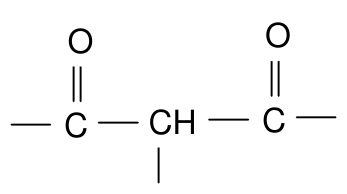
[S2]
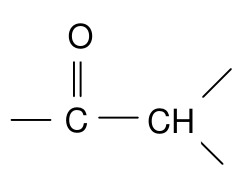
[S3]
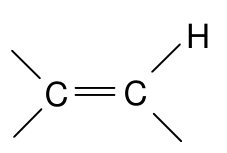
[S4]
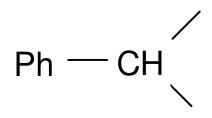
[S5]
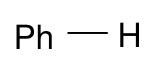
[S6]
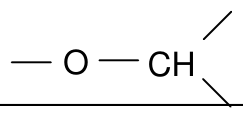
[S7]
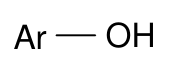
Spin–spin coupling constants \((J)\)
| Alkenes | cis | 5 – 14 Hz (commonly around 6 – 8 Hz) |
| trans | 11 – 19 Hz (commonly around 14 – 16 Hz) |
Zingerone on bromination with bromine water gives only one nuclear mono brominated product. The IR spectrum of Zingerone indicates the presence of a week intramolecular hydrogen bond. The same is present even after Clemmensen reduction (\(\ce{Zn}\) – \(\ce{Hg}/\ce{HCl}\)) of Zingerone.
6.2 From the information above deduce the following:
i) side chain in Zingerone
ii) substituent on the aromatic ring
iii) relative positions of the substituents on the ring
6.3 Draw a possible structure of Zingerone based on the above inferences.
6.4 Complete the following reaction sequence for the synthesis of Zingerone.
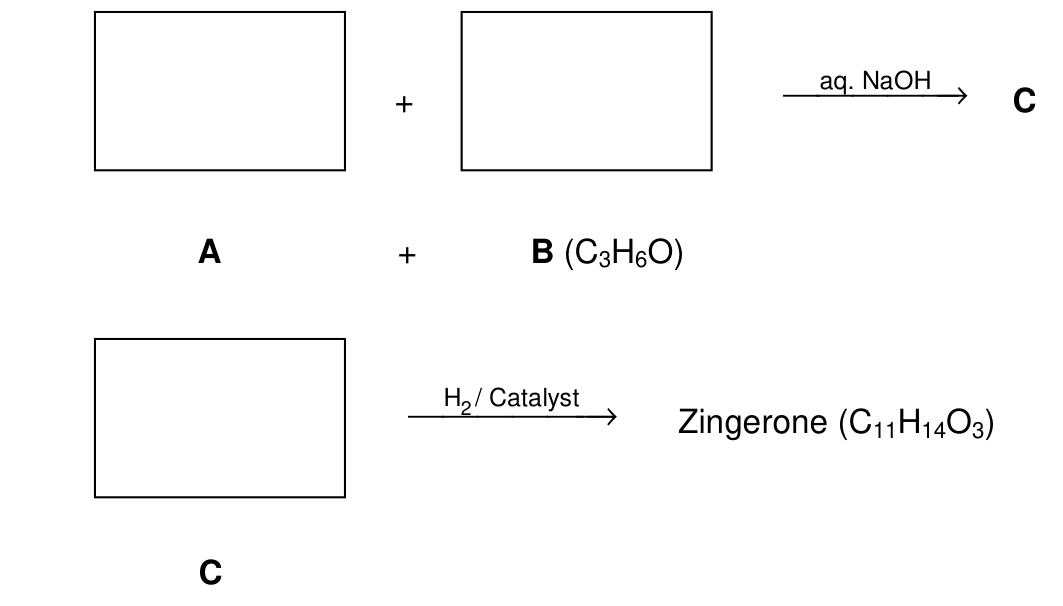
6.5 Zingerone can be easily converted into Gingerol by the following reaction sequence:

Notes: (1) \(\ce{Me3SiCl}/\ce{(Me3Si)2NH}\) is used to convert OH into \(\ce{-OSiMe3}\); the group \(\ce{-SiMe3}\) can be removed by acid hydrolysis.
(2) LDA is lithium disopropylamine, a strong, very hindered, non.nucleophilic base.
i) Draw the structure of D.
ii) Draw the structure of Gingerol.
iii) Complete the Fischer projection of the \(R\)-enantiomer of Gingerol.
iv) In the above reaction sequence (6.5), about 2 – 3 % another constitutional isomer (E) of Gingerol is obtained. Draw the likely structure of E.
v) Will the compound E be formed as
(a) a pair of enatiomers? \(\square\)
(b) a mixture of diastereomers? \(\square\)
(c) a mixture of an enantiomeric pair and a meso isomer? \(\square\)
(Mark X in the correct box.)
vi) Gingerol (\(\ce{C17H26O4}\)) when heated with a mild acid (such as \(\ce{KHSO4}\)) gives Shogaol (\(\ce{C17H24O3}\)). Draw the structure of Shogaol.
6.6 Turmeric (Curcuma longa) is a commonly used spice in Indian food. It is also used in Ayurvedic medicinal formulations. Curmunin (\(\ce{C21H20O6}\)), an active ingredient of turmeric, is structurally related to Gingerol. It exhibits keto-enol tautomerism. Curcumin is responsible for the yellow colour of turmeric and probably also for the pungent taste.
The \(\ce{^1H}\) NMR spectrum of the keto form of Curcumin shows aromatic signal similar to that of Gingerol. It also shows a singlet around \(\delta\) 3.5 (2H) and two doublets (2H each) in the region \(\delta\) 6 – 7 with \(J=16\ \mathrm{Hz}\). It can be synthesized by condensing TWO moles of A (refer to 6.4) with one mole of pentan-2,4-dione.
i) Draw the stereochemical structure of Curcumin.
ii) Draw the structure of the enol form of Curcumin.
iii) Curcumin is yellow in colour because it has
(a) a phenyl ring \(\square\)
(b) a carbonyl group \(\square\)
(c) an extended conjugation \(\square\)
(d) a hydroxyl group \(\square\)
(Mark X in the correct box.)
Official English text of the problem.
Answers
Hereafter, \(\ce{Ar}\) denotes the 4-hydroxy-3-methoxyphenyl group, fragment SMILES [*]c1cc(OC)c(O)cc1. The wildcard marks the bond to the side chain.
-
6.1: Mark (c) ketonic carbonyl and (d) phenolic hydroxyl.
-
6.2(i): A 3-oxobutyl side chain, \(\ce{-CH2CH2COCH3}\); fragment SMILES
[*]CCC(=O)C. -
6.2(ii): A methoxy group, fragment SMILES
[*]OC, in addition to the established phenolic hydroxyl, fragment SMILES[*]O. -
6.2(iii): Taking the side-chain attachment as ring C1, put methoxy at C3 and hydroxyl at C4. Thus hydroxyl and methoxy are ortho, hydroxyl and side chain para, and methoxy and side chain meta.
-
6.3: Zingerone, 4-(4-hydroxy-3-methoxyphenyl)butan-2-one: \[ \ce{ArCH2CH2COCH3}. \] SMILES:
CC(=O)CCc1cc(OC)c(O)cc1. -
6.4 — A: Vanillin, 4-hydroxy-3-methoxybenzaldehyde.
SMILES:O=Cc1cc(OC)c(O)cc1. -
6.4 — B: Acetone, propan-2-one.
SMILES:CC(=O)C. -
6.4 — C: Dehydrozingerone, shown as the usual \(E\) condensation product, (3E)-4-(4-hydroxy-3-methoxyphenyl)but-3-en-2-one.
SMILES:CC(=O)/C=C/c1cc(OC)c(O)cc1. -
6.5(i): D is the methyl-side lithium enolate of O-trimethylsilylzingerone. The phenolic oxygen is protected, and the terminal methyl group has become the terminal enolate methylene.
SMILES:C=C([O-])CCc1cc(OC)c(O[Si](C)(C)C)cc1.[Li+]. -
6.5(ii): [6]-Gingerol, 5-hydroxy-1-(4-hydroxy-3-methoxyphenyl)decan-3-one: \[ \ce{ArCH2CH2COCH2CH(OH)(CH2)4CH3}. \] SMILES, configuration unspecified:
CCCCCC(O)CC(=O)CCc1cc(OC)c(O)cc1.
Its correct formula is \(\ce{C17H26O4}\). The stated achiral synthesis gives a racemate. -
6.5(iii): (5R)-[6]-Gingerol.
SMILES:CCCCC[C@@H](O)CC(=O)CCc1cc(OC)c(O)cc1.
In a Fischer projection with \(\ce{CH2COCH2CH2Ar}\) above and \(\ce{(CH2)4CH3}\) below the stereocentre, place H on the left and OH on the right. -
6.5(iv): E, 3-(4-hydroxy-3-methoxybenzyl)-4-hydroxynonan-2-one: \[ \ce{ArCH2CH(COCH3)CH(OH)(CH2)4CH3}. \] SMILES, configurations unspecified:
CC(=O)C(Cc1cc(OC)c(O)cc1)C(O)CCCCC. -
6.5(v): Mark (b), a mixture of diastereomers. There are two enantiomeric pairs and no meso form.
-
6.5(vi): [6]-Shogaol, 1-(4-hydroxy-3-methoxyphenyl)dec-4-en-3-one: \[ \ce{ArCH2CH2COCH=CH(CH2)4CH3}. \] The expected major \(4E\) form has SMILES
CCCCC/C=C/C(=O)CCc1cc(OC)c(O)cc1. -
6.6(i): Diketo curcumin, (1E,6E)-1,7-bis(4-hydroxy-3-methoxyphenyl)hepta-1,6-diene-3,5-dione: \[ \ce{ArCH=CHCOCH2COCH=CHAr}, \] with both outer double bonds \(E\).
SMILES:COc1cc(/C=C/C(=O)CC(=O)/C=C/c2cc(OC)c(O)cc2)ccc1O. -
6.6(ii): The hydrogen-bonded enol tautomer of curcumin, (1E,4Z,6E)-5-hydroxy-1,7-bis(4-hydroxy-3-methoxyphenyl)hepta-1,4,6-trien-3-one: \[ \ce{ArCH=CHCOCH=C(OH)CH=CHAr}. \] SMILES:
COc1cc(/C=C/C(=O)/C=C(O)/C=C/c2cc(OC)c(O)cc2)ccc1O.
Orient the enolic OH toward the remaining carbonyl oxygen to form an intramolecular hydrogen bond. -
6.6(iii): Mark (c), an extended conjugation.
Solution
6.1 — Functional-group tests
Iron(III) chloride, [Fe+3].[Cl-].[Cl-].[Cl-], gives the characteristic positive test for a phenolic hydroxyl group.
2,4-Dinitrophenylhydrazine, NNc1ccc([N+](=O)[O-])cc1[N+](=O)[O-], detects an aldehyde or ketone carbonyl. The negative Tollens test excludes the aldehyde alternative in the intended interpretation. The carbonyl is therefore ketonic.
The active Tollens ion is diamminesilver(I), [NH3]->[Ag+]<-[NH3]; its coordination geometry is linear.
Consequently, the boxes justified by these tests are (c) and (d). The methoxy group is established by the subsequent NMR evidence.
6.2 — Side chain, substituents, and their relative positions
For zingerone, \(\ce{C11H14O3}\), the degree of unsaturation is
\[ \mathrm{DBE}=\frac{2(11)+2-14}{2}=5. \]
A benzene ring accounts for four degrees of unsaturation, and the ketone accounts for the fifth. Thus the side chain requires no additional carbon–carbon double bond or ring.
The NMR assignments are:
| \(\delta\), ppm | Integral | Assignment and deduction |
|---|---|---|
| 2.04 | 3 | A methyl directly attached to a carbonyl, \(\ce{-COCH3}\). It is a singlet because there is no proton on the adjacent carbonyl carbon. |
| 2.69, 2.71 | 4 | Two adjacent methylene groups, \(\ce{-CH2CH2-}\), each appearing approximately as a triplet. One is benzylic and the other is adjacent to the ketone. |
| 3.81 | 3 | A methoxy group, \(\ce{-OCH3}\). |
| 5.90 | 1 | The exchangeable phenolic OH proton. |
| 6.4–6.8 | 3 | Three aromatic protons: two adjacent protons and one effectively isolated proton in the simplified spectrum. |
The integrated proton count is
\[ 3+4+3+1+3=14, \]
matching the molecular formula.
6.2(i). The acetyl methyl and the two coupled methylene groups require
\[ \boxed{\ce{Ar-CH2-CH2-C(=O)-CH3}}. \]
The two closely spaced methylene resonances cannot individually be assigned to the benzylic and carbonyl-adjacent positions from the supplied shifts alone.
6.2(ii). The \(3\mathrm H\) singlet at \(\delta 3.81\) identifies methoxy. Together with the phenolic OH and the side chain, this gives three substituents on the aromatic ring.
6.2(iii). The intramolecular hydrogen bond survives removal of the ketone oxygen by Clemmensen reduction. Its acceptor must therefore be the methoxy oxygen. The hydroxyl and methoxy groups must be adjacent, allowing the phenolic OH to point toward the ether oxygen.
For completeness, the reduced compound is 4-butyl-2-methoxyphenol, CCCCc1cc(OC)c(O)cc1. A balanced representation of the Clemmensen reduction is
\[ \ce{C11H14O3 + 2Zn + 4HCl ->[Hg] C11H16O2 + 2ZnCl2 + H2O}. \]
The aromatic NMR pattern and the bromination result complete the assignment. The phenolic OH strongly directs bromination to its ortho and para positions. To leave only one such position available:
- one ortho position is occupied by methoxy;
- the para position is occupied by the side chain;
- the other ortho position remains available for bromination.
With the side chain numbered C1, methoxy is therefore at C3, hydroxyl at C4, and bromination occurs at C5.
The product, 4-(3-bromo-4-hydroxy-5-methoxyphenyl)butan-2-one, has SMILES CC(=O)CCc1cc(OC)c(O)c(Br)c1. Its formation is balanced as
\[ \ce{C11H14O3 + Br2 -> C11H13BrO3 + HBr}. \]
In the original ring numbering, H5 and H6 give the two principal aromatic doublets, while H2 gives the approximate singlet. Small longer-range couplings are omitted in the simplified data.
6.3 — Zingerone
All the evidence is satisfied by
\[ \boxed{\ce{ArCH2CH2COCH3}}, \]
where \(\ce{Ar}\) is 4-hydroxy-3-methoxyphenyl.
To draw it, attach a four-carbon chain to ring C1 in the order methylene–methylene–carbonyl carbon–methyl, place methoxy at ring C3, and place hydroxyl at ring C4. This is zingerone, with the name and SMILES given in the Answers.
6.4 — Synthesis of zingerone
The final hydrogenation suggests that C is the corresponding conjugated enone:
\[ \ce{ArCH=CHCOCH3}. \]
Disconnecting its newly formed carbon–carbon double bond gives the aldehyde vanillin, A, and the ketone acetone, B.
The balanced aldol-condensation equation is
\[ \ce{ArCHO + CH3COCH3 ->[NaOH(aq)] ArCH=CHCOCH3 + H2O}. \]
In molecular formulas,
\[ \ce{C8H8O3 + C3H6O -> C11H12O3 + H2O}. \]
Hydroxide generates a small equilibrium concentration of acetone enolate. Its carbon attacks the aldehyde carbonyl carbon, while the aldehyde \(\pi\) electrons move onto oxygen. Proton transfer gives a β-hydroxy ketone, and elimination of water produces the conjugated enone C, dehydrozingerone.
Selective hydrogenation of the carbon–carbon double bond then gives zingerone:
\[ \ce{ArCH=CHCOCH3 + H2 ->[catalyst] ArCH2CH2COCH3}, \]
or
\[ \ce{C11H12O3 + H2 -> C11H14O3}. \]
The \(E\) enone is the usual favored condensation product; either alkene geometry would give the same saturated product on hydrogenation.
6.5(i) — Formation and structure of D
The phenolic OH must first be protected so that it does not consume the strong base.
The relevant reagents and protected intermediate are:
| Name | SMILES |
|---|---|
| Chlorotrimethylsilane | C[Si](C)(C)Cl |
| Hexamethyldisilazane | C[Si](C)(C)N[Si](C)(C)C |
| O-Trimethylsilylzingerone | CC(=O)CCc1cc(OC)c(O[Si](C)(C)C)cc1 |
| Lithium diisopropylamide, LDA | CC(C)[N-]C(C)C.[Li+] |
| Diisopropylamine | CC(C)NC(C)C |
A balanced net representation of protection by hexamethyldisilazane is
\[ \ce{2C11H14O3 + (Me3Si)2NH ->[Me3SiCl] 2C14H22O3Si + NH3}. \]
The bulky base preferentially removes a proton from the less hindered terminal methyl group under the intended kinetic-enolate conditions. The deprotonation is
\[ \ce{C14H22O3Si + LiN[CH(CH3)2]2 -> C14H21LiO3Si + HN[CH(CH3)2]2}. \]
Thus D is represented by the resonance forms
\[ \ce{R-C(O^-)=CH2 <-> R-C(=O)-CH2^-}, \]
with a lithium counterion, where \(\ce{R}\) is the protected aromatic–ethyl residue.
To draw D, retain the aromatic methoxy group, replace phenolic OH by \(\ce{-OSiMe3}\), and replace the terminal \(\ce{-COCH3}\) unit by \(\ce{-C(O^-)=CH2}\), accompanied by \(\ce{Li+}\).
Its SMILES in the Answers specifies the formal ion pair. Lithium coordination and aggregation are not specified by the problem.
The usual temperature for this kinetic enolization is \(-78\,^\circ\mathrm C\); the supplied scheme prints \(78\,^\circ\mathrm C\).
6.5(ii) — Formation and structure of gingerol
Hexanal, CCCCCC=O, provides an aldehyde carbon bearing a pentyl substituent.
The terminal carbon of D attacks the carbonyl carbon of hexanal. The aldehyde carbonyl becomes an alkoxide; acid workup protonates it and removes the phenolic trimethylsilyl protecting group.
The resulting carbon skeleton is
\[ \ce{ArCH2CH2COCH2CH(OH)(CH2)4CH3}. \]
The net carbon-skeleton reaction is an aldol addition:
\[ \ce{ArCH2CH2COCH3 + CH3(CH2)4CHO -> ArCH2CH2COCH2CH(OH)(CH2)4CH3}. \]
Therefore,
\[ \boxed{\ce{C11H14O3 + C6H12O -> C17H26O4}}. \]
This establishes the correct gingerol formula independently of the conflicting printed formulas.
Including the lithium counterion and hydrolysis of the silyl group, a balanced net workup equation is
\[ \ce{C14H21LiO3Si + C6H12O + H2O + H+ -> C17H26O4 + (CH3)3SiOH + Li+}. \]
The silicon-containing product is trimethylsilanol, C[Si](C)(C)O.
Only one stereocentre is formed in this major product. Because the starting materials and reagents are achiral, the synthesis gives equal amounts of the two enantiomers unless a resolution or asymmetric step is added. The sign \((+)\) in the introduction alone does not establish an \(R\) or \(S\) configuration.
6.5(iii) — Fischer projection of the R enantiomer
At gingerol C5, the CIP priorities are
\[ \ce{OH} \;>\; \ce{CH2COCH2CH2Ar} \;>\; \ce{(CH2)4CH3} \;>\; \ce{H}. \]
The two carbon chains initially tie: each begins with a methylene carbon. At the next comparison, the carbonyl carbon has the effective attached-atom list \((\ce{O},\ce{O},\ce{C})\), which outranks the alkyl-chain list \((\ce{C},\ce{H},\ce{H})\).
A suitable Fischer projection is
\[ \begin{array}{ccc} & \ce{CH2COCH2CH2Ar} &\\ & | &\\ \ce{H} & -\ce{C}- & \ce{OH}\\ & | &\\ & \ce{(CH2)4CH3} & \end{array} \]
The horizontal bonds point toward the observer; the vertical bonds point away. Here the lowest-priority group, H, points toward the observer, so the apparent sense of the \(1\to2\to3\) sequence is reversed, giving \(R\).
The corresponding stereochemical SMILES is CCCCC[C@@H](O)CC(=O)CCc1cc(OC)c(O)cc1.
6.5(iv) — Constitution of the minor product E
Zingerone also has an enolizable methylene on the other side of its carbonyl. Minor deprotonation there, followed by addition to hexanal, gives
\[ \boxed{\ce{ArCH2CH(COCH3)CH(OH)(CH2)4CH3}}. \]
The balanced net addition is
\[ \ce{ArCH2CH2COCH3 + CH3(CH2)4CHO -> ArCH2CH(COCH3)CH(OH)(CH2)4CH3}. \]
This is 3-(4-hydroxy-3-methoxybenzyl)-4-hydroxynonan-2-one, E. It has the same molecular formula, \(\ce{C17H26O4}\), as gingerol, but different connectivity.
6.5(v) — Stereoisomers of E
E has two stereogenic centres, C3 and C4 in its nonan-2-one parent chain. There is no internal symmetry that could produce a meso form.
The four configurations and their explicit SMILES are:
| Stereoisomer of E | SMILES |
|---|---|
| \((3R,4R)\)-E | CC(=O)[C@H](Cc1cc(OC)c(O)cc1)[C@H](O)CCCCC |
| \((3S,4S)\)-E | CC(=O)[C@@H](Cc1cc(OC)c(O)cc1)[C@@H](O)CCCCC |
| \((3R,4S)\)-E | CC(=O)[C@H](Cc1cc(OC)c(O)cc1)[C@@H](O)CCCCC |
| \((3S,4R)\)-E | CC(=O)[C@@H](Cc1cc(OC)c(O)cc1)[C@H](O)CCCCC |
The first two form one enantiomeric pair, and the last two form another. Members belonging to different pairs are diastereomers. The relative amounts of the two pairs need not be equal.
Thus the correct answer is (b), a mixture of diastereomers.
6.5(vi) — Dehydration to shogaol
Gingerol is a β-hydroxy ketone. Acid-catalysed dehydration removes the hydroxyl at C5 and a hydrogen from C4, producing a carbon–carbon double bond conjugated with the ketone:
\[ \ce{ArCH2CH2COCH2CH(OH)(CH2)4CH3 -> ArCH2CH2COCH=CH(CH2)4CH3 + H2O}. \]
The molecular equation is
\[ \boxed{\ce{C17H26O4 -> C17H24O3 + H2O}}. \]
The product is [6]-shogaol. Draw the double bond between side-chain C4 and C5, immediately next to the C3 carbonyl.
The less crowded \(E\) enone is the expected favored product. The supplied data establish the conjugated alkene position but do not independently measure its geometry.
6.6(i) — Structure and stereochemistry of diketo curcumin
Pentan-2,4-dione, also called acetylacetone, has SMILES CC(=O)CC(C)=O.
Condensation of its two terminal methyl groups with two molecules of vanillin gives
\[ \ce{2ArCHO + CH3COCH2COCH3 -> ArCH=CHCOCH2COCH=CHAr + 2H2O}. \]
The molecular balance is
\[ \boxed{\ce{2C8H8O3 + C5H8O2 -> C21H20O6 + 2H2O}}. \]
The structure explains the NMR data:
- The two identical substituted aromatic rings give equivalent sets of aromatic signals resembling those of gingerol.
- The central \(\ce{-COCH2CO-}\) group gives a \(2\mathrm H\) singlet around \(\delta 3.5\), consistent with the supplied \(3.4\)–\(3.6\) range for a carbon between two carbonyl groups.
- Molecular symmetry makes the four vinylic protons occur as two sets of two, giving two \(2\mathrm H\) doublets.
- \(J=16\ \mathrm{Hz}\) lies in the supplied trans range and exceeds the supplied cis range. Both outer double bonds are therefore \(E\).
Its degree of unsaturation also agrees:
\[ \mathrm{DBE}=\frac{2(21)+2-20}{2}=12. \]
These comprise eight from the two benzene rings, two from the carbonyls, and two from the additional carbon–carbon double bonds.
6.6(ii) — Enol form
Enolization of one carbonyl using a hydrogen from the central methylene gives
\[ \ce{ArCH=CHCOCH2COCH=CHAr <=> ArCH=CHCOCH=C(OH)CH=CHAr}. \]
The molecular formula remains \(\ce{C21H20O6}\). Acid- or base-catalysed proton transfer changes one carbonyl into an enolic OH while forming the central carbon–carbon double bond.
Draw the enolic OH and the remaining carbonyl oxygen on the same side of the central framework. The favorable central \(Z\) arrangement permits an \(\ce{O-H...O}\) hydrogen bond closing a six-membered pseudoring. The two outer double bonds retain their \(E\) configurations.
The SMILES given in the Answers encodes \(1E,4Z,6E\). It does not itself encode the hydrogen bond or the approximately planar conformation that supports conjugation.
6.6(iii) — Origin of the yellow colour
The correct choice is (c), extended conjugation.
The aromatic rings, alkene bonds, and carbonyl/enol groups form extended conjugated systems. In the enol tautomer, conjugation extends continuously through the central chain. This lowers the energy of electronic excitation enough for absorption to reach the visible region; absorption toward the violet–blue part of the spectrum gives the observed yellow colour.
For completeness, the small species used in the equations above have the following names and SMILES:
| Species | SMILES |
|---|---|
| Water | O |
| Dihydrogen | [H][H] |
| Sodium hydroxide | [Na+].[OH-] |
| Bromine | BrBr |
| Hydrogen bromide | Br |
| Zinc | [Zn] |
| Mercury | [Hg] |
| Hydrogen chloride | Cl |
| Zinc chloride | [Zn+2].[Cl-].[Cl-] |
| Ammonia | N |
| Hydrogen ion | [H+] |
| Lithium ion | [Li+] |
| Potassium hydrogen sulfate | [K+].[O-]S(=O)(=O)O |
The solution was checked against the official solution.
IChO 2001 · Theorieaufgabe 6
Organische Chemie indischer Gewürze
Die Rhizome des Ingwers (Zingiber officinale) sind für ihre heilenden und würzenden Eigenschaften bekannt. Im Ayurveda (dem traditionellen Medizinsystem Indiens) werden verschiedene Ingwerzubereitungen zur Behandlung von Magen-Darm-Beschwerden, Erkältungen und anderen Erkrankungen verwendet. Mehrere Verbindungen sind für die Schärfe des Ingwers verantwortlich. Viele davon sind einfach substituierte aromatische Verbindungen mit unterschiedlichen Seitenketten. Drei von ihnen, Zingeron, (+)[6]-Gingerol (im Folgenden nur als Gingerol bezeichnet) und Shogaol, sind besonders wichtig.
Zingeron: \(\ce{C11H14O3}\)
Gingerol: \(\ce{C17H14O4}\)
Shogaol: \(\ce{C17H24O3}\)
6.1 Zingeron ergibt positive Nachweise mit \(\ce{FeCl3}\) und 2,4-DNP (2,4-Dinitrophenylhydrazin). Es reagiert nicht mit Tollens-Reagenz. Daher enthält Zingeron die folgenden funktionellen Gruppen: (Markieren Sie die richtigen Kästchen mit X.)
| (a) alkoholische Hydroxygruppe | \(\square\) | (e) Estergruppe | \(\square\) |
| (b) aldehydische Carbonylgruppe | \(\square\) | (f) Alkoxygruppe | \(\square\) |
| (c) ketonische Carbonylgruppe | \(\square\) | (g) Ungesättigtheit | \(\square\) |
| (d) phenolische Hydroxygruppe | \(\square\) |
Die aus dem \(\ce{^1H}\)-NMR-Spektrum von Zingeron erhaltenen Daten sind in Tabelle 1 aufgeführt. Einige weitere relevante Informationen sind in Tabelle 2 angegeben.
Tabelle 1: \(\ce{^1H}\)-NMR-spektroskopische Daten von Zingeron
| Chemische Verschiebungen \((\delta)\) | Multiplizität | Relative Intensität |
|---|---|---|
| 2.04 | Singulett | 3 |
| 2.69, 2.71 | zwei (eng benachbarte) Tripletts gleicher Intensität | 4 |
| 3.81 | Singulett | 3 |
| 5.90 | breites Singulett (mit \(\ce{D2O}\) austauschbar) | 1 |
| 6.4 – 6.8 | zwei Dubletts mit ähnlichen chemischen Verschiebungen und ein Singulett | 3 |
*) Zur besseren Übersicht wurden einige Daten geringfügig verändert.)
Tabelle 2: Ungefähre chemische \(\ce{^1H}\)-Verschiebungen \((\delta)\) und Spin-Spin-Kopplungskonstanten \((J)\) einiger Protonen
Chemische \(\ce{^1H}\)-Verschiebungen
| Alkyl - H | 0.9 - 1.5 | [S1] | 3.4 - 3.6 |
| [S2] | 2.0 - 2.7 | [S3] | 4.0 - 7.0 |
| [S4] | 2.3 - 2.9 | [S5] | 6.0 - 8.0 |
| [S6] | 3.3 - 3.9 | [S7] | 4.0 - 11.0 |
[S1]
[S2]
[S3]
[S4]
[S5]
[S6]
[S7]
Spin-Spin-Kopplungskonstanten \((J)\)
| Alkene | cis | 5 – 14 Hz (gewöhnlich etwa 6 – 8 Hz) |
| trans | 11 – 19 Hz (gewöhnlich etwa 14 – 16 Hz) |
Bei der Bromierung mit Bromwasser ergibt Zingeron nur ein einziges am Ring monobromiertes Produkt. Das IR-Spektrum von Zingeron weist auf eine schwache intramolekulare Wasserstoffbrückenbindung hin. Diese ist auch nach der Clemmensen-Reduktion (\(\ce{Zn}\) – \(\ce{Hg}/\ce{HCl}\)) von Zingeron noch vorhanden.
6.2 Leiten Sie aus den obigen Informationen Folgendes ab:
i) die Seitenkette in Zingeron
ii) den Substituenten am aromatischen Ring
iii) die relativen Positionen der Substituenten am Ring
6.3 Zeichnen Sie auf der Grundlage der obigen Schlussfolgerungen eine mögliche Struktur von Zingeron.
6.4 Vervollständigen Sie die folgende Reaktionsfolge zur Synthese von Zingeron.
6.5 Zingeron lässt sich durch die folgende Reaktionsfolge leicht in Gingerol überführen:
Hinweise: (1) \(\ce{Me3SiCl}/\ce{(Me3Si)2NH}\) wird verwendet, um OH in \(\ce{-OSiMe3}\) umzuwandeln; die Gruppe \(\ce{-SiMe3}\) kann durch saure Hydrolyse entfernt werden.
(2) LDA ist Lithiumdiisopropylamin, eine starke, stark sterisch gehinderte, nicht nukleophile Base.
i) Zeichnen Sie die Struktur von D.
ii) Zeichnen Sie die Struktur von Gingerol.
iii) Vervollständigen Sie die Fischer-Projektion des \(R\)-Enantiomers von Gingerol.
iv) In der obigen Reaktionsfolge (6.5) entstehen etwa 2 – 3 % eines weiteren Konstitutionsisomers (E) von Gingerol. Zeichnen Sie die wahrscheinliche Struktur von E.
v) Entsteht die Verbindung E als
(a) ein Enantiomerenpaar? \(\square\)
(b) ein Gemisch von Diastereomeren? \(\square\)
(c) ein Gemisch aus einem Enantiomerenpaar und einem meso-Isomer? \(\square\)
(Markieren Sie das richtige Kästchen mit X.)
vi) Beim Erhitzen mit einer milden Säure (wie \(\ce{KHSO4}\)) ergibt Gingerol (\(\ce{C17H26O4}\)) Shogaol (\(\ce{C17H24O3}\)). Zeichnen Sie die Struktur von Shogaol.
6.6 Kurkuma (Curcuma longa) ist ein häufig verwendetes Gewürz in der indischen Küche. Es wird auch in ayurvedischen Arzneizubereitungen verwendet. Curcumin (\(\ce{C21H20O6}\)), ein wirksamer Inhaltsstoff von Kurkuma, ist strukturell mit Gingerol verwandt. Es zeigt Keto-Enol-Tautomerie. Curcumin ist für die gelbe Farbe von Kurkuma und wahrscheinlich auch für den scharfen Geschmack verantwortlich.
Das \(\ce{^1H}\)-NMR-Spektrum der Ketoform von Curcumin zeigt ein aromatisches Signal ähnlich dem von Gingerol. Es zeigt außerdem ein Singulett bei etwa \(\delta\) 3.5 (2H) und zwei Dubletts (je 2H) im Bereich \(\delta\) 6 – 7 mit \(J=16\ \mathrm{Hz}\). Es lässt sich durch Kondensation von ZWEI Mol A (siehe 6.4) mit einem Mol Pentan-2,4-dion synthetisieren.
i) Zeichnen Sie die stereochemische Struktur von Curcumin.
ii) Zeichnen Sie die Struktur der Enolform von Curcumin.
iii) Curcumin ist gelb, weil es Folgendes besitzt:
(a) einen Phenylring \(\square\)
(b) eine Carbonylgruppe \(\square\)
(c) ein ausgedehntes konjugiertes System \(\square\)
(d) eine Hydroxygruppe \(\square\)
(Markieren Sie das richtige Kästchen mit X.)
Aufgabentext aus dem offiziellen englischen Text übersetzt.
Antworten
Im Folgenden bezeichnet \(\ce{Ar}\) die 4-Hydroxy-3-methoxyphenylgruppe, Fragment-SMILES [*]c1cc(OC)c(O)cc1. Der Platzhalter kennzeichnet die Bindung zur Seitenkette.
-
6.1: Markieren Sie (c) ketonische Carbonylgruppe und (d) phenolische Hydroxygruppe.
-
6.2(i): Eine 3-Oxobutylseitenkette, \(\ce{-CH2CH2COCH3}\); Fragment-SMILES
[*]CCC(=O)C. -
6.2(ii): Eine Methoxygruppe, Fragment-SMILES
[*]OC, zusätzlich zur bereits nachgewiesenen phenolischen Hydroxygruppe, Fragment-SMILES[*]O. -
6.2(iii): Wird die Verknüpfungsstelle der Seitenkette als Ring-C1 gewählt, befindet sich die Methoxygruppe an C3 und die Hydroxygruppe an C4. Somit stehen Hydroxy- und Methoxygruppe ortho, Hydroxygruppe und Seitenkette para sowie Methoxygruppe und Seitenkette meta zueinander.
-
6.3: Zingeron, 4-(4-Hydroxy-3-methoxyphenyl)butan-2-on: \[ \ce{ArCH2CH2COCH3}. \] SMILES:
CC(=O)CCc1cc(OC)c(O)cc1. -
6.4 — A: Vanillin, 4-Hydroxy-3-methoxybenzaldehyd.
SMILES:O=Cc1cc(OC)c(O)cc1. -
6.4 — B: Aceton, Propan-2-on.
SMILES:CC(=O)C. -
6.4 — C: Dehydrozingeron, dargestellt als das übliche \(E\)-Kondensationsprodukt, (3E)-4-(4-Hydroxy-3-methoxyphenyl)but-3-en-2-on.
SMILES:CC(=O)/C=C/c1cc(OC)c(O)cc1. -
6.5(i): D ist das auf der Methylseite gebildete Lithiumenolat von O-Trimethylsilylzingeron. Der phenolische Sauerstoff ist geschützt, und die endständige Methylgruppe ist zur endständigen Enolat-Methylengruppe geworden.
SMILES:C=C([O-])CCc1cc(OC)c(O[Si](C)(C)C)cc1.[Li+]. -
6.5(ii): [6]-Gingerol, 5-Hydroxy-1-(4-hydroxy-3-methoxyphenyl)decan-3-on: \[ \ce{ArCH2CH2COCH2CH(OH)(CH2)4CH3}. \] SMILES, Konfiguration nicht festgelegt:
CCCCCC(O)CC(=O)CCc1cc(OC)c(O)cc1.
Seine korrekte Summenformel lautet \(\ce{C17H26O4}\). Die angegebene achirale Synthese ergibt ein Racemat. -
6.5(iii): (5R)-[6]-Gingerol.
SMILES:CCCCC[C@@H](O)CC(=O)CCc1cc(OC)c(O)cc1.
In einer Fischer-Projektion mit \(\ce{CH2COCH2CH2Ar}\) oberhalb und \(\ce{(CH2)4CH3}\) unterhalb des Stereozentrums steht H links und OH rechts. -
6.5(iv): E, 3-(4-Hydroxy-3-methoxybenzyl)-4-hydroxynonan-2-on: \[ \ce{ArCH2CH(COCH3)CH(OH)(CH2)4CH3}. \] SMILES, Konfigurationen nicht festgelegt:
CC(=O)C(Cc1cc(OC)c(O)cc1)C(O)CCCCC. -
6.5(v): Markieren Sie (b), ein Gemisch von Diastereomeren. Es gibt zwei Enantiomerenpaare und keine meso-Form.
-
6.5(vi): [6]-Shogaol, 1-(4-Hydroxy-3-methoxyphenyl)dec-4-en-3-on: \[ \ce{ArCH2CH2COCH=CH(CH2)4CH3}. \] Die als Hauptprodukt erwartete \(4E\)-Form hat die SMILES
CCCCC/C=C/C(=O)CCc1cc(OC)c(O)cc1. -
6.6(i): Diketo-Curcumin, (1E,6E)-1,7-Bis(4-hydroxy-3-methoxyphenyl)hepta-1,6-dien-3,5-dion: \[ \ce{ArCH=CHCOCH2COCH=CHAr}, \] wobei beide äußeren Doppelbindungen \(E\)-konfiguriert sind.
SMILES:COc1cc(/C=C/C(=O)CC(=O)/C=C/c2cc(OC)c(O)cc2)ccc1O. -
6.6(ii): Das durch eine Wasserstoffbrückenbindung stabilisierte Enoltautomer von Curcumin, (1E,4Z,6E)-5-Hydroxy-1,7-bis(4-hydroxy-3-methoxyphenyl)hepta-1,4,6-trien-3-on: \[ \ce{ArCH=CHCOCH=C(OH)CH=CHAr}. \] SMILES:
COc1cc(/C=C/C(=O)/C=C(O)/C=C/c2cc(OC)c(O)cc2)ccc1O.
Richten Sie die enolische OH-Gruppe zum verbleibenden Carbonylsauerstoff hin aus, sodass eine intramolekulare Wasserstoffbrückenbindung entsteht. -
6.6(iii): Markieren Sie (c), ein ausgedehntes konjugiertes System.
Lösung
6.1 — Nachweise funktioneller Gruppen
Eisen(III)-chlorid, [Fe+3].[Cl-].[Cl-].[Cl-], ergibt den charakteristischen positiven Nachweis einer phenolischen Hydroxygruppe.
2,4-Dinitrophenylhydrazin, NNc1ccc([N+](=O)[O-])cc1[N+](=O)[O-], weist eine Aldehyd- oder Ketoncarbonylgruppe nach. Die negative Tollens-Probe schließt bei der hier beabsichtigten Interpretation die Aldehydalternative aus. Die Carbonylgruppe ist daher ketonisch.
Das aktive Ion im Tollens-Reagenz ist Diamminsilber(I), [NH3]->[Ag+]<-[NH3]; seine Koordinationsgeometrie ist linear.
Folglich sind aufgrund dieser Nachweise die Kästchen (c) und (d) anzukreuzen. Die Methoxygruppe wird durch die nachfolgenden NMR-Befunde nachgewiesen.
6.2 — Seitenkette, Substituenten und ihre relativen Positionen
Für Zingeron, \(\ce{C11H14O3}\), beträgt der Ungesättigtheitsgrad
\[ \mathrm{DBE}=\frac{2(11)+2-14}{2}=5. \]
Ein Benzolring trägt vier Ungesättigtheitsgrade bei, und die Ketongruppe liefert den fünften. Somit erfordert die Seitenkette keine zusätzliche Kohlenstoff-Kohlenstoff-Doppelbindung und keinen zusätzlichen Ring.
Die NMR-Zuordnungen lauten:
| \(\delta\), ppm | Integral | Zuordnung und Schlussfolgerung |
|---|---|---|
| 2.04 | 3 | Eine direkt an eine Carbonylgruppe gebundene Methylgruppe, \(\ce{-COCH3}\). Sie ergibt ein Singulett, weil sich am benachbarten Carbonylkohlenstoff kein Proton befindet. |
| 2.69, 2.71 | 4 | Zwei benachbarte Methylengruppen, \(\ce{-CH2CH2-}\), die jeweils näherungsweise als Triplett erscheinen. Eine befindet sich in benzylischer Position, die andere neben der Ketongruppe. |
| 3.81 | 3 | Eine Methoxygruppe, \(\ce{-OCH3}\). |
| 5.90 | 1 | Das austauschbare phenolische OH-Proton. |
| 6.4–6.8 | 3 | Drei aromatische Protonen: zwei benachbarte Protonen und ein im vereinfachten Spektrum praktisch isoliertes Proton. |
Die aus den Integralen ermittelte Protonenzahl beträgt
\[ 3+4+3+1+3=14, \]
in Übereinstimmung mit der Summenformel.
6.2(i). Die Acetylmethylgruppe und die beiden gekoppelten Methylengruppen erfordern
\[ \boxed{\ce{Ar-CH2-CH2-C(=O)-CH3}}. \]
Die beiden eng benachbarten Methylenresonanzen lassen sich allein anhand der angegebenen Verschiebungen nicht einzeln der benzylischen beziehungsweise der carbonylbenachbarten Position zuordnen.
6.2(ii). Das \(3\mathrm H\)-Singulett bei \(\delta 3.81\) identifiziert die Methoxygruppe. Zusammen mit der phenolischen OH-Gruppe und der Seitenkette ergeben sich damit drei Substituenten am aromatischen Ring.
6.2(iii). Die intramolekulare Wasserstoffbrückenbindung bleibt nach der Entfernung des Ketonsauerstoffs durch Clemmensen-Reduktion bestehen. Ihr Akzeptor muss daher der Methoxysauerstoff sein. Die Hydroxy- und Methoxygruppen müssen benachbart sein, sodass die phenolische OH-Gruppe zum Ethersauerstoff hin ausgerichtet sein kann.
Der Vollständigkeit halber: Die reduzierte Verbindung ist 4-Butyl-2-methoxyphenol, CCCCc1cc(OC)c(O)cc1. Eine ausgeglichene Darstellung der Clemmensen-Reduktion lautet
\[ \ce{C11H14O3 + 2Zn + 4HCl ->[Hg] C11H16O2 + 2ZnCl2 + H2O}. \]
Das aromatische NMR-Muster und das Ergebnis der Bromierung vervollständigen die Zuordnung. Die phenolische OH-Gruppe dirigiert die Bromierung stark in ihre ortho- und para-Positionen. Damit nur eine dieser Positionen verfügbar bleibt, gilt:
- Eine ortho-Position ist durch die Methoxygruppe besetzt;
- die para-Position ist durch die Seitenkette besetzt;
- die andere ortho-Position bleibt für die Bromierung verfügbar.
Wird die Verknüpfungsstelle der Seitenkette als C1 nummeriert, befindet sich die Methoxygruppe daher an C3, die Hydroxygruppe an C4, und die Bromierung erfolgt an C5.
Das Produkt, 4-(3-Brom-4-hydroxy-5-methoxyphenyl)butan-2-on, hat die SMILES CC(=O)CCc1cc(OC)c(O)c(Br)c1. Seine Bildung lässt sich durch folgende ausgeglichene Gleichung beschreiben:
\[ \ce{C11H14O3 + Br2 -> C11H13BrO3 + HBr}. \]
Bei der ursprünglichen Ringnummerierung ergeben H5 und H6 die beiden hauptsächlichen aromatischen Dubletts, während H2 das näherungsweise Singulett ergibt. Kleine Kopplungen über größere Entfernungen sind in den vereinfachten Daten nicht berücksichtigt.
6.3 — Zingeron
Alle Befunde werden durch
\[ \boxed{\ce{ArCH2CH2COCH3}}, \]
erfüllt, wobei \(\ce{Ar}\) für 4-Hydroxy-3-methoxyphenyl steht.
Zum Zeichnen verbinden Sie eine Kette aus vier Kohlenstoffatomen in der Reihenfolge Methylen–Methylen–Carbonylkohlenstoff–Methyl mit Ring-C1, setzen die Methoxygruppe an Ring-C3 und die Hydroxygruppe an Ring-C4. Dies ist Zingeron; Name und SMILES sind unter Antworten angegeben.
6.4 — Synthese von Zingeron
Die abschließende Hydrierung legt nahe, dass C das entsprechende konjugierte Enon ist:
\[ \ce{ArCH=CHCOCH3}. \]
Die retrosynthetische Spaltung seiner neu gebildeten Kohlenstoff-Kohlenstoff-Doppelbindung liefert den Aldehyd Vanillin, A, und das Keton Aceton, B.
Die ausgeglichene Gleichung der Aldolkondensation lautet
\[ \ce{ArCHO + CH3COCH3 ->[NaOH(aq)] ArCH=CHCOCH3 + H2O}. \]
In Summenformeln:
\[ \ce{C8H8O3 + C3H6O -> C11H12O3 + H2O}. \]
Hydroxid erzeugt eine geringe Gleichgewichtskonzentration an Acetonenolat. Dessen Kohlenstoff greift den Carbonylkohlenstoff des Aldehyds an, während die \(\pi\)-Elektronen der Aldehydgruppe auf den Sauerstoff verschoben werden. Protonenübertragung ergibt ein β-Hydroxyketon, und Wasserabspaltung liefert das konjugierte Enon C, Dehydrozingeron.
Die selektive Hydrierung der Kohlenstoff-Kohlenstoff-Doppelbindung ergibt anschließend Zingeron:
\[ \ce{ArCH=CHCOCH3 + H2 ->[catalyst] ArCH2CH2COCH3}, \]
oder
\[ \ce{C11H12O3 + H2 -> C11H14O3}. \]
Das \(E\)-Enon ist das üblicherweise bevorzugte Kondensationsprodukt; beide Alkengeometrien würden bei der Hydrierung dasselbe gesättigte Produkt ergeben.
6.5(i) — Bildung und Struktur von D
Die phenolische OH-Gruppe muss zunächst geschützt werden, damit sie die starke Base nicht verbraucht.
Die relevanten Reagenzien und die geschützte Zwischenstufe sind:
| Name | SMILES |
|---|---|
| Chlortrimethylsilan | C[Si](C)(C)Cl |
| Hexamethyldisilazan | C[Si](C)(C)N[Si](C)(C)C |
| O-Trimethylsilylzingeron | CC(=O)CCc1cc(OC)c(O[Si](C)(C)C)cc1 |
| Lithiumdiisopropylamid, LDA | CC(C)[N-]C(C)C.[Li+] |
| Diisopropylamin | CC(C)NC(C)C |
Eine ausgeglichene Nettodarstellung der Schutzgruppenbildung mit Hexamethyldisilazan lautet
\[ \ce{2C11H14O3 + (Me3Si)2NH ->[Me3SiCl] 2C14H22O3Si + NH3}. \]
Unter den vorgesehenen Bedingungen zur Bildung des kinetischen Enolats entfernt die sterisch anspruchsvolle Base bevorzugt ein Proton von der weniger gehinderten endständigen Methylgruppe. Die Deprotonierung lautet
\[ \ce{C14H22O3Si + LiN[CH(CH3)2]2 -> C14H21LiO3Si + HN[CH(CH3)2]2}. \]
Somit wird D durch die mesomeren Grenzstrukturen
\[ \ce{R-C(O^-)=CH2 <-> R-C(=O)-CH2^-}, \]
mit einem Lithiumgegenion dargestellt, wobei \(\ce{R}\) der geschützte Aromat-Ethyl-Rest ist.
Zum Zeichnen von D behalten Sie die aromatische Methoxygruppe bei, ersetzen die phenolische OH-Gruppe durch \(\ce{-OSiMe3}\) und die endständige \(\ce{-COCH3}\)-Einheit durch \(\ce{-C(O^-)=CH2}\), ergänzt durch \(\ce{Li+}\).
Die SMILES unter Antworten gibt das formale Ionenpaar an. Lithiumkoordination und Aggregation sind in der Aufgabe nicht näher festgelegt.
Die übliche Temperatur für diese kinetische Enolisierung beträgt \(-78\,^\circ\mathrm C\); im vorgegebenen Schema steht \(78\,^\circ\mathrm C\).
6.5(ii) — Bildung und Struktur von Gingerol
Hexanal, CCCCCC=O, liefert einen Aldehydkohlenstoff mit einem Pentylsubstituenten.
Der endständige Kohlenstoff von D greift den Carbonylkohlenstoff von Hexanal an. Die Aldehydcarbonylgruppe wird zu einem Alkoxid; die saure Aufarbeitung protoniert dieses und entfernt die phenolische Trimethylsilylschutzgruppe.
Das resultierende Kohlenstoffgerüst lautet
\[ \ce{ArCH2CH2COCH2CH(OH)(CH2)4CH3}. \]
Die Nettoreaktion des Kohlenstoffgerüsts ist eine Aldoladdition:
\[ \ce{ArCH2CH2COCH3 + CH3(CH2)4CHO -> ArCH2CH2COCH2CH(OH)(CH2)4CH3}. \]
Daher gilt:
\[ \boxed{\ce{C11H14O3 + C6H12O -> C17H26O4}}. \]
Damit ist die korrekte Summenformel von Gingerol unabhängig von den widersprüchlichen gedruckten Formeln bestimmt.
Unter Einbeziehung des Lithiumgegenions und der Hydrolyse der Silylgruppe lautet eine ausgeglichene Nettogleichung der Aufarbeitung
\[ \ce{C14H21LiO3Si + C6H12O + H2O + H+ -> C17H26O4 + (CH3)3SiOH + Li+}. \]
Das siliciumhaltige Produkt ist Trimethylsilanol, C[Si](C)(C)O.
In diesem Hauptprodukt entsteht nur ein Stereozentrum. Da die Ausgangsstoffe und Reagenzien achiral sind, liefert die Synthese gleiche Mengen der beiden Enantiomere, sofern keine Racematspaltung oder kein asymmetrischer Schritt hinzugefügt wird. Das Vorzeichen \((+)\) in der Einleitung allein legt keine \(R\)- oder \(S\)-Konfiguration fest.
6.5(iii) — Fischer-Projektion des R-Enantiomers
Am C5 von Gingerol lauten die CIP-Prioritäten
\[ \ce{OH} \;>\; \ce{CH2COCH2CH2Ar} \;>\; \ce{(CH2)4CH3} \;>\; \ce{H}. \]
Die beiden Kohlenstoffketten sind zunächst gleichrangig: Jede beginnt mit einem Methylenkohlenstoff. Beim nächsten Vergleich weist der Carbonylkohlenstoff die effektive Liste gebundener Atome \((\ce{O},\ce{O},\ce{C})\) auf, die gegenüber der Liste der Alkylkette \((\ce{C},\ce{H},\ce{H})\) Vorrang hat.
Eine geeignete Fischer-Projektion ist
\[ \begin{array}{ccc} & \ce{CH2COCH2CH2Ar} &\\ & | &\\ \ce{H} & -\ce{C}- & \ce{OH}\\ & | &\\ & \ce{(CH2)4CH3} & \end{array} \]
Die horizontalen Bindungen zeigen zum Betrachter hin; die vertikalen Bindungen zeigen von ihm weg. Hier zeigt die Gruppe mit der niedrigsten Priorität, H, zum Betrachter hin, sodass der scheinbare Drehsinn der Folge \(1\to2\to3\) umgekehrt wird und sich \(R\) ergibt.
Die entsprechende stereochemische SMILES lautet CCCCC[C@@H](O)CC(=O)CCc1cc(OC)c(O)cc1.
6.5(iv) — Konstitution des Nebenprodukts E
Zingeron besitzt auf der anderen Seite seiner Carbonylgruppe ebenfalls eine enolisierbare Methylengruppe. Die in geringem Umfang dort erfolgende Deprotonierung mit anschließender Addition an Hexanal ergibt
\[ \boxed{\ce{ArCH2CH(COCH3)CH(OH)(CH2)4CH3}}. \]
Die ausgeglichene Nettoaddition lautet
\[ \ce{ArCH2CH2COCH3 + CH3(CH2)4CHO -> ArCH2CH(COCH3)CH(OH)(CH2)4CH3}. \]
Dies ist 3-(4-Hydroxy-3-methoxybenzyl)-4-hydroxynonan-2-on, E. Es besitzt dieselbe Summenformel, \(\ce{C17H26O4}\), wie Gingerol, jedoch eine andere Verknüpfung der Atome.
6.5(v) — Stereoisomere von E
E besitzt zwei stereogene Zentren, C3 und C4 seiner Nonan-2-on-Stammkette. Es gibt keine innere Symmetrie, die eine meso-Form ermöglichen könnte.
Die vier Konfigurationen und ihre expliziten SMILES sind:
| Stereoisomer von E | SMILES |
|---|---|
| \((3R,4R)\)-E | CC(=O)[C@H](Cc1cc(OC)c(O)cc1)[C@H](O)CCCCC |
| \((3S,4S)\)-E | CC(=O)[C@@H](Cc1cc(OC)c(O)cc1)[C@@H](O)CCCCC |
| \((3R,4S)\)-E | CC(=O)[C@H](Cc1cc(OC)c(O)cc1)[C@@H](O)CCCCC |
| \((3S,4R)\)-E | CC(=O)[C@@H](Cc1cc(OC)c(O)cc1)[C@H](O)CCCCC |
Die ersten beiden bilden ein Enantiomerenpaar, die letzten beiden ein weiteres. Vertreter unterschiedlicher Paare sind Diastereomere. Die relativen Mengen der beiden Paare müssen nicht gleich sein.
Somit ist die richtige Antwort (b), ein Gemisch von Diastereomeren.
6.5(vi) — Dehydratisierung zu Shogaol
Gingerol ist ein β-Hydroxyketon. Bei der säurekatalysierten Dehydratisierung werden die Hydroxygruppe an C5 und ein Wasserstoff an C4 entfernt, wodurch eine mit der Ketongruppe konjugierte Kohlenstoff-Kohlenstoff-Doppelbindung entsteht:
\[ \ce{ArCH2CH2COCH2CH(OH)(CH2)4CH3 -> ArCH2CH2COCH=CH(CH2)4CH3 + H2O}. \]
Die Gleichung in Summenformeln lautet
\[ \boxed{\ce{C17H26O4 -> C17H24O3 + H2O}}. \]
Das Produkt ist [6]-Shogaol. Zeichnen Sie die Doppelbindung zwischen C4 und C5 der Seitenkette, unmittelbar neben der Carbonylgruppe an C3.
Das sterisch weniger gehinderte \(E\)-Enon ist das erwartete bevorzugte Produkt. Die vorgegebenen Daten belegen die Position der konjugierten Alkenbindung, liefern jedoch keine unabhängige Messung ihrer Geometrie.
6.6(i) — Struktur und Stereochemie von Diketo-Curcumin
Pentan-2,4-dion, auch Acetylaceton genannt, hat die SMILES CC(=O)CC(C)=O.
Die Kondensation seiner beiden endständigen Methylgruppen mit zwei Molekülen Vanillin ergibt
\[ \ce{2ArCHO + CH3COCH2COCH3 -> ArCH=CHCOCH2COCH=CHAr + 2H2O}. \]
Die Bilanz in Summenformeln lautet
\[ \boxed{\ce{2C8H8O3 + C5H8O2 -> C21H20O6 + 2H2O}}. \]
Die Struktur erklärt die NMR-Daten:
- Die beiden identischen substituierten aromatischen Ringe ergeben äquivalente Sätze aromatischer Signale, die denen von Gingerol ähneln.
- Die zentrale \(\ce{-COCH2CO-}\)-Gruppe ergibt ein \(2\mathrm H\)-Singulett bei etwa \(\delta 3.5\), in Übereinstimmung mit dem angegebenen Bereich von \(3.4\)–\(3.6\) für einen Kohlenstoff zwischen zwei Carbonylgruppen.
- Aufgrund der Molekülsymmetrie treten die vier vinylischen Protonen als zwei Sätze von jeweils zwei Protonen auf und ergeben zwei \(2\mathrm H\)-Dubletts.
- \(J=16\ \mathrm{Hz}\) liegt im angegebenen trans-Bereich und überschreitet den angegebenen cis-Bereich. Beide äußeren Doppelbindungen sind daher \(E\)-konfiguriert.
Auch der Ungesättigtheitsgrad stimmt überein:
\[ \mathrm{DBE}=\frac{2(21)+2-20}{2}=12. \]
Davon entfallen acht auf die beiden Benzolringe, zwei auf die Carbonylgruppen und zwei auf die zusätzlichen Kohlenstoff-Kohlenstoff-Doppelbindungen.
6.6(ii) — Enolform
Die Enolisierung einer Carbonylgruppe unter Verwendung eines Wasserstoffs der zentralen Methylengruppe ergibt
\[ \ce{ArCH=CHCOCH2COCH=CHAr <=> ArCH=CHCOCH=C(OH)CH=CHAr}. \]
Die Summenformel bleibt \(\ce{C21H20O6}\). Durch säure- oder basenkatalysierte Protonenübertragung wird eine Carbonylgruppe in eine enolische OH-Gruppe umgewandelt, während die zentrale Kohlenstoff-Kohlenstoff-Doppelbindung entsteht.
Zeichnen Sie die enolische OH-Gruppe und den verbleibenden Carbonylsauerstoff auf derselben Seite des zentralen Gerüsts. Die günstige zentrale \(Z\)-Anordnung ermöglicht eine \(\ce{O-H...O}\)-Wasserstoffbrückenbindung, die einen sechsgliedrigen Pseudoring schließt. Die beiden äußeren Doppelbindungen behalten ihre \(E\)-Konfigurationen bei.
Die unter Antworten angegebene SMILES codiert \(1E,4Z,6E\). Sie codiert selbst weder die Wasserstoffbrückenbindung noch die annähernd planare Konformation, die die Konjugation begünstigt.
6.6(iii) — Ursprung der gelben Farbe
Die richtige Wahl ist (c), ein ausgedehntes konjugiertes System.
Die aromatischen Ringe, Alkenbindungen und Carbonyl-/Enolgruppen bilden ausgedehnte konjugierte Systeme. Im Enoltautomer erstreckt sich die Konjugation durchgehend über die zentrale Kette. Dadurch wird die Energie der elektronischen Anregung so weit abgesenkt, dass die Absorption den sichtbaren Bereich erreicht; die Absorption im violett-blauen Teil des Spektrums führt zur beobachteten gelben Farbe.
Der Vollständigkeit halber sind die Namen und SMILES der in den obigen Gleichungen verwendeten kleinen Spezies im Folgenden aufgeführt:
| Spezies | SMILES |
|---|---|
| Wasser | O |
| Molekularer Wasserstoff | [H][H] |
| Natriumhydroxid | [Na+].[OH-] |
| Brom | BrBr |
| Bromwasserstoff | Br |
| Zink | [Zn] |
| Quecksilber | [Hg] |
| Chlorwasserstoff | Cl |
| Zinkchlorid | [Zn+2].[Cl-].[Cl-] |
| Ammoniak | N |
| Wasserstoffion | [H+] |
| Lithiumion | [Li+] |
| Kaliumhydrogensulfat | [K+].[O-]S(=O)(=O)O |
Die Lösung wurde mit der offiziellen Lösung abgeglichen.
IChO 2001 · Teori sorusu 6
Hint Baharatlarının Organik Kimyası
Zencefilin (Zingiber officinale) rizomları, tıbbi ve tatlandırıcı özellikleriyle iyi bilinir. Ayurveda'da (Hindistan'ın geleneksel tıp sistemi) mide-bağırsak sorunlarının, soğuk algınlığının ve diğer rahatsızlıkların tedavisinde farklı zencefil preparatları kullanılır. Zencefilin yakıcı tadından çeşitli bileşikler sorumludur. Bunların birçoğu, farklı yan zincirlere sahip basit sübstitüe aromatik bileşiklerdir. Bunlardan üçü, Zingeron, (+)[6] Gingerol (bundan sonra yalnızca Gingerol olarak anılacaktır) ve Şogaol özellikle önemlidir.
Zingeron: \(\ce{C11H14O3}\)
Gingerol: \(\ce{C17H14O4}\)
Şogaol: \(\ce{C17H24O3}\)
6.1 Zingeron, \(\ce{FeCl3}\) ve 2,4-DNP (2,4-dinitrofenilhidrazin) testlerine pozitif sonuç verir. Tollens ayıracıyla tepkimeye girmez. Dolayısıyla Zingeron aşağıdaki fonksiyonel grupları içerir: (Doğru kutulara X koyunuz.)
| (a) alkolik hidroksil | \(\square\) | (e) ester | \(\square\) |
| (b) aldehit karbonili | \(\square\) | (f) alkoksil | \(\square\) |
| (c) keton karbonili | \(\square\) | (g) doymamışlık | \(\square\) |
| (d) fenolik hidroksil | \(\square\) |
Zingeronun \(\ce{^1H}\) NMR spektrumundan elde edilen veriler Tablo 1'de gösterilmiştir. İlgili diğer bazı bilgiler Tablo 2'de verilmiştir.
Tablo 1: Zingeronun \(\ce{^1H}\) NMR spektrum verileri
| Kimyasal kaymalar \((\delta)\) | Çokluluk | Bağıl şiddet |
|---|---|---|
| 2.04 | singlet | 3 |
| 2.69, 2.71 | eşit şiddette iki (birbirine yakın) triplet | 4 |
| 3.81 | singlet | 3 |
| 5.90 | geniş singlet (\(\ce{D2O}\) ile değişebilir) | 1 |
| 6.4 – 6.8 | benzer kimyasal kaymalara sahip iki dublet ve bir singlet | 3 |
*) Açıklık sağlamak amacıyla verilerin bazıları biraz değiştirilmiştir.)
Tablo 2: Bazı protonların yaklaşık \(\ce{^1H}\) kimyasal kaymaları \((\delta)\) ve spin-spin eşleşme sabitleri \((J)\)
\(\ce{^1H}\) Kimyasal kaymaları
| alkil - H | 0.9 - 1.5 | [S1] | 3.4 - 3.6 |
| [S2] | 2.0 - 2.7 | [S3] | 4.0 - 7.0 |
| [S4] | 2.3 - 2.9 | [S5] | 6.0 - 8.0 |
| [S6] | 3.3 - 3.9 | [S7] | 4.0 - 11.0 |
[S1]
[S2]
[S3]
[S4]
[S5]
[S6]
[S7]
Spin–spin eşleşme sabitleri \((J)\)
| Alkenler | cis | 5 – 14 Hz (genellikle yaklaşık 6 – 8 Hz) |
| trans | 11 – 19 Hz (genellikle yaklaşık 14 – 16 Hz) |
Zingeronun bromlu suyla bromlanması, yalnızca bir adet halkadan monobromlanmış ürün verir. Zingeronun IR spektrumu, zayıf bir molekül içi hidrojen bağının varlığını gösterir. Bu bağ, Zingeronun Clemmensen indirgenmesinden (\(\ce{Zn}\) – \(\ce{Hg}/\ce{HCl}\)) sonra bile varlığını sürdürür.
6.2 Yukarıdaki bilgilerden hareketle aşağıdakileri belirleyiniz:
i) Zingerondaki yan zincir
ii) aromatik halkadaki sübstitüent
iii) halkadaki sübstitüentlerin birbirlerine göre konumları
6.3 Yukarıdaki çıkarımlara dayanarak Zingeronun olası bir yapısını çiziniz.
6.4 Zingeron sentezi için aşağıdaki tepkime dizisini tamamlayınız.
6.5 Zingeron, aşağıdaki tepkime dizisiyle kolayca Gingerole dönüştürülebilir:
Notlar: (1) \(\ce{Me3SiCl}/\ce{(Me3Si)2NH}\), OH'yi \(\ce{-OSiMe3}\) grubuna dönüştürmek için kullanılır; \(\ce{-SiMe3}\) grubu asit hidroliziyle uzaklaştırılabilir.
(2) LDA, kuvvetli, sterik engeli çok yüksek, nükleofilik olmayan bir baz olan lityum diizopropilamindir.
i) D'nin yapısını çiziniz.
ii) Gingerolün yapısını çiziniz.
iii) Gingerolün \(R\)-enantiyomerinin Fischer izdüşümünü tamamlayınız.
iv) Yukarıdaki tepkime dizisinde (6.5), Gingerolün başka bir yapı izomeri (E) yaklaşık %2 – 3 oranında elde edilir. E'nin olası yapısını çiziniz.
v) E bileşiği aşağıdaki biçimlerden hangisinde oluşur?
(a) bir enantiyomer çifti \(\square\)
(b) bir diastereomer karışımı \(\square\)
(c) bir enantiyomer çifti ile bir mezo izomerin karışımı \(\square\)
(Doğru kutuya X koyunuz.)
vi) Gingerol (\(\ce{C17H26O4}\)), hafif bir asitle (\(\ce{KHSO4}\) gibi) ısıtıldığında Şogaol (\(\ce{C17H24O3}\)) verir. Şogaolün yapısını çiziniz.
6.6 Zerdeçal (Curcuma longa), Hint yemeklerinde yaygın olarak kullanılan bir baharattır. Ayurvedik tıbbi preparatlarda da kullanılır. Zerdeçalın etkin bir bileşeni olan Kurkumin (\(\ce{C21H20O6}\)), yapısal olarak Gingerolle ilişkilidir. Keto-enol tautomerisi gösterir. Kurkumin, zerdeçalın sarı renginden ve muhtemelen yakıcı tadından da sorumludur.
Kurkumindeki keto biçiminin \(\ce{^1H}\) NMR spektrumu, Gingerolünkine benzer aromatik sinyal gösterir. Ayrıca \(\delta\) 3.5 civarında bir singlet (2H) ve \(\delta\) 6 – 7 bölgesinde \(J=16\ \mathrm{Hz}\) olan iki dublet (her biri 2H) gösterir. İKİ mol A'nın (6.4'e bakınız) bir mol pentan-2,4-dion ile kondenzasyonu yoluyla sentezlenebilir.
i) Kurkuminin stereokimyasal yapısını çiziniz.
ii) Kurkuminin enol biçiminin yapısını çiziniz.
iii) Kurkumin aşağıdakilerden hangisine sahip olduğu için sarı renklidir?
(a) bir fenil halkası \(\square\)
(b) bir karbonil grubu \(\square\)
(c) genişlemiş bir konjugasyon \(\square\)
(d) bir hidroksil grubu \(\square\)
(Doğru kutuya X koyunuz.)
Soru metni resmi İngilizce metinden çevrilmiştir.
Cevaplar
Bundan sonra \(\ce{Ar}\), parça SMILES gösterimi [*]c1cc(OC)c(O)cc1 olan 4-hidroksi-3-metoksifenil grubunu belirtir. Joker atom, yan zincire olan bağı işaret eder.
-
6.1: (c) keton karbonili ve (d) fenolik hidroksil seçeneklerini işaretleyiniz.
-
6.2(i): Bir 3-oksobütil yan zinciri, \(\ce{-CH2CH2COCH3}\); parça SMILES gösterimi
[*]CCC(=O)C. -
6.2(ii): Varlığı belirlenmiş olan, parça SMILES gösterimi
[*]Oolan fenolik hidroksile ek olarak, parça SMILES gösterimi[*]OColan bir metoksi grubu. -
6.2(iii): Yan zincirin bağlandığı halka atomunu C1 alarak metoksiyi C3'e, hidroksili C4'e yerleştiriniz. Böylece hidroksil ve metoksi orto, hidroksil ve yan zincir para, metoksi ve yan zincir ise meta konumundadır.
-
6.3: Zingeron, 4-(4-hidroksi-3-metoksifenil)bütan-2-on: \[ \ce{ArCH2CH2COCH3}. \] SMILES:
CC(=O)CCc1cc(OC)c(O)cc1. -
6.4 — A: Vanilin, 4-hidroksi-3-metoksibenzaldehit.
SMILES:O=Cc1cc(OC)c(O)cc1. -
6.4 — B: Aseton, propan-2-on.
SMILES:CC(=O)C. -
6.4 — C: Olağan \(E\) kondenzasyon ürünü olarak gösterilen dehidrozingeron, (3E)-4-(4-hidroksi-3-metoksifenil)büt-3-en-2-on.
SMILES:CC(=O)/C=C/c1cc(OC)c(O)cc1. -
6.5(i): D, O-trimetilsililzingeronun metil tarafındaki lityum enolatıdır. Fenolik oksijen korunmuştur ve uçtaki metil grubu, uç enolat metilenine dönüşmüştür.
SMILES:C=C([O-])CCc1cc(OC)c(O[Si](C)(C)C)cc1.[Li+]. -
6.5(ii): [6]-Gingerol, 5-hidroksi-1-(4-hidroksi-3-metoksifenil)dekan-3-on: \[ \ce{ArCH2CH2COCH2CH(OH)(CH2)4CH3}. \] Konfigürasyon belirtilmemiş SMILES:
CCCCCC(O)CC(=O)CCc1cc(OC)c(O)cc1.
Doğru formülü \(\ce{C17H26O4}\)'tür. Belirtilen akiral sentez bir rasemat verir. -
6.5(iii): (5R)-[6]-Gingerol.
SMILES:CCCCC[C@@H](O)CC(=O)CCc1cc(OC)c(O)cc1.
Stereomerkezin üstünde \(\ce{CH2COCH2CH2Ar}\), altında \(\ce{(CH2)4CH3}\) bulunan bir Fischer izdüşümünde H'yi sola, OH'yi sağa yerleştiriniz. -
6.5(iv): E, 3-(4-hidroksi-3-metoksibenzil)-4-hidroksinonan-2-on: \[ \ce{ArCH2CH(COCH3)CH(OH)(CH2)4CH3}. \] Konfigürasyonlar belirtilmemiş SMILES:
CC(=O)C(Cc1cc(OC)c(O)cc1)C(O)CCCCC. -
6.5(v): (b), bir diastereomer karışımı seçeneğini işaretleyiniz. İki enantiyomer çifti vardır ve mezo biçimi yoktur.
-
6.5(vi): [6]-Şogaol, 1-(4-hidroksi-3-metoksifenil)dek-4-en-3-on: \[ \ce{ArCH2CH2COCH=CH(CH2)4CH3}. \] Beklenen ana \(4E\) biçiminin SMILES gösterimi
CCCCC/C=C/C(=O)CCc1cc(OC)c(O)cc1şeklindedir. -
6.6(i): Diketo kurkumin, (1E,6E)-1,7-bis(4-hidroksi-3-metoksifenil)hepta-1,6-dien-3,5-dion: \[ \ce{ArCH=CHCOCH2COCH=CHAr}, \] dıştaki iki çift bağın ikisi de \(E\) konfigürasyonundadır.
SMILES:COc1cc(/C=C/C(=O)CC(=O)/C=C/c2cc(OC)c(O)cc2)ccc1O. -
6.6(ii): Kurkuminin hidrojen bağlı enol tautomeri, (1E,4Z,6E)-5-hidroksi-1,7-bis(4-hidroksi-3-metoksifenil)hepta-1,4,6-trien-3-on: \[ \ce{ArCH=CHCOCH=C(OH)CH=CHAr}. \] SMILES:
COc1cc(/C=C/C(=O)/C=C(O)/C=C/c2cc(OC)c(O)cc2)ccc1O.
Molekül içi bir hidrojen bağı oluşturmak üzere enolik OH'yi kalan karbonil oksijenine doğru yönlendiriniz. -
6.6(iii): (c), genişlemiş bir konjugasyon seçeneğini işaretleyiniz.
Çözüm
6.1 — Fonksiyonel grup testleri
Demir(III) klorür, [Fe+3].[Cl-].[Cl-].[Cl-], fenolik hidroksil grubu için karakteristik pozitif test sonucunu verir.
2,4-Dinitrofenilhidrazin, NNc1ccc([N+](=O)[O-])cc1[N+](=O)[O-], aldehit veya keton karbonilini saptar. Negatif Tollens testi, amaçlanan yorum çerçevesinde aldehit olasılığını dışlar. Dolayısıyla karbonil, keton karbonilidir.
Etkin Tollens iyonu diammin gümüş(I), [NH3]->[Ag+]<-[NH3], iyonudur; koordinasyon geometrisi doğrusaldır.
Sonuç olarak, bu testlerle doğrulanan kutular (c) ve (d)'dir. Metoksi grubunun varlığı, daha sonra verilen NMR bulgularıyla belirlenir.
6.2 — Yan zincir, sübstitüentler ve birbirlerine göre konumları
Zingeron, \(\ce{C11H14O3}\), için doymamışlık derecesi
\[ \mathrm{DBE}=\frac{2(11)+2-14}{2}=5. \]
Bir benzen halkası dört doymamışlık derecesini, keton ise beşincisini karşılar. Dolayısıyla yan zincirde ek bir karbon–karbon çift bağı veya halka bulunması gerekmez.
NMR sinyal atamaları şöyledir:
| \(\delta\), ppm | İntegral | Atama ve çıkarım |
|---|---|---|
| 2.04 | 3 | Doğrudan bir karbonile bağlı metil, \(\ce{-COCH3}\). Komşu karbonil karbonunda proton bulunmadığı için singlettir. |
| 2.69, 2.71 | 4 | Her biri yaklaşık bir triplet olarak görünen, birbirine komşu iki metilen grubu, \(\ce{-CH2CH2-}\). Biri benzilik konumda, diğeri ketona komşudur. |
| 3.81 | 3 | Bir metoksi grubu, \(\ce{-OCH3}\). |
| 5.90 | 1 | Değişebilir fenolik OH protonu. |
| 6.4–6.8 | 3 | Üç aromatik proton: basitleştirilmiş spektrumda birbirine komşu iki proton ve etkin olarak yalıtılmış bir proton. |
İntegrasyondan elde edilen proton sayısı
\[ 3+4+3+1+3=14, \]
olup molekül formülüyle uyumludur.
6.2(i). Asetil metili ve birbiriyle eşleşen iki metilen grubu, şu yapıyı gerektirir:
\[ \boxed{\ce{Ar-CH2-CH2-C(=O)-CH3}}. \]
Birbirine yakın iki metilen rezonansı, yalnızca verilen kaymalardan hareketle benzilik ve karbonile komşu konumlara ayrı ayrı atanamaz.
6.2(ii). \(\delta 3.81\)'deki \(3\mathrm H\) singleti metoksiyi tanımlar. Fenolik OH ve yan zincirle birlikte bu, aromatik halkada üç sübstitüent bulunduğunu gösterir.
6.2(iii). Molekül içi hidrojen bağı, Clemmensen indirgenmesiyle keton oksijeninin uzaklaştırılmasından sonra varlığını korur. Dolayısıyla bağın alıcısı metoksi oksijeni olmalıdır. Fenolik OH'nin eter oksijenine yönelmesine olanak vermek için hidroksil ve metoksi grupları komşu olmalıdır.
Bilgiyi tamamlamak amacıyla, indirgenmiş bileşik 4-bütil-2-metoksifenol, CCCCc1cc(OC)c(O)cc1, olarak verilir. Clemmensen indirgenmesinin denkleştirilmiş bir gösterimi şöyledir:
\[ \ce{C11H14O3 + 2Zn + 4HCl ->[Hg] C11H16O2 + 2ZnCl2 + H2O}. \]
Aromatik NMR deseni ve bromlama sonucu, yapı atamasını tamamlar. Fenolik OH, bromlamayı kuvvetle orto ve para konumlarına yönlendirir. Bu konumlardan yalnızca birinin kullanılabilir kalması için:
- bir orto konumunda metoksi bulunur;
- para konumunda yan zincir bulunur;
- diğer orto konumu bromlama için kullanılabilir kalır.
Yan zincirin bağlı olduğu konum C1 olarak numaralandırıldığında, metoksi C3'te, hidroksil C4'te bulunur ve bromlama C5'te gerçekleşir.
Ürün olan 4-(3-bromo-4-hidroksi-5-metoksifenil)bütan-2-on bileşiğinin SMILES gösterimi CC(=O)CCc1cc(OC)c(O)c(Br)c1 şeklindedir. Oluşumunun denkleştirilmiş gösterimi şöyledir:
\[ \ce{C11H14O3 + Br2 -> C11H13BrO3 + HBr}. \]
Başlangıçtaki halka numaralandırmasında H5 ve H6 iki ana aromatik dubleti, H2 ise yaklaşık singleti verir. Basitleştirilmiş verilerde, daha uzun menzilli küçük eşleşmeler göz ardı edilmiştir.
6.3 — Zingeron
Bütün bulguları karşılayan yapı
\[ \boxed{\ce{ArCH2CH2COCH3}}, \]
olup burada \(\ce{Ar}\), 4-hidroksi-3-metoksifenildir.
Bu yapıyı çizmek için halka C1'e metilen–metilen–karbonil karbonu–metil sırasıyla dört karbonlu bir zincir bağlayınız, halka C3'e metoksi ve halka C4'e hidroksil yerleştiriniz. Bu, adı ve SMILES gösterimi Cevaplar bölümünde verilen zingerondur.
6.4 — Zingeron sentezi
Son hidrojenleme basamağı, C'nin ilgili konjuge enon olduğunu düşündürür:
\[ \ce{ArCH=CHCOCH3}. \]
Yeni oluşmuş karbon–karbon çift bağını geriye doğru çözümlemek, aldehit olarak vanilin, A, ve keton olarak aseton, B verir.
Denkleştirilmiş aldol kondenzasyonu denklemi şöyledir:
\[ \ce{ArCHO + CH3COCH3 ->[NaOH(aq)] ArCH=CHCOCH3 + H2O}. \]
Molekül formülleriyle,
\[ \ce{C8H8O3 + C3H6O -> C11H12O3 + H2O}. \]
Hidroksit, denge koşullarında düşük bir derişimde aseton enolatı oluşturur. Enolatın karbonu aldehitin karbonil karbonuna saldırırken aldehitin \(\pi\) elektronları oksijene geçer. Proton aktarımı bir β-hidroksi keton verir ve su eliminasyonu, konjuge enon C'yi, yani dehidrozingeronu oluşturur.
Ardından karbon–karbon çift bağının seçici hidrojenlenmesi zingeronu verir:
\[ \ce{ArCH=CHCOCH3 + H2 ->[catalyst] ArCH2CH2COCH3}, \]
veya
\[ \ce{C11H12O3 + H2 -> C11H14O3}. \]
\(E\) enon, genellikle tercih edilen kondenzasyon ürünüdür; alkenin her iki geometrisi de hidrojenleme sonucunda aynı doymuş ürünü verir.
6.5(i) — D'nin oluşumu ve yapısı
Kuvvetli bazı tüketmemesi için önce fenolik OH korunmalıdır.
İlgili reaktifler ve korunmuş ara ürün şunlardır:
| Ad | SMILES |
|---|---|
| Klorotrimetilsilan | C[Si](C)(C)Cl |
| Hekzametildisilazan | C[Si](C)(C)N[Si](C)(C)C |
| O-Trimetilsililzingeron | CC(=O)CCc1cc(OC)c(O[Si](C)(C)C)cc1 |
| Lityum diizopropilamid, LDA | CC(C)[N-]C(C)C.[Li+] |
| Diizopropilamin | CC(C)NC(C)C |
Hekzametildisilazanla korumanın denkleştirilmiş net gösterimi şöyledir:
\[ \ce{2C11H14O3 + (Me3Si)2NH ->[Me3SiCl] 2C14H22O3Si + NH3}. \]
Hacimli baz, amaçlanan kinetik enolat koşullarında, sterik engeli daha az olan uç metil grubundan tercihen bir proton uzaklaştırır. Deprotonlanma şöyledir:
\[ \ce{C14H22O3Si + LiN[CH(CH3)2]2 -> C14H21LiO3Si + HN[CH(CH3)2]2}. \]
Dolayısıyla D, bir lityum karşı iyonu eşliğinde şu rezonans biçimleriyle gösterilir:
\[ \ce{R-C(O^-)=CH2 <-> R-C(=O)-CH2^-}, \]
burada \(\ce{R}\), korunmuş aromatik–etil kalıntısıdır.
D'yi çizmek için aromatik metoksi grubunu koruyunuz, fenolik OH'yi \(\ce{-OSiMe3}\) ile değiştiriniz ve uçtaki \(\ce{-COCH3}\) birimini, yanında \(\ce{Li+}\) bulunacak şekilde \(\ce{-C(O^-)=CH2}\) ile değiştiriniz.
Cevaplar bölümündeki SMILES gösterimi, biçimsel iyon çiftini belirtir. Lityumun koordinasyonu ve agregasyonu soruda belirtilmemiştir.
Bu kinetik enolleşme için olağan sıcaklık \(-78\,^\circ\mathrm C\)'dir; verilen şemada \(78\,^\circ\mathrm C\) yazılıdır.
6.5(ii) — Gingerolün oluşumu ve yapısı
Hekzanal, CCCCCC=O, pentil sübstitüenti taşıyan bir aldehit karbonu sağlar.
D'nin uç karbonu, hekzanalın karbonil karbonuna saldırır. Aldehit karbonili bir alkoksite dönüşür; asidik son işlem alkoksiti protonlar ve fenolik trimetilsilil koruyucu grubunu uzaklaştırır.
Oluşan karbon iskeleti şöyledir:
\[ \ce{ArCH2CH2COCH2CH(OH)(CH2)4CH3}. \]
Karbon iskeletini oluşturan net tepkime bir aldol katılmasıdır:
\[ \ce{ArCH2CH2COCH3 + CH3(CH2)4CHO -> ArCH2CH2COCH2CH(OH)(CH2)4CH3}. \]
Dolayısıyla,
\[ \boxed{\ce{C11H14O3 + C6H12O -> C17H26O4}}. \]
Bu, birbiriyle çelişen basılı formüllerden bağımsız olarak gingerolün doğru formülünü belirler.
Lityum karşı iyonu ve silil grubunun hidrolizi dahil edildiğinde, denkleştirilmiş net son işlem denklemi şöyledir:
\[ \ce{C14H21LiO3Si + C6H12O + H2O + H+ -> C17H26O4 + (CH3)3SiOH + Li+}. \]
Silisyum içeren ürün trimetilsilanol, C[Si](C)(C)O, bileşiğidir.
Bu ana üründe yalnızca bir stereomerkez oluşur. Başlangıç maddeleri ve reaktifler akiral olduğundan, bir rezolüsyon veya asimetrik basamak eklenmedikçe sentez iki enantiyomeri eşit miktarlarda verir. Girişteki \((+)\) işareti tek başına \(R\) veya \(S\) konfigürasyonunu belirlemez.
6.5(iii) — R enantiyomerinin Fischer izdüşümü
Gingerolün C5 atomunda CIP öncelikleri şöyledir:
\[ \ce{OH} \;>\; \ce{CH2COCH2CH2Ar} \;>\; \ce{(CH2)4CH3} \;>\; \ce{H}. \]
İki karbon zinciri başlangıçta eşit önceliktedir: her biri bir metilen karbonuyla başlar. Bir sonraki karşılaştırmada, karbonil karbonunun etkin bağlı atom listesi \((\ce{O},\ce{O},\ce{C})\) olup bu liste, alkil zincirinin \((\ce{C},\ce{H},\ce{H})\) listesinden daha yüksek önceliklidir.
Uygun bir Fischer izdüşümü şöyledir:
\[ \begin{array}{ccc} & \ce{CH2COCH2CH2Ar} &\\ & | &\\ \ce{H} & -\ce{C}- & \ce{OH}\\ & | &\\ & \ce{(CH2)4CH3} & \end{array} \]
Yatay bağlar gözlemciye doğru, düşey bağlar gözlemciden uzağa yönelir. Burada en düşük öncelikli grup olan H, gözlemciye doğru yöneldiğinden \(1\to2\to3\) sırasının görünen yönü tersine çevrilir ve \(R\) elde edilir.
Buna karşılık gelen stereokimyasal SMILES gösterimi CCCCC[C@@H](O)CC(=O)CCc1cc(OC)c(O)cc1 şeklindedir.
6.5(iv) — Yan ürün E'nin bağlanma düzeni
Zingeronun karbonilinin diğer tarafında da enolleşebilen bir metilen bulunur. Bu konumda az miktarda gerçekleşen deprotonlanmayı izleyen hekzanala katılma, şu ürünü verir:
\[ \boxed{\ce{ArCH2CH(COCH3)CH(OH)(CH2)4CH3}}. \]
Denkleştirilmiş net katılma şöyledir:
\[ \ce{ArCH2CH2COCH3 + CH3(CH2)4CHO -> ArCH2CH(COCH3)CH(OH)(CH2)4CH3}. \]
Bu, 3-(4-hidroksi-3-metoksibenzil)-4-hidroksinonan-2-on, yani E'dir. Gingerolle aynı molekül formülüne, \(\ce{C17H26O4}\), fakat farklı bağlanma düzenine sahiptir.
6.5(v) — E'nin stereoizomerleri
E'nin nonan-2-on ana zincirinde C3 ve C4 olmak üzere iki stereojenik merkez vardır. Mezo biçimini oluşturabilecek bir iç simetri bulunmaz.
Dört konfigürasyon ve bunların açık SMILES gösterimleri şöyledir:
| E'nin stereoizomeri | SMILES |
|---|---|
| \((3R,4R)\)-E | CC(=O)[C@H](Cc1cc(OC)c(O)cc1)[C@H](O)CCCCC |
| \((3S,4S)\)-E | CC(=O)[C@@H](Cc1cc(OC)c(O)cc1)[C@@H](O)CCCCC |
| \((3R,4S)\)-E | CC(=O)[C@H](Cc1cc(OC)c(O)cc1)[C@@H](O)CCCCC |
| \((3S,4R)\)-E | CC(=O)[C@@H](Cc1cc(OC)c(O)cc1)[C@H](O)CCCCC |
İlk ikisi bir enantiyomer çifti, son ikisi ise başka bir çift oluşturur. Farklı çiftlere ait üyeler diastereomerdir. İki çiftin bağıl miktarlarının eşit olması gerekmez.
Dolayısıyla doğru cevap (b), bir diastereomer karışımı seçeneğidir.
6.5(vi) — Şogaole dehidrasyon
Gingerol bir β-hidroksi ketondur. Asit katalizli dehidrasyon, C5'teki hidroksili ve C4'ten bir hidrojeni uzaklaştırarak ketonla konjuge bir karbon–karbon çift bağı oluşturur:
\[ \ce{ArCH2CH2COCH2CH(OH)(CH2)4CH3 -> ArCH2CH2COCH=CH(CH2)4CH3 + H2O}. \]
Moleküler denklem şöyledir:
\[ \boxed{\ce{C17H26O4 -> C17H24O3 + H2O}}. \]
Ürün [6]-şogaoldür. Çift bağı, C3 karbonilinin hemen yanında, yan zincirin C4 ve C5 atomları arasında çiziniz.
Sterik engeli daha az olan \(E\) enonun tercih edilen ürün olması beklenir. Verilen veriler konjuge alkenin konumunu belirler, ancak geometrisini bağımsız olarak ölçmez.
6.6(i) — Diketo kurkuminin yapısı ve stereokimyası
Asetilaseton olarak da adlandırılan pentan-2,4-dion bileşiğinin SMILES gösterimi CC(=O)CC(C)=O şeklindedir.
İki uç metil grubunun iki vanilin molekülüyle kondenzasyonu şu ürünü verir:
\[ \ce{2ArCHO + CH3COCH2COCH3 -> ArCH=CHCOCH2COCH=CHAr + 2H2O}. \]
Molekül formülleriyle denkleştirilmiş gösterim şöyledir:
\[ \boxed{\ce{2C8H8O3 + C5H8O2 -> C21H20O6 + 2H2O}}. \]
Bu yapı NMR verilerini açıklar:
- Birbirinin aynı iki sübstitüe aromatik halka, gingerolünkine benzeyen eşdeğer aromatik sinyal kümeleri verir.
- Merkezdeki \(\ce{-COCH2CO-}\) grubu, \(\delta 3.5\) civarında bir \(2\mathrm H\) singleti verir; bu, iki karbonil grubu arasındaki karbon için verilen \(3.4\)–\(3.6\) aralığıyla uyumludur.
- Moleküler simetri, dört vinilik protonun ikişer protonlu iki küme halinde bulunmasını sağlar ve iki \(2\mathrm H\) dubleti oluşur.
- \(J=16\ \mathrm{Hz}\), verilen trans aralığındadır ve verilen cis aralığını aşar. Dolayısıyla dıştaki iki çift bağ da \(E\) konfigürasyonundadır.
Doymamışlık derecesi de uyumludur:
\[ \mathrm{DBE}=\frac{2(21)+2-20}{2}=12. \]
Bunların sekizi iki benzen halkasından, ikisi karbonillerden ve ikisi ilave karbon–karbon çift bağlarından kaynaklanır.
6.6(ii) — Enol biçimi
Merkezdeki metilenden bir hidrojen kullanılarak bir karbonilin enolleşmesi şu dönüşümü verir:
\[ \ce{ArCH=CHCOCH2COCH=CHAr <=> ArCH=CHCOCH=C(OH)CH=CHAr}. \]
Molekül formülü \(\ce{C21H20O6}\) olarak kalır. Asit veya baz katalizli proton aktarımı, merkezdeki karbon–karbon çift bağını oluştururken bir karbonili enolik OH'ye dönüştürür.
Enolik OH'yi ve kalan karbonil oksijenini merkezi iskeletin aynı tarafında çiziniz. Elverişli merkezi \(Z\) düzeni, altı üyeli bir yalancı halka oluşturan \(\ce{O-H...O}\) hidrojen bağına olanak verir. Dıştaki iki çift bağ \(E\) konfigürasyonlarını korur.
Cevaplar bölümünde verilen SMILES, \(1E,4Z,6E\) konfigürasyonunu kodlar. Hidrojen bağını veya konjugasyonu destekleyen yaklaşık düzlemsel konformasyonu kendi başına kodlamaz.
6.6(iii) — Sarı rengin kaynağı
Doğru seçenek (c), genişlemiş konjugasyondur.
Aromatik halkalar, alken bağları ve karbonil/enol grupları genişlemiş konjuge sistemler oluşturur. Enol tautomerinde konjugasyon, merkezi zincir boyunca kesintisiz olarak uzanır. Bu durum, elektronik uyarılma enerjisini soğurmanın görünür bölgeye ulaşmasına yetecek kadar düşürür; spektrumun mor–mavi kısmına doğru gerçekleşen soğurma, gözlenen sarı rengi verir.
Bilgiyi tamamlamak amacıyla, yukarıdaki denklemlerde kullanılan küçük türlerin adları ve SMILES gösterimleri aşağıda verilmiştir:
| Tür | SMILES |
|---|---|
| Su | O |
| Dihidrojen | [H][H] |
| Sodyum hidroksit | [Na+].[OH-] |
| Brom | BrBr |
| Hidrojen bromür | Br |
| Çinko | [Zn] |
| Cıva | [Hg] |
| Hidrojen klorür | Cl |
| Çinko klorür | [Zn+2].[Cl-].[Cl-] |
| Amonyak | N |
| Hidrojen iyonu | [H+] |
| Lityum iyonu | [Li+] |
| Potasyum hidrojen sülfat | [K+].[O-]S(=O)(=O)O |
Çözüm, resmi çözümle karşılaştırılarak kontrol edildi.
IChO 2001 · Problema teórico 6
Química orgánica de las especias de la India
Los rizomas del jengibre (Zingiber officinale) son bien conocidos por sus propiedades medicinales y aromatizantes. En el Ayurveda (el sistema tradicional de medicina de la India) se utilizan distintas formulaciones de jengibre para tratar problemas gastrointestinales, el resfriado común y otras dolencias. Varios compuestos son responsables del sabor picante del jengibre. Muchos son compuestos aromáticos sustituidos sencillos con distintas cadenas laterales. Tres de ellos, la zingerona, el (+)[6] gingerol (en adelante denominado simplemente gingerol) y el shogaol, son especialmente importantes.
Zingerona: \(\ce{C11H14O3}\)
Gingerol: \(\ce{C17H14O4}\)
Shogaol: \(\ce{C17H24O3}\)
6.1 La zingerona da resultados positivos en los ensayos con \(\ce{FeCl3}\) y 2,4-DNP (2,4-dinitrofenilhidrazina). No reacciona con el reactivo de Tollens. Por tanto, la zingerona contiene los siguientes grupos funcionales: (Marque con una X las casillas correctas.)
| (a) hidroxilo alcohólico | \(\square\) | (e) éster | \(\square\) |
| (b) carbonilo aldehídico | \(\square\) | (f) alcoxilo | \(\square\) |
| (c) carbonilo cetónico | \(\square\) | (g) insaturación | \(\square\) |
| (d) hidroxilo fenólico | \(\square\) |
Los datos obtenidos del espectro de RMN de \(\ce{^1H}\) de la zingerona se muestran en la Tabla 1. En la Tabla 2 se proporciona otra información pertinente.
Tabla 1: Datos espectrales de RMN de \(\ce{^1H}\) de la zingerona
| Desplazamientos químicos \((\delta)\) | Multiplicidad | Intensidad relativa |
|---|---|---|
| 2.04 | singlete | 3 |
| 2.69, 2.71 | dos tripletes (muy próximos) de igual intensidad | 4 |
| 3.81 | singlete | 3 |
| 5.90 | singlete ancho (intercambiable con \(\ce{D2O}\)) | 1 |
| 6.4 – 6.8 | dos dobletes con desplazamientos químicos similares y un singlete | 3 |
*) Por claridad, algunos datos se han modificado ligeramente.)
Tabla 2: Desplazamientos químicos \((\delta)\) aproximados de \(\ce{^1H}\) y constantes de acoplamiento espín-espín \((J)\) de algunos protones
Desplazamientos químicos de \(\ce{^1H}\)
| alquilo - H | 0.9 - 1.5 | [S1] | 3.4 - 3.6 |
| [S2] | 2.0 - 2.7 | [S3] | 4.0 - 7.0 |
| [S4] | 2.3 - 2.9 | [S5] | 6.0 - 8.0 |
| [S6] | 3.3 - 3.9 | [S7] | 4.0 - 11.0 |
[S1]
[S2]
[S3]
[S4]
[S5]
[S6]
[S7]
Constantes de acoplamiento espín–espín \((J)\)
| Alquenos | cis | 5 – 14 Hz (habitualmente alrededor de 6 – 8 Hz) |
| trans | 11 – 19 Hz (habitualmente alrededor de 14 – 16 Hz) |
La bromación de la zingerona con agua de bromo da un único producto monobromado en el núcleo aromático. El espectro IR de la zingerona indica la presencia de un enlace de hidrógeno intramolecular débil. Este sigue presente incluso después de la reducción de Clemmensen (\(\ce{Zn}\) – \(\ce{Hg}/\ce{HCl}\)) de la zingerona.
6.2 A partir de la información anterior, deduzca lo siguiente:
i) la cadena lateral de la zingerona
ii) el sustituyente del anillo aromático
iii) las posiciones relativas de los sustituyentes en el anillo
6.3 Dibuje una estructura posible de la zingerona basándose en las deducciones anteriores.
6.4 Complete la siguiente secuencia de reacciones para la síntesis de zingerona.
6.5 La zingerona puede convertirse fácilmente en gingerol mediante la siguiente secuencia de reacciones:
Notas: (1) Se utiliza \(\ce{Me3SiCl}/\ce{(Me3Si)2NH}\) para convertir OH en \(\ce{-OSiMe3}\); el grupo \(\ce{-SiMe3}\) puede eliminarse mediante hidrólisis ácida.
(2) LDA es diisopropilamina de litio, una base fuerte, con gran impedimento estérico y no nucleófila.
i) Dibuje la estructura de D.
ii) Dibuje la estructura del gingerol.
iii) Complete la proyección de Fischer del enantiómero \(R\) del gingerol.
iv) En la secuencia de reacciones anterior (6.5) se obtiene aproximadamente un 2 – 3 % de otro isómero constitucional (E) del gingerol. Dibuje la estructura probable de E.
v) ¿Se formará el compuesto E como
(a) un par de enantiómeros? \(\square\)
(b) una mezcla de diastereómeros? \(\square\)
(c) una mezcla de un par de enantiómeros y un isómero meso? \(\square\)
(Marque con una X la casilla correcta.)
vi) El gingerol (\(\ce{C17H26O4}\)), al calentarse con un ácido suave (como \(\ce{KHSO4}\)), da shogaol (\(\ce{C17H24O3}\)). Dibuje la estructura del shogaol.
6.6 La cúrcuma (Curcuma longa) es una especia utilizada habitualmente en la cocina de la India. También se utiliza en formulaciones medicinales ayurvédicas. La curcumina (\(\ce{C21H20O6}\)), un componente activo de la cúrcuma, está relacionada estructuralmente con el gingerol. Presenta tautomería ceto-enólica. La curcumina es responsable del color amarillo de la cúrcuma y, probablemente, también de su sabor picante.
El espectro de RMN de \(\ce{^1H}\) de la forma cetónica de la curcumina muestra una señal aromática similar a la del gingerol. También muestra un singlete alrededor de \(\delta\) 3.5 (2H) y dos dobletes (2H cada uno) en la región \(\delta\) 6 – 7 con \(J=16\ \mathrm{Hz}\). Puede sintetizarse por condensación de DOS moles de A (véase 6.4) con un mol de pentano-2,4-diona.
i) Dibuje la estructura estereoquímica de la curcumina.
ii) Dibuje la estructura de la forma enólica de la curcumina.
iii) La curcumina es de color amarillo porque tiene
(a) un anillo fenilo \(\square\)
(b) un grupo carbonilo \(\square\)
(c) una conjugación extendida \(\square\)
(d) un grupo hidroxilo \(\square\)
(Marque con una X la casilla correcta.)
Enunciado traducido del texto oficial en inglés.
Respuestas
En lo sucesivo, \(\ce{Ar}\) representa el grupo 4-hidroxi-3-metoxifenilo, cuyo fragmento SMILES es [*]c1cc(OC)c(O)cc1. El comodín indica el enlace con la cadena lateral.
-
6.1: Marque (c) carbonilo cetónico y (d) hidroxilo fenólico.
-
6.2(i): Una cadena lateral 3-oxobutilo, \(\ce{-CH2CH2COCH3}\); fragmento SMILES
[*]CCC(=O)C. -
6.2(ii): Un grupo metoxi, fragmento SMILES
[*]OC, además del hidroxilo fenólico ya establecido, fragmento SMILES[*]O. -
6.2(iii): Tomando como C1 del anillo el punto de unión de la cadena lateral, sitúe el metoxi en C3 y el hidroxilo en C4. Así, el hidroxilo y el metoxi están en orto, el hidroxilo y la cadena lateral en para, y el metoxi y la cadena lateral en meta.
-
6.3: Zingerona, 4-(4-hidroxi-3-metoxifenil)butan-2-ona: \[ \ce{ArCH2CH2COCH3}. \] SMILES:
CC(=O)CCc1cc(OC)c(O)cc1. -
6.4 — A: Vainillina, 4-hidroxi-3-metoxibenzaldehído.
SMILES:O=Cc1cc(OC)c(O)cc1. -
6.4 — B: Acetona, propan-2-ona.
SMILES:CC(=O)C. -
6.4 — C: Deshidrozingerona, representada como el producto de condensación habitual \(E\), (3E)-4-(4-hidroxi-3-metoxifenil)but-3-en-2-ona.
SMILES:CC(=O)/C=C/c1cc(OC)c(O)cc1. -
6.5(i): D es el enolato de litio de la O-trimetilsililzingerona formado por el lado del metilo. El oxígeno fenólico está protegido y el grupo metilo terminal se ha convertido en el metileno terminal del enolato.
SMILES:C=C([O-])CCc1cc(OC)c(O[Si](C)(C)C)cc1.[Li+]. -
6.5(ii): [6]-Gingerol, 5-hidroxi-1-(4-hidroxi-3-metoxifenil)decan-3-ona: \[ \ce{ArCH2CH2COCH2CH(OH)(CH2)4CH3}. \] SMILES, sin especificar la configuración:
CCCCCC(O)CC(=O)CCc1cc(OC)c(O)cc1.
Su fórmula correcta es \(\ce{C17H26O4}\). La síntesis aquiral indicada da un racemato. -
6.5(iii): (5R)-[6]-Gingerol.
SMILES:CCCCC[C@@H](O)CC(=O)CCc1cc(OC)c(O)cc1.
En una proyección de Fischer con \(\ce{CH2COCH2CH2Ar}\) por encima y \(\ce{(CH2)4CH3}\) por debajo del estereocentro, sitúe H a la izquierda y OH a la derecha. -
6.5(iv): E, 3-(4-hidroxi-3-metoxibencil)-4-hidroxinonan-2-ona: \[ \ce{ArCH2CH(COCH3)CH(OH)(CH2)4CH3}. \] SMILES, sin especificar las configuraciones:
CC(=O)C(Cc1cc(OC)c(O)cc1)C(O)CCCCC. -
6.5(v): Marque (b), una mezcla de diastereómeros. Hay dos pares de enantiómeros y ninguna forma meso.
-
6.5(vi): [6]-Shogaol, 1-(4-hidroxi-3-metoxifenil)dec-4-en-3-ona: \[ \ce{ArCH2CH2COCH=CH(CH2)4CH3}. \] La forma \(4E\), que se espera como mayoritaria, tiene el SMILES
CCCCC/C=C/C(=O)CCc1cc(OC)c(O)cc1. -
6.6(i): Curcumina dicetónica, (1E,6E)-1,7-bis(4-hidroxi-3-metoxifenil)hepta-1,6-dieno-3,5-diona: \[ \ce{ArCH=CHCOCH2COCH=CHAr}, \] con ambos dobles enlaces externos \(E\).
SMILES:COc1cc(/C=C/C(=O)CC(=O)/C=C/c2cc(OC)c(O)cc2)ccc1O. -
6.6(ii): El tautómero enólico de la curcumina con enlace de hidrógeno, (1E,4Z,6E)-5-hidroxi-1,7-bis(4-hidroxi-3-metoxifenil)hepta-1,4,6-trien-3-ona: \[ \ce{ArCH=CHCOCH=C(OH)CH=CHAr}. \] SMILES:
COc1cc(/C=C/C(=O)/C=C(O)/C=C/c2cc(OC)c(O)cc2)ccc1O.
Oriente el OH enólico hacia el oxígeno carbonílico restante para formar un enlace de hidrógeno intramolecular. -
6.6(iii): Marque (c), una conjugación extendida.
Solución
6.1 — Ensayos de grupos funcionales
El cloruro de hierro(III), [Fe+3].[Cl-].[Cl-].[Cl-], da el resultado positivo característico de un grupo hidroxilo fenólico.
La 2,4-dinitrofenilhidrazina, NNc1ccc([N+](=O)[O-])cc1[N+](=O)[O-], detecta un carbonilo de aldehído o de cetona. El resultado negativo del ensayo de Tollens excluye la alternativa del aldehído en la interpretación prevista. Por tanto, el carbonilo es cetónico.
El ion activo de Tollens es la diaminoplata(I), [NH3]->[Ag+]<-[NH3]; su geometría de coordinación es lineal.
En consecuencia, las casillas justificadas por estos ensayos son (c) y (d). El grupo metoxi se establece mediante los datos de RMN posteriores.
6.2 — Cadena lateral, sustituyentes y sus posiciones relativas
Para la zingerona, \(\ce{C11H14O3}\), el grado de insaturación es
\[ \mathrm{DBE}=\frac{2(11)+2-14}{2}=5. \]
Un anillo de benceno aporta cuatro grados de insaturación y la cetona aporta el quinto. Por tanto, la cadena lateral no requiere ningún doble enlace carbono–carbono ni anillo adicional.
Las asignaciones de RMN son:
| \(\delta\), ppm | Integral | Asignación y deducción |
|---|---|---|
| 2.04 | 3 | Un metilo unido directamente a un carbonilo, \(\ce{-COCH3}\). Es un singlete porque no hay ningún protón en el carbono carbonílico adyacente. |
| 2.69, 2.71 | 4 | Dos grupos metileno adyacentes, \(\ce{-CH2CH2-}\), cada uno de los cuales aparece aproximadamente como un triplete. Uno es bencílico y el otro es adyacente a la cetona. |
| 3.81 | 3 | Un grupo metoxi, \(\ce{-OCH3}\). |
| 5.90 | 1 | El protón intercambiable del OH fenólico. |
| 6.4–6.8 | 3 | Tres protones aromáticos: dos protones adyacentes y un protón prácticamente aislado en el espectro simplificado. |
El número de protones obtenido por integración es
\[ 3+4+3+1+3=14, \]
en concordancia con la fórmula molecular.
6.2(i). El metilo del acetilo y los dos grupos metileno acoplados requieren
\[ \boxed{\ce{Ar-CH2-CH2-C(=O)-CH3}}. \]
Las dos resonancias de los metilenos, muy próximas entre sí, no pueden asignarse individualmente a las posiciones bencílica y adyacente al carbonilo únicamente a partir de los desplazamientos proporcionados.
6.2(ii). El singlete de \(3\mathrm H\) a \(\delta 3.81\) identifica el metoxi. Junto con el OH fenólico y la cadena lateral, esto da tres sustituyentes en el anillo aromático.
6.2(iii). El enlace de hidrógeno intramolecular persiste tras eliminar el oxígeno cetónico mediante la reducción de Clemmensen. Por tanto, su aceptor debe ser el oxígeno del metoxi. Los grupos hidroxilo y metoxi deben ser adyacentes, lo que permite que el OH fenólico se oriente hacia el oxígeno del éter.
Para completar la información, el compuesto reducido es el 4-butil-2-metoxifenol, CCCCc1cc(OC)c(O)cc1. Una representación ajustada de la reducción de Clemmensen es
\[ \ce{C11H14O3 + 2Zn + 4HCl ->[Hg] C11H16O2 + 2ZnCl2 + H2O}. \]
El patrón de RMN aromático y el resultado de la bromación completan la asignación. El OH fenólico dirige fuertemente la bromación hacia sus posiciones orto y para. Para que solo quede disponible una de esas posiciones:
- una posición orto está ocupada por el metoxi;
- la posición para está ocupada por la cadena lateral;
- la otra posición orto queda disponible para la bromación.
Si se numera como C1 el carbono unido a la cadena lateral, el metoxi está, por tanto, en C3, el hidroxilo en C4 y la bromación tiene lugar en C5.
El producto, 4-(3-bromo-4-hidroxi-5-metoxifenil)butan-2-ona, tiene el SMILES CC(=O)CCc1cc(OC)c(O)c(Br)c1. Su formación se expresa mediante la ecuación ajustada
\[ \ce{C11H14O3 + Br2 -> C11H13BrO3 + HBr}. \]
En la numeración original del anillo, H5 y H6 dan los dos dobletes aromáticos principales, mientras que H2 da el singlete aproximado. Los pequeños acoplamientos a mayor distancia se omiten en los datos simplificados.
6.3 — Zingerona
Todos los datos concuerdan con
\[ \boxed{\ce{ArCH2CH2COCH3}}, \]
donde \(\ce{Ar}\) es 4-hidroxi-3-metoxifenilo.
Para dibujarla, una una cadena de cuatro carbonos al C1 del anillo en el orden metileno–metileno–carbono carbonílico–metilo, sitúe el metoxi en C3 del anillo y el hidroxilo en C4 del anillo. Esta es la zingerona, cuyo nombre y SMILES se indican en las Respuestas.
6.4 — Síntesis de zingerona
La hidrogenación final sugiere que C es la enona conjugada correspondiente:
\[ \ce{ArCH=CHCOCH3}. \]
La desconexión de su doble enlace carbono–carbono recién formado da el aldehído vainillina, A, y la cetona acetona, B.
La ecuación ajustada de la condensación aldólica es
\[ \ce{ArCHO + CH3COCH3 ->[NaOH(aq)] ArCH=CHCOCH3 + H2O}. \]
En fórmulas moleculares,
\[ \ce{C8H8O3 + C3H6O -> C11H12O3 + H2O}. \]
El hidróxido genera una pequeña concentración de equilibrio del enolato de acetona. Su carbono ataca al carbono carbonílico del aldehído, mientras que los electrones \(\pi\) del aldehído se desplazan hacia el oxígeno. La transferencia de un protón da una β-hidroxicetona y la eliminación de agua produce la enona conjugada C, la deshidrozingerona.
La hidrogenación selectiva del doble enlace carbono–carbono da entonces zingerona:
\[ \ce{ArCH=CHCOCH3 + H2 ->[catalyst] ArCH2CH2COCH3}, \]
o bien
\[ \ce{C11H12O3 + H2 -> C11H14O3}. \]
La enona \(E\) es el producto de condensación habitualmente favorecido; cualquiera de las dos geometrías del alqueno daría el mismo producto saturado tras la hidrogenación.
6.5(i) — Formación y estructura de D
Primero debe protegerse el OH fenólico para que no consuma la base fuerte.
Los reactivos pertinentes y el intermedio protegido son:
| Nombre | SMILES |
|---|---|
| Clorotrimetilsilano | C[Si](C)(C)Cl |
| Hexametildisilazano | C[Si](C)(C)N[Si](C)(C)C |
| O-Trimetilsililzingerona | CC(=O)CCc1cc(OC)c(O[Si](C)(C)C)cc1 |
| Diisopropilamida de litio, LDA | CC(C)[N-]C(C)C.[Li+] |
| Diisopropilamina | CC(C)NC(C)C |
Una representación neta ajustada de la protección con hexametildisilazano es
\[ \ce{2C11H14O3 + (Me3Si)2NH ->[Me3SiCl] 2C14H22O3Si + NH3}. \]
La base voluminosa abstrae preferentemente un protón del grupo metilo terminal menos impedido en las condiciones previstas para la formación del enolato cinético. La desprotonación es
\[ \ce{C14H22O3Si + LiN[CH(CH3)2]2 -> C14H21LiO3Si + HN[CH(CH3)2]2}. \]
Así, D se representa mediante las formas de resonancia
\[ \ce{R-C(O^-)=CH2 <-> R-C(=O)-CH2^-}, \]
con un contraión de litio, donde \(\ce{R}\) es el resto aromático–etilo protegido.
Para dibujar D, conserve el grupo metoxi aromático, sustituya el OH fenólico por \(\ce{-OSiMe3}\) y sustituya la unidad terminal \(\ce{-COCH3}\) por \(\ce{-C(O^-)=CH2}\), acompañada de \(\ce{Li+}\).
Su SMILES en las Respuestas especifica el par iónico formal. El problema no especifica la coordinación ni la agregación del litio.
La temperatura habitual para esta enolización cinética es \(-78\,^\circ\mathrm C\); el esquema proporcionado indica \(78\,^\circ\mathrm C\).
6.5(ii) — Formación y estructura del gingerol
El hexanal, CCCCCC=O, aporta un carbono aldehídico que lleva un sustituyente pentilo.
El carbono terminal de D ataca al carbono carbonílico del hexanal. El carbonilo del aldehído se convierte en un alcóxido; el tratamiento final ácido lo protona y elimina el grupo protector trimetilsililo fenólico.
El esqueleto carbonado resultante es
\[ \ce{ArCH2CH2COCH2CH(OH)(CH2)4CH3}. \]
La reacción neta del esqueleto carbonado es una adición aldólica:
\[ \ce{ArCH2CH2COCH3 + CH3(CH2)4CHO -> ArCH2CH2COCH2CH(OH)(CH2)4CH3}. \]
Por tanto,
\[ \boxed{\ce{C11H14O3 + C6H12O -> C17H26O4}}. \]
Esto establece la fórmula correcta del gingerol independientemente de las fórmulas impresas contradictorias.
Incluyendo el contraión de litio y la hidrólisis del grupo sililo, una ecuación neta ajustada del tratamiento final es
\[ \ce{C14H21LiO3Si + C6H12O + H2O + H+ -> C17H26O4 + (CH3)3SiOH + Li+}. \]
El producto que contiene silicio es el trimetilsilanol, C[Si](C)(C)O.
En este producto mayoritario se forma un único estereocentro. Como los materiales de partida y los reactivos son aquirales, la síntesis da cantidades iguales de los dos enantiómeros, a menos que se añada una resolución o una etapa asimétrica. El signo \((+)\) de la introducción, por sí solo, no establece una configuración \(R\) o \(S\).
6.5(iii) — Proyección de Fischer del enantiómero R
En el C5 del gingerol, las prioridades CIP son
\[ \ce{OH} \;>\; \ce{CH2COCH2CH2Ar} \;>\; \ce{(CH2)4CH3} \;>\; \ce{H}. \]
Las dos cadenas carbonadas empatan inicialmente: cada una comienza con un carbono de metileno. En la siguiente comparación, el carbono carbonílico tiene la lista efectiva de átomos unidos \((\ce{O},\ce{O},\ce{C})\), que tiene mayor prioridad que la lista de la cadena alquílica \((\ce{C},\ce{H},\ce{H})\).
Una proyección de Fischer adecuada es
\[ \begin{array}{ccc} & \ce{CH2COCH2CH2Ar} &\\ & | &\\ \ce{H} & -\ce{C}- & \ce{OH}\\ & | &\\ & \ce{(CH2)4CH3} & \end{array} \]
Los enlaces horizontales apuntan hacia el observador; los enlaces verticales se alejan de él. Aquí, el grupo de menor prioridad, H, apunta hacia el observador, por lo que se invierte el sentido aparente de la secuencia \(1\to2\to3\), dando \(R\).
El SMILES estereoquímico correspondiente es CCCCC[C@@H](O)CC(=O)CCc1cc(OC)c(O)cc1.
6.5(iv) — Constitución del producto minoritario E
La zingerona también tiene un metileno enolizable al otro lado de su carbonilo. La desprotonación minoritaria en esa posición, seguida de la adición al hexanal, da
\[ \boxed{\ce{ArCH2CH(COCH3)CH(OH)(CH2)4CH3}}. \]
La adición neta ajustada es
\[ \ce{ArCH2CH2COCH3 + CH3(CH2)4CHO -> ArCH2CH(COCH3)CH(OH)(CH2)4CH3}. \]
Se trata de la 3-(4-hidroxi-3-metoxibencil)-4-hidroxinonan-2-ona, E. Tiene la misma fórmula molecular, \(\ce{C17H26O4}\), que el gingerol, pero distinta conectividad.
6.5(v) — Estereoisómeros de E
E tiene dos centros estereogénicos, C3 y C4 de su cadena principal de nonan-2-ona. No hay ninguna simetría interna que pueda dar lugar a una forma meso.
Las cuatro configuraciones y sus SMILES explícitos son:
| Estereoisómero de E | SMILES |
|---|---|
| \((3R,4R)\)-E | CC(=O)[C@H](Cc1cc(OC)c(O)cc1)[C@H](O)CCCCC |
| \((3S,4S)\)-E | CC(=O)[C@@H](Cc1cc(OC)c(O)cc1)[C@@H](O)CCCCC |
| \((3R,4S)\)-E | CC(=O)[C@H](Cc1cc(OC)c(O)cc1)[C@@H](O)CCCCC |
| \((3S,4R)\)-E | CC(=O)[C@@H](Cc1cc(OC)c(O)cc1)[C@H](O)CCCCC |
Los dos primeros forman un par de enantiómeros y los dos últimos forman otro. Los miembros pertenecientes a pares distintos son diastereómeros. Las cantidades relativas de los dos pares no tienen por qué ser iguales.
Por tanto, la respuesta correcta es (b), una mezcla de diastereómeros.
6.5(vi) — Deshidratación a shogaol
El gingerol es una β-hidroxicetona. La deshidratación catalizada por ácido elimina el hidroxilo de C5 y un hidrógeno de C4, produciendo un doble enlace carbono–carbono conjugado con la cetona:
\[ \ce{ArCH2CH2COCH2CH(OH)(CH2)4CH3 -> ArCH2CH2COCH=CH(CH2)4CH3 + H2O}. \]
La ecuación molecular es
\[ \boxed{\ce{C17H26O4 -> C17H24O3 + H2O}}. \]
El producto es el [6]-shogaol. Dibuje el doble enlace entre C4 y C5 de la cadena lateral, inmediatamente junto al carbonilo de C3.
Se espera que la enona \(E\), con menor impedimento estérico, sea el producto favorecido. Los datos proporcionados establecen la posición del alqueno conjugado, pero no miden de forma independiente su geometría.
6.6(i) — Estructura y estereoquímica de la curcumina dicetónica
La pentano-2,4-diona, también llamada acetilacetona, tiene el SMILES CC(=O)CC(C)=O.
La condensación de sus dos grupos metilo terminales con dos moléculas de vainillina da
\[ \ce{2ArCHO + CH3COCH2COCH3 -> ArCH=CHCOCH2COCH=CHAr + 2H2O}. \]
El balance molecular es
\[ \boxed{\ce{2C8H8O3 + C5H8O2 -> C21H20O6 + 2H2O}}. \]
La estructura explica los datos de RMN:
- Los dos anillos aromáticos sustituidos idénticos dan conjuntos equivalentes de señales aromáticas semejantes a las del gingerol.
- El grupo central \(\ce{-COCH2CO-}\) da un singlete de \(2\mathrm H\) alrededor de \(\delta 3.5\), en concordancia con el intervalo proporcionado de \(3.4\)–\(3.6\) para un carbono situado entre dos grupos carbonilo.
- La simetría molecular hace que los cuatro protones vinílicos aparezcan como dos conjuntos de dos, dando dos dobletes de \(2\mathrm H\).
- \(J=16\ \mathrm{Hz}\) se encuentra en el intervalo trans proporcionado y supera el intervalo cis proporcionado. Por tanto, ambos dobles enlaces externos son \(E\).
Su grado de insaturación también concuerda:
\[ \mathrm{DBE}=\frac{2(21)+2-20}{2}=12. \]
Estos corresponden a ocho de los dos anillos de benceno, dos de los carbonilos y dos de los dobles enlaces carbono–carbono adicionales.
6.6(ii) — Forma enólica
La enolización de un carbonilo utilizando un hidrógeno del metileno central da
\[ \ce{ArCH=CHCOCH2COCH=CHAr <=> ArCH=CHCOCH=C(OH)CH=CHAr}. \]
La fórmula molecular sigue siendo \(\ce{C21H20O6}\). La transferencia de protones catalizada por ácido o por base transforma un carbonilo en un OH enólico a la vez que forma el doble enlace carbono–carbono central.
Dibuje el OH enólico y el oxígeno carbonílico restante en el mismo lado del esqueleto central. La disposición central \(Z\) favorable permite un enlace de hidrógeno \(\ce{O-H...O}\) que cierra un pseudoanillo de seis miembros. Los dos dobles enlaces externos conservan sus configuraciones \(E\).
El SMILES indicado en las Respuestas codifica \(1E,4Z,6E\). No codifica por sí mismo el enlace de hidrógeno ni la conformación aproximadamente plana que favorece la conjugación.
6.6(iii) — Origen del color amarillo
La opción correcta es (c), conjugación extendida.
Los anillos aromáticos, los enlaces de alqueno y los grupos carbonilo/enol forman sistemas conjugados extendidos. En el tautómero enólico, la conjugación se extiende de forma continua a través de la cadena central. Esto reduce la energía de excitación electrónica lo suficiente para que la absorción alcance la región visible; la absorción hacia la zona violeta–azul del espectro da el color amarillo observado.
Para completar la información, las especies pequeñas utilizadas en las ecuaciones anteriores tienen los siguientes nombres y SMILES:
| Especie | SMILES |
|---|---|
| Agua | O |
| Dihidrógeno | [H][H] |
| Hidróxido de sodio | [Na+].[OH-] |
| Bromo | BrBr |
| Bromuro de hidrógeno | Br |
| Zinc | [Zn] |
| Mercurio | [Hg] |
| Cloruro de hidrógeno | Cl |
| Cloruro de zinc | [Zn+2].[Cl-].[Cl-] |
| Amoníaco | N |
| Ion hidrógeno | [H+] |
| Ion litio | [Li+] |
| Hidrogenosulfato de potasio | [K+].[O-]S(=O)(=O)O |
La solución se comprobó con la solución oficial.
IChO 2001 · 理论题 6
印度香料的有机化学
姜(Zingiber officinale)的根茎以其药用和调味作用而闻名。在阿育吠陀(印度传统医学体系)中,不同的姜制剂用于治疗胃肠道疾病、普通感冒及其他病症。姜的辛辣味来源于多种化合物,其中许多是具有不同侧链的简单取代芳香族化合物。姜酮、(+)[6] 姜酚(下文简称姜酚)和姜烯酚是其中尤为重要的三种。
姜酮: \(\ce{C11H14O3}\)
姜酚: \(\ce{C17H14O4}\)
姜烯酚: \(\ce{C17H24O3}\)
6.1 姜酮的 \(\ce{FeCl3}\) 和 2,4-DNP(2,4-二硝基苯肼)检验均呈阳性。它不与托伦试剂反应。因此,姜酮含有以下官能团:(在正确的方框中标上 X。)
| (a) 醇羟基 | \(\square\) | (e) 酯基 | \(\square\) |
| (b) 醛羰基 | \(\square\) | (f) 烷氧基 | \(\square\) |
| (c) 酮羰基 | \(\square\) | (g) 不饱和键 | \(\square\) |
| (d) 酚羟基 | \(\square\) |
姜酮的 \(\ce{^1H}\) NMR 谱数据见表 1。其他一些相关信息见表 2。
表 1:姜酮的 \(\ce{^1H}\) NMR 谱数据
| 化学位移 \((\delta)\) | 峰的多重性 | 相对强度 |
|---|---|---|
| 2.04 | 单峰 | 3 |
| 2.69, 2.71 | 两个强度相等(间距很小)的三重峰 | 4 |
| 3.81 | 单峰 | 3 |
| 5.90 | 宽单峰(可与 \(\ce{D2O}\) 交换) | 1 |
| 6.4 – 6.8 | 两个化学位移相近的双重峰和一个单峰 | 3 |
*) 为使谱图特征清晰,对部分数据作了轻微调整。)
表 2:某些质子的近似 \(\ce{^1H}\) 化学位移 \((\delta)\) 和自旋–自旋耦合常数 \((J)\)
\(\ce{^1H}\) 化学位移
| 烷基 - H | 0.9 - 1.5 | [S1] | 3.4 - 3.6 |
| [S2] | 2.0 - 2.7 | [S3] | 4.0 - 7.0 |
| [S4] | 2.3 - 2.9 | [S5] | 6.0 - 8.0 |
| [S6] | 3.3 - 3.9 | [S7] | 4.0 - 11.0 |
[S1]
[S2]
[S3]
[S4]
[S5]
[S6]
[S7]
自旋–自旋耦合常数 \((J)\)
| 烯烃 | 顺式 | 5 – 14 Hz(通常约为 6 – 8 Hz) |
| 反式 | 11 – 19 Hz(通常约为 14 – 16 Hz) |
姜酮用溴水溴化时,只生成一种芳环上的一溴代产物。姜酮的红外光谱表明存在较弱的分子内氢键。即使姜酮经过克莱门森还原(\(\ce{Zn}\) – \(\ce{Hg}/\ce{HCl}\))后,这种氢键仍然存在。
6.2 根据上述信息,推断下列各项:
i) 姜酮中的侧链
ii) 芳环上的取代基
iii) 环上各取代基的相对位置
6.3 根据上述推断,画出姜酮的一种可能结构。
6.4 完成下列合成姜酮的反应序列。
6.5 姜酮可通过下列反应序列容易地转化为姜酚:
注: (1) \(\ce{Me3SiCl}/\ce{(Me3Si)2NH}\) 用于将 OH 转化为 \(\ce{-OSiMe3}\);\(\ce{-SiMe3}\) 基团可通过酸性水解除去。
(2) LDA 是二异丙基氨基锂,是一种位阻很大的非亲核性强碱。
i) 画出 D 的结构。
ii) 画出姜酚的结构。
iii) 完成姜酚的 \(R\)-对映异构体的费歇尔投影式。
iv) 在上述反应序列(6.5)中,还会得到约 2 – 3 % 的姜酚的另一种构造异构体(E)。画出 E 的可能结构。
v) 化合物 E 将以下列哪种形式生成?
(a) 一对对映异构体? \(\square\)
(b) 非对映异构体的混合物? \(\square\)
(c) 一对对映异构体与一种内消旋异构体的混合物? \(\square\)
(在正确的方框中标上 X。)
vi) 姜酚(\(\ce{C17H26O4}\))与温和的酸(如 \(\ce{KHSO4}\))一起加热时,生成姜烯酚(\(\ce{C17H24O3}\))。画出姜烯酚的结构。
6.6 姜黄(Curcuma longa)是印度食物中常用的一种香料,也用于阿育吠陀药物制剂。姜黄素(\(\ce{C21H20O6}\))是姜黄的一种活性成分,其结构与姜酚相关。它存在酮–烯醇互变异构。姜黄素使姜黄呈黄色,也可能是其辛辣味的来源。
酮式姜黄素的 \(\ce{^1H}\) NMR 谱显示出与姜酚类似的芳香质子信号。此外,在 \(\delta\) 3.5 附近有一个单峰(2H),在 \(\delta\) 6 – 7 区域有两个双重峰(各为 2H),且 \(J=16\ \mathrm{Hz}\)。姜黄素可由两摩尔 A(参见 6.4)与一摩尔戊烷-2,4-二酮缩合制得。
i) 画出姜黄素的立体化学结构。
ii) 画出姜黄素的烯醇式结构。
iii) 姜黄素呈黄色是因为它具有
(a) 苯环 \(\square\)
(b) 羰基 \(\square\)
(c) 扩展的共轭体系 \(\square\)
(d) 羟基 \(\square\)
(在正确的方框中标上 X。)
题目译自官方英文原文。
答案
下文中,\(\ce{Ar}\) 表示 4-羟基-3-甲氧基苯基,其片段 SMILES 为 [*]c1cc(OC)c(O)cc1。通配符标记与侧链相连的键。
-
6.1: 标记 (c) 酮羰基和 (d) 酚羟基。
-
6.2(i): 3-氧代丁基侧链,\(\ce{-CH2CH2COCH3}\);片段 SMILES 为
[*]CCC(=O)C。 -
6.2(ii): 一个甲氧基,片段 SMILES 为
[*]OC,此外还有已确定的酚羟基,片段 SMILES 为[*]O。 -
6.2(iii): 将侧链连接的环碳定为 C1,则甲氧基位于 C3,羟基位于 C4。因此,羟基与甲氧基处于邻位,羟基与侧链处于对位,甲氧基与侧链处于间位。
-
6.3: 姜酮,4-(4-羟基-3-甲氧基苯基)丁烷-2-酮: \[ \ce{ArCH2CH2COCH3}. \] SMILES:
CC(=O)CCc1cc(OC)c(O)cc1。 -
6.4 — A: 香兰素,4-羟基-3-甲氧基苯甲醛。
SMILES:O=Cc1cc(OC)c(O)cc1。 -
6.4 — B: 丙酮,丙烷-2-酮。
SMILES:CC(=O)C。 -
6.4 — C: 脱氢姜酮,以通常生成的 \(E\) 型缩合产物表示,即 (3E)-4-(4-羟基-3-甲氧基苯基)丁-3-烯-2-酮。
SMILES:CC(=O)/C=C/c1cc(OC)c(O)cc1。 -
6.5(i): D 是 O-三甲基硅基姜酮在甲基一侧形成的烯醇锂盐。酚氧已被保护,末端甲基已转变为烯醇盐的末端亚甲基。
SMILES:C=C([O-])CCc1cc(OC)c(O[Si](C)(C)C)cc1.[Li+]。 -
6.5(ii): [6]-姜酚,5-羟基-1-(4-羟基-3-甲氧基苯基)癸烷-3-酮: \[ \ce{ArCH2CH2COCH2CH(OH)(CH2)4CH3}. \] 未指定构型的 SMILES:
CCCCCC(O)CC(=O)CCc1cc(OC)c(O)cc1。
其正确的分子式为 \(\ce{C17H26O4}\)。题述非手性合成得到外消旋体。 -
6.5(iii): (5R)-[6]-姜酚。
SMILES:CCCCC[C@@H](O)CC(=O)CCc1cc(OC)c(O)cc1。
在费歇尔投影式中,若将 \(\ce{CH2COCH2CH2Ar}\) 置于立体中心上方、\(\ce{(CH2)4CH3}\) 置于下方,则应将 H 置于左侧,OH 置于右侧。 -
6.5(iv): E,3-(4-羟基-3-甲氧基苄基)-4-羟基壬烷-2-酮: \[ \ce{ArCH2CH(COCH3)CH(OH)(CH2)4CH3}. \] 未指定构型的 SMILES:
CC(=O)C(Cc1cc(OC)c(O)cc1)C(O)CCCCC。 -
6.5(v): 标记 (b),非对映异构体的混合物。存在两对对映异构体,不存在内消旋形式。
-
6.5(vi): [6]-姜烯酚,1-(4-羟基-3-甲氧基苯基)癸-4-烯-3-酮: \[ \ce{ArCH2CH2COCH=CH(CH2)4CH3}. \] 预期的主要 \(4E\) 型产物的 SMILES 为
CCCCC/C=C/C(=O)CCc1cc(OC)c(O)cc1。 -
6.6(i): 二酮式姜黄素,(1E,6E)-1,7-双(4-羟基-3-甲氧基苯基)庚-1,6-二烯-3,5-二酮: \[ \ce{ArCH=CHCOCH2COCH=CHAr}, \] 两个外侧双键均为 \(E\) 构型。
SMILES:COc1cc(/C=C/C(=O)CC(=O)/C=C/c2cc(OC)c(O)cc2)ccc1O。 -
6.6(ii): 形成氢键的姜黄素烯醇式互变异构体,(1E,4Z,6E)-5-羟基-1,7-双(4-羟基-3-甲氧基苯基)庚-1,4,6-三烯-3-酮: \[ \ce{ArCH=CHCOCH=C(OH)CH=CHAr}. \] SMILES:
COc1cc(/C=C/C(=O)/C=C(O)/C=C/c2cc(OC)c(O)cc2)ccc1O。
使烯醇羟基朝向剩余的羰基氧,以形成分子内氢键。 -
6.6(iii): 标记 (c),扩展的共轭体系。
解答
6.1 — 官能团检验
氯化铁(III),[Fe+3].[Cl-].[Cl-].[Cl-],对酚羟基给出特征性的阳性检验结果。
2,4-二硝基苯肼,NNc1ccc([N+](=O)[O-])cc1[N+](=O)[O-],用于检验醛或酮的羰基。按照本题的预期解释,托伦检验呈阴性排除了醛的可能性。因此,该羰基为酮羰基。
托伦试剂中的活性离子为二氨合银(I)离子,[NH3]->[Ag+]<-[NH3];其配位几何构型为直线形。
因此,这些检验所支持的选项为 (c) 和 (d)。甲氧基由后续的 NMR 证据确定。
6.2 — 侧链、取代基及其相对位置
对于姜酮 \(\ce{C11H14O3}\),不饱和度为
\[ \mathrm{DBE}=\frac{2(11)+2-14}{2}=5. \]
苯环贡献四个不饱和度,酮羰基贡献第五个。因此,侧链中不需要额外的碳碳双键或环。
NMR 信号归属如下:
| \(\delta\),ppm | 积分值 | 归属与推断 |
|---|---|---|
| 2.04 | 3 | 直接与羰基相连的甲基,\(\ce{-COCH3}\)。由于相邻的羰基碳上没有质子,因此呈单峰。 |
| 2.69, 2.71 | 4 | 两个相邻的亚甲基,\(\ce{-CH2CH2-}\),各自近似呈三重峰。其中一个位于苄位,另一个与酮羰基相邻。 |
| 3.81 | 3 | 甲氧基,\(\ce{-OCH3}\)。 |
| 5.90 | 1 | 可交换的酚羟基质子。 |
| 6.4–6.8 | 3 | 三个芳香质子:在简化的谱图中,两个质子彼此相邻,另一个质子可视为孤立质子。 |
积分所得的质子总数为
\[ 3+4+3+1+3=14, \]
与分子式相符。
6.2(i). 乙酰基中的甲基和两个相互耦合的亚甲基要求结构为
\[ \boxed{\ce{Ar-CH2-CH2-C(=O)-CH3}}. \]
仅凭给出的化学位移,无法将这两个间距很小的亚甲基共振信号分别归属于苄位和羰基邻位。
6.2(ii). 位于 \(\delta 3.81\) 的 \(3\mathrm H\) 单峰表明存在甲氧基。加上酚羟基和侧链,芳环上共有三个取代基。
6.2(iii). 克莱门森还原除去酮羰基氧后,分子内氢键仍然存在。因此,其氢键受体必定是甲氧基氧。羟基和甲氧基必须彼此相邻,使酚羟基能够朝向醚氧。
为完整起见,还原产物为 4-丁基-2-甲氧基苯酚,CCCCc1cc(OC)c(O)cc1。配平后的克莱门森还原反应可表示为
\[ \ce{C11H14O3 + 2Zn + 4HCl ->[Hg] C11H16O2 + 2ZnCl2 + H2O}. \]
芳香区的 NMR 峰型和溴化结果使结构归属得以完成。酚羟基对溴化有很强的邻、对位定位作用。若只有一个这样的位置可发生取代,则:
- 一个邻位被甲氧基占据;
- 对位被侧链占据;
- 另一个邻位仍可发生溴化。
将侧链连接的位置编号为 C1,则甲氧基位于 C3,羟基位于 C4,溴化发生在 C5。
产物 4-(3-溴-4-羟基-5-甲氧基苯基)丁烷-2-酮的 SMILES 为 CC(=O)CCc1cc(OC)c(O)c(Br)c1。其生成反应配平为
\[ \ce{C11H14O3 + Br2 -> C11H13BrO3 + HBr}. \]
按原来的芳环编号,H5 和 H6 给出芳香区两个主要的双重峰,而 H2 给出近似单峰。简化的数据忽略了较小的远程耦合。
6.3 — 姜酮
满足全部证据的结构为
\[ \boxed{\ce{ArCH2CH2COCH3}}, \]
其中 \(\ce{Ar}\) 为 4-羟基-3-甲氧基苯基。
绘制时,在环上 C1 处按亚甲基–亚甲基–羰基碳–甲基的顺序连接一条四碳链,在环上 C3 处连接甲氧基,在环上 C4 处连接羟基。这就是姜酮,其名称和 SMILES 已列于答案中。
6.4 — 姜酮的合成
最后一步加氢表明,C 是相应的共轭烯酮:
\[ \ce{ArCH=CHCOCH3}. \]
断开其中新形成的碳碳双键,可得到醛组分香兰素 A 和酮组分丙酮 B。
配平后的羟醛缩合反应方程式为
\[ \ce{ArCHO + CH3COCH3 ->[NaOH(aq)] ArCH=CHCOCH3 + H2O}. \]
用分子式表示为
\[ \ce{C8H8O3 + C3H6O -> C11H12O3 + H2O}. \]
氢氧根使体系在平衡时生成低浓度的丙酮烯醇盐。其碳原子进攻醛的羰基碳,同时醛羰基的 \(\pi\) 电子移向氧。经质子转移生成 β-羟基酮,随后消去水,形成共轭烯酮 C,即脱氢姜酮。
再选择性地将碳碳双键加氢,即得到姜酮:
\[ \ce{ArCH=CHCOCH3 + H2 ->[catalyst] ArCH2CH2COCH3}, \]
或
\[ \ce{C11H12O3 + H2 -> C11H14O3}. \]
\(E\) 型烯酮通常是优势缩合产物;无论烯烃具有哪种几何构型,加氢后都会得到相同的饱和产物。
6.5(i) — D 的形成与结构
必须先保护酚羟基,以免其消耗强碱。
相关试剂及受保护的中间体如下:
| 名称 | SMILES |
|---|---|
| 三甲基氯硅烷 | C[Si](C)(C)Cl |
| 六甲基二硅氮烷 | C[Si](C)(C)N[Si](C)(C)C |
| O-三甲基硅基姜酮 | CC(=O)CCc1cc(OC)c(O[Si](C)(C)C)cc1 |
| 二异丙基氨基锂,LDA | CC(C)[N-]C(C)C.[Li+] |
| 二异丙胺 | CC(C)NC(C)C |
用六甲基二硅氮烷进行保护的总反应配平后可表示为
\[ \ce{2C11H14O3 + (Me3Si)2NH ->[Me3SiCl] 2C14H22O3Si + NH3}. \]
在预期的动力学控制烯醇盐生成条件下,大位阻碱优先从位阻较小的末端甲基上夺取一个质子。去质子化反应为
\[ \ce{C14H22O3Si + LiN[CH(CH3)2]2 -> C14H21LiO3Si + HN[CH(CH3)2]2}. \]
因此,D 可由下列共振式表示
\[ \ce{R-C(O^-)=CH2 <-> R-C(=O)-CH2^-}, \]
并带有锂反离子,其中 \(\ce{R}\) 为受保护的芳基–乙基残基。
绘制 D 时,保留芳环上的甲氧基,将酚羟基替换为 \(\ce{-OSiMe3}\),并将末端的 \(\ce{-COCH3}\) 单元替换为 \(\ce{-C(O^-)=CH2}\),同时配以 \(\ce{Li+}\)。
答案中的 SMILES 指定了形式上的离子对。本题未指定锂的配位及聚集状态。
这种动力学控制的烯醇化通常在 \(-78\,^\circ\mathrm C\) 下进行;给出的反应图中印为 \(78\,^\circ\mathrm C\)。
6.5(ii) — 姜酚的形成与结构
己醛,CCCCCC=O,提供一个连有戊基取代基的醛基碳。
D 的末端碳进攻己醛的羰基碳。醛羰基转变为醇盐;酸性后处理使其质子化,并脱去酚氧上的三甲基硅基保护基。
所得碳骨架为
\[ \ce{ArCH2CH2COCH2CH(OH)(CH2)4CH3}. \]
碳骨架形成的总反应为羟醛加成:
\[ \ce{ArCH2CH2COCH3 + CH3(CH2)4CHO -> ArCH2CH2COCH2CH(OH)(CH2)4CH3}. \]
因此,
\[ \boxed{\ce{C11H14O3 + C6H12O -> C17H26O4}}. \]
这一结果独立确定了姜酚的正确分子式,不依赖于印刷文本中相互矛盾的分子式。
计入锂反离子和硅基的水解,配平后的后处理总反应方程式为
\[ \ce{C14H21LiO3Si + C6H12O + H2O + H+ -> C17H26O4 + (CH3)3SiOH + Li+}. \]
含硅产物为三甲基硅醇,C[Si](C)(C)O。
该主要产物中只形成一个立体中心。由于起始原料和试剂均为非手性,除非加入拆分或不对称反应步骤,否则合成会得到等量的两种对映异构体。仅凭引言中的 \((+)\) 符号,无法确定其为 \(R\) 构型还是 \(S\) 构型。
6.5(iii) — R 对映异构体的费歇尔投影式
在姜酚的 C5 处,CIP 优先顺序为
\[ \ce{OH} \;>\; \ce{CH2COCH2CH2Ar} \;>\; \ce{(CH2)4CH3} \;>\; \ce{H}. \]
两条碳链在第一层比较时相同:均以亚甲基碳开始。在下一层比较中,羰基碳的等效相连原子序列为 \((\ce{O},\ce{O},\ce{C})\),其优先级高于烷基链的序列 \((\ce{C},\ce{H},\ce{H})\)。
一个合适的费歇尔投影式为
\[ \begin{array}{ccc} & \ce{CH2COCH2CH2Ar} &\\ & | &\\ \ce{H} & -\ce{C}- & \ce{OH}\\ & | &\\ & \ce{(CH2)4CH3} & \end{array} \]
水平键朝向观察者,竖直键背向观察者。这里优先级最低的基团 H 朝向观察者,因此须将 \(1\to2\to3\) 顺序的表观旋转方向反转,得到 \(R\) 构型。
相应的立体化学 SMILES 为 CCCCC[C@@H](O)CC(=O)CCc1cc(OC)c(O)cc1。
6.5(iv) — 次要产物 E 的构造
姜酮羰基的另一侧也有一个可发生烯醇化的亚甲基。少量分子在该处去质子化后再与己醛加成,得到
\[ \boxed{\ce{ArCH2CH(COCH3)CH(OH)(CH2)4CH3}}. \]
配平后的加成总反应为
\[ \ce{ArCH2CH2COCH3 + CH3(CH2)4CHO -> ArCH2CH(COCH3)CH(OH)(CH2)4CH3}. \]
这就是 3-(4-羟基-3-甲氧基苄基)-4-羟基壬烷-2-酮,即 E。它与姜酚具有相同的分子式 \(\ce{C17H26O4}\),但原子连接方式不同。
6.5(v) — E 的立体异构体
E 有两个立体中心,分别为其壬烷-2-酮母体链上的 C3 和 C4。分子不存在能产生内消旋形式的内部对称性。
四种构型及其明确指定构型的 SMILES 如下:
| E 的立体异构体 | SMILES |
|---|---|
| \((3R,4R)\)-E | CC(=O)[C@H](Cc1cc(OC)c(O)cc1)[C@H](O)CCCCC |
| \((3S,4S)\)-E | CC(=O)[C@@H](Cc1cc(OC)c(O)cc1)[C@@H](O)CCCCC |
| \((3R,4S)\)-E | CC(=O)[C@H](Cc1cc(OC)c(O)cc1)[C@@H](O)CCCCC |
| \((3S,4R)\)-E | CC(=O)[C@@H](Cc1cc(OC)c(O)cc1)[C@H](O)CCCCC |
前两种构成一对对映异构体,后两种构成另一对。属于不同对的异构体互为非对映异构体。两对异构体的相对含量不必相等。
因此,正确答案为 (b),非对映异构体的混合物。
6.5(vi) — 脱水生成姜烯酚
姜酚是一种 β-羟基酮。酸催化脱水除去 C5 上的羟基和 C4 上的一个氢,生成与酮羰基共轭的碳碳双键:
\[ \ce{ArCH2CH2COCH2CH(OH)(CH2)4CH3 -> ArCH2CH2COCH=CH(CH2)4CH3 + H2O}. \]
用分子式表示的反应方程式为
\[ \boxed{\ce{C17H26O4 -> C17H24O3 + H2O}}. \]
产物为 [6]-姜烯酚。将双键画在侧链的 C4 与 C5 之间,紧邻 C3 羰基。
空间拥挤程度较小的 \(E\) 型烯酮预期为优势产物。给出的数据确定了共轭烯键的位置,但未独立测定其几何构型。
6.6(i) — 二酮式姜黄素的结构与立体化学
戊烷-2,4-二酮又称乙酰丙酮,其 SMILES 为 CC(=O)CC(C)=O。
其两个末端甲基与两分子香兰素缩合,得到
\[ \ce{2ArCHO + CH3COCH2COCH3 -> ArCH=CHCOCH2COCH=CHAr + 2H2O}. \]
用分子式表示的配平方程式为
\[ \boxed{\ce{2C8H8O3 + C5H8O2 -> C21H20O6 + 2H2O}}. \]
这一结构可解释 NMR 数据:
- 两个相同的取代芳环给出相互等价的芳香质子信号组,与姜酚的信号相似。
- 中央的 \(\ce{-COCH2CO-}\) 基团在 \(\delta 3.5\) 附近给出一个 \(2\mathrm H\) 单峰,与题目给出的两个羰基之间碳原子上质子的 \(3.4\)–\(3.6\) 范围一致。
- 分子对称性使四个烯键质子分成两组,每组两个,给出两个 \(2\mathrm H\) 双重峰。
- \(J=16\ \mathrm{Hz}\) 位于题目给出的反式范围内,且超出给出的顺式范围。因此,两个外侧双键均为 \(E\) 构型。
其不饱和度也相符:
\[ \mathrm{DBE}=\frac{2(21)+2-20}{2}=12. \]
其中,两个苯环贡献八个,两个羰基贡献两个,另外两个碳碳双键贡献两个。
6.6(ii) — 烯醇式
利用中央亚甲基上的一个氢,使一个羰基发生烯醇化,得到
\[ \ce{ArCH=CHCOCH2COCH=CHAr <=> ArCH=CHCOCH=C(OH)CH=CHAr}. \]
分子式仍为 \(\ce{C21H20O6}\)。酸或碱催化的质子转移使一个羰基转变为烯醇羟基,同时形成中央的碳碳双键。
将烯醇羟基和剩余的羰基氧画在中央骨架的同一侧。有利的中央 \(Z\) 型排列允许形成 \(\ce{O-H...O}\) 氢键,从而闭合成一个六元准环。两个外侧双键保持其 \(E\) 构型。
答案中给出的 SMILES 编码了 \(1E,4Z,6E\) 构型。它本身并未编码氢键,也未编码有利于共轭的近似平面构象。
6.6(iii) — 黄色的来源
正确选项为 (c),扩展的共轭体系。
芳环、烯键以及羰基或烯醇基团构成扩展的共轭体系。在烯醇式互变异构体中,共轭沿中央链连续延伸。这使电子激发所需的能量降低到足以使吸收进入可见光区;对光谱中紫光至蓝光区域的吸收使其呈现所观察到的黄色。
为完整起见,上述方程式中使用的小分子及离子的名称和 SMILES 如下:
| 物种 | SMILES |
|---|---|
| 水 | O |
| 氢气 | [H][H] |
| 氢氧化钠 | [Na+].[OH-] |
| 溴 | BrBr |
| 溴化氢 | Br |
| 锌 | [Zn] |
| 汞 | [Hg] |
| 氯化氢 | Cl |
| 氯化锌 | [Zn+2].[Cl-].[Cl-] |
| 氨 | N |
| 氢离子 | [H+] |
| 锂离子 | [Li+] |
| 硫酸氢钾 | [K+].[O-]S(=O)(=O)O |
解答已与官方解答核对。
IChO 2001 · Теоретическая задача 6
Органическая химия индийских пряностей
Корневища имбиря (Zingiber officinale) хорошо известны своими лечебными и вкусоароматическими свойствами. В аюрведе (традиционной системе медицины Индии) различные препараты имбиря применяются для лечения желудочно-кишечных расстройств, простуды и других заболеваний. Жгучий вкус имбиря обусловлен несколькими соединениями. Многие из них представляют собой простые замещённые ароматические соединения с различными боковыми цепями. Особое значение имеют три из них: зингерон, (+)[6]-гингерол (далее называемый просто гингеролом) и шогаол.
Зингерон: \(\ce{C11H14O3}\)
Гингерол: \(\ce{C17H14O4}\)
Шогаол: \(\ce{C17H24O3}\)
6.1 Зингерон даёт положительные реакции с \(\ce{FeCl3}\) и 2,4-ДНФГ (2,4-динитрофенилгидразином). Он не реагирует с реактивом Толленса. Следовательно, зингерон содержит следующие функциональные группы: (Отметьте X в соответствующих клетках.)
| (a) спиртовой гидроксил | \(\square\) | (e) сложноэфирная группа | \(\square\) |
| (b) альдегидная карбонильная группа | \(\square\) | (f) алкоксильная группа | \(\square\) |
| (c) кетонная карбонильная группа | \(\square\) | (g) ненасыщенность | \(\square\) |
| (d) фенольный гидроксил | \(\square\) |
Данные, полученные из спектра ЯМР \(\ce{^1H}\) зингерона, представлены в таблице 1. Некоторые другие полезные сведения приведены в таблице 2.
Таблица 1: Данные спектра ЯМР \(\ce{^1H}\) зингерона
| Химические сдвиги \((\delta)\) | Мультиплетность | Относительная интенсивность |
|---|---|---|
| 2.04 | синглет | 3 |
| 2.69, 2.71 | два близко расположенных триплета одинаковой интенсивности | 4 |
| 3.81 | синглет | 3 |
| 5.90 | широкий синглет (обменивается с \(\ce{D2O}\)) | 1 |
| 6.4 – 6.8 | два дублета с близкими химическими сдвигами и один синглет | 3 |
*) Для наглядности некоторые данные были слегка изменены.)
Таблица 2: Приблизительные химические сдвиги \(\ce{^1H}\) \((\delta)\) и константы спин-спинового взаимодействия \((J)\) некоторых протонов
Химические сдвиги \(\ce{^1H}\)
| алкил - H | 0.9 - 1.5 | [S1] | 3.4 - 3.6 |
| [S2] | 2.0 - 2.7 | [S3] | 4.0 - 7.0 |
| [S4] | 2.3 - 2.9 | [S5] | 6.0 - 8.0 |
| [S6] | 3.3 - 3.9 | [S7] | 4.0 - 11.0 |
[S1]
[S2]
[S3]
[S4]
[S5]
[S6]
[S7]
Константы спин-спинового взаимодействия \((J)\)
| Алкены | цис | 5 – 14 Гц (обычно около 6 – 8 Гц) |
| транс | 11 – 19 Гц (обычно около 14 – 16 Гц) |
При бромировании зингерона бромной водой образуется только один продукт монобромирования ароматического ядра. ИК-спектр зингерона указывает на наличие слабой внутримолекулярной водородной связи. Она сохраняется даже после восстановления зингерона по Клемменсену (\(\ce{Zn}\) – \(\ce{Hg}/\ce{HCl}\)).
6.2 На основании приведённой выше информации установите:
i) боковую цепь в зингероне
ii) заместитель в ароматическом кольце
iii) взаимное расположение заместителей в кольце
6.3 Изобразите возможную структуру зингерона на основании сделанных выше выводов.
6.4 Дополните следующую последовательность реакций синтеза зингерона.
6.5 Зингерон можно легко превратить в гингерол с помощью следующей последовательности реакций:
Примечания: (1) \(\ce{Me3SiCl}/\ce{(Me3Si)2NH}\) используется для превращения OH в \(\ce{-OSiMe3}\); группу \(\ce{-SiMe3}\) можно удалить кислотным гидролизом.
(2) LDA — диизопропиламин лития, сильное, сильно пространственно затруднённое, ненуклеофильное основание.
i) Изобразите структуру D.
ii) Изобразите структуру гингерола.
iii) Дополните проекцию Фишера \(R\)-энантиомера гингерола.
iv) В приведённой выше последовательности реакций (6.5) образуется около 2 – 3 % другого структурного изомера (E) гингерола. Изобразите вероятную структуру E.
v) Будет ли соединение E образовываться в виде
(a) пары энантиомеров? \(\square\)
(b) смеси диастереомеров? \(\square\)
(c) смеси энантиомерной пары и мезо-изомера? \(\square\)
(Отметьте X в соответствующей клетке.)
vi) Гингерол (\(\ce{C17H26O4}\)) при нагревании с кислотой мягкого действия (например, \(\ce{KHSO4}\)) даёт шогаол (\(\ce{C17H24O3}\)). Изобразите структуру шогаола.
6.6 Куркума (Curcuma longa) — пряность, широко используемая в индийской кухне. Она также применяется в аюрведических лекарственных препаратах. Куркумин (\(\ce{C21H20O6}\)), активный компонент куркумы, структурно родствен гингеролу. Он проявляет кето-енольную таутомерию. Куркумин обусловливает жёлтый цвет куркумы и, вероятно, также её жгучий вкус.
Спектр ЯМР \(\ce{^1H}\) кетоформы куркумина содержит ароматический сигнал, сходный с сигналом гингерола. В нём также наблюдаются синглет около \(\delta\) 3.5 (2H) и два дублета (по 2H каждый) в области \(\delta\) 6 – 7 с \(J=16\ \mathrm{Hz}\). Его можно синтезировать конденсацией ДВУХ молей A (см. 6.4) с одним молем пентан-2,4-диона.
i) Изобразите стереохимическую структуру куркумина.
ii) Изобразите структуру енольной формы куркумина.
iii) Куркумин имеет жёлтый цвет, поскольку в нём имеется
(a) фенильное кольцо \(\square\)
(b) карбонильная группа \(\square\)
(c) протяжённая система сопряжения \(\square\)
(d) гидроксильная группа \(\square\)
(Отметьте X в соответствующей клетке.)
Условие переведено с официального английского текста.
Ответы
Далее \(\ce{Ar}\) обозначает 4-гидрокси-3-метоксифенильную группу, SMILES фрагмента [*]c1cc(OC)c(O)cc1. Символ подстановки обозначает связь с боковой цепью.
-
6.1: Отметьте (c) кетонная карбонильная группа и (d) фенольный гидроксил.
-
6.2(i): 3-Оксобутильная боковая цепь, \(\ce{-CH2CH2COCH3}\); SMILES фрагмента
[*]CCC(=O)C. -
6.2(ii): Метоксигруппа, SMILES фрагмента
[*]OC, в дополнение к установленному фенольному гидроксилу, SMILES фрагмента[*]O. -
6.2(iii): Приняв атом кольца, к которому присоединена боковая цепь, за C1, расположите метоксигруппу у C3, а гидроксил у C4. Таким образом, гидроксил и метоксигруппа находятся в орто-положениях, гидроксил и боковая цепь — в пара-положениях, а метоксигруппа и боковая цепь — в мета-положениях.
-
6.3: Зингерон, 4-(4-гидрокси-3-метоксифенил)бутан-2-он: \[ \ce{ArCH2CH2COCH3}. \] SMILES:
CC(=O)CCc1cc(OC)c(O)cc1. -
6.4 — A: Ванилин, 4-гидрокси-3-метоксибензальдегид.
SMILES:O=Cc1cc(OC)c(O)cc1. -
6.4 — B: Ацетон, пропан-2-он.
SMILES:CC(=O)C. -
6.4 — C: Дегидрозингерон, изображённый в виде обычного \(E\)-продукта конденсации, (3E)-4-(4-гидрокси-3-метоксифенил)бут-3-ен-2-он.
SMILES:CC(=O)/C=C/c1cc(OC)c(O)cc1. -
6.5(i): D — литиевый енолят O-триметилсилилзингерона, образованный со стороны метильной группы. Фенольный атом кислорода защищён, а концевая метильная группа превратилась в концевую метиленовую группу енолята.
SMILES:C=C([O-])CCc1cc(OC)c(O[Si](C)(C)C)cc1.[Li+]. -
6.5(ii): [6]-Гингерол, 5-гидрокси-1-(4-гидрокси-3-метоксифенил)декан-3-он: \[ \ce{ArCH2CH2COCH2CH(OH)(CH2)4CH3}. \] SMILES без указания конфигурации:
CCCCCC(O)CC(=O)CCc1cc(OC)c(O)cc1.
Его правильная формула — \(\ce{C17H26O4}\). Описанный ахиральный синтез даёт рацемат. -
6.5(iii): (5R)-[6]-Гингерол.
SMILES:CCCCC[C@@H](O)CC(=O)CCc1cc(OC)c(O)cc1.
В проекции Фишера с \(\ce{CH2COCH2CH2Ar}\) над стереоцентром и \(\ce{(CH2)4CH3}\) под ним расположите H слева, а OH справа. -
6.5(iv): E, 3-(4-гидрокси-3-метоксибензил)-4-гидроксинонан-2-он: \[ \ce{ArCH2CH(COCH3)CH(OH)(CH2)4CH3}. \] SMILES без указания конфигураций:
CC(=O)C(Cc1cc(OC)c(O)cc1)C(O)CCCCC. -
6.5(v): Отметьте (b), смесь диастереомеров. Имеются две энантиомерные пары, мезоформа отсутствует.
-
6.5(vi): [6]-Шогаол, 1-(4-гидрокси-3-метоксифенил)дец-4-ен-3-он: \[ \ce{ArCH2CH2COCH=CH(CH2)4CH3}. \] Ожидаемая основная \(4E\)-форма имеет SMILES
CCCCC/C=C/C(=O)CCc1cc(OC)c(O)cc1. -
6.6(i): Дикетоформа куркумина, (1E,6E)-1,7-бис(4-гидрокси-3-метоксифенил)гепта-1,6-диен-3,5-дион: \[ \ce{ArCH=CHCOCH2COCH=CHAr}, \] с обеими внешними двойными связями в конфигурации \(E\).
SMILES:COc1cc(/C=C/C(=O)CC(=O)/C=C/c2cc(OC)c(O)cc2)ccc1O. -
6.6(ii): Енольный таутомер куркумина с водородной связью, (1E,4Z,6E)-5-гидрокси-1,7-бис(4-гидрокси-3-метоксифенил)гепта-1,4,6-триен-3-он: \[ \ce{ArCH=CHCOCH=C(OH)CH=CHAr}. \] SMILES:
COc1cc(/C=C/C(=O)/C=C(O)/C=C/c2cc(OC)c(O)cc2)ccc1O.
Направьте енольную OH-группу к оставшемуся карбонильному атому кислорода для образования внутримолекулярной водородной связи. -
6.6(iii): Отметьте (c), протяжённая система сопряжения.
Решение
6.1 — Качественные реакции на функциональные группы
Хлорид железа(III), [Fe+3].[Cl-].[Cl-].[Cl-], даёт характерную положительную реакцию на фенольную гидроксильную группу.
2,4-Динитрофенилгидразин, NNc1ccc([N+](=O)[O-])cc1[N+](=O)[O-], обнаруживает альдегидную или кетонную карбонильную группу. Отрицательная проба Толленса в рамках предполагаемой интерпретации исключает альдегидный вариант. Следовательно, карбонильная группа является кетонной.
Активный ион реактива Толленса — диамминсеребро(I), [NH3]->[Ag+]<-[NH3]; его координационная геометрия линейная.
Следовательно, эти пробы обосновывают выбор клеток (c) и (d). Наличие метоксигруппы устанавливается по приведённым далее данным ЯМР.
6.2 — Боковая цепь, заместители и их взаимное расположение
Для зингерона, \(\ce{C11H14O3}\), степень ненасыщенности равна
\[ \mathrm{DBE}=\frac{2(11)+2-14}{2}=5. \]
На бензольное кольцо приходятся четыре степени ненасыщенности, а на кетонную группу — пятая. Таким образом, боковая цепь не требует дополнительной двойной связи углерод–углерод или цикла.
Отнесение сигналов ЯМР:
| \(\delta\), м. д. | Интеграл | Отнесение и вывод |
|---|---|---|
| 2.04 | 3 | Метильная группа, непосредственно связанная с карбонилом, \(\ce{-COCH3}\). Она даёт синглет, поскольку у соседнего карбонильного атома углерода нет протона. |
| 2.69, 2.71 | 4 | Две соседние метиленовые группы, \(\ce{-CH2CH2-}\), каждая из которых даёт приблизительно триплет. Одна находится в бензильном положении, другая — рядом с кетонной группой. |
| 3.81 | 3 | Метоксигруппа, \(\ce{-OCH3}\). |
| 5.90 | 1 | Обменивающийся протон фенольной OH-группы. |
| 6.4–6.8 | 3 | Три ароматических протона: два соседних протона и один практически изолированный протон в упрощённом спектре. |
Суммарное число протонов по интегралам составляет
\[ 3+4+3+1+3=14, \]
что соответствует молекулярной формуле.
6.2(i). Ацетильная метильная группа и две взаимодействующие метиленовые группы требуют следующей структуры:
\[ \boxed{\ce{Ar-CH2-CH2-C(=O)-CH3}}. \]
Два близко расположенных метиленовых сигнала нельзя по отдельности отнести к бензильному положению и положению рядом с карбонилом только на основании приведённых химических сдвигов.
6.2(ii). Синглет \(3\mathrm H\) при \(\delta 3.81\) указывает на метоксигруппу. Вместе с фенольной OH-группой и боковой цепью это даёт три заместителя в ароматическом кольце.
6.2(iii). Внутримолекулярная водородная связь сохраняется после удаления кетонного атома кислорода восстановлением по Клемменсену. Следовательно, её акцептором должен быть атом кислорода метоксигруппы. Гидроксильная и метоксигруппа должны быть соседними, что позволяет фенольной OH-группе быть направленной к эфирному атому кислорода.
Для полноты приведём восстановленное соединение: 4-бутил-2-метоксифенол, CCCCc1cc(OC)c(O)cc1. Уравнение восстановления по Клемменсену с расставленными коэффициентами:
\[ \ce{C11H14O3 + 2Zn + 4HCl ->[Hg] C11H16O2 + 2ZnCl2 + H2O}. \]
Характер ароматических сигналов ЯМР и результат бромирования завершают установление структуры. Фенольная OH-группа сильно направляет бромирование в орто- и пара-положения по отношению к себе. Чтобы доступным оставалось только одно такое положение:
- одно орто-положение занято метоксигруппой;
- пара-положение занято боковой цепью;
- другое орто-положение остаётся доступным для бромирования.
Если атому кольца с боковой цепью присвоить номер C1, то метоксигруппа находится у C3, гидроксил — у C4, а бромирование происходит по C5.
Продукт, 4-(3-бром-4-гидрокси-5-метоксифенил)бутан-2-он, имеет SMILES CC(=O)CCc1cc(OC)c(O)c(Br)c1. Уравнение его образования с расставленными коэффициентами:
\[ \ce{C11H14O3 + Br2 -> C11H13BrO3 + HBr}. \]
При исходной нумерации кольца H5 и H6 дают два основных ароматических дублета, а H2 — приблизительный синглет. Малые дальние спин-спиновые взаимодействия в упрощённых данных не учитываются.
6.3 — Зингерон
Всем данным удовлетворяет структура
\[ \boxed{\ce{ArCH2CH2COCH3}}, \]
где \(\ce{Ar}\) — 4-гидрокси-3-метоксифенил.
Чтобы изобразить её, присоедините к C1 кольца четырёхуглеродную цепь в порядке метилен–метилен–карбонильный углерод–метил, расположите метоксигруппу у C3 кольца, а гидроксил — у C4 кольца. Это зингерон, название и SMILES которого приведены в разделе «Ответы».
6.4 — Синтез зингерона
Заключительное гидрирование позволяет предположить, что C — соответствующий сопряжённый енон:
\[ \ce{ArCH=CHCOCH3}. \]
Ретросинтетическое рассечение его вновь образованной двойной связи углерод–углерод даёт альдегид ванилин, A, и кетон ацетон, B.
Уравнение альдольной конденсации с расставленными коэффициентами:
\[ \ce{ArCHO + CH3COCH3 ->[NaOH(aq)] ArCH=CHCOCH3 + H2O}. \]
В молекулярных формулах:
\[ \ce{C8H8O3 + C3H6O -> C11H12O3 + H2O}. \]
Гидроксид создаёт небольшую равновесную концентрацию енолята ацетона. Его атом углерода атакует карбонильный атом углерода альдегида, а \(\pi\)-электроны альдегидной группы смещаются к кислороду. Перенос протона даёт β-гидроксикетон, а отщепление воды приводит к сопряжённому енону C, дегидрозингерону.
Последующее селективное гидрирование двойной связи углерод–углерод даёт зингерон:
\[ \ce{ArCH=CHCOCH3 + H2 ->[catalyst] ArCH2CH2COCH3}, \]
или
\[ \ce{C11H12O3 + H2 -> C11H14O3}. \]
\(E\)-Енон — обычный преимущественно образующийся продукт конденсации; обе геометрические конфигурации алкена при гидрировании дали бы один и тот же насыщенный продукт.
6.5(i) — Образование и структура D
Фенольную OH-группу сначала необходимо защитить, чтобы она не расходовала сильное основание.
Соответствующие реагенты и защищённое промежуточное соединение:
| Название | SMILES |
|---|---|
| Хлортриметилсилан | C[Si](C)(C)Cl |
| Гексаметилдисилазан | C[Si](C)(C)N[Si](C)(C)C |
| O-Триметилсилилзингерон | CC(=O)CCc1cc(OC)c(O[Si](C)(C)C)cc1 |
| Диизопропиламид лития, LDA | CC(C)[N-]C(C)C.[Li+] |
| Диизопропиламин | CC(C)NC(C)C |
Суммарное уравнение введения защиты гексаметилдисилазаном с расставленными коэффициентами:
\[ \ce{2C11H14O3 + (Me3Si)2NH ->[Me3SiCl] 2C14H22O3Si + NH3}. \]
Объёмное основание преимущественно отщепляет протон от менее пространственно затруднённой концевой метильной группы в предполагаемых условиях образования кинетического енолята. Депротонирование описывается уравнением
\[ \ce{C14H22O3Si + LiN[CH(CH3)2]2 -> C14H21LiO3Si + HN[CH(CH3)2]2}. \]
Таким образом, D представляется резонансными формами
\[ \ce{R-C(O^-)=CH2 <-> R-C(=O)-CH2^-}, \]
с противоионом лития, где \(\ce{R}\) — защищённый арилэтильный остаток.
Чтобы изобразить D, сохраните ароматическую метоксигруппу, замените фенольную OH-группу на \(\ce{-OSiMe3}\), а концевой фрагмент \(\ce{-COCH3}\) — на \(\ce{-C(O^-)=CH2}\) с противоионом \(\ce{Li+}\).
Его SMILES в разделе «Ответы» задаёт формальную ионную пару. Координация лития и агрегация в условии задачи не уточняются.
Обычная температура этой кинетической енолизации — \(-78\,^\circ\mathrm C\); в приведённой схеме напечатано \(78\,^\circ\mathrm C\).
6.5(ii) — Образование и структура гингерола
Гексаналь, CCCCCC=O, предоставляет альдегидный атом углерода с пентильным заместителем.
Концевой атом углерода D атакует карбонильный атом углерода гексаналя. Альдегидная карбонильная группа превращается в алкоголятную; кислотная обработка протонирует её и удаляет фенольную триметилсилильную защитную группу.
Получающийся углеродный скелет:
\[ \ce{ArCH2CH2COCH2CH(OH)(CH2)4CH3}. \]
Суммарная реакция образования углеродного скелета представляет собой альдольное присоединение:
\[ \ce{ArCH2CH2COCH3 + CH3(CH2)4CHO -> ArCH2CH2COCH2CH(OH)(CH2)4CH3}. \]
Следовательно,
\[ \boxed{\ce{C11H14O3 + C6H12O -> C17H26O4}}. \]
Это устанавливает правильную формулу гингерола независимо от противоречащих друг другу напечатанных формул.
С учётом противоиона лития и гидролиза силильной группы суммарное уравнение обработки с расставленными коэффициентами имеет вид
\[ \ce{C14H21LiO3Si + C6H12O + H2O + H+ -> C17H26O4 + (CH3)3SiOH + Li+}. \]
Кремнийсодержащий продукт — триметилсиланол, C[Si](C)(C)O.
В этом основном продукте образуется только один стереоцентр. Поскольку исходные вещества и реагенты ахиральны, синтез даёт равные количества двух энантиомеров, если не включить стадию разделения рацемата или асимметрическую стадию. Сам по себе знак \((+)\) во введении не определяет конфигурацию \(R\) или \(S\).
6.5(iii) — Проекция Фишера R-энантиомера
У атома C5 гингерола приоритеты по правилам CIP таковы:
\[ \ce{OH} \;>\; \ce{CH2COCH2CH2Ar} \;>\; \ce{(CH2)4CH3} \;>\; \ce{H}. \]
При первом сравнении две углеродные цепи равноценны: каждая начинается с метиленового атома углерода. При следующем сравнении карбонильный атом углерода имеет формальный список присоединённых атомов \((\ce{O},\ce{O},\ce{C})\), который имеет более высокий приоритет, чем список алкильной цепи \((\ce{C},\ce{H},\ce{H})\).
Подходящая проекция Фишера:
\[ \begin{array}{ccc} & \ce{CH2COCH2CH2Ar} &\\ & | &\\ \ce{H} & -\ce{C}- & \ce{OH}\\ & | &\\ & \ce{(CH2)4CH3} & \end{array} \]
Горизонтальные связи направлены к наблюдателю, вертикальные — от него. Здесь группа с наименьшим приоритетом, H, направлена к наблюдателю, поэтому видимое направление последовательности \(1\to2\to3\) обращается, что даёт \(R\).
Соответствующий стереохимический SMILES: CCCCC[C@@H](O)CC(=O)CCc1cc(OC)c(O)cc1.
6.5(iv) — Строение побочного продукта E
У зингерона также имеется способная к енолизации метиленовая группа с другой стороны карбонила. Депротонирование в этом положении, происходящее в небольшой степени, с последующим присоединением к гексаналю даёт
\[ \boxed{\ce{ArCH2CH(COCH3)CH(OH)(CH2)4CH3}}. \]
Суммарное уравнение присоединения с расставленными коэффициентами:
\[ \ce{ArCH2CH2COCH3 + CH3(CH2)4CHO -> ArCH2CH(COCH3)CH(OH)(CH2)4CH3}. \]
Это 3-(4-гидрокси-3-метоксибензил)-4-гидроксинонан-2-он, E. Он имеет ту же молекулярную формулу, \(\ce{C17H26O4}\), что и гингерол, но иной порядок соединения атомов.
6.5(v) — Стереоизомеры E
E имеет два стереогенных центра, C3 и C4 в основной цепи нонан-2-она. Внутренняя симметрия, которая могла бы привести к мезоформе, отсутствует.
Четыре конфигурации и их SMILES с явным указанием стереохимии:
| Стереоизомер E | SMILES |
|---|---|
| \((3R,4R)\)-E | CC(=O)[C@H](Cc1cc(OC)c(O)cc1)[C@H](O)CCCCC |
| \((3S,4S)\)-E | CC(=O)[C@@H](Cc1cc(OC)c(O)cc1)[C@@H](O)CCCCC |
| \((3R,4S)\)-E | CC(=O)[C@H](Cc1cc(OC)c(O)cc1)[C@@H](O)CCCCC |
| \((3S,4R)\)-E | CC(=O)[C@@H](Cc1cc(OC)c(O)cc1)[C@H](O)CCCCC |
Первые два образуют одну энантиомерную пару, а последние два — другую. Представители разных пар являются диастереомерами. Относительные количества двух пар не обязательно равны.
Таким образом, правильный ответ — (b), смесь диастереомеров.
6.5(vi) — Дегидратация с образованием шогаола
Гингерол — β-гидроксикетон. При дегидратации, катализируемой кислотой, отщепляются гидроксил у C5 и водород от C4, в результате чего образуется двойная связь углерод–углерод, сопряжённая с кетонной группой:
\[ \ce{ArCH2CH2COCH2CH(OH)(CH2)4CH3 -> ArCH2CH2COCH=CH(CH2)4CH3 + H2O}. \]
Молекулярное уравнение:
\[ \boxed{\ce{C17H26O4 -> C17H24O3 + H2O}}. \]
Продукт — [6]-шогаол. Изобразите двойную связь между C4 и C5 боковой цепи, непосредственно рядом с карбонильной группой у C3.
Ожидается преимущественное образование менее пространственно затруднённого \(E\)-енона. Приведённые данные устанавливают положение сопряжённой алкеновой связи, но не дают независимого измерения её геометрии.
6.6(i) — Структура и стереохимия дикетоформы куркумина
Пентан-2,4-дион, также называемый ацетилацетоном, имеет SMILES CC(=O)CC(C)=O.
Конденсация его двух концевых метильных групп с двумя молекулами ванилина даёт
\[ \ce{2ArCHO + CH3COCH2COCH3 -> ArCH=CHCOCH2COCH=CHAr + 2H2O}. \]
Материальный баланс в молекулярных формулах:
\[ \boxed{\ce{2C8H8O3 + C5H8O2 -> C21H20O6 + 2H2O}}. \]
Эта структура объясняет данные ЯМР:
- Два одинаковых замещённых ароматических кольца дают эквивалентные наборы ароматических сигналов, сходные с сигналами гингерола.
- Центральная группа \(\ce{-COCH2CO-}\) даёт синглет \(2\mathrm H\) около \(\delta 3.5\), что согласуется с приведённым диапазоном \(3.4\)–\(3.6\) для атома углерода между двумя карбонильными группами.
- Благодаря симметрии молекулы четыре винильных протона образуют два набора по два протона, давая два дублета \(2\mathrm H\).
- \(J=16\ \mathrm{Hz}\) находится в приведённом диапазоне для транс-расположения и превышает приведённый диапазон для цис-расположения. Следовательно, обе внешние двойные связи имеют конфигурацию \(E\).
Степень ненасыщенности также согласуется со структурой:
\[ \mathrm{DBE}=\frac{2(21)+2-20}{2}=12. \]
Из них восемь приходятся на два бензольных кольца, две — на карбонильные группы и две — на дополнительные двойные связи углерод–углерод.
6.6(ii) — Енольная форма
Енолизация одной карбонильной группы с использованием водорода центральной метиленовой группы даёт
\[ \ce{ArCH=CHCOCH2COCH=CHAr <=> ArCH=CHCOCH=C(OH)CH=CHAr}. \]
Молекулярная формула остаётся \(\ce{C21H20O6}\). Перенос протона, катализируемый кислотой или основанием, превращает одну карбонильную группу в енольную OH-группу с одновременным образованием центральной двойной связи углерод–углерод.
Изобразите енольную OH-группу и оставшийся карбонильный атом кислорода по одну сторону центрального фрагмента. Благоприятная центральная конфигурация \(Z\) позволяет образоваться водородной связи \(\ce{O-H...O}\), замыкающей шестичленный псевдоцикл. Две внешние двойные связи сохраняют свои конфигурации \(E\).
SMILES, приведённый в разделе «Ответы», кодирует \(1E,4Z,6E\). Сам по себе он не кодирует водородную связь или приблизительно плоскую конформацию, обеспечивающую сопряжение.
6.6(iii) — Причина жёлтой окраски
Правильный выбор — (c), протяжённая система сопряжения.
Ароматические кольца, алкеновые связи и карбонильные/енольные группы образуют протяжённые сопряжённые системы. В енольном таутомере сопряжение непрерывно распространяется вдоль всей центральной цепи. Это снижает энергию электронного возбуждения настолько, что поглощение достигает видимой области; поглощение в фиолетово-синей части спектра обусловливает наблюдаемую жёлтую окраску.
Для полноты приведём названия и SMILES малых химических частиц, использованных в уравнениях выше:
| Частица | SMILES |
|---|---|
| Вода | O |
| Молекулярный водород | [H][H] |
| Гидроксид натрия | [Na+].[OH-] |
| Бром | BrBr |
| Бромоводород | Br |
| Цинк | [Zn] |
| Ртуть | [Hg] |
| Хлороводород | Cl |
| Хлорид цинка | [Zn+2].[Cl-].[Cl-] |
| Аммиак | N |
| Ион водорода | [H+] |
| Ион лития | [Li+] |
| Гидросульфат калия | [K+].[O-]S(=O)(=O)O |
Решение проверено по официальному решению.
IChO 2001 · مسألة نظرية 6
الكيمياء العضوية للتوابل الهندية
تُعرف جذامير الزنجبيل (Zingiber officinale) بخصائصها الطبية والمنكِّهة. وفي الأيورفيدا (نظام الطب التقليدي في الهند)، تُستخدم مستحضرات مختلفة من الزنجبيل لعلاج مشكلات الجهاز الهضمي ونزلات البرد وغيرها من العلل. وتُعزى لذوعة الزنجبيل إلى عدة مركبات، كثير منها مركبات عطرية مستبدلة بسيطة ذات سلاسل جانبية مختلفة. وتكتسب ثلاثة منها أهمية خاصة، هي الزنجرون، و(+)[6] جينجيرول (الذي سيُشار إليه فيما يأتي باسم جينجيرول فقط)، والشوغول.
الزنجرون: \(\ce{C11H14O3}\)
الجينجيرول: \(\ce{C17H14O4}\)
الشوغول: \(\ce{C17H24O3}\)
6.1 يعطي الزنجرون نتيجة موجبة في اختباري \(\ce{FeCl3}\) و2,4-DNP (2,4-ثنائي نيتروفينيل هيدرازين). ولا يتفاعل مع كاشف تولنس. لذا يحتوي الزنجرون على المجموعات الوظيفية الآتية: (ضع علامة X في المربعات الصحيحة.)
| (a) هيدروكسيل كحولي | \(\square\) | (e) إستر | \(\square\) |
| (b) كربونيل ألدهيدي | \(\square\) | (f) ألكوكسيل | \(\square\) |
| (c) كربونيل كيتوني | \(\square\) | (g) عدم تشبع | \(\square\) |
| (d) هيدروكسيل فينولي | \(\square\) |
ترد في الجدول 1 البيانات المستخلصة من طيف الرنين المغناطيسي النووي لـ\(\ce{^1H}\) للزنجرون. ويعرض الجدول 2 بعض المعلومات الأخرى ذات الصلة.
الجدول 1: بيانات طيف الرنين المغناطيسي النووي لـ\(\ce{^1H}\) للزنجرون
| الإزاحات الكيميائية \((\delta)\) | تعددية الإشارة | الشدة النسبية |
|---|---|---|
| 2.04 | إشارة أحادية | 3 |
| 2.69, 2.71 | إشارتان ثلاثيتان (متقاربتان) متساويتان في الشدة | 4 |
| 3.81 | إشارة أحادية | 3 |
| 5.90 | إشارة أحادية عريضة (قابلة للتبادل مع \(\ce{D2O}\)) | 1 |
| 6.4 – 6.8 | إشارتان ثنائيتان ذواتا إزاحتين كيميائيتين متشابهتين وإشارة أحادية واحدة | 3 |
*) عُدِّلت بعض البيانات قليلًا توخيًا للوضوح.)
الجدول 2: الإزاحات الكيميائية التقريبية لـ\(\ce{^1H}\) \((\delta)\) وثوابت اقتران اللف المغزلي–اللف المغزلي \((J)\) لبعض البروتونات
الإزاحات الكيميائية لـ\(\ce{^1H}\)
| ألكيل - H | 0.9 - 1.5 | [S1] | 3.4 - 3.6 |
| [S2] | 2.0 - 2.7 | [S3] | 4.0 - 7.0 |
| [S4] | 2.3 - 2.9 | [S5] | 6.0 - 8.0 |
| [S6] | 3.3 - 3.9 | [S7] | 4.0 - 11.0 |
[S1]
[S2]
[S3]
[S4]
[S5]
[S6]
[S7]
ثوابت اقتران اللف المغزلي–اللف المغزلي \((J)\)
| الألكينات | مقرون | 5 – 14 Hz (عادةً نحو 6 – 8 Hz) |
| مفروق | 11 – 19 Hz (عادةً نحو 14 – 16 Hz) |
عند برومة الزنجرون بماء البروم، يتكوّن ناتج واحد فقط أحادي البرومة على النواة العطرية. ويشير طيف الأشعة تحت الحمراء للزنجرون إلى وجود رابطة هيدروجينية ضعيفة داخل الجزيء. وتظل هذه الرابطة موجودة حتى بعد اختزال كليمنسن (\(\ce{Zn}\) – \(\ce{Hg}/\ce{HCl}\)) للزنجرون.
6.2 استنتج مما سبق ما يأتي:
i) السلسلة الجانبية في الزنجرون
ii) المستبدل على الحلقة العطرية
iii) المواضع النسبية للمستبدلات على الحلقة
6.3 ارسم بنية محتملة للزنجرون بناءً على الاستنتاجات السابقة.
6.4 أكمل تسلسل التفاعلات الآتي لتحضير الزنجرون.
6.5 يمكن تحويل الزنجرون بسهولة إلى جينجيرول وفق تسلسل التفاعلات الآتي:
ملاحظات: (1) يُستخدم \(\ce{Me3SiCl}/\ce{(Me3Si)2NH}\) لتحويل OH إلى \(\ce{-OSiMe3}\)؛ ويمكن إزالة المجموعة \(\ce{-SiMe3}\) بالتحلل المائي الحمضي.
(2) LDA هو ثنائي إيزوبروبيل أمين الليثيوم، وهو قاعدة قوية ذات إعاقة فراغية كبيرة وغير نوكليوفيلية.
i) ارسم بنية D.
ii) ارسم بنية الجينجيرول.
iii) أكمل إسقاط فيشر للمتماكب المرآتي \(R\) للجينجيرول.
iv) في تسلسل التفاعلات السابق (6.5)، يُحصَل على نحو 2 – 3 % من متماكب بنيوي آخر (E) للجينجيرول. ارسم البنية المرجحة لـE.
v) هل سيتكوّن المركب E على هيئة
(a) زوج من المتماكبات المرآتية؟ \(\square\)
(b) مزيج من المتماكبات الفراغية غير المرآتية؟ \(\square\)
(c) مزيج من زوج من المتماكبات المرآتية ومتماكب ميزو؟ \(\square\)
(ضع علامة X في المربع الصحيح.)
vi) عند تسخين الجينجيرول (\(\ce{C17H26O4}\)) مع حمض لطيف (مثل \(\ce{KHSO4}\))، فإنه يعطي الشوغول (\(\ce{C17H24O3}\)). ارسم بنية الشوغول.
6.6 الكركم (Curcuma longa) من التوابل الشائعة الاستعمال في الطعام الهندي. ويُستخدم أيضًا في المستحضرات الطبية الأيورفيدية. ويرتبط الكركمين (\(\ce{C21H20O6}\))، وهو مكوّن فعّال في الكركم، بنيويًا بالجينجيرول. ويُظهر توتومرية كيتو–إينول. والكركمين مسؤول عن اللون الأصفر للكركم، وربما عن طعمه اللاذع أيضًا.
يُظهر طيف الرنين المغناطيسي النووي لـ\(\ce{^1H}\) للشكل الكيتوني من الكركمين إشارة عطرية شبيهة بإشارة الجينجيرول. كما يُظهر إشارة أحادية قرب \(\delta\) 3.5 (2H) وإشارتين ثنائيتين (2H لكل منهما) في المجال \(\delta\) 6 – 7، مع \(J=16\ \mathrm{Hz}\). ويمكن تحضيره بتكثيف مولين من A (راجع 6.4) مع مول واحد من البنتان-2,4-ديون.
i) ارسم البنية الكيميائية الفراغية للكركمين.
ii) ارسم بنية الشكل الإينولي للكركمين.
iii) الكركمين أصفر اللون لأنه يحتوي على
(a) حلقة فينيل \(\square\)
(b) مجموعة كربونيل \(\square\)
(c) ترافق ممتد \(\square\)
(d) مجموعة هيدروكسيل \(\square\)
(ضع علامة X في المربع الصحيح.)
نص المسألة مترجم عن النص الإنجليزي الرسمي.
الإجابات
فيما يأتي، يرمز \(\ce{Ar}\) إلى مجموعة 4-هيدروكسي-3-ميثوكسي فينيل، وتمثيل الجزء بصيغة SMILES هو [*]c1cc(OC)c(O)cc1. ويشير الرمز البديل إلى الرابطة مع السلسلة الجانبية.
-
6.1: ضع علامة على (c) كربونيل كيتوني و(d) هيدروكسيل فينولي.
-
6.2(i): سلسلة جانبية من 3-أوكسوبوتيل، \(\ce{-CH2CH2COCH3}\)؛ وتمثيل الجزء بصيغة SMILES هو
[*]CCC(=O)C. -
6.2(ii): مجموعة ميثوكسي، وتمثيل الجزء بصيغة SMILES هو
[*]OC، إضافةً إلى الهيدروكسيل الفينولي الذي ثبت وجوده، وتمثيل الجزء بصيغة SMILES هو[*]O. -
6.2(iii): باعتبار موضع ارتباط السلسلة الجانبية هو C1 في الحلقة، ضع الميثوكسي عند C3 والهيدروكسيل عند C4. ومن ثم يكون الهيدروكسيل والميثوكسي في وضع أورثو، والهيدروكسيل والسلسلة الجانبية في وضع بارا، والميثوكسي والسلسلة الجانبية في وضع ميتا.
-
6.3: الزنجرون، 4-(4-هيدروكسي-3-ميثوكسي فينيل)بوتان-2-ون: \[ \ce{ArCH2CH2COCH3}. \] SMILES:
CC(=O)CCc1cc(OC)c(O)cc1. -
6.4 — A: الفانيلين، 4-هيدروكسي-3-ميثوكسي بنزالدهيد.
SMILES:O=Cc1cc(OC)c(O)cc1. -
6.4 — B: الأسيتون، بروبان-2-ون.
SMILES:CC(=O)C. -
6.4 — C: ديهيدروزنجرون، ممثَّلًا بناتج التكثيف المعتاد ذي التشكيل \(E\)، (3E)-4-(4-هيدروكسي-3-ميثوكسي فينيل)بوت-3-ين-2-ون.
SMILES:CC(=O)/C=C/c1cc(OC)c(O)cc1. -
6.5(i): D هو إينولات الليثيوم المتكوّن من جهة الميثيل في O-ثلاثي ميثيل سيليل الزنجرون. تكون ذرة الأكسجين الفينولية محمية، وتكون مجموعة الميثيل الطرفية قد أصبحت مجموعة الميثيلين الطرفية للإينولات.
SMILES:C=C([O-])CCc1cc(OC)c(O[Si](C)(C)C)cc1.[Li+]. -
6.5(ii): [6]-جينجيرول، 5-هيدروكسي-1-(4-هيدروكسي-3-ميثوكسي فينيل)ديكان-3-ون: \[ \ce{ArCH2CH2COCH2CH(OH)(CH2)4CH3}. \] SMILES، دون تحديد التشكيل الفراغي:
CCCCCC(O)CC(=O)CCc1cc(OC)c(O)cc1.
صيغته الصحيحة هي \(\ce{C17H26O4}\). ويعطي التحضير المذكور، الخالي من العناصر الكيرالية، مزيجًا راسيميًا. -
6.5(iii): (5R)-[6]-جينجيرول.
SMILES:CCCCC[C@@H](O)CC(=O)CCc1cc(OC)c(O)cc1.
في إسقاط فيشر الذي تكون فيه \(\ce{CH2COCH2CH2Ar}\) أعلى المركز الفراغي و\(\ce{(CH2)4CH3}\) أسفله، ضع H إلى اليسار وOH إلى اليمين. -
6.5(iv): E، 3-(4-هيدروكسي-3-ميثوكسي بنزيل)-4-هيدروكسي نونان-2-ون: \[ \ce{ArCH2CH(COCH3)CH(OH)(CH2)4CH3}. \] SMILES، دون تحديد التشكيلات الفراغية:
CC(=O)C(Cc1cc(OC)c(O)cc1)C(O)CCCCC. -
6.5(v): ضع علامة على (b)، مزيج من المتماكبات الفراغية غير المرآتية. يوجد زوجان من المتماكبات المرآتية، ولا يوجد شكل ميزو.
-
6.5(vi): [6]-شوغول، 1-(4-هيدروكسي-3-ميثوكسي فينيل)ديك-4-ين-3-ون: \[ \ce{ArCH2CH2COCH=CH(CH2)4CH3}. \] الشكل الغالب المتوقع \(4E\) له تمثيل SMILES الآتي:
CCCCC/C=C/C(=O)CCc1cc(OC)c(O)cc1. -
6.6(i): الكركمين ثنائي الكيتون، (1E,6E)-1,7-بيس(4-هيدروكسي-3-ميثوكسي فينيل)هبتا-1,6-ديين-3,5-ديون: \[ \ce{ArCH=CHCOCH2COCH=CHAr}, \] حيث تكون كلتا الرابطتين المزدوجتين الخارجيتين بالتشكيل \(E\).
SMILES:COc1cc(/C=C/C(=O)CC(=O)/C=C/c2cc(OC)c(O)cc2)ccc1O. -
6.6(ii): التوتومر الإينولي للكركمين ذو الرابطة الهيدروجينية، (1E,4Z,6E)-5-هيدروكسي-1,7-بيس(4-هيدروكسي-3-ميثوكسي فينيل)هبتا-1,4,6-تريين-3-ون: \[ \ce{ArCH=CHCOCH=C(OH)CH=CHAr}. \] SMILES:
COc1cc(/C=C/C(=O)/C=C(O)/C=C/c2cc(OC)c(O)cc2)ccc1O.
وجّه OH الإينولية نحو أكسجين الكربونيل المتبقي لتكوين رابطة هيدروجينية داخل الجزيء. -
6.6(iii): ضع علامة على (c)، ترافق ممتد.
الحل
6.1 — اختبارات المجموعات الوظيفية
يعطي كلوريد الحديد(III)، [Fe+3].[Cl-].[Cl-].[Cl-]، النتيجة الموجبة المميزة لمجموعة الهيدروكسيل الفينولية.
يكشف 2,4-ثنائي نيتروفينيل هيدرازين، NNc1ccc([N+](=O)[O-])cc1[N+](=O)[O-]، عن كربونيل الألدهيد أو الكيتون. وتستبعد النتيجة السالبة لاختبار تولنس احتمال الألدهيد وفق التفسير المقصود. لذا يكون الكربونيل كيتونيًا.
أيون تولنس الفعّال هو ثنائي أمين الفضة(I)، [NH3]->[Ag+]<-[NH3]؛ وهندسته التناسقية خطية.
وعليه، فالمربعان اللذان تبرر هذه الاختبارات اختيارهما هما (c) و(d). أما مجموعة الميثوكسي فيثبت وجودها الدليل اللاحق المستمد من الرنين المغناطيسي النووي.
6.2 — السلسلة الجانبية والمستبدلات ومواضعها النسبية
للزنجرون، \(\ce{C11H14O3}\)، درجة عدم التشبع الآتية:
\[ \mathrm{DBE}=\frac{2(11)+2-14}{2}=5. \]
تمثل حلقة البنزين أربع درجات من عدم التشبع، ويمثل الكيتون الدرجة الخامسة. ومن ثم لا تتطلب السلسلة الجانبية أي رابطة مزدوجة إضافية بين ذرتي كربون أو أي حلقة إضافية.
تعيينات إشارات الرنين المغناطيسي النووي هي:
| \(\delta\)، ppm | التكامل | التعيين والاستنتاج |
|---|---|---|
| 2.04 | 3 | ميثيل مرتبط مباشرةً بكربونيل، \(\ce{-COCH3}\). وإشارته أحادية لعدم وجود بروتون على ذرة كربون الكربونيل المجاورة. |
| 2.69, 2.71 | 4 | مجموعتا ميثيلين متجاورتان، \(\ce{-CH2CH2-}\)، تظهر كل منهما تقريبًا كإشارة ثلاثية. إحداهما بنزيلية والأخرى مجاورة للكيتون. |
| 3.81 | 3 | مجموعة ميثوكسي، \(\ce{-OCH3}\). |
| 5.90 | 1 | بروتون OH الفينولية القابل للتبادل. |
| 6.4–6.8 | 3 | ثلاثة بروتونات عطرية: بروتونان متجاوران وبروتون واحد معزول عمليًا في الطيف المبسط. |
عدد البروتونات المستخلص من التكامل هو
\[ 3+4+3+1+3=14, \]
وهو يطابق الصيغة الجزيئية.
6.2(i). يستلزم ميثيل الأسيتيل ومجموعتا الميثيلين المقترنتان البنية الآتية:
\[ \boxed{\ce{Ar-CH2-CH2-C(=O)-CH3}}. \]
لا يمكن تعيين كلٍّ من رنيني الميثيلين المتقاربين على حدة للموضع البنزيلي والموضع المجاور للكربونيل اعتمادًا على الإزاحات المعطاة وحدها.
6.2(ii). تحدد الإشارة الأحادية \(3\mathrm H\) عند \(\delta 3.81\) وجود الميثوكسي. وبالاشتراك مع OH الفينولية والسلسلة الجانبية، يصبح عدد المستبدلات على الحلقة العطرية ثلاثة.
6.2(iii). تبقى الرابطة الهيدروجينية داخل الجزيء بعد إزالة أكسجين الكيتون باختزال كليمنسن. لذا لا بد أن يكون متقبّلها هو أكسجين الميثوكسي. ويجب أن تكون مجموعتا الهيدروكسيل والميثوكسي متجاورتين، مما يسمح بتوجّه OH الفينولية نحو أكسجين الإيثر.
واستكمالًا للعرض، فإن المركب المختزل هو 4-بوتيل-2-ميثوكسي فينول، CCCCc1cc(OC)c(O)cc1. ويمكن تمثيل اختزال كليمنسن بالمعادلة الموزونة الآتية:
\[ \ce{C11H14O3 + 2Zn + 4HCl ->[Hg] C11H16O2 + 2ZnCl2 + H2O}. \]
يستكمل نمط الرنين المغناطيسي النووي العطري ونتيجة البرومة تعيين البنية. وتوجّه OH الفينولية البرومة بقوة إلى موضعي أورثو وموضع بارا بالنسبة إليها. ولكي يبقى موضع واحد فقط من هذه المواضع متاحًا:
- تشغل الميثوكسي أحد موضعي أورثو؛
- تشغل السلسلة الجانبية موضع بارا؛
- يبقى موضع أورثو الآخر متاحًا للبرومة.
وبترقيم موضع السلسلة الجانبية C1، تكون الميثوكسي عند C3 والهيدروكسيل عند C4، وتحدث البرومة عند C5.
الناتج، 4-(3-برومو-4-هيدروكسي-5-ميثوكسي فينيل)بوتان-2-ون، له تمثيل SMILES الآتي: CC(=O)CCc1cc(OC)c(O)c(Br)c1. وتُوزن معادلة تكوّنه كما يأتي:
\[ \ce{C11H14O3 + Br2 -> C11H13BrO3 + HBr}. \]
في الترقيم الأصلي للحلقة، يعطي H5 وH6 الإشارتين الثنائيتين العطريتين الرئيسيتين، بينما يعطي H2 إشارة أحادية تقريبًا. وقد أُهملت الاقترانات الصغيرة بعيدة المدى في البيانات المبسطة.
6.3 — الزنجرون
تتفق الأدلة كلها مع
\[ \boxed{\ce{ArCH2CH2COCH3}}, \]
حيث \(\ce{Ar}\) هي 4-هيدروكسي-3-ميثوكسي فينيل.
لرسمه، صِل سلسلة من أربع ذرات كربون بذرة الحلقة C1 بالترتيب ميثيلين–ميثيلين–كربون الكربونيل–ميثيل، وضع الميثوكسي عند C3 في الحلقة والهيدروكسيل عند C4 فيها. وهذا هو الزنجرون، الذي يرد اسمه وتمثيله بصيغة SMILES في الإجابات.
6.4 — تحضير الزنجرون
تشير الهدرجة النهائية إلى أن C هو الإينون المترافق الموافق:
\[ \ce{ArCH=CHCOCH3}. \]
يؤدي الفصل الرجعي للرابطة المزدوجة بين ذرتي الكربون المتكوّنة حديثًا إلى الألدهيد الفانيلين، A، والكيتون الأسيتون، B.
معادلة التكثيف الألدولي الموزونة هي
\[ \ce{ArCHO + CH3COCH3 ->[NaOH(aq)] ArCH=CHCOCH3 + H2O}. \]
وبالصيغ الجزيئية،
\[ \ce{C8H8O3 + C3H6O -> C11H12O3 + H2O}. \]
يولّد الهيدروكسيد تركيزًا اتزانيًا صغيرًا من إينولات الأسيتون. وتهاجم ذرة الكربون فيه ذرة كربون كربونيل الألدهيد، بينما تنتقل إلكترونات \(\pi\) في الألدهيد إلى الأكسجين. ويعطي انتقال البروتون كيتونًا من نوع β-هيدروكسي، ثم ينتج عن حذف الماء الإينون المترافق C، أي ديهيدروزنجرون.
ثم تعطي الهدرجة الانتقائية للرابطة المزدوجة بين ذرتي الكربون الزنجرون:
\[ \ce{ArCH=CHCOCH3 + H2 ->[catalyst] ArCH2CH2COCH3}, \]
أو
\[ \ce{C11H12O3 + H2 -> C11H14O3}. \]
الإينون ذو التشكيل \(E\) هو ناتج التكثيف المفضّل عادةً؛ ويعطي أيٌّ من التشكيلين الهندسيين للألكين الناتج المشبع نفسه عند الهدرجة.
6.5(i) — تكوّن D وبنيته
يجب أولًا حماية OH الفينولية حتى لا تستهلك القاعدة القوية.
الكواشف ذات الصلة والمركب الوسيط المحمي هي:
| الاسم | SMILES |
|---|---|
| كلورو ثلاثي ميثيل سيلان | C[Si](C)(C)Cl |
| سداسي ميثيل ثنائي سيلازان | C[Si](C)(C)N[Si](C)(C)C |
| O-ثلاثي ميثيل سيليل الزنجرون | CC(=O)CCc1cc(OC)c(O[Si](C)(C)C)cc1 |
| ثنائي إيزوبروبيل أميد الليثيوم، LDA | CC(C)[N-]C(C)C.[Li+] |
| ثنائي إيزوبروبيل أمين | CC(C)NC(C)C |
التمثيل الصافي الموزون للحماية باستخدام سداسي ميثيل ثنائي سيلازان هو
\[ \ce{2C11H14O3 + (Me3Si)2NH ->[Me3SiCl] 2C14H22O3Si + NH3}. \]
تنتزع القاعدة الضخمة فراغيًا بروتونًا على نحو تفضيلي من مجموعة الميثيل الطرفية الأقل إعاقة فراغية، في الظروف المقصودة لتكوين الإينولات الحركية. وتكون عملية نزع البروتون كما يأتي:
\[ \ce{C14H22O3Si + LiN[CH(CH3)2]2 -> C14H21LiO3Si + HN[CH(CH3)2]2}. \]
ومن ثم يُمثَّل D بصيغتي الرنين
\[ \ce{R-C(O^-)=CH2 <-> R-C(=O)-CH2^-}, \]
مع أيون ليثيوم مقابل، حيث \(\ce{R}\) هي البقية العطرية–الإيثيلية المحمية.
لرسم D، أبقِ مجموعة الميثوكسي العطرية، واستبدل OH الفينولية بـ\(\ce{-OSiMe3}\)، واستبدل الوحدة الطرفية \(\ce{-COCH3}\) بـ\(\ce{-C(O^-)=CH2}\)، مصحوبةً بـ\(\ce{Li+}\).
يحدد تمثيله بصيغة SMILES في الإجابات الزوج الأيوني الصوري. ولا تحدد المسألة تناسق الليثيوم أو تجمعه.
درجة الحرارة المعتادة لهذا التحول الإينولي الخاضع للتحكم الحركي هي \(-78\,^\circ\mathrm C\)؛ لكن المخطط المعطى يطبع \(78\,^\circ\mathrm C\).
6.5(ii) — تكوّن الجينجيرول وبنيته
يوفّر الهكسانال، CCCCCC=O، ذرة كربون ألدهيدية تحمل مستبدل بنتيل.
تهاجم ذرة الكربون الطرفية في D ذرة كربون الكربونيل في الهكسانال. ويتحول كربونيل الألدهيد إلى ألكوكسيد؛ ثم تبرطنه المعالجة النهائية الحمضية وتزيل مجموعة ثلاثي ميثيل السيليل الحامية للهيدروكسيل الفينولي.
الهيكل الكربوني الناتج هو
\[ \ce{ArCH2CH2COCH2CH(OH)(CH2)4CH3}. \]
التفاعل الصافي للهيكل الكربوني هو إضافة ألدولية:
\[ \ce{ArCH2CH2COCH3 + CH3(CH2)4CHO -> ArCH2CH2COCH2CH(OH)(CH2)4CH3}. \]
وعليه،
\[ \boxed{\ce{C11H14O3 + C6H12O -> C17H26O4}}. \]
يثبت ذلك الصيغة الصحيحة للجينجيرول بصورة مستقلة عن الصيغ المطبوعة المتعارضة.
بإدراج أيون الليثيوم المقابل والتحلل المائي لمجموعة السيليل، تكون المعادلة الصافية الموزونة للمعالجة النهائية
\[ \ce{C14H21LiO3Si + C6H12O + H2O + H+ -> C17H26O4 + (CH3)3SiOH + Li+}. \]
الناتج المحتوي على السيليكون هو ثلاثي ميثيل سيلانول، C[Si](C)(C)O.
يتكوّن مركز فراغي واحد فقط في هذا الناتج الرئيسي. ولأن المواد الابتدائية والكواشف غير كيرالية، يعطي التحضير كميتين متساويتين من المتماكبين المرآتيين، ما لم تُضف خطوة فصل للمتماكبات المرآتية أو خطوة غير متناظرة. ولا تكفي الإشارة \((+)\) في المقدمة وحدها لإثبات التشكيل \(R\) أو \(S\).
6.5(iii) — إسقاط فيشر للمتماكب المرآتي R
عند C5 في الجينجيرول، تكون أولويات CIP كما يأتي:
\[ \ce{OH} \;>\; \ce{CH2COCH2CH2Ar} \;>\; \ce{(CH2)4CH3} \;>\; \ce{H}. \]
تتعادل السلسلتان الكربونيتان في المقارنة الأولى: فكل منهما تبدأ بذرة كربون ميثيلين. وفي المقارنة التالية، تكون قائمة الذرات المرتبطة الفعلية لكربون الكربونيل هي \((\ce{O},\ce{O},\ce{C})\)، وهي تتقدم في الأولوية على قائمة سلسلة الألكيل \((\ce{C},\ce{H},\ce{H})\).
إسقاط فيشر المناسب هو
\[ \begin{array}{ccc} & \ce{CH2COCH2CH2Ar} &\\ & | &\\ \ce{H} & -\ce{C}- & \ce{OH}\\ & | &\\ & \ce{(CH2)4CH3} & \end{array} \]
تتجه الروابط الأفقية نحو الناظر، وتتجه الروابط الرأسية بعيدًا عنه. وهنا تتجه المجموعة الأقل أولوية، H، نحو الناظر، لذا يُعكس الاتجاه الظاهري للتتابع \(1\to2\to3\)، فنحصل على \(R\).
تمثيل SMILES الكيميائي الفراغي الموافق هو CCCCC[C@@H](O)CC(=O)CCc1cc(OC)c(O)cc1.
6.5(iv) — البنية الاتصالية للناتج الثانوي E
يحتوي الزنجرون أيضًا على ميثيلين قابل للتحول الإينولي على الجانب الآخر من الكربونيل. ويعطي نزع البروتون بنسبة طفيفة من ذلك الموضع، متبوعًا بالإضافة إلى الهكسانال،
\[ \boxed{\ce{ArCH2CH(COCH3)CH(OH)(CH2)4CH3}}. \]
معادلة الإضافة الصافية الموزونة هي
\[ \ce{ArCH2CH2COCH3 + CH3(CH2)4CHO -> ArCH2CH(COCH3)CH(OH)(CH2)4CH3}. \]
وهذا هو 3-(4-هيدروكسي-3-ميثوكسي بنزيل)-4-هيدروكسي نونان-2-ون، E. وله الصيغة الجزيئية نفسها للجينجيرول، \(\ce{C17H26O4}\)، لكن اتصال الذرات مختلف.
6.5(v) — المتماكبات الفراغية لـE
يحتوي E على مركزين مولّدين للتصاوغ الفراغي، هما C3 وC4 في سلسلته الأم نونان-2-ون. ولا يوجد تناظر داخلي يمكن أن ينتج شكل ميزو.
التشكيلات الأربعة وتمثيلاتها الصريحة بصيغة SMILES هي:
| المتماكب الفراغي لـE | SMILES |
|---|---|
| \((3R,4R)\)-E | CC(=O)[C@H](Cc1cc(OC)c(O)cc1)[C@H](O)CCCCC |
| \((3S,4S)\)-E | CC(=O)[C@@H](Cc1cc(OC)c(O)cc1)[C@@H](O)CCCCC |
| \((3R,4S)\)-E | CC(=O)[C@H](Cc1cc(OC)c(O)cc1)[C@@H](O)CCCCC |
| \((3S,4R)\)-E | CC(=O)[C@@H](Cc1cc(OC)c(O)cc1)[C@H](O)CCCCC |
يشكّل الأول والثاني زوجًا من المتماكبات المرآتية، ويشكّل الثالث والرابع زوجًا آخر. أما الأعضاء المنتمون إلى زوجين مختلفين فهم متماكبات فراغية غير مرآتية. ولا يلزم أن تتساوى الكميات النسبية للزوجين.
إذًا الإجابة الصحيحة هي (b)، مزيج من المتماكبات الفراغية غير المرآتية.
6.5(vi) — نزع الماء لتكوين الشوغول
الجينجيرول كيتون من نوع β-هيدروكسي. ويزيل نزع الماء المحفَّز بالحمض الهيدروكسيل عند C5 وذرة هيدروجين من C4، منتجًا رابطة مزدوجة بين ذرتي كربون مترافقة مع الكيتون:
\[ \ce{ArCH2CH2COCH2CH(OH)(CH2)4CH3 -> ArCH2CH2COCH=CH(CH2)4CH3 + H2O}. \]
المعادلة الجزيئية هي
\[ \boxed{\ce{C17H26O4 -> C17H24O3 + H2O}}. \]
الناتج هو [6]-شوغول. ارسم الرابطة المزدوجة بين C4 وC5 في السلسلة الجانبية، بجوار كربونيل C3 مباشرةً.
الإينون ذو التشكيل \(E\)، الأقل ازدحامًا فراغيًا، هو الناتج المتوقع تفضيله. وتثبت البيانات المعطاة موضع الألكين المترافق، لكنها لا تقيس تشكيله الهندسي بصورة مستقلة.
6.6(i) — بنية الكركمين ثنائي الكيتون وكيمياؤه الفراغية
البنتان-2,4-ديون، ويُسمّى أيضًا أسيتيل أسيتون، له تمثيل SMILES الآتي: CC(=O)CC(C)=O.
يعطي تكثيف مجموعتي الميثيل الطرفيتين فيه مع جزيئين من الفانيلين
\[ \ce{2ArCHO + CH3COCH2COCH3 -> ArCH=CHCOCH2COCH=CHAr + 2H2O}. \]
المعادلة الموزونة بالصيغ الجزيئية هي
\[ \boxed{\ce{2C8H8O3 + C5H8O2 -> C21H20O6 + 2H2O}}. \]
تفسر البنية بيانات الرنين المغناطيسي النووي:
- تعطي الحلقتان العطريتان المستبدلتان المتماثلتان مجموعتين متكافئتين من الإشارات العطرية تشبهان إشارات الجينجيرول.
- تعطي المجموعة المركزية \(\ce{-COCH2CO-}\) إشارة أحادية \(2\mathrm H\) قرب \(\delta 3.5\)، بما يتفق مع المجال المعطى \(3.4\)–\(3.6\) لكربون بين مجموعتي كربونيل.
- يجعل التناظر الجزيئي البروتونات الفينيلية الأربعة تظهر في مجموعتين، كل منهما من بروتونين، فتعطي إشارتين ثنائيتين \(2\mathrm H\).
- تقع \(J=16\ \mathrm{Hz}\) ضمن المجال المعطى للوضع مفروق وتتجاوز المجال المعطى للوضع مقرون. لذا تكون كلتا الرابطتين المزدوجتين الخارجيتين بالتشكيل \(E\).
وتتفق درجة عدم التشبع أيضًا:
\[ \mathrm{DBE}=\frac{2(21)+2-20}{2}=12. \]
وتتألف هذه من ثماني درجات لحلقتي البنزين، ودرجتين لمجموعتي الكربونيل، ودرجتين للرابطتين المزدوجتين الإضافيتين بين ذرات الكربون.
6.6(ii) — الشكل الإينولي
يعطي التحول الإينولي لإحدى مجموعتي الكربونيل باستخدام هيدروجين من الميثيلين المركزي
\[ \ce{ArCH=CHCOCH2COCH=CHAr <=> ArCH=CHCOCH=C(OH)CH=CHAr}. \]
تبقى الصيغة الجزيئية \(\ce{C21H20O6}\). ويحوّل انتقال البروتون المحفَّز بحمض أو قاعدة إحدى مجموعتي الكربونيل إلى OH إينولية، مع تكوين الرابطة المزدوجة المركزية بين ذرتي الكربون.
ارسم OH الإينولية وأكسجين الكربونيل المتبقي على الجانب نفسه من الهيكل المركزي. ويسمح الترتيب المركزي المفضّل \(Z\) بتكوين رابطة هيدروجينية \(\ce{O-H...O}\) تُغلق شبه حلقة سداسية الأعضاء. وتحتفظ الرابطتان المزدوجتان الخارجيتان بتشكيلهما \(E\).
يرمز تمثيل SMILES الوارد في الإجابات إلى \(1E,4Z,6E\). لكنه لا يرمز بذاته إلى الرابطة الهيدروجينية أو الهيئة شبه المستوية التي تدعم الترافق.
6.6(iii) — منشأ اللون الأصفر
الاختيار الصحيح هو (c)، ترافق ممتد.
تشكّل الحلقات العطرية وروابط الألكين ومجموعات الكربونيل/الإينول أنظمة مترافقة ممتدة. وفي التوتومر الإينولي، يمتد الترافق بصورة متصلة عبر السلسلة المركزية. ويخفض ذلك طاقة الإثارة الإلكترونية بما يكفي ليمتد الامتصاص إلى المجال المرئي؛ ويؤدي الامتصاص في ناحية الجزء البنفسجي–الأزرق من الطيف إلى اللون الأصفر المشاهَد.
واستكمالًا للعرض، ترد فيما يأتي أسماء الأنواع الكيميائية الصغيرة المستخدمة في المعادلات السابقة وتمثيلاتها بصيغة SMILES:
| النوع الكيميائي | SMILES |
|---|---|
| الماء | O |
| ثنائي الهيدروجين | [H][H] |
| هيدروكسيد الصوديوم | [Na+].[OH-] |
| البروم | BrBr |
| بروميد الهيدروجين | Br |
| الزنك | [Zn] |
| الزئبق | [Hg] |
| كلوريد الهيدروجين | Cl |
| كلوريد الزنك | [Zn+2].[Cl-].[Cl-] |
| الأمونيا | N |
| أيون الهيدروجين | [H+] |
| أيون الليثيوم | [Li+] |
| هيدروجين كبريتات البوتاسيوم | [K+].[O-]S(=O)(=O)O |
تمت مراجعة الحل بمقارنته بالحل الرسمي.